
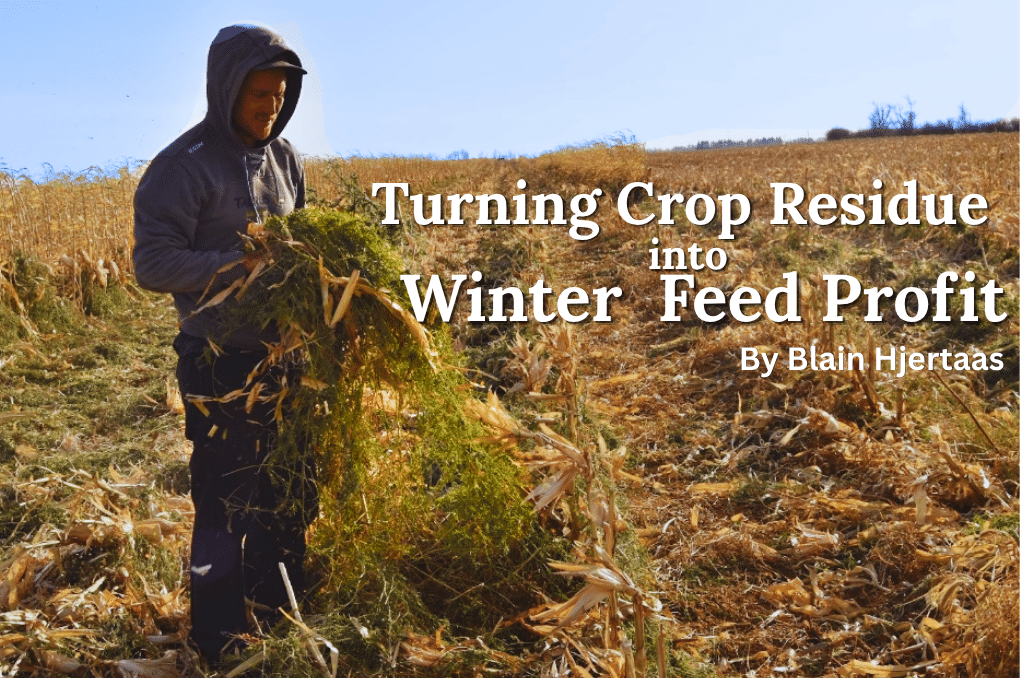
I live in a cold part of the northern Great Plains in southern Saskatchewan. We have snow for four and a half to five months every year. December, January, and February rarely get above freezing.
Our biggest cost in raising a cow is winter feed. To be successful, we need to be very aware of this cost and do whatever we can to shorten the feeding period of stored feed.
There is a natural synergy between crop farming and raising livestock. When you can use the residue from one enterprise to feed another, it becomes profitable.
Allow me share a couple of examples.
#1 Oats and winter triticale
Seeding winter triticale with a spring-seeded cereal crop is a simple and effective strategy. Oats are the best choice, but wheat or barley can work as well. About 25 lbs. of winter triticale is added at seeding alongside the intended cereal crop. The agronomic practices are not altered in any way.
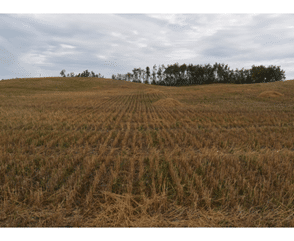
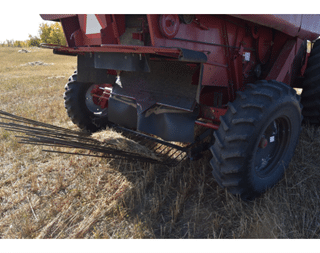
Winter triticale remains vegetative and produces very nice green leaves that retain their color well into winter. A chaff piler can be used, but windrows work just as well. The field is limit-fenced to prevent animals from trampling and wasting the entire area.
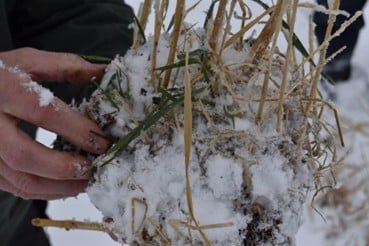
The animals are drawn to the green triticale leaves and get additional roughage from the cereal straw or chaff. Energy levels can be low, so supplementation with an energy source is required in our cold climate.
This approach provides a very economical way to winter animals—at least until the snow becomes too deep.
2024 Results
Stocking Rate
- 88 Animal Days per Acre (ADA)
- Each acre produced enough feed to support:
- 88 animals (1,000 lb each) for 1 day
Feed Consumption
- Each animal consumes:
- 3% of body weight daily
- = 30 lbs of dry matter (DM) per day
- Value of feed:
- $0.08 per lb of DM
Revenue Calculation
- Total consumption:
- 88 animals × 30 lbs DM/day = 2,640 lbs DM/day
- Revenue:
- 2,640 lbs × $0.08 = $211.20 per acre
Costs
- Winter triticale (25 lbs/acre): $51.30 per acre
- Oats (5 lbs/head/day): $46.30 per acre
- Total Cost per Acre:
- $51.30 + $46.30 = $97.60
Profit
- Revenue: $211.20 per acre
- Costs: $97.60 per acre
- Net Profit:
- $113.60 per acre
Summary
- Estimated Profit per Acre: $113.60
- Achieved using a waste product feed system
#2 Corn and hairy vetch
Hairy vetch is sown at the same time as RR corn in the spring. The application of Roundup suppresses the hairy vetch early, allowing the corn to establish and get well ahead.
The Results
- 35% utilization of 18,000 lbs. = 6,300 lbs. of residue consumed
- Equivalent to 210 ADA (Animal Days per acre)
Each animal unit day (AUD) consumes approximately 30 lbs. of dry matter per day at $0.08/lb.
- 210 AUD × 30 lbs. × $0.08 = $504/acre
Input cost:
- 5–10 lbs. of hairy vetch at seeding @ $3.00/lb. = $30/acre
Profit from feeding residue: $474/acre
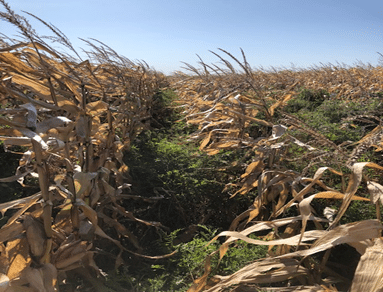
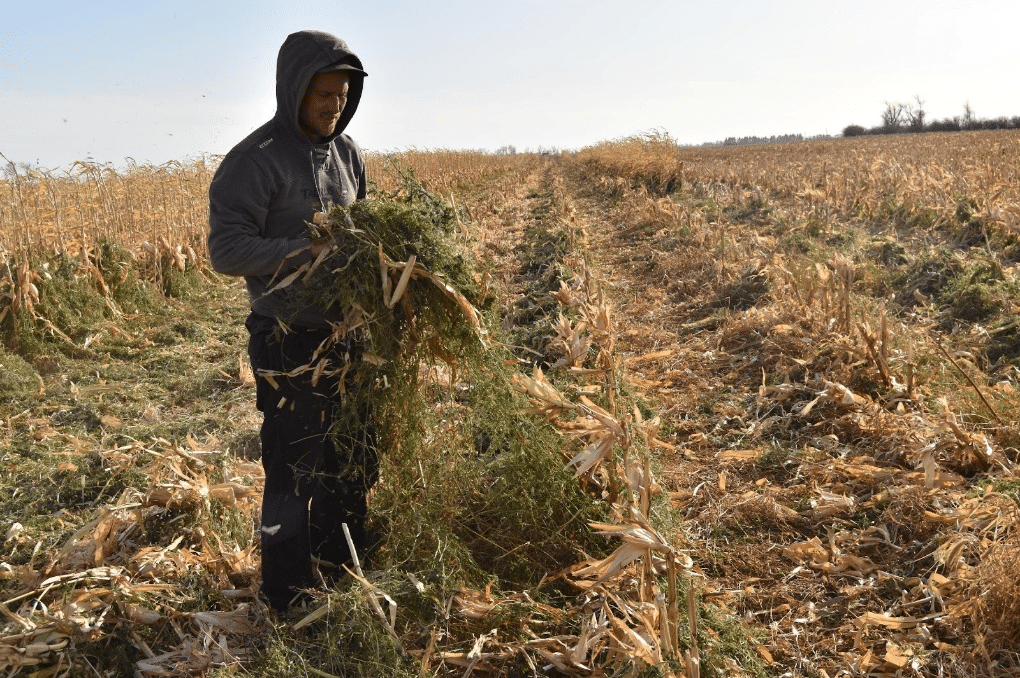
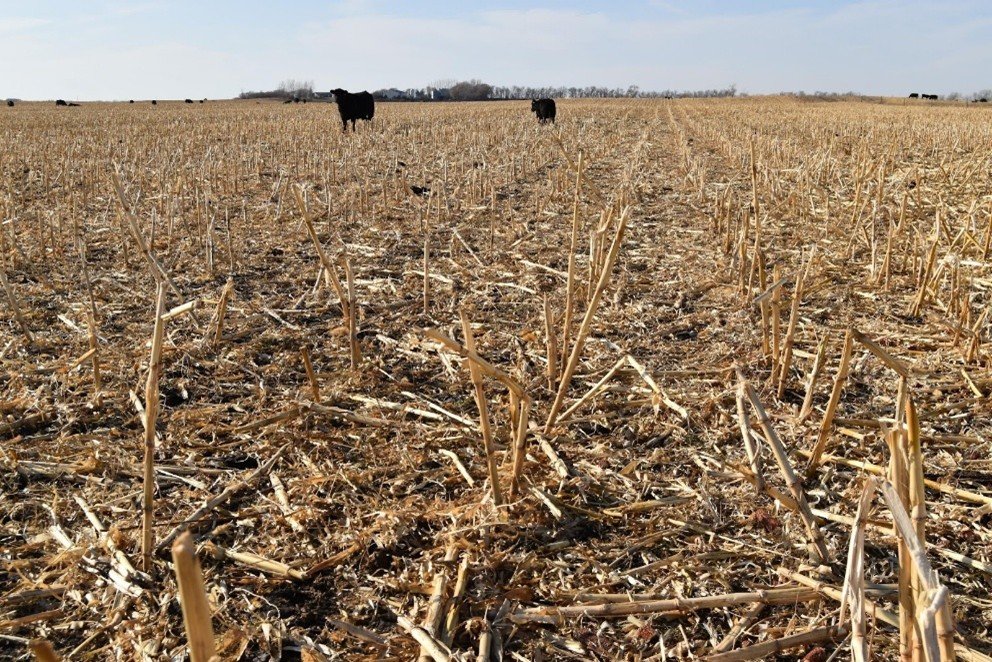
These two examples demonstrate how to generate profit by utilizing the “waste” from one crop (chaff or stover) and feeding it into another enterprise.
From a soil health perspective, we increase diversity, capture more sunlight, build more litter on the soil surface, and integrate livestock onto cropland—all while improving profitability.
The cash crop remains profitable, while the triticale and vetch add value to the residue.
I have not included land rent or machinery costs, as the cash crop already covers these expenses. No additional operations were required for seeding or harvesting.
If you’re looking for ways to reduce winter feed costs and better integrate livestock with your cropping system, it’s worth taking a closer look at how these kinds of strategies could work on your operation. Reach out to an Understanding Ag consultant to learn more about implementing practical, profitable solutions tailored to your farm.

The post Turning Crop Residue into Winter Feed Profit appeared first on Understanding Ag.


