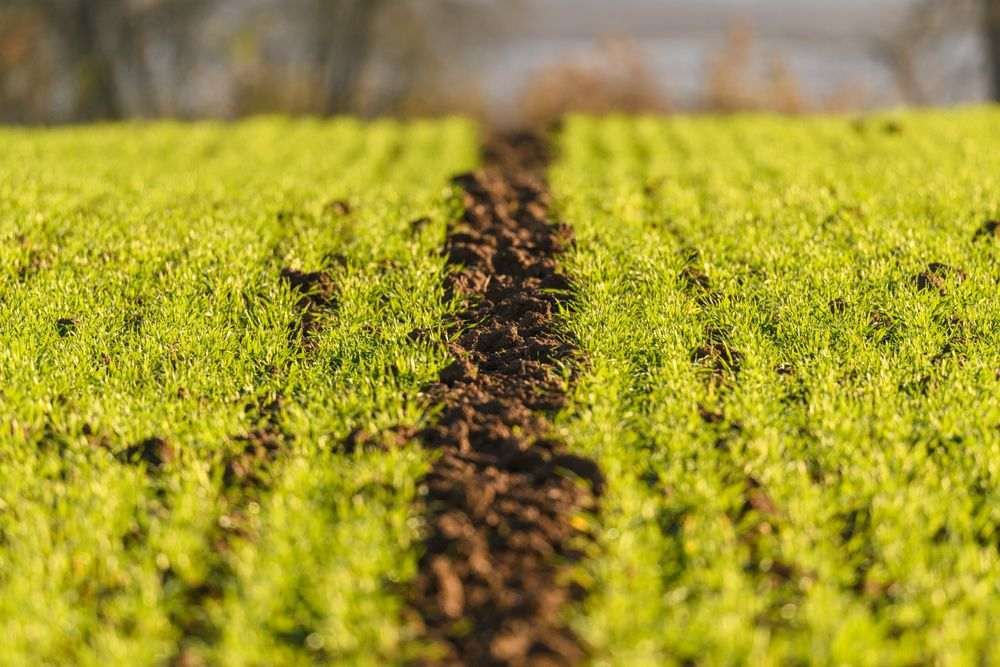
Cracked, thinning, polluted, and parched. Soils around the world are dying, threatening to take our food system down with them.
Soil degradation is already hitting food supply: the world loses 20 million tonnes of crops each year because of it.
This is not just a problem for countries near the equator, either. In the UK, companies are investing in soil-regeneration tech once reserved for tropical farming.
The trend reflects just how quickly climate change is changing the agtech market.
Here is the low-down on how UK biotech firms are developing solutions that can protect our soils from the heat.
Earth mother
After water and light, healthy soil is the most important element of our food system.
High-quality soil has two features: organic matter and microbes.
Organic matter refers to rotted plants, as opposed to sand or mineral particles. The rich “black soils” of the Central European plains are a classic example, securing the immense productivity of farms in Ukraine and Western Russia.
Healthy soils also contain diverse microbes. There are between 2500 to more than 5000 pounds of microorganisms in the top six inches of an acre of soil, which feed on the organic matter in the ground. Some help plants to extract nutrients more efficiently or to withstand stressors like drought or pests.
Scorched earth
If healthy soils are vibrant microbial ecosystems, the world’s croplands are fast becoming lifeless deserts.
In Europe, around 60-70% of soils are in an unhealthy state, resulting from two pressures: intensive agriculture and rising heat.
Intensive modern agriculture has been the biggest global contributor. Pesticides, overgrazing, and overtilling kill off soil microbes, resulting in poorer soil and weaker plants that depend on artificial chemicals to survive.
Increased heat and drought from climate change is putting additional pressure on overworked soils. Without intervention, the problem will get worse.
The end point is desertification where land becomes too poor and dry to support agriculture. In the EU, this process is actually accelerating, with the highest rate in Portugal, Spain, Greece, Cyprus and Sicily.
The English savannah
As climate change worsens, even countries further north will need to find ways to protect farmland from heat damage.
This includes the UK. The country is forecast to develop a Mediterranean climate before the century is out, leaving the country just as vulnerable to desertification as its Southerly neighbours.
In August 2026, English farming had a foretaste of its climate future. After four heatwaves, half the country was in severe drought.
Drone footage of arable farms resembled savannahs. Farmers were forced into the earliest harvest on record, leaving empty fields that were visibly cracked.
Heat and drought damage the soil in two ways. The first is that the lack of moisture kills off vegetation. Without plants to shade it or roots to anchor it, dry soil becomes vulnerable to wind erosion. Under these conditions, soil microbes also stop functioning. No longer capable of supporting crop growth, the ground becomes less fertile.
British agriculture will have to rapidly adapt to sustain yields. To do this, farmers will need new tools. With carefully cultivated microbes, soil-regenerative biotech can offer a way to support agricultural yields through exceptional heat and drought.
Watered by microbes
As conditions in the UK turn increasingly arid, Biotech company UK’s CroBio has been steadily accumulating funds to develop its soil biotech.
The startup is focused on soil regeneration and is currently working with University of York scientists for microbial soil amendment that helps crops adapt to heat.
The company wants to commodify a strain of Pseudomonas that can help crops stay alive when there is little rainfall. Once underground, the bacteria produces cellulose, a natural biological material that can form a moisture-retaining biobased structure around plant roots.
The ability to lock-in soil moisture could be a lifeline for farmers facing more revenue-crippling droughts. The immediate benefits are to hydrate crops in the field for longer, making it likelier they can push on until harvest. Improving soil water retention can also reduce costs for the farmers, cutting back on the need for water.
Innovations like this can also help maintain yields in future seasons. With crop cover, soil is less vulnerable to wind or water erosion. The shade from plants can keep temperatures lower, so that soil microbes can continue to support plants below ground.
The long-term payoffs that comes from nurturing soil health points to why investors are backing startups in this space. Soil-degradation costs farmers money – poor soils are more expensive to grow on since it needs more compensating resources: water, fertiliser, pesticides. The problem compounds under climate change. As ever, ecological decline is always a disaster from a business perspective as from an environmental one.
Scotland’s Rhizocore expands to the US
Another UK startup developing soil drought-proofing is Rhizocore, this time for the forestry and conservation market.
Their product is a small fungal pellet designed to be planted alongside young saplings. Once in the ground, they grow thin networks that help roots absorb nutrients and water, improving their tolerance to drought.
On a test plot in North Lanarkshire, Scotland, Rhizocore reported 97% survival of RhizoPellet-treated trees compared to just 78% survival of non-treated trees after 12 months. Another test at a UK site saw treated saplings grow 13 times faster than controls.
Its trial success has attracted the company global attention. In November 2025, the company raised £4.5M for North American expansion. The financing round led by the agritech investor The First Thirty – a major name in the soil biotech space.
The fund’s name refers to the thin layer of living soil around the earth that can support crops, reflecting founder Naeem Lakhani’s special interest in the ground beneath his feet.
Lakhani is informed by a growing scientific literature that links soil to human health, arguing that declining soil quality is undermining the nutritional quality of our food. Accordingly, the fund targets early stage companies with the potential to tackle soil health and human health in one.
The First Thirty is just one of a growing ecosystem of soil health companies shaping the UK biotech market. These fan out from actual biobased soil inputs to digital platforms that help farmers monitor their land.
The UK is becoming a hub of these wider soil tech companies. Some, like East Anglia-based PES technologies, offer monitoring technologies that offer farmers precise readings on the invisible chemical and biological parameters of soil health. Another UK startup Elaniti offers DNA sequencing that reveals the types of microbes residing in soil.
The race for better soils
The UK is a prime example of how the market for soil biotech is expanding into more northerly climates as the world gets hotter.
Yet native companies are not the only ones waking up to the UK’s potential as a market.
Chinese-owned bioscience company Syngenta recently announced plans for a £100 million bioscience hub in the UK. The facility will develop a range of agritech products, including soil quality monitoring and novel biological inputs for farmers.
Agtech is a huge investment priority for the Chinese state. Within soil biotech, it is blazing a trail. The Chinese Academy of Sciences recently demonstrated a way to “grow” healthy soils on desert sand using a mixture of cyanobacteria and straw. The technique could be used to turn areas of desert into productive farmland within a relatively short period of time.
China’s commitments reflect how precious high quality soil is becoming. It also highlights the importance of building European capabilities in the sector too. In a world increasingly preoccupied with resource competition, soil biotech is becoming another tool of statecraft.
Helping nature along
The UK will be a particularly interesting test case for how quickly soil biotech can scale in response to need.
Heatwaves and poor harvest are becoming the norm there, pushing up food inflation and hitting farmer margins.
Not only are higher temperatures already hitting agricultural productivity, the country is particularly vulnerable to food shortages due to its import dependence.
Like all ecological problems, though, soil degradation is a complex one. To solve it, we will need different interventions at multiple scales.
Biobased solutions certainly have a part to play. Their unique value lies in how they amplify, rather than replace, natural processes. This means that it can out-perform mechanical or chemical interventions that damage soil long-term.
However, new policies and economic models will be necessary to drive adoption of any new biotech at scale. The next few years will be critical for the government to bring in measures that support wider use of sustainable inputs, as well as the growing domestic soil biotech industry.
The post UK startups invest in drought-defying soil biotech appeared first on World Bio Market Insights.