
Micronutrients are critical to soil function and crop production.
With high input prices, getting micronutrients right can help growers get the most out of their fertilizer and pre-existing nutrients in the soil.
First, it’s important to understand what different micronutrients do.
Zinc (Zn)
Zinc has a significant impact on early plant growth and the formation of seeds. It also plays a role in chlorophyll and carbohydrate production. It is relatively immobile in the plant, with zinc deficiencies being most common on high pH sandy soils. Zinc deficiency hampers the plant’s regulated uptake of phosphorus. Tissue samples from zinc-deficient plants will often show elevated phosphorus levels.
“We do see zinc deficiencies appear regularly, especially in corn and sometimes in edible beans, which are quite responsive to zinc,” says Colin Elgie, soil fertility specialist with the Ontario Ministry of Agriculture, Food and Agribusiness. Due to the immobility of zinc, achieving a response necessitates applying it as starter fertilizer “as close to the seed as possible.”
Zinc can be measured in soil tests, but because zinc availability is very tied to pH, both parts per million and soil pH level are combined to produce a zinc index number. Zinc Soil Index levels of 15 or less indicate the nutrient should be applied with fertilizer, particularly, as Elgie says, “in susceptible crops like corn.”
Manganese (Mn)
Manganese helps activate enzymes involved in the distribution of growth regulators within the plant, making it important for photosynthesis and chlorophyll production. It is most available to crops in soils with a pH of 5.0 to 6.5. Manganese deficiency causes yellowing between veins of young leaves. Conversely, manganese toxicity, visually characterized by brown spots or yellowed areas near the tips of leaves, can occur in soils with low pH levels. Soils with high organic matter levels decrease manganese availability.
Overall, Elgie considers manganese deficiency a common occurrence in soybeans and winter wheat and its ability to oxidize quickly when aerated contributes to its visibility across the field.
“The real standout with manganese, and the one you can see driving by, is wherever compaction happens… you can often see that pattern showing off in the crop. Crops on those compacted areas will stay green.”
Applying manganese as a foliar spray can correct deficiencies. One application at early vegetative stage is often enough, although another application at later vegetative stages, even during the last field pass the sprayer makes in the growing season, can be useful in fields with a history of manganese deficiency.
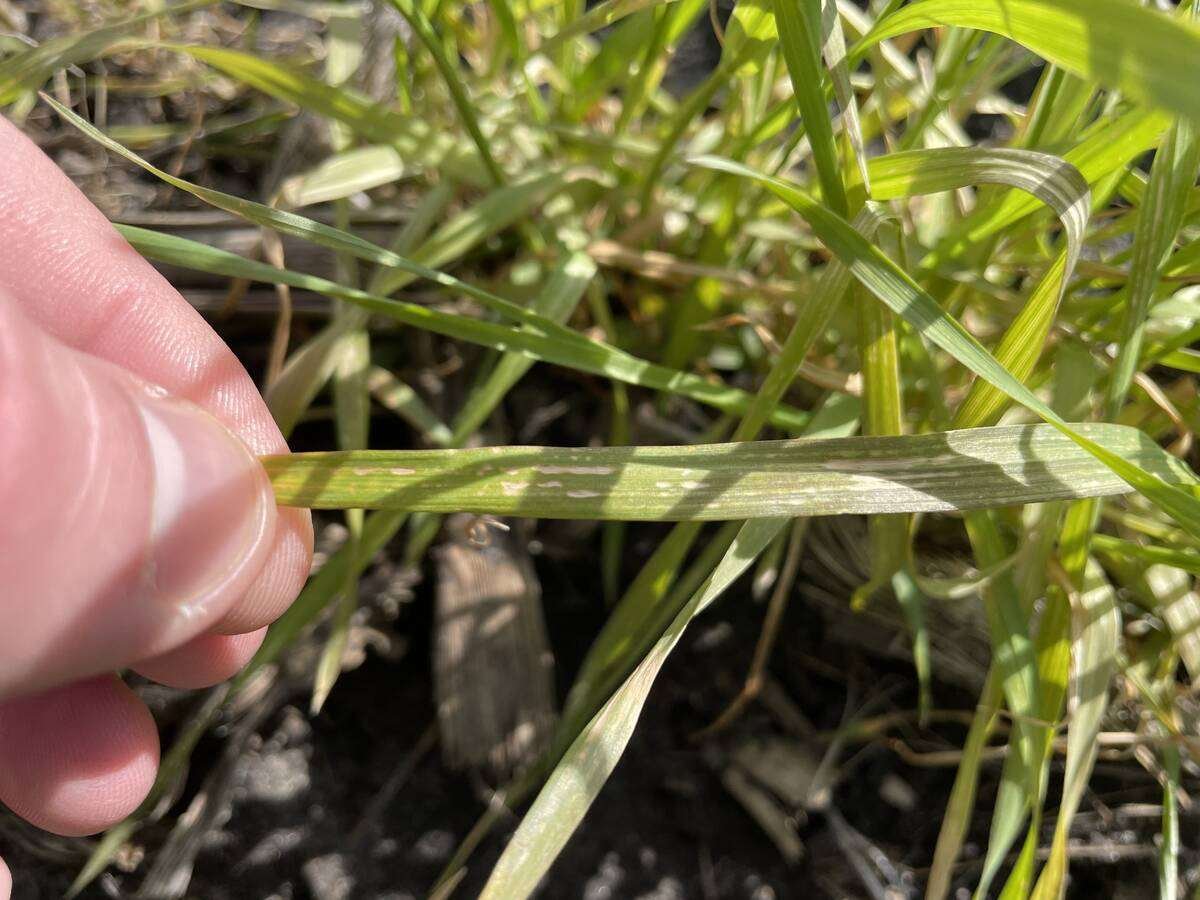
“The key with foliar application is, once deficiencies start to show, there’s potential for yield loss. The ideal scenario is you have enough manganese to feed the crop before it gets deficient. But often it’s an environment-related issue that causes it to show up,” Elgie says.
Boron (B)
Boron plays an important role in the structure of cell walls, fruit set and seed development. It’s also a component of protein and carbohydrate metabolism. Despite its importance, the amount of boron in soil is typically very small — less than 1 ppm — making it difficult to measure. There is also no provincially accredited test for boron, though some soil tests will report it. Boron deficiency can be hard to identify, whereas some crops, soybeans, for example, are particularly vulnerable to boron toxicity. Toxicity can be identified by leaf yellowing, which can lead to tissue death at leaf tips and the margins of older leaves.
“Boron is a challenge. We don’t have a good handle on what that actual value needs to be. There hasn’t been enough research to show what that response is across a wide variety of soil types,” says Elgie, adding plant tissue tests are the best means of determining if boron deficiency is the source of the problem “because it’s such a tiny, tiny amount.”
“Oftentimes we’re seeing that deficiency, and it’s not regular where we see it, in sandier soils, real dry conditions, particularly in crops like alfalfa. Sometimes you can see a response in corn, but it’s not particularly abundant that we really see that response.”
Molybdenum (Mo)
Molybdenum is another comparatively mysterious micronutrient. It has a direct impact on crop nitrogen utilization, regulating metabolism, supporting nitrogen fixation (in legumes) and promoting both pollination and seed production. The availability of molybdenum increases with soil pH, with deficiencies more likely to occur in low pH and low soil moisture conditions. Liming acidic soils can improve availability. Deficiency can be identified by browning leaf margins and general lack of overall plant vigour.
Even compared to boron, Elgie says molybdenum has not been the focus of much research. There is also no soil test for it, due to it being present in tiny amounts.
“There is speculation out there that sometimes if we see poor nodulation, it could be something related to low soil molybdenum. The only way to tell that is with a tissue test. It’s one that might have to be asked for as an extra add-on, because it’s one we rarely test for in general. We kind of assume our soils are sufficient in molybdenum.”
Iron (Fe)
Chlorophyll formation, respiration and some protein formation all require the relatively immobile element, iron. Not enough iron and crops become chlorotic. Most soils contain plenty of iron, but only a portion is in a soluble form that can be absorbed by plants. Higher pH and more calcium carbonate present in the soil, as well as cold water-logged soils, reduce the amount of available iron.
In Ontario, iron deficiencies are rare. Indeed, Elgie says Ontario is “kind of blessed” with high iron levels across “the vast majority of our soils.”
“I think the exception might be the Canadian Shield, where soil comes from different parent material,” he says. The U.S. Midwest and Great Plains are where iron deficiency is more common.
“It’s the bottom one that we usually consider to be an issue in Ontario. Again, that’s where tissue tests would come in…. But soils are kind of magical and mystical. It’s definitely not an impossibility.”
Copper (Cu)
Chlorophyll production also relies on adequate copper levels — another immobile micronutrient. Copper deficiency is more likely to occur in organic soils with high pH. Availability, in general, is more limited in coarse sands with very low organic matter, as well as in muck soils. Because of its immobility, copper deficiency is usually first observed as yellowing on the younger or rapidly growing parts of the plant.
Copper deficiencies in field crops are rare, says Elgie. The same can’t be said for horticulture crops, like onions, grown in high organic matter soils.
“It’s absolutely in the muck soils that we see that in. Onions, carrots, some of the root crops,” he says. “It’s something to do with how tightly held copper is in organic matter. There are more cation exchange sites in high organic soil, so it binds up quicker and doesn’t release near as fast.”
Chlorine (Cl)
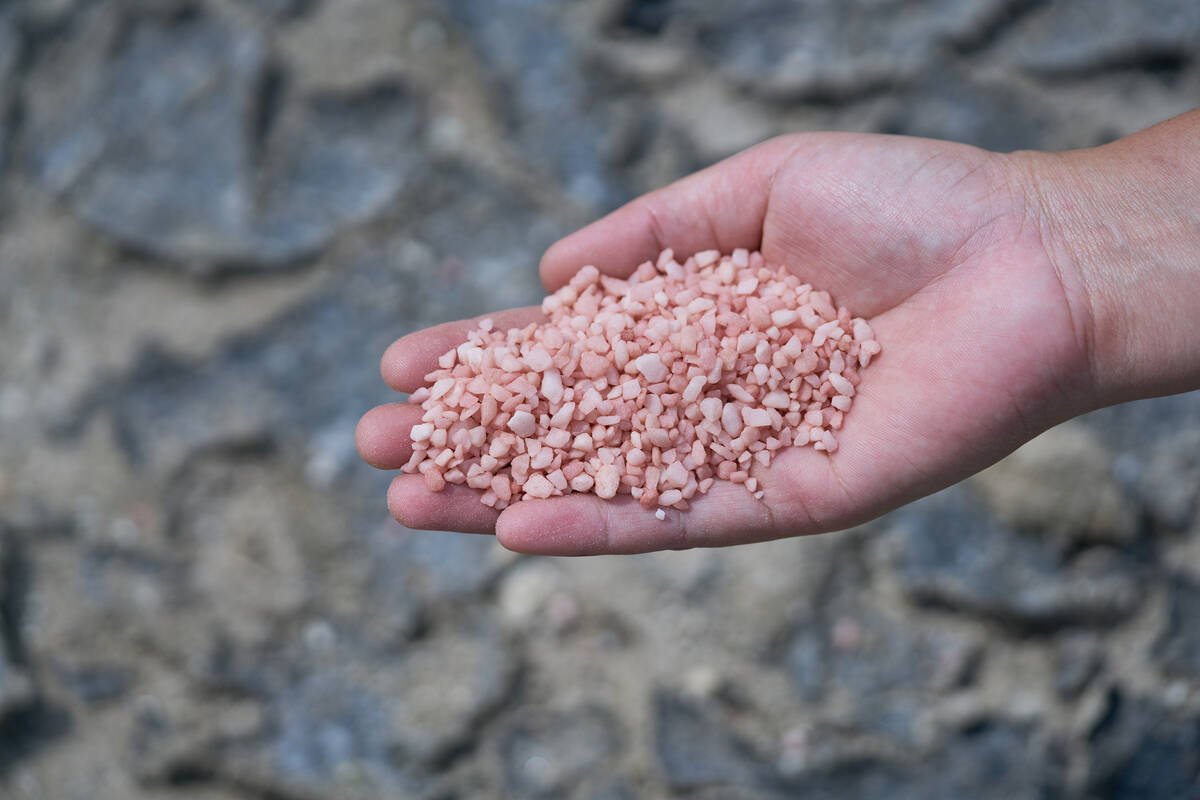
Perhaps the least attention-garnering micronutrient, says Elgie, is chlorine — an element important for photosynthesis and a variety of other functions, but one that’s even more mobile than nitrogen.
Despite this mobility, there is enough chlorine naturally available in Ontario soils to make chlorine deficiency rare. Elgie says there is some research from outside Ontario that points to chlorine’s role in the suppression of disease. Chlorine can be added in the field in the form of potassium chloride or muriate of potash. Those growing tobacco do have to be mindful of chlorine toxicity, however.
“Tobacco growers know they can’t use muriate of potash in spring. That tobacco is very sensitive to chlorine. Most of the time (excess chlorine is) not an issue at all, but something to be aware of,” he says.
The take-away message
Micronutrients play a critical role in crop development and, subsequently, profitability. But for Elgie, a focus on micronutrients is secondary to the fundamentals: nitrogen, phosphorus, potassium and soil pH.
“In my mind there’s no point in worrying about your micros until you have your macros and secondary macros in check. We need very small amounts of them. If you have a low P or K and focus on that, you’ll get far more payback far more quickly,” he says.
“Oftentimes we look for the one magic solution that’s going to fix the problem. You have to look at the whole soil test. Your macros are N, P, K and your pH. Make sure those are in check, because it will affect the availability of all your micros anyways.”


