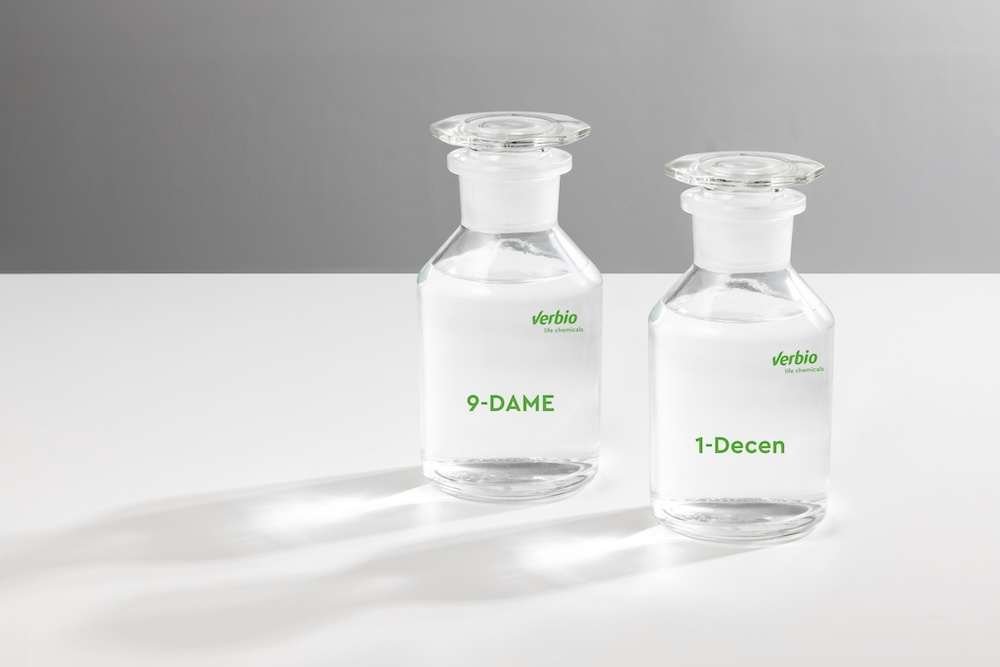
Verbio has commissioned what it calls the world’s first large-scale ethenolysis plant based on rapeseed methyl ester. The facility sits at its Bitterfeld site. The company invested nearly EUR 100 million in it.
The plant can produce up to 60,000 tonnes of bio-based chemicals a year. These renewable carbon compounds can replace fossil-based raw materials in lubricants, detergents, cleaning products and plastics. The first two products are 1-decene and 9-DAME.
The process relies on ethenolysis, a form of olefin metathesis. Special catalysts from Verbio’s Hungarian subsidiary XiMo convert carbon compounds in rapeseed methyl ester into new molecules. Yves Chauvin, Robert H. Grubbs and Richard R. Schrock won the 2005 Nobel Prize in Chemistry for their work on metathesis. Schrock attended the ceremony. He said seeing the research used at this scale was a moving moment.
Verbio has so far used its Bitterfeld rapeseed methyl ester as biodiesel. It will now also serve as a feedstock for higher-value chemicals. That opens an extra market for a raw material the company already makes in large volumes.
CEO Claus Sauter said the plant adds a stage to the biorefinery’s value chain. He said processing European rapeseed oil supports regional farming and reduces reliance on disruption-prone global supply chains.
Michael Carus of the nova-Institute said Europe cannot compete on cheap fossil feedstock in the long run. He said solutions must move beyond pilot scale. German Research Minister Dorothee Bär called the plant a strong signal as crude oil prices dominate the debate.
The market ramp-up will happen in stages. Customers must qualify the building blocks for their own applications. Volumes will therefore grow gradually. Verbio has received enquiries from Europe, the Americas and Asia.
The post Verbio opens large-scale plant for rapeseed-based chemicals appeared first on World Bio Market Insights.
- Source: https://worldbiomarketinsights.com/verbio-opens-large-scale-plant-for-rapeseed-based-chemicals/