
A suspected herbicide-resistant weed is only as useful as the sample that reaches the lab.
That means producers need to collect the right seeds at the right time and keep them in good condition if they want an accurate answer, says James Bush, manager of diagnostics at Saskatchewan’s Crop Protection Lab.
“First and foremost, you want to make sure that you’re collecting mature seeds, and you want to make sure that you’re collecting them before you do any fall weed control or burnoff,” he said during the Crop Diagnostic School held at Swift Current, Sask., in late July.
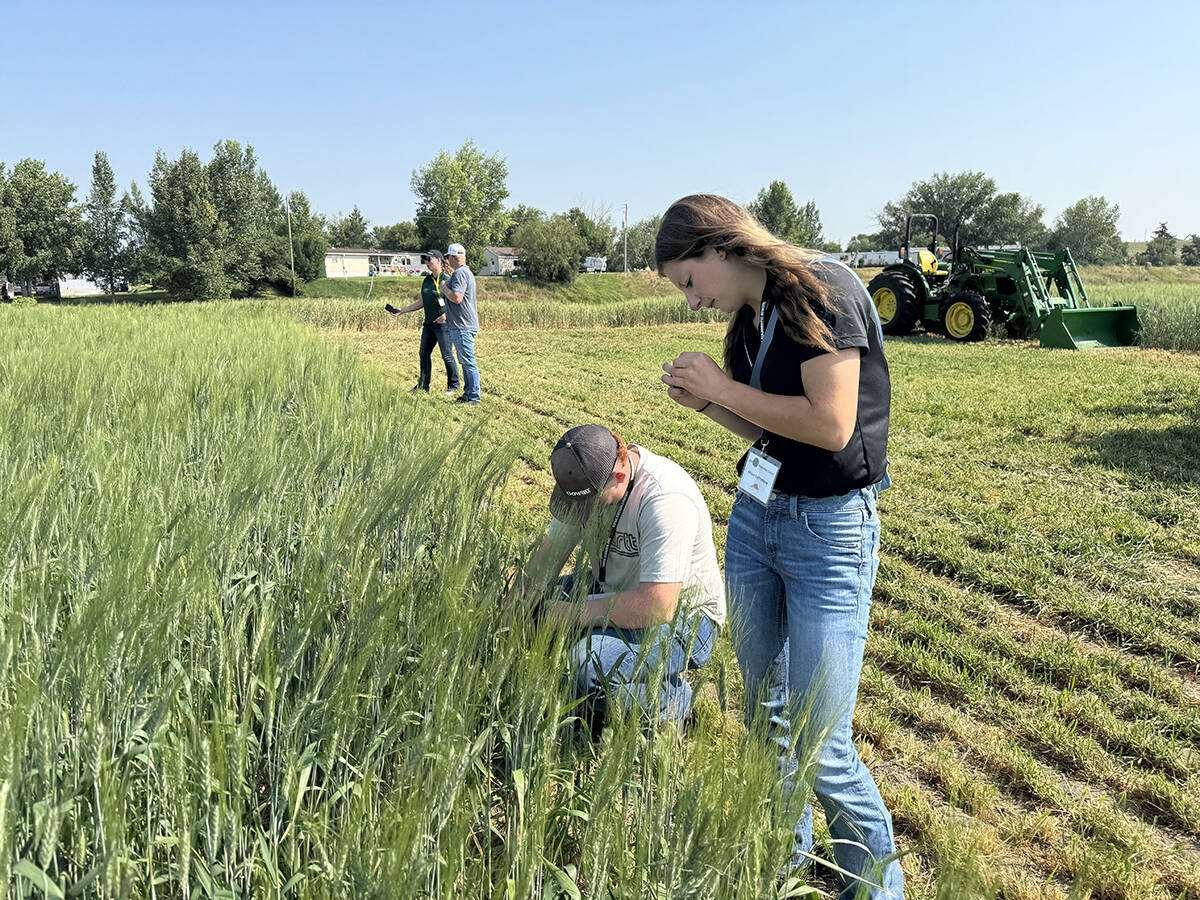
Organized by the provincial agriculture ministry’s crops extension specialist team, the event featured five diagnostic stations that presented information about weeds, diseases, insects, herbicides and soil.
Bush said the provincial lab tests weeds for known herbicide resistance and can also investigate suspected new cases.
Samples showing possible novel resistance can be forwarded to an Agriculture and Agri-food Canada laboratory for further testing.
Herbicide resistance develops when the same herbicide group is repeatedly used against a weed population.
Susceptible plants are killed, while resistant plants survive and produce seed.
“So how we have herbicide resistance occurring in a field is when you’re continually exposing a population of plants to the same herbicide group,” Bush said.
Selecting suspects
The pattern can begin with only a few resistant plants in a field. After repeated selection, those small patches can become increasingly obvious and difficult to control.
“They’re going to drop their seeds, and then year two, before you do weed control, you’re going to have some very small patches of resistant plants there,” he said.
Those patches can become larger and more difficult to manage over successive years as resistant plants continue producing seed.
TABLE: Confirmed resistant weeds in Ontario as of December 2025
| Weed | Group/Groups |
| Canada fleabane | 2/9, 9 |
| Cocklebur | 2 |
| Common ragweed | 2, 5, 2/5, 2/5/7, 2/5/14, 2/7, |
| 2/9, 2/9/14 | |
| Giant ragweed | 9, 2/9, 2/5/7/9 |
| Eastern black nightshade | 2 |
| Giant foxtail | 1/2, 2 |
| Green foxtail | 2 |
| Yellow foxtail | 2 |
| Green pigweed | 2, 5, 14, 2/5, 2/5/7, 2/5/14, |
| 2/5/6/7, 2/5/7/14, 5/7 | |
| Redroot pigweed | 2, 5, 14, 2/5, 2/7, 2/14, 2/5/7, |
| 2/5/14, 2/5/7/14, 2/5/6/7/14, 5/7 | |
| Kochia | 2 |
| Lambsquarters | 2, 5, 2/5 |
| Large crabgrass | 1 |
| Ryegrass | 9, 1/9 |
| Waterhemp | 14, 2/14, 2/9/14, 2/5/9/14, 2/5/9/14/27 |
| Wild oats | 1/2 |
Source: Ontario Crop Protection Hub, OMAFA
In Saskatchewan, the Crop Protection Lab uses dose-response testing to determine whether submitted weeds are resistant.
The submitted sample is grown to the appropriate stage and sprayed with the herbicide. Three weeks following herbicide application the plants are compared to known resistant and susceptible populations.
The lab can also test some soil-applied herbicides using an agar-based method.
Seeds are grown in dishes containing herbicide-treated and untreated media, allowing technicians to compare root growth and determine whether plants are responding to the herbicide.
Gathering the evidence
However, Bush said the testing process can only work if producers provide a viable sample.
Weed seeds should be mature and collected before fall herbicide applications. Herbicide residues on the plants can also interfere with testing and potentially produce a false result.
For wild oats, he recommends using a sweep net to collect seeds from a suspected patch because the plants can readily shed their seeds.
A substantial sample is required for a test — about 2,000 wild oat seeds, or roughly a measuring cup full.
Producers who don’t have equipment to clean the sample can send the material to the lab, where a thresher can separate the seeds from the chaff.
Kochia requires a different approach.
Bush recommends placing a seed bag or old pillowcase over a suspected plant, cutting the plant and allowing it to dry before shaking the seeds loose.
How the sample is stored is just as important.
Bush advises producers to avoid plastic bags because moisture can build up inside and damage the sample.
“That just turns into a greenhouse,” he said.
Instead, he recommends using a paper lunch bag, preferably doubled, so moisture can escape.
Producers should also avoid leaving samples in a hot vehicle, on the dashboard or direct sunlight, where high temperatures can damage the seeds and make them unsuitable for testing.
“Keep the sample like you would treat a pet, almost,” he said.
“Yeah, it’s a temporary pet.”
Not every weed that survives a herbicide application is necessarily resistant, Bush said.
Poor application, water quality and other factors can also contribute to inadequate weed control, making laboratory testing useful when resistance is suspected.
For producers who suspect resistance, the first step may be as simple as collecting the right seeds at the right time and keeping them alive until they reach the lab.
The post Viable weed samples needed to confirm herbicide resistance appeared first on Farmtario.


