
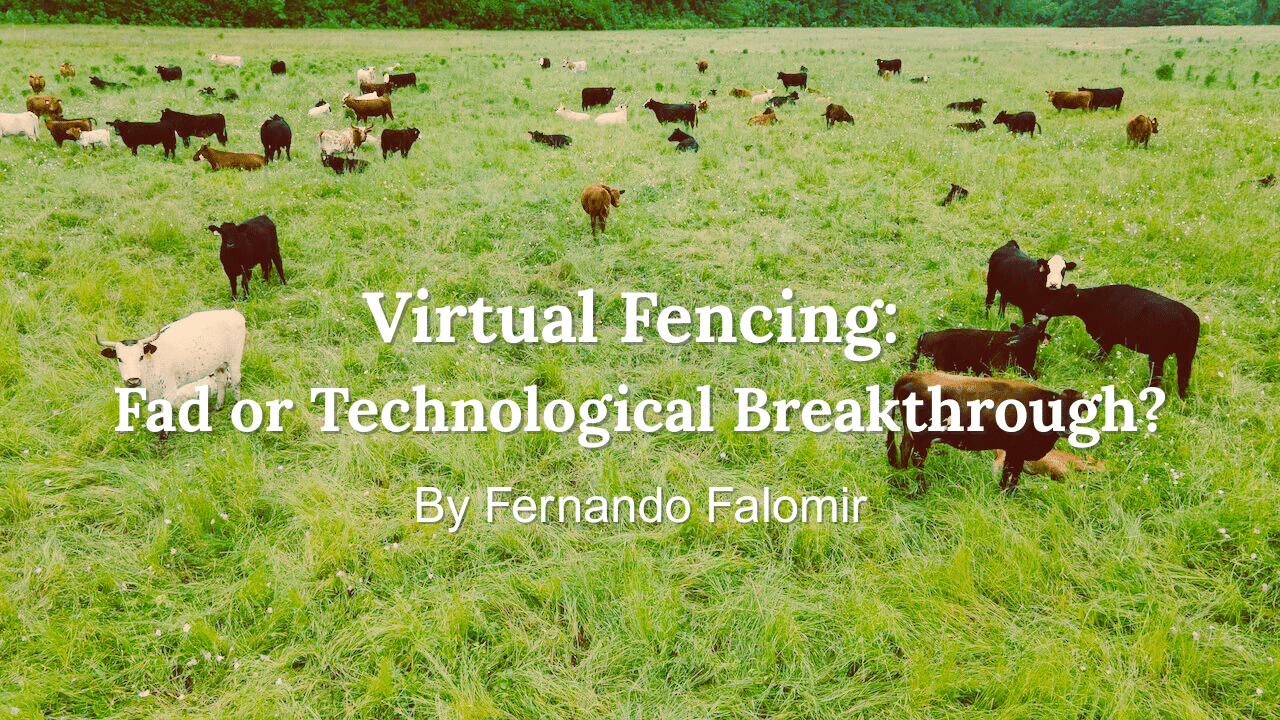
We live in The Digital Age, and for the first time in a long while it appears that a new technology is emerging that could truly revolutionize the way we graze livestock. But is our growing dependence on technology necessarily a good thing? Is this really what our industry needs?
Virtual fencing is becoming commercially available and claims to offer solutions in animal management challenges by replacing physical barriers with GPS-enabled collars, allowing ranchers to manage herd movement, protect sensitive land, and automate rotational grazing via an app on their smartphone.
We can debate back and forth whether virtual fencing is a gamechanger for an operation or not. On paper, the potential labor savings alone can seem like reason enough to invest. But how expensive is it to implement? And is it truly the miracle solution many claim it to be?
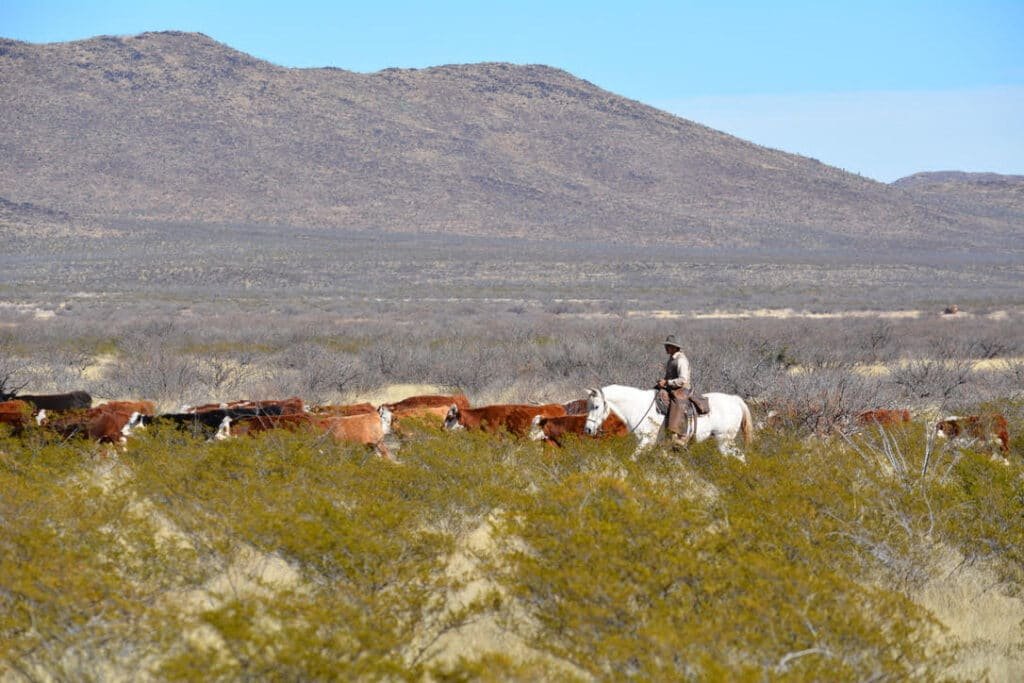
As an old-school rancher who enjoys spending time with his livestock across big, open, rugged country, on horseback I see things differently. My own ranch has the kind of brush and terrain that gives most people nightmares. Yet I’ve found that proper stockmanship is what makes the operation manageable. When cattle are handled well, they become a pleasure to manage even when labor is scarce. I don’t need four ATVs, two sets of dogs, a feed truck, and a whole posse to gather the herd. One person alone can handle the entire herd and make a pasture move within a matter of hours. It is something that we worked very hard to achieve over the years on our ranch. Good stockmanship, in my context, is the most valuable tool at our disposal. Without it we simply could not continue to operate as we do.
My biggest concern—one few people seem to be talking about—is the long-term effect of this technology on animal behavior and on us as land managers. If we spend even less time with our livestock, observing and reading the land, we risk further disconnecting ourselves from the very system we’re supposed to steward.
Lessons from the Past
Let’s step back 150 years, before barbed wire and windmills spread across the West. It wasn’t uncommon back then to find a cowboy that could manage 2,000 head of cattle, at least for a while, on his own. The level of stockmanship and ecological awareness required in those days far surpasses what many modern “super-punchers” can do today. Back then, skill mattered out of necessity—if the herd scattered, it meant financial ruin.
The Arrival of Technological Advancements
Windmills allowed cattle to travel longer in places they once couldn’t graze, and fences allowed cattle to be held there indefinitely. What followed, in many places, was overgrazing, declining plant diversity, and landscape degradation at a scale never seen before.
This is the biggest lesson learned; when we removed ourselves from daily interaction with our cattle and land, we lost something. Historically, cattle had to keep moving to survive. That movement allowed for natural recovery periods and seasonal grazing patterns that landscapes evolved with. You couldn’t force animals to graze what should have been trampled, and you couldn’t hold them indefinitely where forage quantity declined. Unfortunately, with the arrival of technological advancements that promised convenience and efficiency came one of ranchers’ biggest downfalls. It cost us our skills and loss of knowledge.
Stockmanship and Animal Behavior
The Psychological Effects of Management
The way we manage our cattle has effects on both the herd and the handler. Anyone who has worked with stressed cattle knows the frustration of chasing mavericks and fighting poor animal disposition. Good cattle are worth their weight in gold. Once you’ve worked with calm, well-trained cattle that pair up and trail willingly across miles of rough country, you understand their true value. They know how to move, how to lead, and how to respond to subtle cues. And yes, those animals have a stronger will to survive.
Low-Stress Handling Changes Everything
With proper stockmanship, there is silent communication between animals, people, and land. A skilled handler reads social dynamics in the herd and anticipates reactions before problems unfold. In terms of animal performance, the difference between a handler that understands low animal stress versus the conventional mindset is beyond comparison.
That kind of cow sense can’t be downloaded from an app. It’s learned through time spent with animals. It’s what allows a herd to flow through towns, highways, and river crossings without chaos. Unfortunately, that kind of stockmanship is becoming extremely rare and hard to find. More frequently I find cattle owners or hired help that do not share the patience required nor see the value behind animal husbandry. Sure, we all love to tend to our cows. However, there is a different level of communication when you are required to punch in and punch out at odd, non-working hours of the day to see that the herd is properly placed on a new pasture. Therefore, allowing you to avoid cattle pacing along the fence, to see what species of plants the cattle are preferring during specific times of the year, and so on. When working with livestock, it’s about being in the right state of mind and making the appropriate grazing decisions so that the herd views you as the main lead.
Technology and the Risk of Disconnection
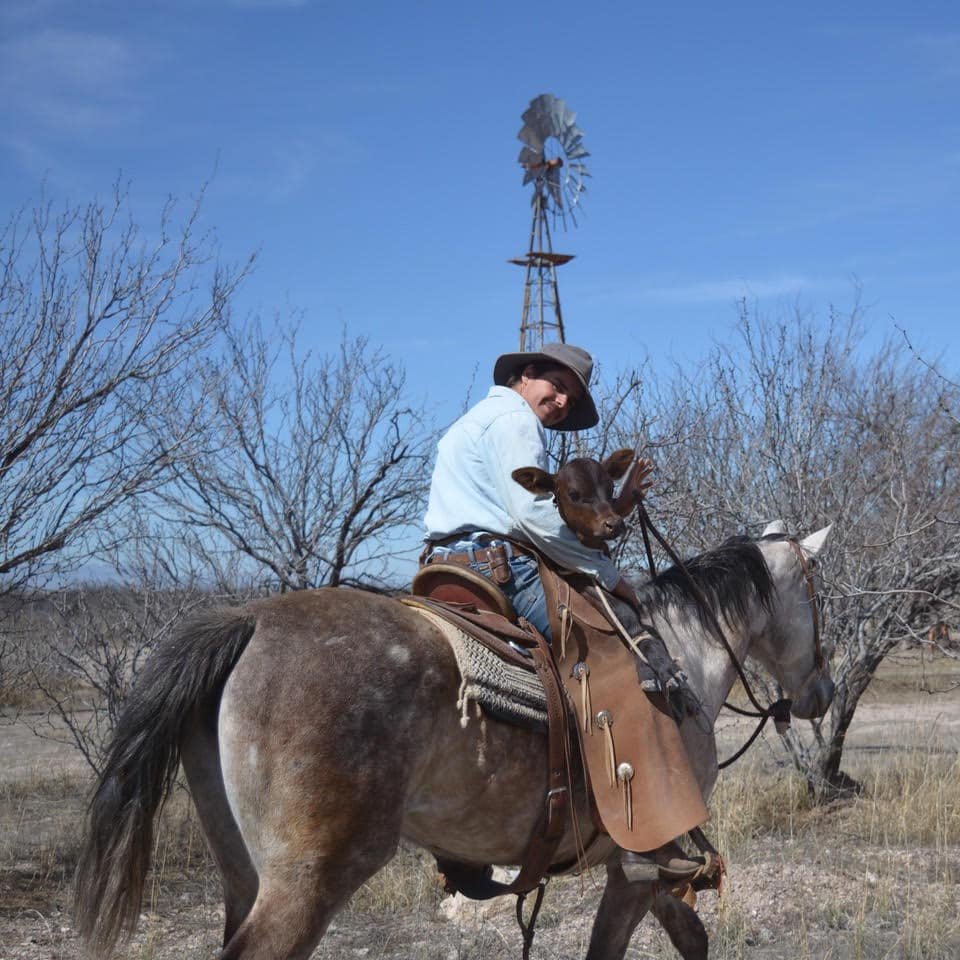
Technology can be useful, but it can also hinder the “cow-sense” learning process. Virtual fencing is a very powerful tool—but only in skilled hands. Without understanding why we adopt a particular technology, it will certainly do more harm than good.
I’ve seen this before with portable electric fencing. Poor stockmanship combined with technology can lead to chronic stress, poor animal performance, and land degradation. Some of the worst-behaved cattle I’ve encountered came from operations where animals were repeatedly pressured and mismanaged behind fences. They wouldn’t pair, wouldn’t trail, and often became avid fence-jumpers or even dangerous to handle. All these negative effects are due to the lack of stress management which can quietly linger within the herd. Over time this stress will cause cattle to lose their natural herding behavior. The longer their natural instincts and needs are ignored as we continue to overpressure them the worse their poor behavior and stress becomes.
The concept of Instinctive Migratory Grazing reminds us that herding livestock naturally can be restored. Cattle can positively respond to our leadership; it is innate within their instinct to want to establish these bonds with us. With proper handling, those positive natural herding behaviors can be restored, and when they do, men, cattle, and land see the benefit. The real question should be how can we preserve these natural behaviors when implementing these tools such as electric fencing or collars?
Skill vs. Technology
At the opposite end of the spectrum—where skill and animal husbandry dominate—we can achieve similar grazing outcomes without losing animal behavior or compromising land health. On the contrary we can operate cost effectively.
Calm herds with strong herding instincts will move across landscapes at higher densities without being forced by fences or collars. They’ll graze farther from water, utilize a greater diversity of plants, and distribute nutrients more evenly across the landscape on a continuous basis. Ultimately, it is management—not technology—that determines ecological outcomes.
This is often difficult for producers to accept. Tools don’t restore land—management does.
The Cost of Virtual Fencing
Now let’s talk about cost. Virtual fencing companies use different pricing models: some sell collars, others lease them out with subscriptions. Yes, like Netflix, you’ll pay annual fees to be able to move your own cattle. Typical subscription costs range from about $35 to $72 per collar per year. Then there’s infrastructure: relay or base stations every three to five miles, costing roughly $5,000 to $12,500 each depending on terrain.
Let’s assume a modest setup: three base stations and collars for 100 cows. Total investment can easily reach $17,000 to $22,000 at the low end. That’s significant—especially when many grazing operations struggle more with water distribution than with fencing. That same money could install several miles of water pipeline and transform grazing flexibility permanently.
Should You Adopt Virtual Fencing?
If you’re considering collars, ask yourself:
- Will the benefits truly outweigh the costs?
For large or labor-limited operations, perhaps yes. For smaller producers, portable fencing often remains more economical and more effective at ultra-high grazing densities in smaller landscapes. - Will this technology increase or decrease your time with the herd?
If it’s mainly to save time for unrelated tasks, you may be removing yourself from management—the most critical factor in grazing success. - How will you support natural grazing cattle behavior?
Technology should support natural grazing behavior, not suppress it. The implementation of any practice should be mindful of the psychological effects of our management on cattle. Regarding animal performance, this can translate to significant increase in overall profitability.
Practical Tips for Positive Implementation
If you choose virtual fencing, the following practices will help ensure success:
- Train cattle to an electric fence first.
Prior experience with electric fence boundaries eases transition and lowers stress on the herd once visual cues disappear. - Maintain visual markers.
Fiberglass posts or temporary markers help cattle associate virtual boundaries with reality. Alternatively, one could also quietly herd in the new virtual paddock to help settle them in. - Make moves in person whenever possible.
Don’t just “drop” the fence digitally, same goes for opening the gate in fencing systems. Going out to pasture and walking through the fence gate with the cattle strengthens relationships and places the handler in the leading position, herding from the front. The added time spent on pasture is also necessary for animal and land health assessment. - Use fences to protect recovery—not force grazing.
Boundaries should keep cattle out of resting areas and not used to force them to graze lower quality forage. - Use virtual fencing to enhance trampling effect.
Higher grazing densities can increase soil armor and incorporate plant residues. If there is insufficient animal impact, the positive effects on forage productivity might be minimized. - Implement strip grazing
Strip grazing works well with virtual fence collars. Anticipation of fresh forage encourages herd movement. It can also increase the desired animal grazing densities to achieve the effect necessary on the new grazing strip. At the same time providing enough room on the open back fences for stress decompression and shelter. - Remember: water still limits grazing more than fences.
Virtual fencing can reduce physical fence costs, but water distribution remains the primary constraint in most systems. Continuing to invest in necessary ranching infrastructure will yield the highest return in labor savings over time and improve overall forage utilization.
Final Thoughts
Virtual fencing is neither miracle nor a menace—it is a tool. Like windmills, barbed wire, and the electric fence before it, its impact depends entirely on how it is used. If adopted thoughtfully, it may expand grazing flexibility and speed up restoration efforts. If used to replace stockmanship and observation, it risks widening the disconnect between rancher, animal, and land.
In the end, regenerative grazing is not about technology—it is about strengthening our relationship with natural processes. The most advanced tool in grazing management remains the attentive human eye and the skilled hand that calmly guides a herd across living landscapes.
Reach out to an Understanding Ag consultant for more information or conversation regarding implementation of modern technology in your grazing systems.
The post Virtual Fencing: Fad or Technological Breakthrough? appeared first on Understanding Ag.


