
Agtech circles have long recognized the need to standardize agricultural data, but to date, no one has quite solved the problem, and valuable information remains trapped in many, many silos.
Agriculture is practically infamous for siloed data, which includes everything from inconsistent formats for field trial results to terminology that varies from one region to the next.
Other industries have already solved this challenge. Finance standardized transaction data through systems like SWIFT and FIX; healthcare created shared data models like HL7 and FHIR to enable interoperability; and e-commerce platforms like Amazon built unified product taxonomies that allow millions of SKUs to be compared and analyzed consistently.
Agriculture, on the other hand, is still wading through a sea of disparate data points that could reveal insights into product performance, trial results, and the like, but are as yet lost in translation.
“The reason the industry hasn’t made material progress is that nobody’s invested the time, energy, and capital to build the infrastructure that’s required to actually do that at scale,” explains Steven Valencsin, founder and CEO of Growers, which, alongside Israel-based Agmatix, hopes to change this.
Following their integration under Growers Tech, ICL Group’s digital agriculture platform, Agmatix and Growers are building that infrastructure layer specifically for agriculture—a system that takes messy, disconnected data, cleans it, puts it into a common language, and adds context so it can be turned into insights companies can actually use
Without it, agribusinesses, agronomists, and indeed farmers will never be able to leverage the current “AI revolution” to their benefit, the companies say.
Valencsin, along with Ron Baruchi, president of GrowersTech and the CEO of Agmatix, recently sat down with AgFunderNews to discuss how the two companies worked together to build that infrastructure layer for AI in agriculture, and how it could become the model for the whole industry.
AgFunderNews (AFN): Tell us more about your companies and how they work together.
Ron Baruchi (RB): Growers Tech, the company that combines Agmatix and Growers, is building an AI infrastructure layer for agriculture, focusing on solving one of the industry’s biggest challenges today: data standardization.
Regardless of whether it’s data yielding from agronomy field trials, precision agriculture tools, or transactions, data is very siloed. This limits the ability to deploy insights at scale, at the right time and place.
Without a strong infrastructure and a robust data set, it will be impossible for agriculture to leverage the AI revolution happening everywhere and generate market-leading disruptions.
Growers Tech is putting itself at the forefront of solving this problem and leading agricultural intelligence by standardizing and harmonizing data in ag. We do that in multiple ways, one of which is through our subsidiary in the US, Growers, with incentive intelligence.
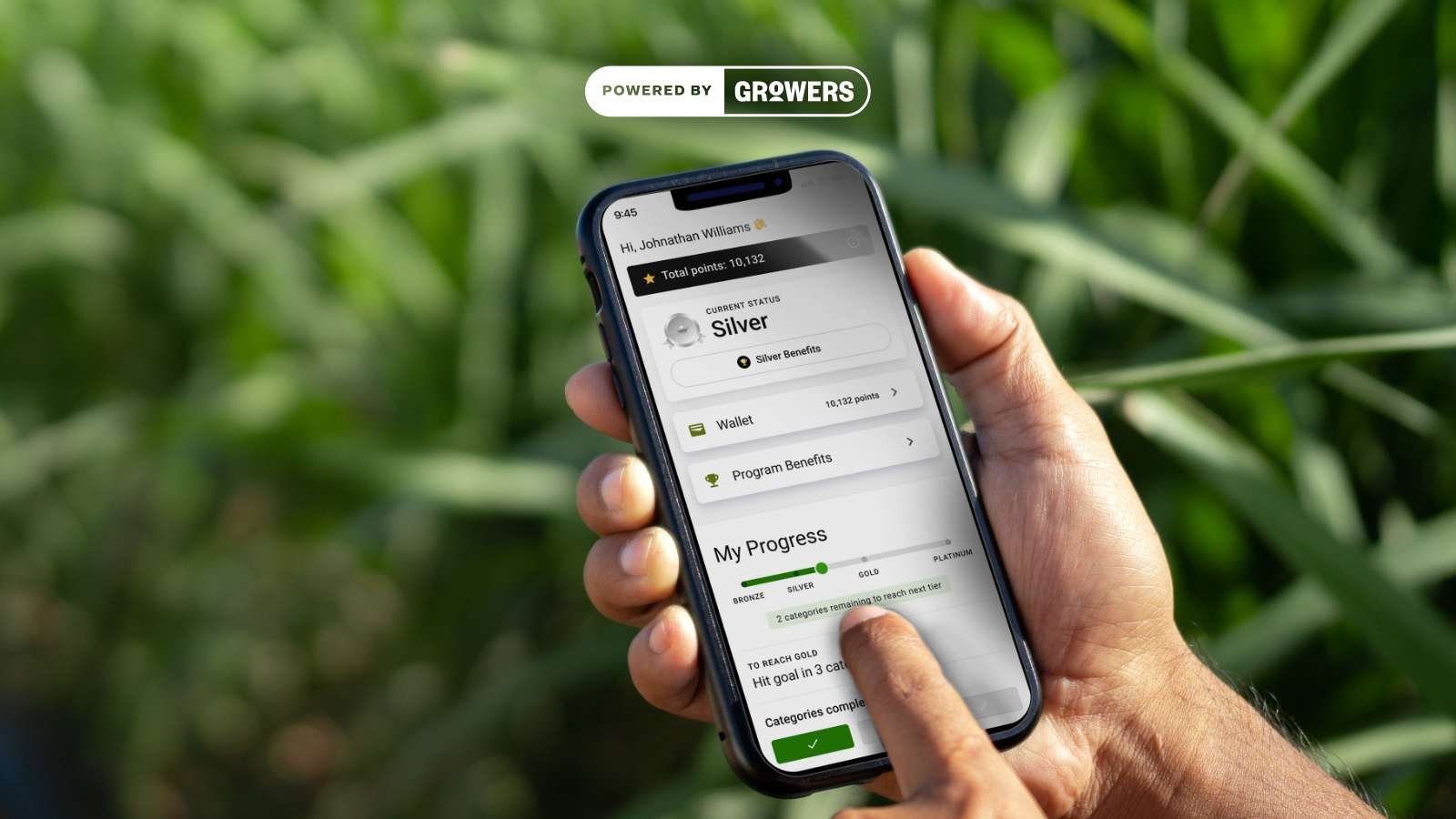
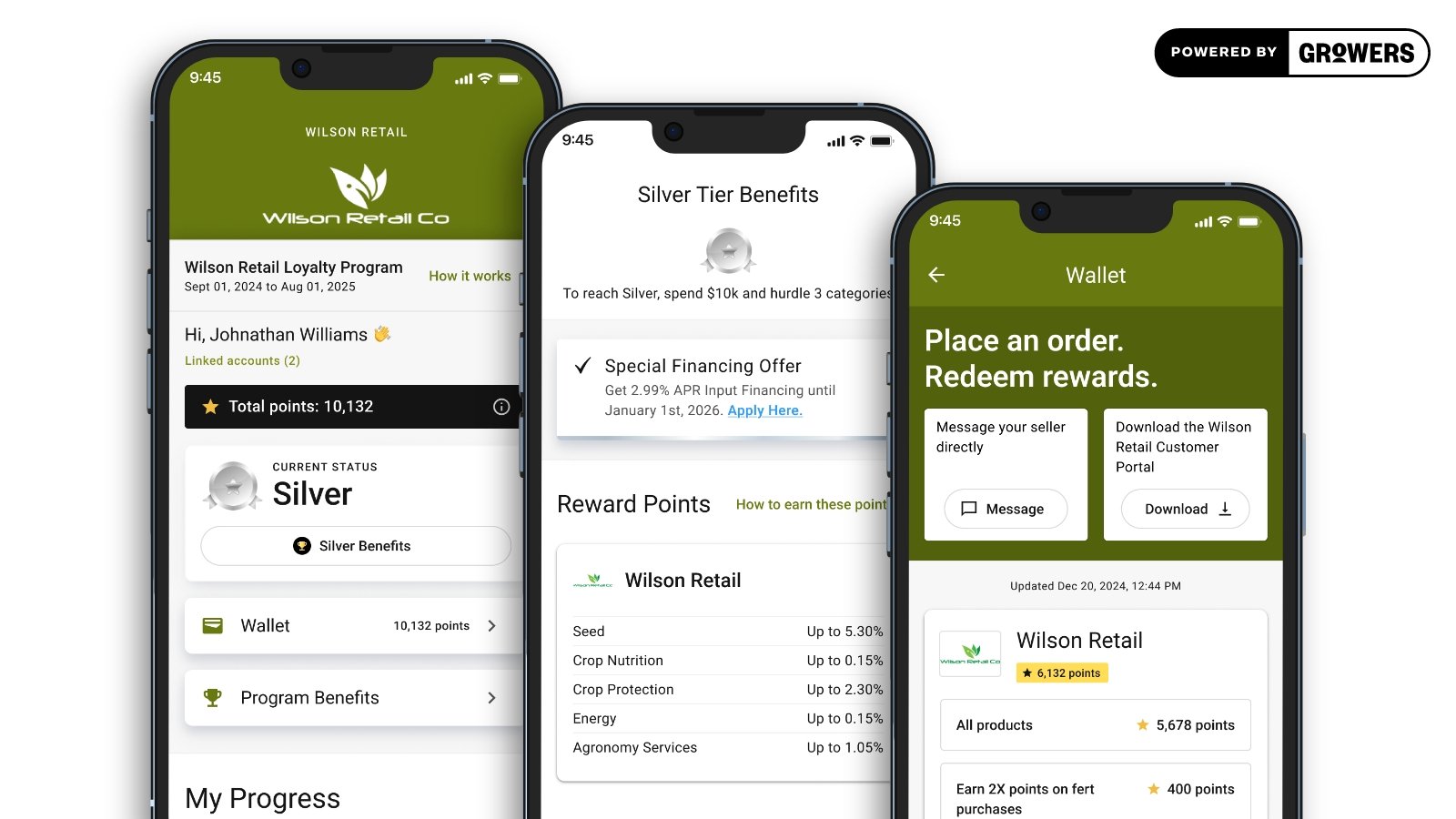
Steven Valencsin (SV): The platform that we have in the market is a commercial intelligence tool that’s powered by our ability to manage incentives for the entire agriculture ecosystem inside one closed-loop system.
Today, incentives are really what make the world go around in agriculture, but they’re loosely managed, in manual, fragmented ways, and often not aligned among the key stakeholders—retailers, manufacturers, and farmers.
We built an engine that allows the entire supply chain—retail, distribution, manufacturing—to build their own loyalty or incentive programs that are powered by Growers, and that sits on top of Agmatix’ Axiom technology.
What we’re capturing is a very granular view of how the market is behaving—primarily through farmers’ buying behavior—that we can turn into commercial intelligence for the entire supply chain, so they understand how their brands and products perform across the ecosystem. It’s really about getting better information faster.
AFN: Why is data standardization such an important topic in agriculture right now?
SV: Lack of data standardization creates an enormous drag on any of the organizations that are trying to glean anything out of the data they have.
Every corner of the agricultural market seems to generate enormous amounts of data, but we’re all doing it in silos. As a result, we see, for example, thousands of different variations of the exact same product name, oftentimes within the same organization.
In an environment where you’re trying to analyze data at scale, that is a massive, massive problem because AI tools and SQL queries will recognize all this unstandardized, fragmented data as unique data points.
That means it’s an enormous manual lift to try to gain any deep understanding of what is happening.
For example, if you think about 100 retailers selling, on average, 3,000 different SKUs, their warehouse manufacturers have the tedious job of understanding sales of Product X across 100 retailers, all of which likely have 3-5 different names for the same product within their ERP. That’s almost untenable. It could take an organization nine to 10 months to reconcile that data. That’s 9 to 10 months during which the market will change, so you’re acting on outdated data.
If you do all of this inside an infrastructure layer, like the one we built that does it automatically, you can surface that information much faster. So we’re drastically shortening the time it takes to make actionable decisions on agronomic and transactional data.
AFN: You all are using neuro-sympolic AI to accomplish this. Tell us more about how this works.
RB: One of the biggest challenges in agentic AI is hallucinations. This is especially challenging in agriculture, where providing business and agronomic recommendations requires extreme accuracy.
Neuro-symbolic AI is a system that builds a data pipeline that translates data into a structure combining a neural network and a symbolic layer. A symbolic layer is what we call ontologies—think of it as a digital twin for agriculture.
The AI creates the relationships between different data points in the system. Once data gets ingested through our pipelines, it’s modeled in our ontology layers, which is the symbolic part, and stored in a knowledge graph. The knowledge graph allows you to understand relationships between nodes and query the data in a responsible, explainable, and repeatable way, and that’s our neuro-symbolic AI. It’s the ability to combine agentic layers of neural networks and symbolic infrastructure to provide fast, accurate insights from standardized data.
Another way to think of it is that we’re building the Palantir of agriculture.
AFN: What are the biggest opportunities agribusinesses can glean from this type of system?
SV: We’ve been talking about the need to break down silos and standardize data for the last 15 years. The reason we haven’t made any progress is that nobody’s invested the time and energy and capital to build the infrastructure that’s required to actually do that at scale.
Just parking LLMs on top of structured and unstructured datasets is not going to solve this problem—you’ll just run into the same issues we alluded to earlier, with inaccuracies and hallucinations. Unfortunately, this is where 95% of agricultural implementations of AI are headed right now.
Because we’ve built that infrastructure layer, organizations don’t have to do that. They don’t have to go out and invest in their own systems; they can leverage the knowledge graph database we’ve created and let our technology do the hard work of standardizing their data and serving it up to them. They basically get plain English guidance and explanations on what happened, why it matters, and what you should do next.
This will help organizations execute more accurately and more efficiently in the future. And I think it’s going to become the standard operating procedure moving forward.
AFN: What about the benefits that go back to the actual farmers?
SV: If you think about farmers that have been investing so much in all of the equipment and the technology that’s on their farm, many of them have been doing it because they’ve been sold the same bill of goods that everybody else has: you can use this data to make better decisions. But I think if you surveyed 100 farmers, 99 of them would tell you they still don’t feel like they’ve gotten the full benefit of that information.
We sell to the enterprise layer above the farmer, and what we enable them to do is deliver a better, value-added service to their farmers. That’s more specific, more actionable, more accurate, and more tailored and custom-made. Farmers want better service at the end of the day, and we believe that most of these organizations have the data to provide that better service.
What they don’t have is the time and energy to do it well and accurately at scale. In a market that’s increasingly facing a lot of labor shortages, ultimately, the person who’s going to suffer the most when this problem doesn’t get solved is the farmer. People aren’t going to be able to deliver enough value to them, and they’re going to have to go on their own expedition to figure this out their own way.
RB: I always say that farmers have the most complicated CEO job with the highest risk. So they need to have the right tools and the right insights in order to manage their business in the right way.
The only way to do it is to combine outcomes with commercial ROIs. And for that, you need to connect the dots for them.
AFN: What’s on the near-term horizon for both Agmatix and Growers?
SV: Our main focus right now is scaling the commercial intelligence layer of our platform. Those are the loyalty programs that exist inside retail cooperatives and with distributors and manufacturers.
We’re always doubling down on our predictive intelligence. How are new products being adopted? How are legacy products getting phased out? What decisions are farmers making around generics versus brand names? All those questions are no longer a mystery to us, thanks to the years of data we have.
Now we want to actually help our customers stop looking backwards and start seeing forward.
Our first commercial application of this was a churn-prediction model for agriculture—detecting signals that farmers are churning brands and helping retailers get ahead of it.
We’re also moving into product adoption trends to help manufacturers think about what they need to do from an R&D standpoint as well as from a logistical and supply chain standpoint.
RB: Once we can increase predictive capabilities, we can start stacking up value for our customers.
It goes beyond incentives, towards sentiment, and also outcomes, and helping customers connect the dots for now and also for the next season and the next year.
The ability to provide commercial intelligence from transactional data, coupled with agronomic incentives and outcomes, is why we combined the two companies, and why we believe we have the right tech and the right position in the market to lead agricultural intelligence.
The post Why Agmatix and Growers built ‘the Palantir of agriculture’ appeared first on AgFunderNews.


