
Copper has become one of the hottest commodities of 2026, and the rally may have more staying power than a typical commodity cycle.
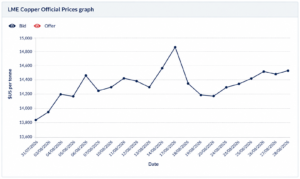
A recent Bloomberg report revealed that the metal has climbed about 15% since the beginning of the year and recently traded above $14,300 a metric ton on the London Metal Exchange, close to its record high of $14,527.50 reached earlier this year. The rally has been supported by strong demand, limited mine growth and growing concerns about where future supplies will come from.
However, the price surge is not simply an AI trade.
Copper is fundamental to the global economy because it moves electricity through power grids, buildings, factories, electric vehicles and renewable energy systems. Artificial intelligence is adding another fast-growing source of demand, but its bigger significance is that it highlights just how much new electricity infrastructure the world will need.
That could keep copper in the spotlight well beyond the current price cycle.
Copper Demand Is Heading Higher:
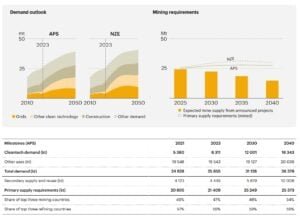
In a separate analysis, S&P Global expects global copper demand to rise from about 28 million metric tons in 2025 to 42 million tons by 2040, representing a 50% increase. The growth will come from several directions.
Traditional economic activity remains the largest source of copper consumption, particularly as developing economies urbanize, incomes rise and electricity use increases. At the same time, electric vehicles, renewable power, grid expansion and industrial investment are adding new demand.
Data centers are becoming another important contributor.
The distinction matters because AI is unlikely to account for most of the world’s future copper consumption. Instead, it is adding demand to an already expanding market. The resulting pressure grows when combined with the long lead times required to develop new mines.
- S&P Global estimates that the copper market could face a supply shortfall of about 10 million metric tons a year by 2040, equivalent to nearly 24% of projected demand. This gap underpins the longer-term copper investment story.
AI Is Creating a New Copper Demand Cycle
The rapid construction of AI data centers is making copper’s role even more important. AI systems require enormous computing capacity, and that capacity requires electricity. Data centers consequently need extensive electrical infrastructure, including power distribution equipment, cooling systems, cabling, and connections to the wider grid.
S&P Global estimates that data centers consumed around 1.1 million metric tons of copper in 2025. By 2040, that figure could reach 2.5 million tons a year, more than doubling over the period. Depending on how quickly data centers expand and how much copper their designs require, the research firm places the 2040 range between 1.7 million and 2.7 million tons.
The numbers become more striking when measured against individual facilities.
S&P Global estimates that data centers can require roughly 30 to 40 metric tons of copper per megawatt of capacity, with some AI-focused facilities using even more. That means a 100 MW AI data center could require several thousand tons of copper before accounting for the broader infrastructure needed to supply its electricity.
This is why the AI story extends well beyond the server room.
A new data center can require new substations, transformers, transmission lines and generation capacity. If renewable energy is used to supply that electricity, additional copper is needed across the generation and grid infrastructure.
In effect, AI can create copper demand twice: inside the data center and across the power system supporting it.
The Supply Side Is the Bigger Problem
Demand growth would be manageable if miners could respond quickly. Copper, however, is not a commodity that can simply be produced more quickly when prices rise. New mines can take many years to permit, finance and build. Existing operations also face declining ore grades, aging infrastructure and geopolitical risks.
Analysts expect mined copper production to increase in the near term before declining later in the next decade. Without substantial new projects and expansions, the industry will struggle to keep pace with consumption. Even recycling, to become increasingly important, is unlikely to close the entire gap.
That creates an unusual setup for a commodity market.
Copper prices are already high enough to encourage investment in new supply, yet the response from mining companies cannot happen overnight. If demand continues to rise faster than available production, prices may need to remain elevated for long enough to justify the enormous capital required to develop new mines.
Copper Demand and Mining Requirements: IEA Analysis
Why Copper Prices Are Already So High
The current rally also reflects more immediate market forces.
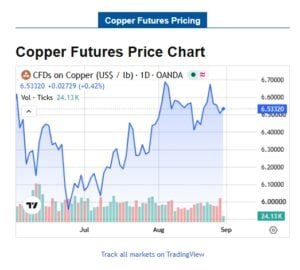
Copper has been pulled higher by concerns over future U.S. tariffs, which have encouraged traders to move metal into the United States ahead of potential restrictions. That has tightened availability elsewhere even though the global market was previously expected to remain in surplus this year. Reuters reported that LME copper reached $14,343 a ton in August as inventories outside the U.S. became tighter.
This distinction is important for investors.
Today’s price does not necessarily mean the world is already experiencing a structural 10-million-ton shortage. Some of the recent rally reflects inventory movements, trade policy and expectations about future supply.
Nevertheless, those short-term factors are occurring against a much more bullish long-term backdrop.
If mine production struggles to keep pace with electrification, grid investment and data center construction, the market could remain structurally tight even after today’s tariff-related distortions disappear.
How Investors Can Play the Copper Story
The investment case goes beyond simply buying copper. Bloomberg recently examined several ways investors can gain exposure to the theme, including copper futures, mining companies and businesses that supply the infrastructure required by electrification and data center expansion.
The most direct route is a copper-linked fund such as the United States Copper Index Fund, or CPER, which invests in copper futures. However, futures-based products can experience differences between their returns and the spot price because contracts have to be rolled as they expire.
Copper miners offer another approach, but with greater company-specific risk. Higher copper prices can improve miners’ margins, yet investors also face operational problems, geopolitical exposure, permitting risks and rising development costs.
There is also a broader infrastructure opportunity.
Companies supplying electrical equipment, grid technology, cooling systems and data center infrastructure can benefit from the same investment cycle without relying entirely on copper prices. That makes the infrastructure angle potentially more diversified than simply betting on a higher metal price.
Copper’s Bigger Story Is Electrification
AI may be the newest reason to watch copper, but it is not the only one. The world is building more electric vehicles, renewable energy projects, factories, homes and data centers while upgrading power networks that were designed for a very different electricity system. All of those trends compete for the same finite supply of a highly conductive metal.
That is why the copper market could remain tight even if the AI boom eventually slows. S&P Global’s forecast captures the scale of the challenge: demand could rise 50% by 2040 while supply struggles to keep pace, leaving a potential 10-million-ton annual shortfall.
For investors, the opportunity is therefore less about predicting whether AI will create the next copper supercycle and more about recognizing the infrastructure investment required to support an increasingly electrified economy.
AI is accelerating that investment. And copper is what helps make it possible.
- ALSO CHECK: Copper Prices Enter a New Bull Market: Chile Raises Price Forecast as AI and Clean Energy Fuel Demand
The post Why Copper Could Be One of the Biggest Commodity Bets of the AI Era appeared first on Carbon Credits.


