
More spray adjuvants are available than ever before, but data on their effectiveness and compatibility with other products is harder to find.
Why it matters
Sprayer tank-mix options are more diverse than ever, and each new adjuvant adds the potential for an adverse reaction in the tank. With no independent Canadian research program to lean on, growers buying new adjuvants may have to accept more on-farm trial and error than they’d like.
According to one veteran application expert, Canadian farmers and sprayer operators purchasing new adjuvants may have to accept more on-farm trial and error than they would otherwise like.
Prove it works
Adjuvant products are added to sprayer mixes to change the behaviour of a spray and fall under two subgroups: utility modifiers and activators.
Tom Wolf, Agrimetrix Research & Training, and Sprayers101 application specialist, says the former subgroup includes surfactants, crop oils, and methylated seed oils — all products designed to improve the efficacy of pesticides.
Utility modifiers, by contrast, include water conditioners, pH adjusters, low-drift adjuvants, and so on.
Wolf says the adjuvant business has been thriving for decades. It began with the use of liquids, such as diesel fuel, to dissolve oily molecules, such as those of 24D. The reason there were relatively few historically was due to Canada’s unique product registration requirements.
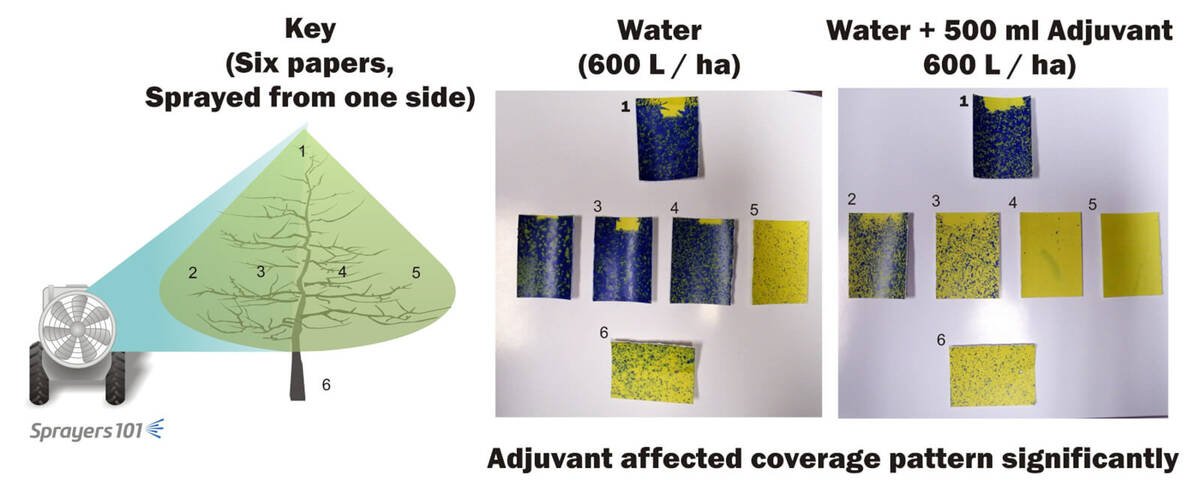
What Canada’s rules do (and don’t) guarantee
As a condition of product registration, the Pesticide Regulatory Directorate (formerly known as the Pest Management Regulatory Agency) requires pesticide developers to provide evidence of the lowest possible effective dose. This is done, says Wolf, to limit unnecessary risk to the environment by allowing a higher dose of the product than actually required. The same stipulation applies to surfactants and other adjuvants in the activator category, where developers must prove the product improves the pesticide’s performance.
“It makes us unique,” says Wolf. “In the United States, you don’t have to provide that information. People find out for themselves if it works or not. The thinking is (that) the market determines it. Word will spread.”
He adds that third-party adjuvants are often produced by smaller companies with fewer research and development resources. For example, if Bayer produces a glyphosate, the company recognizes the competition space, including from other glyphosate and aftermarket adjuvant businesses.
“It motivates you to bring this product to market with all the best adjuvants you can find,” Wolf explains. “You don’t want to leave performance on the table for another company to benefit. If you buy Centurion, for example, you’re going to get Amigo with it.”
No warranties
Due to regulatory barriers, growth in the adjuvant market is largely attributed to an increase in utility modifiers, although Wolf says there is now some growth in third-party activators. Methylated seed oils, particularly, are a good example of surfactants that can increase uptake in plant leaves, but which have historically not been available in Canada.
“We started to see some of these oils on labels here. That’s opened the door for similar products to come in. So now we have a fair number of methylated seed oils,” says Wolf. A key concern is that the marketing of such products may include use cases for which the product was not registered.
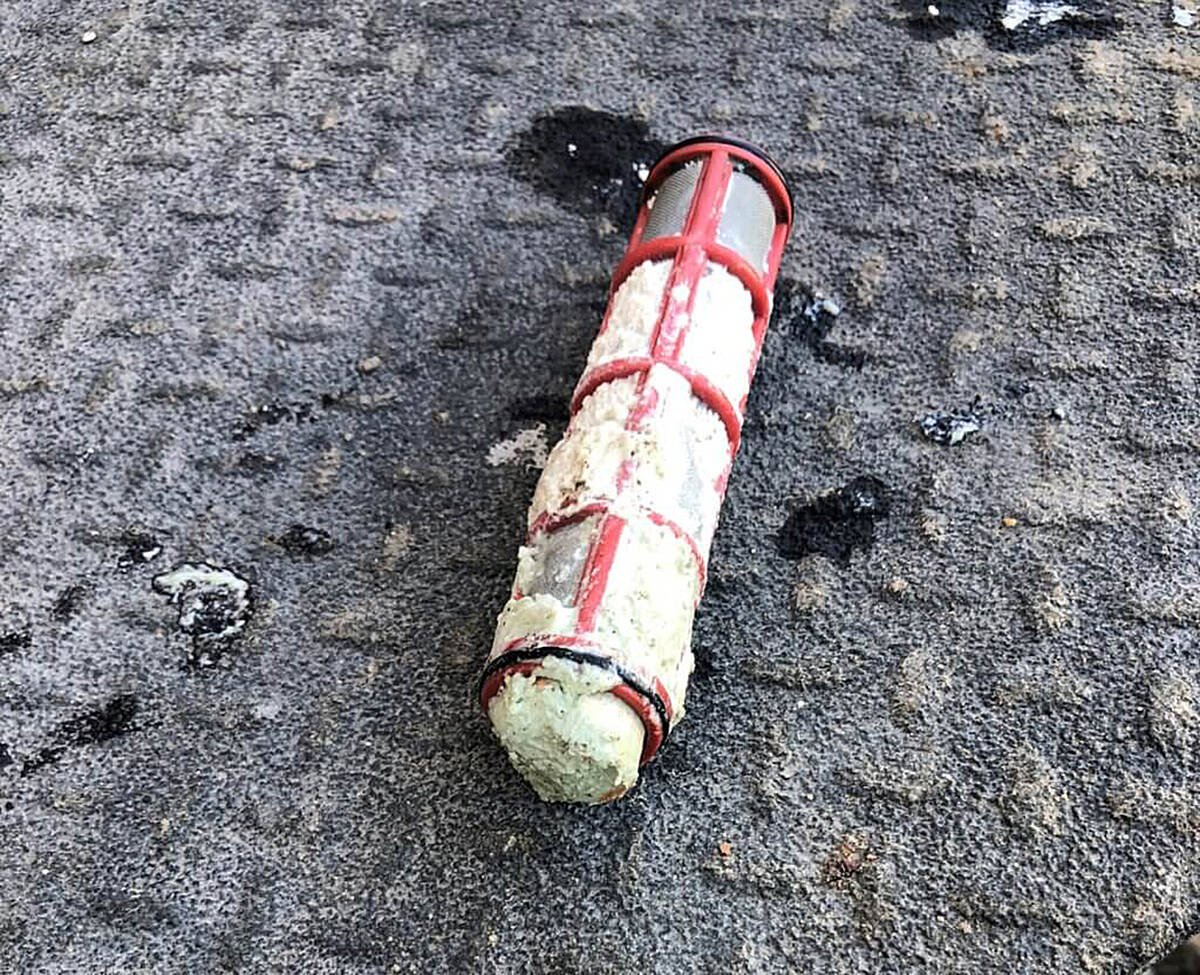
The good news is that surfactants are inherently amenable by nature, being both water- and oil-soluble, thereby decreasing the risk of incompatibility with pesticides and other adjuvants. Where the trouble could start is when those methylated seed oils and other surfactants are added to tank mixes with multiple different active ingredients.
“We have more complicated pesticide mixtures than ever before. The more you add things to the tank, the less able you are to predict what will happen when you add another ingredient,” Wolf states. “You may end up with a mess on your hands. In the old days, when it was all just glyphosate, you wouldn’t have a problem with it.”
The best guidance is experience, mixing order and from manufacturers, says Wolf, adding that all the products have slightly different chemistries and react in different ways.
“It would be wonderful if we had independent research on what we can and can’t do. We don’t have that. It’s ad hoc,” he shares. “We don’t have a research program in Canada at any level. There’s nothing wrong with ground source research, but there’s no guarantees and no warranties.”
Uncharted waters
If you find yourself in uncharted waters, Wolf recommends conducting a jar test – mixing all the ingredients and water you intend to use, and at the intended temperature – to check compatibility. If precipitates form, be wary of over-agitating the mixture, because it can sometimes create an emulsion “like mayonnaise.”
- Combine all the products and water you plan to use, in the mixing order you’ll use
- Match the intended spray temperature — compatibility can change with it
- Watch for precipitates forming in the jar
- If they do, go easy on agitation: over-mixing can turn it into a mayonnaise-like emulsion
The underlying point, for Wolf, is that new adjuvants should not be written off as useless or harmful. Indeed, they could be very effective. Caution, however, is required.
“Agriculture is empirical. Farmers are basically scientific practitioners. In this case, in the adjuvant case, unfortunately, there’s an absence. We don’t have research programs.”
The post Why new spray adjuvants leave more testing up to you appeared first on Farmtario.


