
Digestible fibre intake could be a game changer for feed efficiency, according to researchers.
Rumination is key to complex bovine digestion. But PhD student Megan Dubois, alongside her supervisor, Gabriel Ribeiro at the University of Saskatchewan, is looking at just how important rumination is, and why some cattle digest fibre better.
WHY IT MATTERS: Forage quality is expensive and slow to improve. Picking cattle that pull more energy out of the same feed is a lever producers can pull now, and the early work suggests the efficient ones also belch less methane per kilogram eaten.
“When you look at forage quality, it’s super important for productivity in general, but the thing about it is (that it is) very inconsistent. It’s difficult for us to improve, so what we’re looking at is seeing if we can select for animals that are better at digesting that fibre,” Dubois said at the Livestock and Forage Centre of Excellence field day.
Ranking heifers by what they digest
Dubois became interested in this area of research because of its potential to improve overall productivity on cattle operations. Forage quality is very important to cattle productivity; however, it can be difficult and time-consuming to improve.
That’s why Dubois’s research focuses on identifying cattle better at digesting fibre.
“The whole idea is basically so that we can select for animals that can do more with less, so it makes it a little bit easier. You don’t have to manage your forage and all your feeding programs as much, and (you are) able to improve your steers every year.”
The initial study took place when Dubois was in her master’s program. Researchers monitored feed intake in 64 heifers fed high-forage diets.
Then, they collected fecal samples to analyze for apparent total tract digestibility. Using this information, the animals were ranked based on the amount of digestible fibre they consumed relative to their body size. Digestible fibre intake is referred to as DFI.
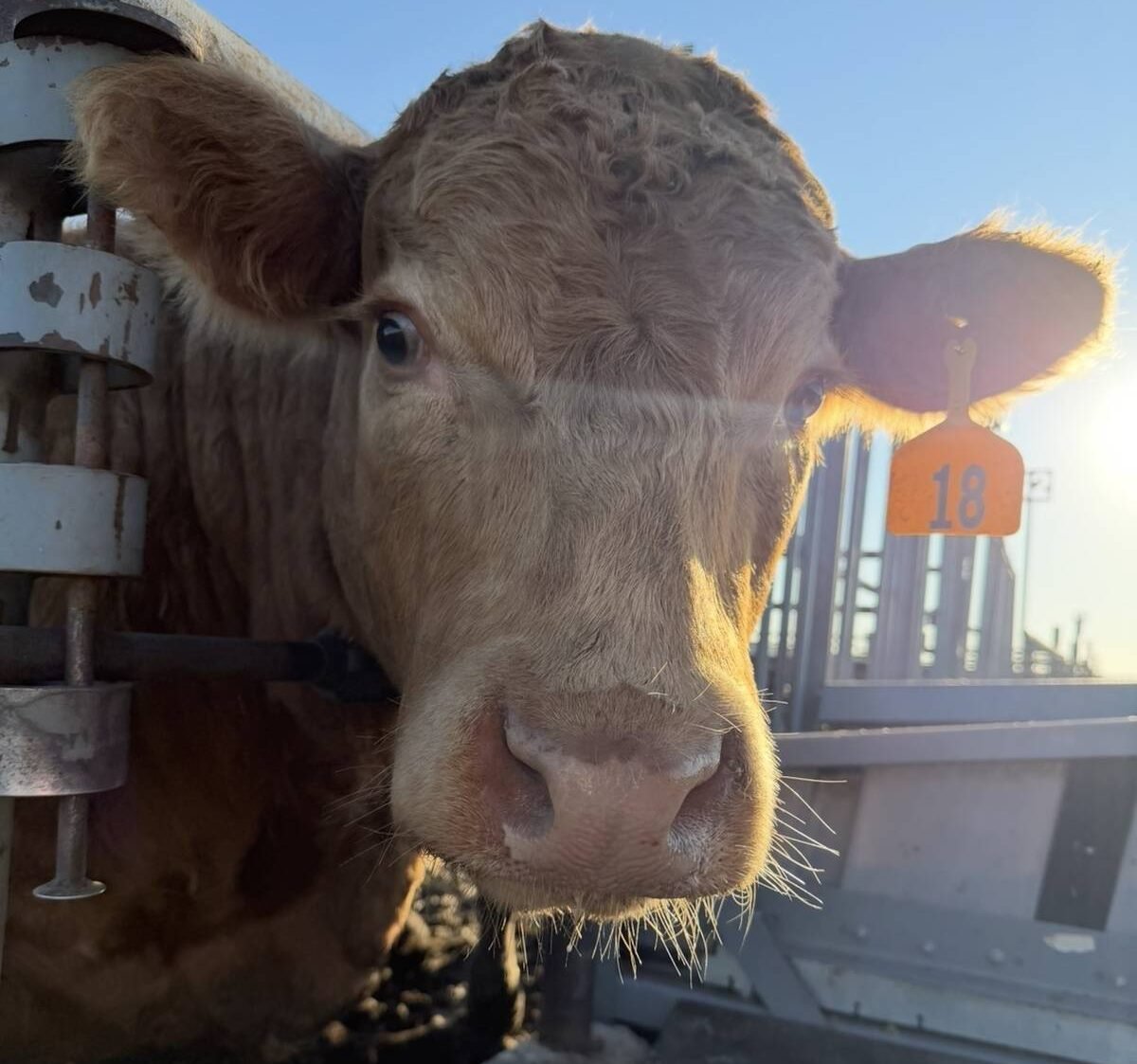
The research showed the high-DFI heifers consumed more dry matter than the low-DFI heifers, indicating greater feed intake among the more fibre-efficient cattle.
Less methane per kilogram of feed
Then, they took the eight most efficient animals and the eight least efficient animals and used them in another study. This study looked at their methane emissions using a GreenFeed system, which is an automated trailer that measures enteric methane and carbon dioxide emissions. This is done when livestock enter the trailer and voluntarily eat small feed treats.
Results from that study showed high-DFI cattle produced the same amount of methane as the other group but produced 16 per cent less methane when they looked at it in grams per kilogram of dry matter intake.
“That’s not something that’s expected,” Dubois said. “Normally if they’re eating more, we expect them to produce more methane overall. But yeah, kind of saw the opposite result there.”
Though more research will need to be done to figure out exactly why this phenomenon has occurred, Dubois speculates that for the high-DFI cattle, faster feed passage through the digestive system may influence methane production by changing how long fibre is available for microbial digestion in the rumen.
Other factors, including rumen microbes and genetics, may also play a role, so more research is needed.
A few more studies were conducted on those heifers. First, they fed them the same diet as they had during the selection period and then changed their diets to see what effect it had.
More time chewing, less time at the bunk
Dubois said they took rumen samples to look at the microbiome, alongside a video to see how much time they spent eating, ruminating, sleeping, drinking water, et cetera.
“So those high-DFI heifers … they actually spent more time ruminating than they did feeding at the bunk. So, that could be one way of explaining (how it is) possible that they’re spending more time breaking down the fibre, basically so that the microbes that are in the rumen can digest that fibre better and create more energy for the cattle.”
Dubois said the high-DFI heifers were slightly heavier and achieved higher average daily gains by the end of the growing phase. She observed differences in their microbial communities and microbial capacity, providing insights and new directions for future research.
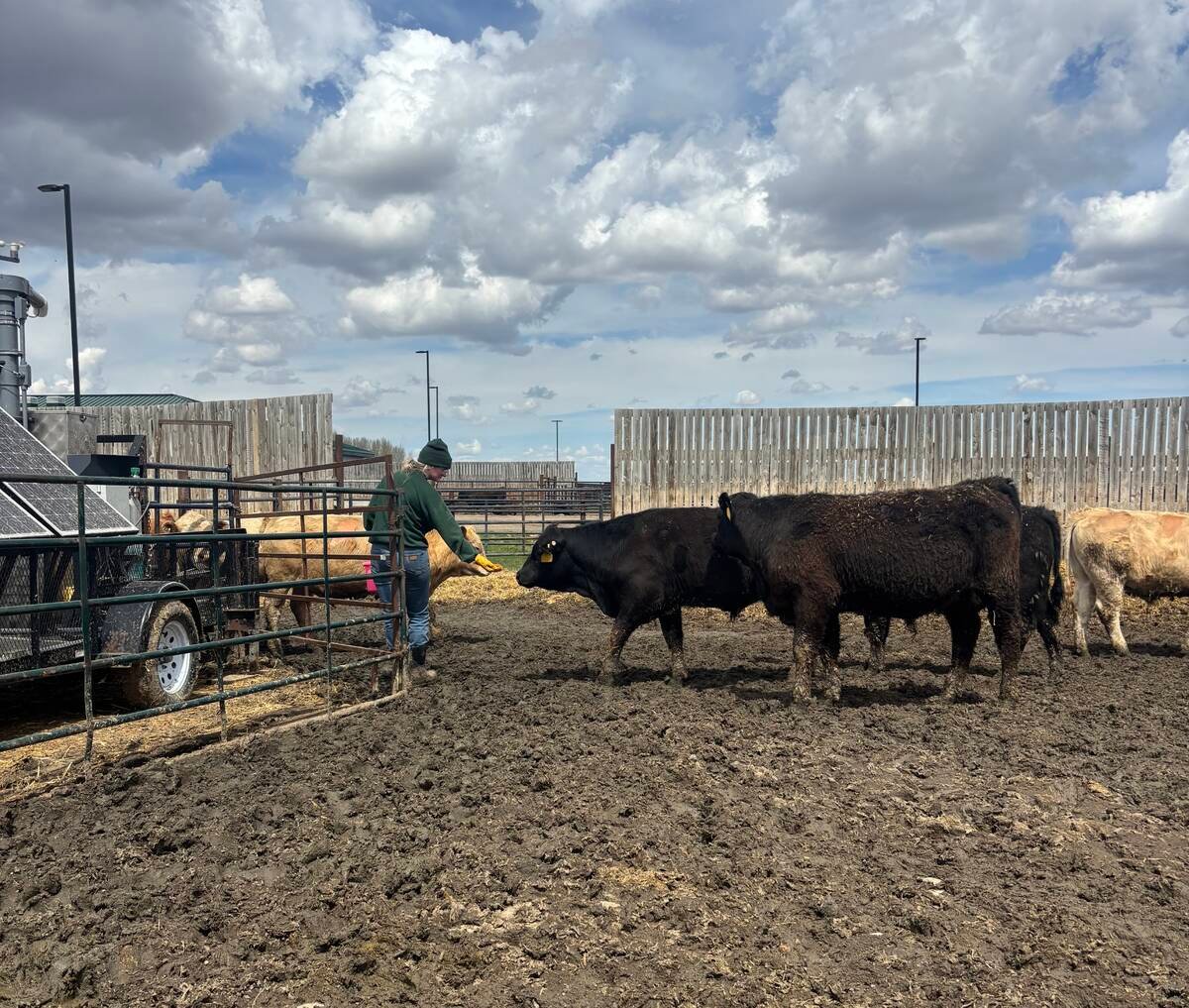
Photo: supplied
Scanning the genome for fibre genes
Now working on her PhD, Dubois has continued this research. For the next two years, she and her group of researchers have a group of 100 steers they are backgrounding and finishing. They will use the GrowSafe System, which reads the RFID tags when the cattle enter individual feed bunks. Then they can know how much they’re eating at a time and what times they’re eating.
They will be using the GreenFeed system again to measure methane emissions, and they will again be taking fecal samples and rumen samples.
Something new with Dubois’s PhD work is a genome-wide association study.
“Doing a genome-wide association study … so basically looking at the entire genome of each of these animals and seeing if we can possibly identify some specific genes that are associated with improved fibre digestion efficiency,” Dubois said.
In an interview, Dubois speculated that differences in fibre-digestion efficiency may be linked not only to genetics but to phenotypic traits too, including feeding and activity behaviours. Her hope is that they can get a better idea of what influences efficiency, and if those traits are heritable.
“Whether there are certain things that are causing differences, so we’ll start here, see what we can find.”
Dubois hopes to have preliminary results in a couple of years.
She said overall, the hope for this study is to lower the cost of production.
Funding for the project comes from the Beef Cattle Research Council (BCRC), Results Driven Agriculture Research (RDAR), Saskatchewan Cattle Association and Agriculture and Agri-Food Canada’s Agricultural Methane Reduction Challenge, and is in place for the rest of her research.


