

Not everything with a recycling symbol can be recycled in your bin.
It’s one of the most common misunderstandings in recycling: If it has the recycling symbol, it must go in the recycling bin… right?
Not necessarily.
The triangle of chasing arrows and even the word “recyclable” can be misleading. These labels are often based on what could be recyclable somewhere—not what your local program can actually accept.
That’s where a lot of confusion starts.
Why “Recyclable” Doesn’t Always Mean Recyclable Here
Recycling is a local system. What works in one city may not work in another.
For an item to be accepted in a curbside recycling program like Sioux Falls, three things need to be in place:
- Sorting capability – Can the material be separated correctly at the recycling facility?
- Processing viability – Is there a reliable and cost-effective way to recycle it?
- End market demand – Is there a manufacturer willing to buy and use that material?
If any one of those pieces is missing, the item can’t be recycled locally—even if it technically could be recycled somewhere else.
When those items are placed in the bin anyway, they become contamination. That can:
- Jam or damage equipment
- Slow down the sorting process
- Increase costs for everyone involved
- Lower the value of good recyclables
What the Recycling Triangle Actually Means
The Universal Recycling Symbol
The triangle symbol is widely recognized, but it doesn’t have one single, consistent meaning.

It can be used to indicate:
- The item is recyclable in some systems
- The item is made with recycled content
- The item may be accepted through a special program
That last one is where confusion often happens.
Some packaging is labeled “recyclable” because it can be sent to a specialty program like TerraCycle. These programs require you to collect and mail items separately…they are not part of your curbside recycling. But most people don’t see that distinction. They see the symbol and assume it belongs in the bin.
Why the Symbol Can Be Misleading
Packaging decisions are made at a national or global level, while recycling programs operate locally.
That means:
- A package might be labeled “recyclable” based on availability somewhere
- Your local system may not have the equipment or market to handle it
- The label doesn’t account for real-world conditions like contamination, size, or sorting limitations
There are guidelines from the Federal Trade Commission (FTC Green Guides) that aim to reduce misleading environmental claims, but labeling is still not always clear to the average person.
What About the Plastic Numbers?
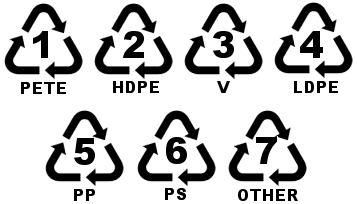
You’ve probably seen numbers like 1 through 7 inside the triangle.
These are called Resin Identification Codes (RICs). They were created for manufacturers and recyclers, not for consumers making recycling decisions at home.
Here’s what’s important to know:
- The number tells you the type of plastic, not whether it’s recyclable
- The same number can be used on items that are recyclable and not recyclable
- Shape, size, and material type matter more than the number
Many communities, like Sioux Falls, avoid talking about numbers at all to avoid using numbers in public guidance. It tends to create more confusion than clarity.
Why Shape Matters More Than Symbols
At a Material Recovery Facility (MRF) like Millennium Recycling, items are sorted using a combination of equipment and manual review. Sorting systems are designed to recognize common container shapes, not every type of packaging.
That’s why the general rule is: Focus on the shape—not the symbol
Accepted items typically include:
- Bottles (water, soda, etc.)
- Jugs (milk, detergent, etc.)
- Tubs (yogurt, butter, etc.)
These item move well through sorting equipment, are made from materials with established markets, and can be processed efficiently and consistently. Items that don’t fit this system—like flexible packaging, pouches, or multi-layer materials—are much harder (or impossible) to sort and recycle locally.
A Real-World Example
Take something like a fruit cup or snack container. It might have a recycling symbol, include a plastic number, and even be labeled “recyclable”… but if it’s too small, made of mixed materials, or not part of the accepted container shapes…it likely does not belong in your recycling bin.
HOW AM I SUPPOSED TO KNOW!?!
We are well aware of the confusion that recycling labeling causes and understand the frustration. To help you figure out what you can and can’t recycle, follow these steps:
- Look at your local guide. If the item in question is not on the YES list, it’s probably not recyclable in your area.
- Use the BINfluencer “What Goes Where” tool. It’s a fast, free, and locally correct answer on anything you’re not sure about.
- Ask us or your hauler. If you’re not sure about something based on the guide, just ask! At Millennium, we are happy to answer questions all day long through our facebook page and website contact form.
We are here to help and want you to recycle everything you possibly can while avoiding what you can’t, making the entire process more efficient and beneficial for everyone.
The post Why something marked ‘recyclable’ sometimes isn’t… appeared first on Millennium Recycling.


