

The 2026 holiday shopping season is soon to be upon us, with gift buyers and bargain hunters perusing stores in person and online. Behind the scenes, the US freight system has been working hard to transport the goods and gifts, traveling mostly by truck as they make their way through ports, warehouses, and highways.
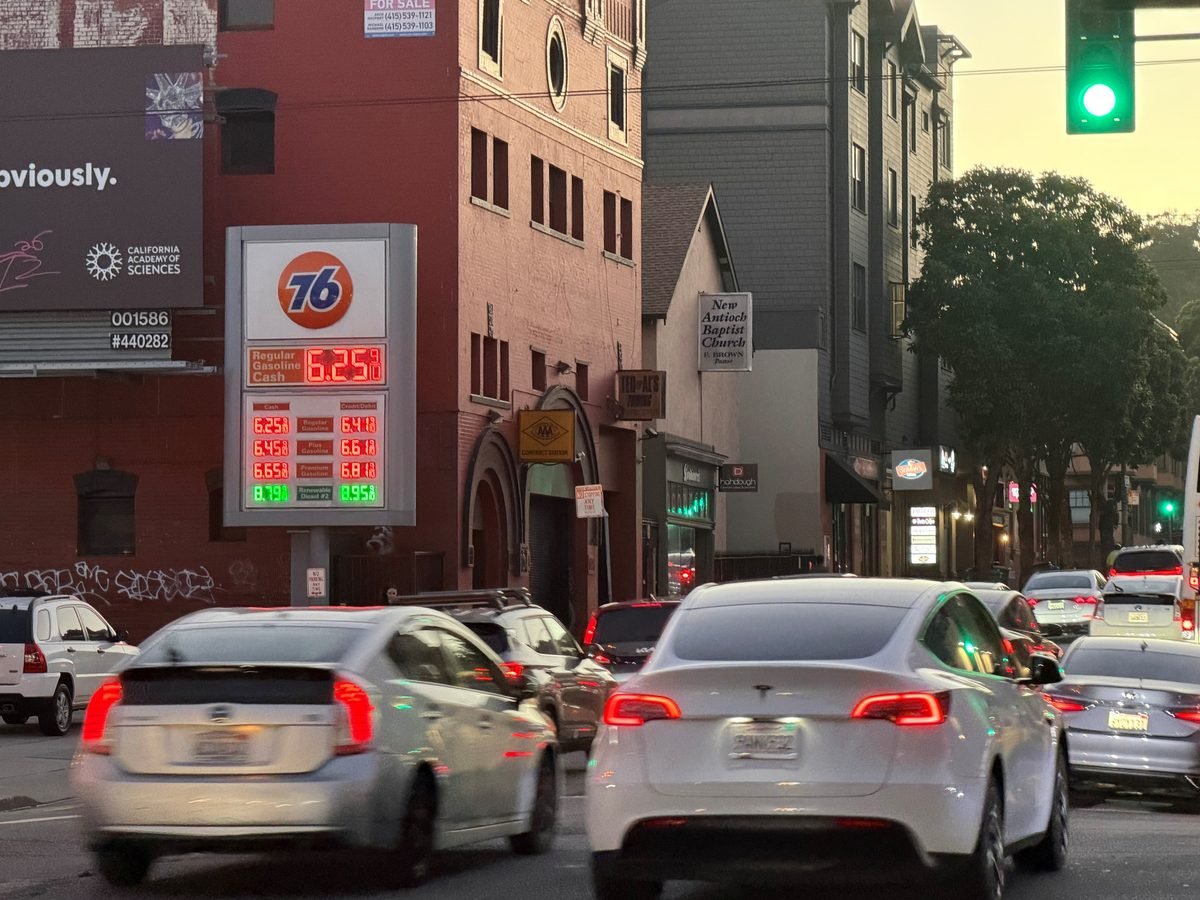
So, what effect will the rising price of gasoline and diesel fuel have on the year’s biggest shopping season? The historic shock in prices at the pump has driven cost increases for the goods consumers buy throughout the economy, including holiday gifts, because costs to produce and ship goods have increased. Between January and October, the average national price for a gallon of diesel rose nearly 80 percent.
But it doesn’t have to be this way. The trucks moving and delivering goods throughout the economy don’t have to be subject to the high cost and volatility of the fossil fuel market. Globally, businesses are transitioning their fleets to zero-emission trucks. In addition to their public health and environmental benefits, zero-emission trucks (and battery-electric models in particular) offer significant reductions in operating costs compared to those powered by fossil fuels. This can help protect producers and consumers from expensive and volatile fuel prices and unhealthy air.
That can help us all breathe a bit easier.

Higher fuel costs show up at the checkout
This year’s holiday shopping season is marked by several unsettling trends – record high fuel prices and the second-largest monthly jump in the Producer Price Index (PPI) since 2010 as well as the largest 12-month increase in the PPI since 2022. This jump in the PPI, the measure of the costs incurred by US businesses to make, ship, and sell their goods, was meaningfully driven by the single largest month-to-month increase in producer energy costs in the past decade and a half. Additionally, September 2026 saw the third largest increase in transportation and warehousing costs under the PPI since 2010, only behind April 2026 and March 2022 – the months following the beginning of the current US-Iran conflict and Russia’s war on Ukraine, respectively.
While Santa’s reindeer are primarily fueled by carrot snacks during the holiday season, according to the Alaska Department of Fish and Game, the rest of our nation’s freight system is most often powered by dirty and increasingly expensive fossil fuels. In September, diesel fuel prices hit record highs – topping as much as $9 per gallon at some retail gas stations. Diesel-fueled trucks are the workhorse of the US freight system, carrying more freight by weight than all other transportation modes combined. Each year, tractor trucks consume over 27 billion gallons of fuel, and fuel is the second-largest cost input to trucking after labor.
Higher fuel costs can ultimately be passed along to consumers and contribute to higher price variance for goods. This is particularly the case with certain food prices. A 2023 study in Energy Economics found that fuel price shocks accounted for nearly 20 percent of the price variance of cereals. Unfortunately, this means that even the reindeer aren’t immune to fossil fuel volatility.
Consumers may never see a fuel surcharge listed on a holiday gift, but fuel costs are embedded throughout the supply chain. When diesel prices spike, it becomes more expensive to move products between ports, warehouses, stores, and homes, even for carriers that hedge fuel prices through bulk or futures fuel agreements. Powering more of those trips with comparatively stable electricity can reduce one source of sudden cost pressure before products reach shopping carts.
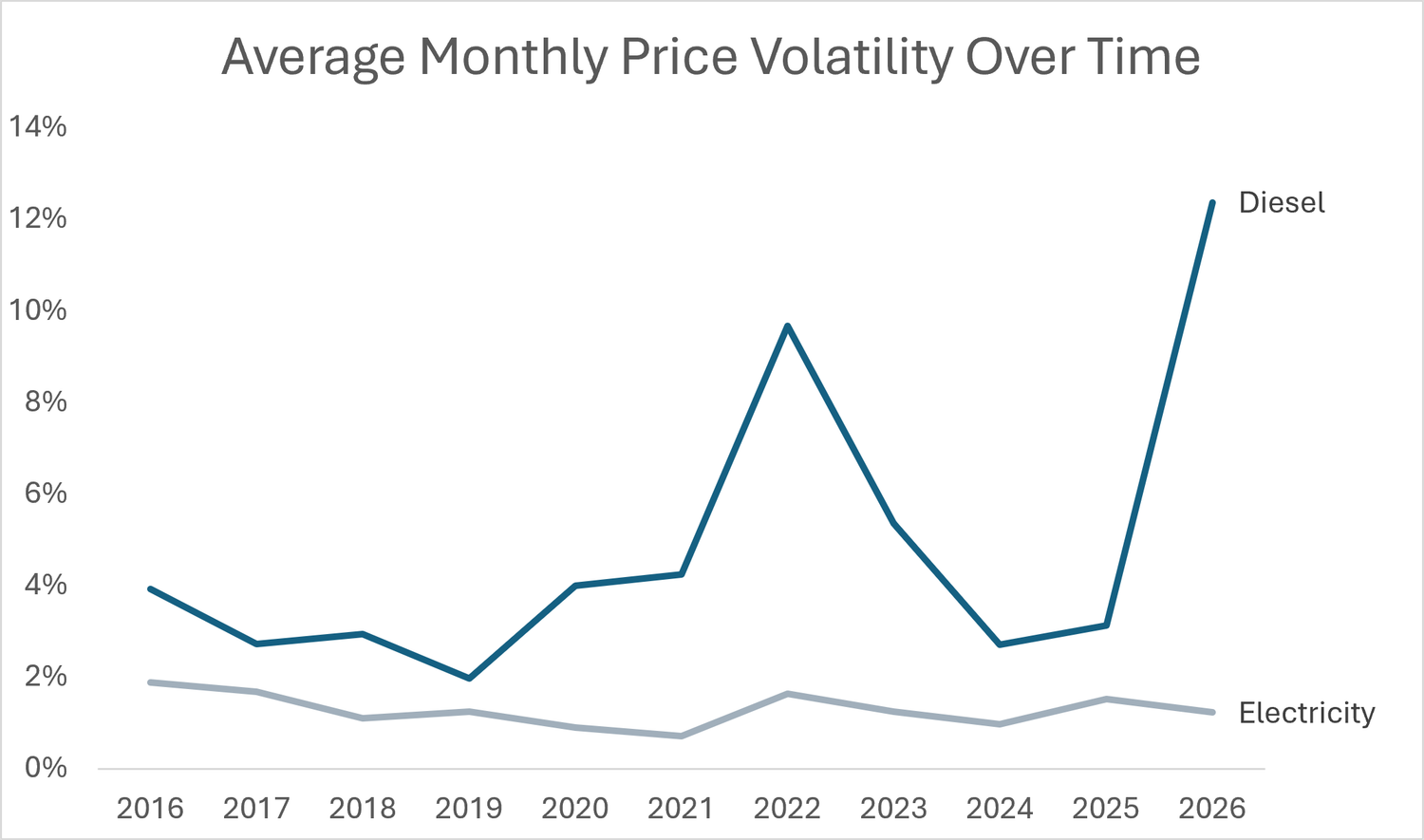
Battery-electric trucks can provide far greater fuel cost predictability while also offering significantly lower per-mile fuel costs than fossil-fueled trucks. Between January 2016 and September 2026 (the most recent data month at the time of this publication), annual diesel price volatility averaged 3.75 times that of commercial electricity prices, according to our analysis of Federal Reserve and Energy Information Administration data. During this time, diesel prices saw a monthly spike of greater than 10 percent seven times, including four times in 2026. Diesel prices between February and March 2026 saw the highest price spike by far at over 32 percent. By contrast, the highest spike in the national average commercial electricity price in the last decade was 4.4 percent.
While it’s true that both diesel and electricity prices have increased this year, the magnitude of those increases is hardly comparable. Between January and September, the average national price for a gallon of diesel fuel rose nearly 80 percent compared to just two percent for average commercial electricity rates.
Freight-adjacent communities pay the price with their health
Consumers are paying for these higher petroleum prices at the pump and checkout lines, while oil companies and shareholders are seeing a windfall: both ExxonMobil’s and Chevron’s Q3 2026 earnings were more than double those of Q3 2025.
But the costs of our fossil fuel-powered freight system extend far beyond our wallets.
Fossil-fueled medium- and heavy-duty trucks are also the nation’s largest source of smog-forming pollution and account for the largest share of the nearly 10,000 premature deaths associated with transportation pollution in the US each year, despite making up just 13 percent of the vehicles on our roads.
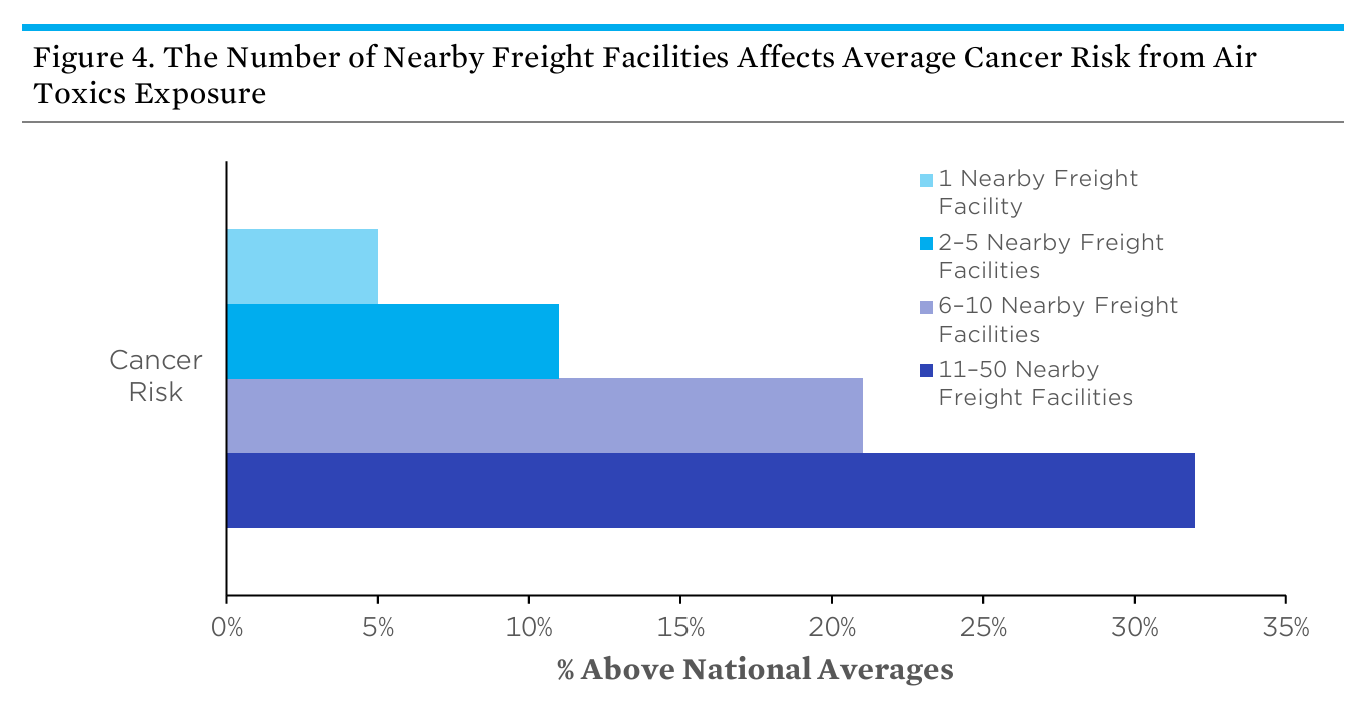
Trucks are a particularly significant source of pollution in areas near the warehouses and logistics centers that our holiday packages travel through. For the 66 million people living near freight corridors, warehouses, ports, and railyards nationwide, the price of a fossil fuel-powered freight system is too often paid for with their health. Recent UCS research found that the 1.7 million people living near 10 or more freight facilities face cancer risk from air toxics that is 32 percent higher than the national average.
Electric trucks can offer both public health and economic protection
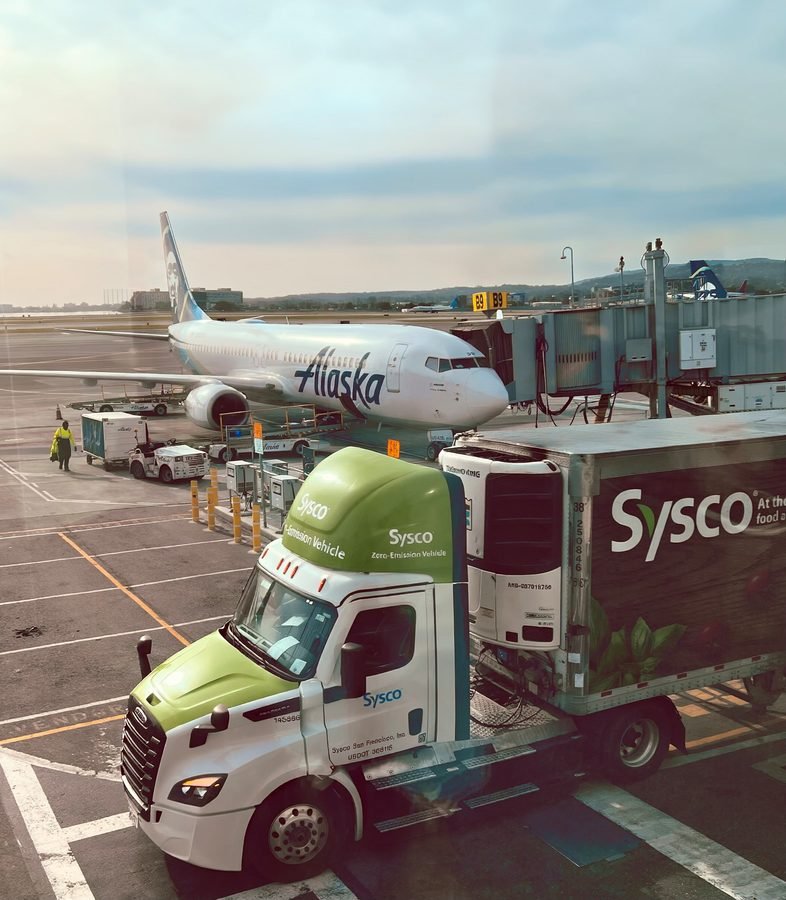
While freight operators cannot control geopolitics and fuel prices, they can control which fuels they choose to use. Increasingly, freight operators are considering the switch to electric trucks, which offer more stable and affordable fueling costs with far less exposure to volatile global oil markets. FedEx, for example, recently announced plans to add 2,000 electric delivery trucks to its growing zero-emission delivery fleet.
The economics for zero-emission trucks are increasingly compelling – this is partially why we’ve seen continued adoption of electric commercial vehicles despite the current federal leadership’s best efforts to prolong our reliance on fossil fuels. Even states not typically thought of as electrification front-runners have seen meaningful growth in zero-emission delivery vehicles. In 2025, over 17 percent of new commercial vans in both Mississippi and Louisiana were zero-emission vehicles (ZEVs). In Georgia, nearly 35 percent of new commercial vans registered last year were electric.
California continues to lead the nation in overall deployments of zero-emission medium-and-heavy-duty vehicles, with zero-emission models accounting for over 24 percent of all new vehicle registrations in 2025. While this is a slight backstep from 2024 levels, California continues to see growth in the deployment of zero-emission tractor trucks. In California, ZEVs comprise around 8 percent of new tractor trucks registered in 2025, and it appears the momentum is just getting started. In the first three quarters of 2026 alone, California fleets applied for state clean truck incentives for more than 1,000 new electric tractor trucks – a clear example of growing interest and demand.
Momentum toward tractor truck electrification is picking up in other parts of the country as well. In September, Catalyst Mobility, a leading clean transportation nonprofit, announced that a group of major businesses, including Microsoft and Pepsi, placed a combined order for 2,500 battery-electric Tesla Semis – the largest single order of zero-emission trucks in US history. These trucks can travel up to 500 miles on a single charge at maximum legal capacity and regain 60 percent of range in a 30-minute charge. Earlier this year, Pilot Travel Centers announced a partnership with Tesla to install high-speed chargers for electric semi-trucks across major freight corridors in California, Georgia, Nevada, New Mexico, and Texas. The first of these stations are now operational.
Public policy is needed to overcome remaining barriers
Despite impressive momentum, private investments and market forces alone are unlikely to reliably electrify our freight system at the needed pace. The freight industry continues to face widespread adoption barriers, including higher upfront costs for many zero-emission truck models and lack of access to widespread, reliable commercial truck charging infrastructure. At the same time, consumers have limited ability to choose shippers committed to cleaner freight. We cannot simply toggle a “green delivery” option when shopping at a local store or online.
That’s where public policy comes in: to reduce barriers to electric truck adoption and accelerate the transition toward a cleaner, more affordable freight system.
At a time when the federal government’s support for freight sustainability and modernization has reversed and is undermining previous progress, state and local governments have the opportunity and responsibility to adopt and implement policies and programs that build momentum toward an electrified freight system. Specifically, they should accelerate zero-emission truck deployment where it is technically and economically feasible today, while addressing the technological and economic barriers that limit adoption elsewhere.
Policies and programs that drive electrification today while addressing barriers could include those that:
- Reduce upfront price barriers and accelerate the market for zero-emission trucks by reducing upfront price barriers through robust, predictable, and accessible incentives and innovative financing;
- Accelerate zero-emission truck charging infrastructure construction through targeted public investments and reduced barriers to operation;
- Encourage electric truck deployments in areas disproportionately impacted by freight pollution and where they are most likely to be successful through Indirect Source Rules, clean miles standards for freight vehicles, and zero-emission delivery zones.
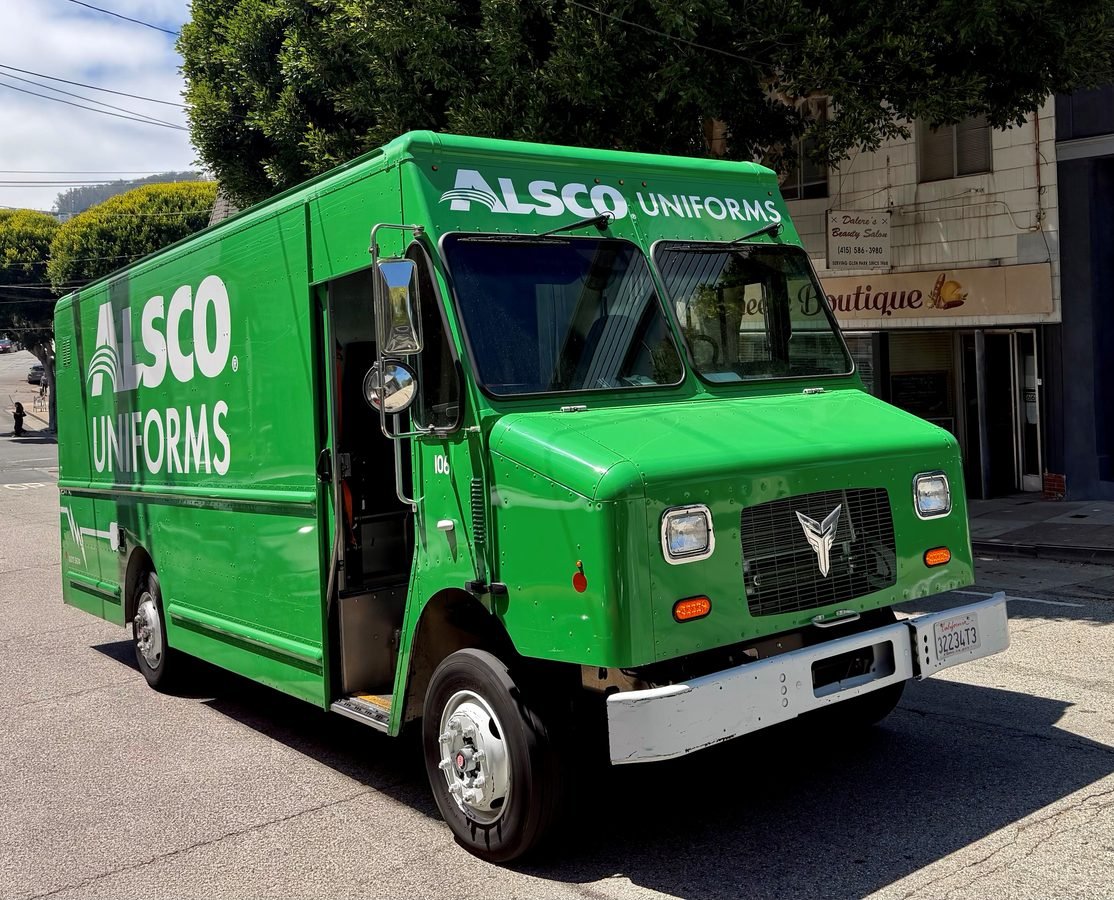
A better way to deliver
This holiday season, millions of gifts will move through a vast network of trucks, warehouses, and distribution centers before we give them to friends and loved ones. Increasingly, those trucks don’t have to run on diesel. Electric trucks offer a path toward a freight system that produces less pollution while reducing business and consumer exposure to the volatile global fossil fuel market.
However, widescale freight electrification is unlikely to occur at the pace needed without effective public policy. Smart public policies and programs can accelerate electric truck deployment where it already makes the most economic and environmental sense, while tackling the costs and infrastructure challenges that remain.
Consumers don’t always have the option or transparency to choose cleaner freight, but we can push our elected representatives to pursue policies and programs that deliver a more sustainable way to move the economy.
If you’re an early-career scientist, seasoned scientist, or technical expert, you can join our science network for opportunities to advocate for smarter transportation policies.


