

If you need a capable ute but don’t want to pay record-high diesel prices, then Chinese commercial vehicle brand JAC has something to tempt you.
The new JAC Hunter PHEV joins a growing number of plug-in petrol-powered utes that offer, in this case, a realistic and rather handy battery-powered driving range of about 75 to 80km from its 31.2kWh lithium iron phosphate battery.
Combine the battery with a 2.0-litre petrol engine (160kW and 370Nm) and max engine and electric motor outputs (front motor 130kW, 300Nm; rear motor 150kW, 340Nm), and the system can deliver a headline-grabbing total output of 360kW and 1010Nm.
READ MORE: Australia’s JAC Hunter PHEV tune goes global: Local engineering adopted for overseas markets
READ MORE: Australia’s cheapest PHEV ute confirmed from $49,988 as JAC Hunter targets BYD Shark 6 and GWM Cannon Alpha
READ MORE: 2026 JAC Hunter PHEV Review: Australia’s cheapest PHEV ute targets BYD Shark 6, GWM Cannon Alpha
2026 JAC Hunter X PHEV price and equipment
The JAC Hunter is available in two grades. The Hunter PHEV PRO is priced from $49,990 before on-road costs, while the X is priced from $54,844.
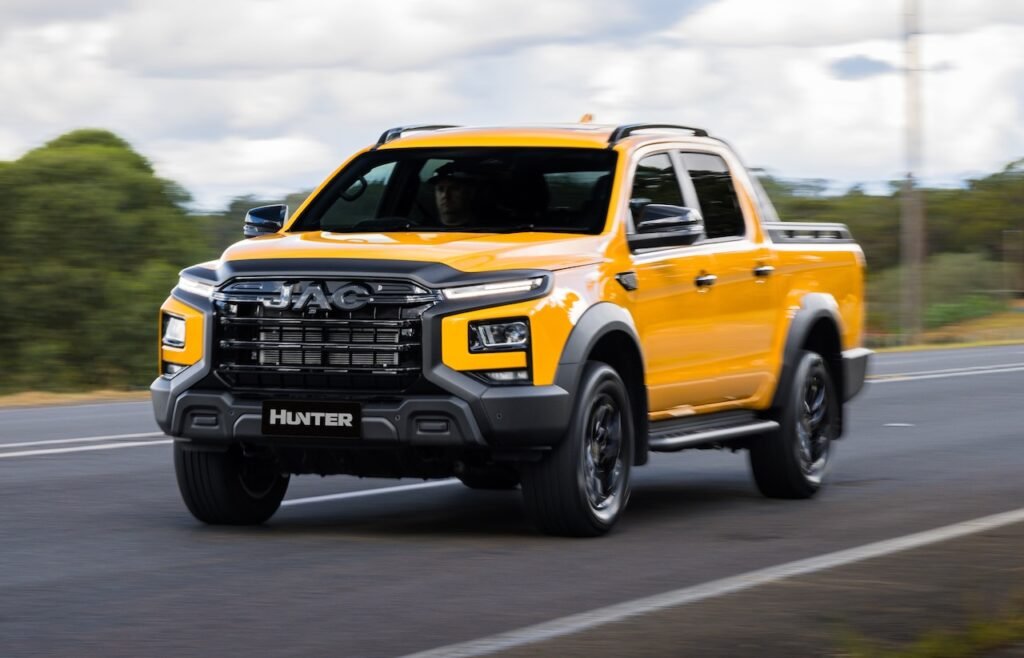
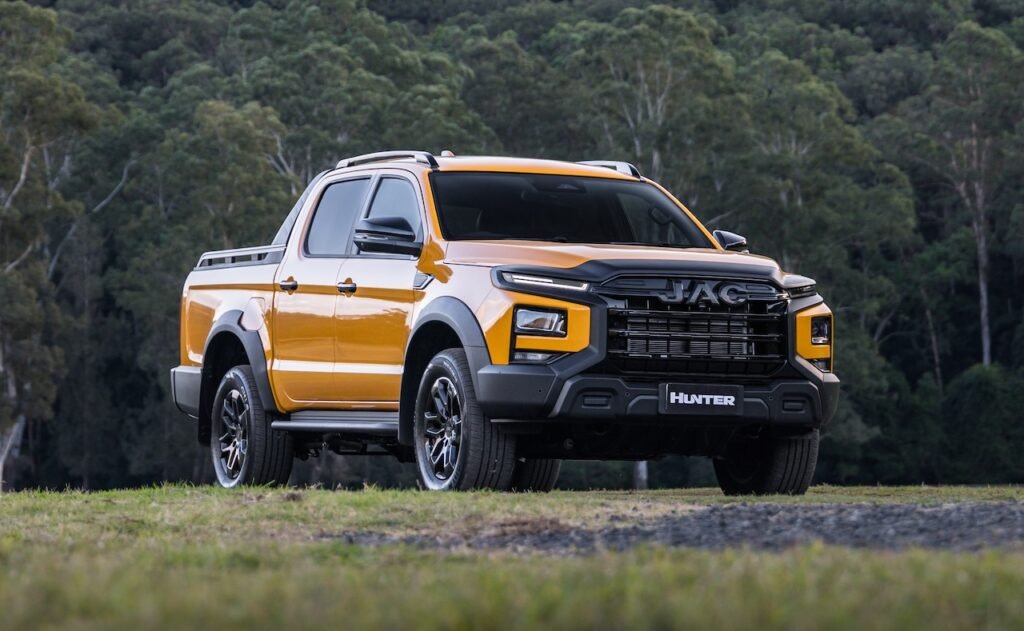
White exterior paint is standard, with the other five colours – including a rather on-trend Ochre – available for $595.
A cab-chassis version is likely to arrive by year’s end and drop the entry price to the range by at least a few thousand dollars.
Other highlights include 3500kg towing, a five-star ANCAP safety rating and a full-size spare neatly tucked under the tray.
The Hunter can also carry a load in the back, with the tub able to handle an impressive 915kg and accommodate an Aussie pallet. It also comes with a light that can be turned on using the key fob or by a button on the dash.
The tailgate has an in-built torsion bar that makes light work of opening and closing it. It’s not fully damped, so unless you hold on it falls with a thud. A spray-in bedliner is standard.
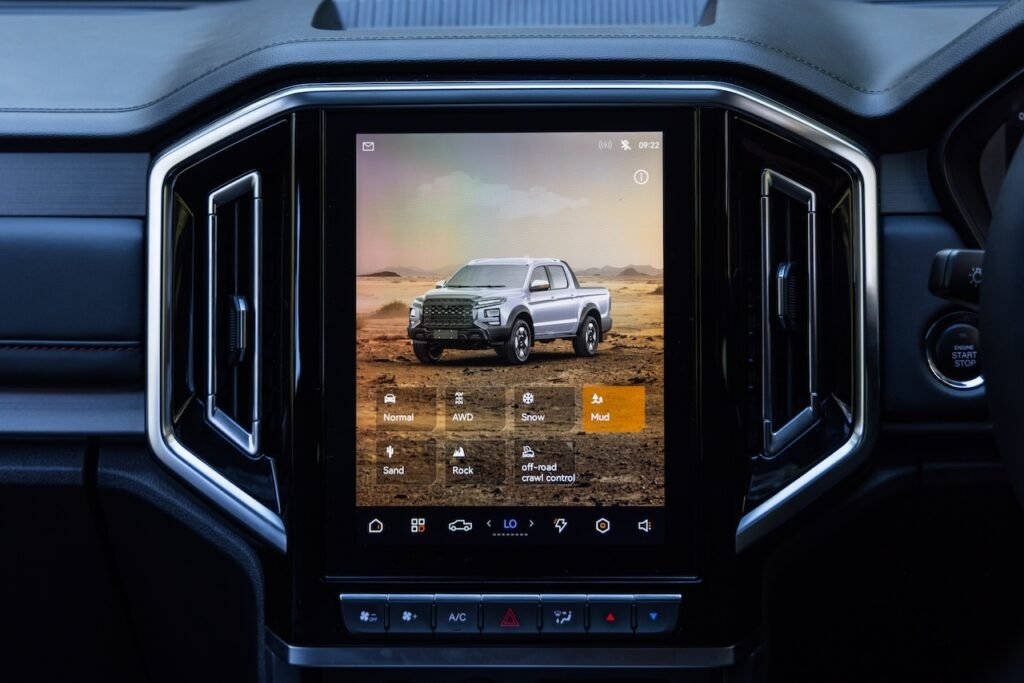
Adding to the Hunter’s capability is a drivetrain offering 4×4 and front and rear differential locks – standard on X and a $1888 option on the PRO – and five off-road modes (Snow, Mud, Sand, Rock, Offroad Crawl Control).
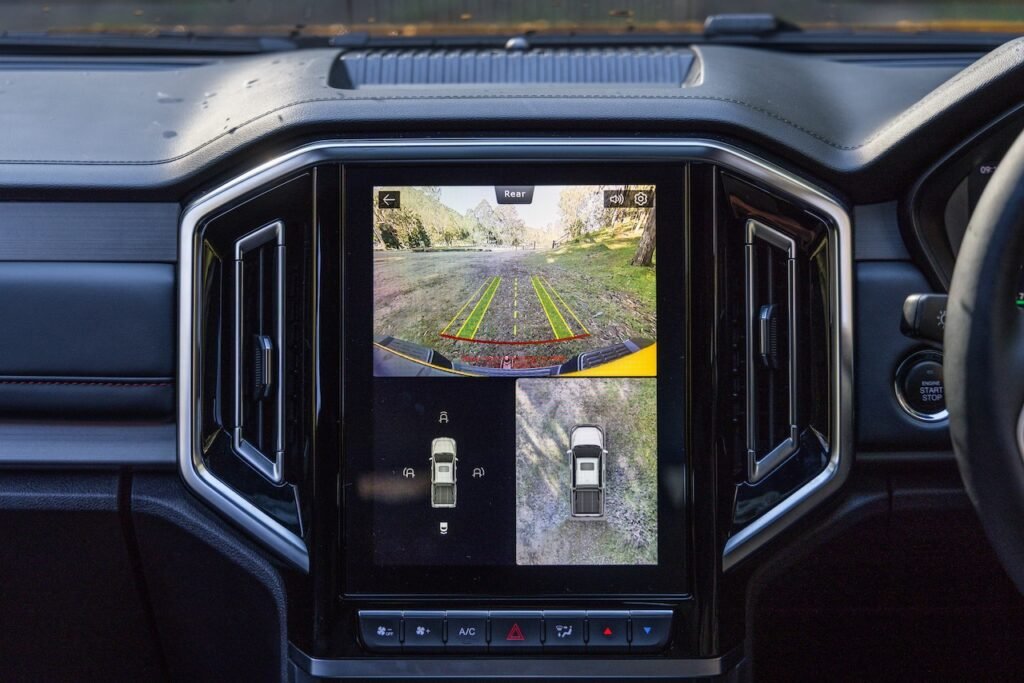
Equipment levels on both variants are good but you’ll need to stretch to the X to get a 360-degree camera, front parking sensors – rear parking sensors and a reverse camera are found on the PRO model – heated front seats, power-folding mirrors, rear 220V accessory socket, roof rails, puddle lamps and rear privacy glass.
The X also enjoys a blacked-out exterior look.
The lack of position memory and more adjustability for the driver’s seat (lumbar, front seat tilt) and perhaps front seat ventilation seem curious omissions.
Our test X also came with the optional sunroof ($1500), towbar ($1453), electronic brake controller ($941) and grippy, dealer-fit Pirelli Scorpion All Terrain tyres ($1736 for four). Giti HT tyres are standard.
The Hunter PHEV comes with a seven-year/unlimited-kilometre warranty (this includes commercial users), seven-year capped-price servicing and roadside assist.
Customers also get access to a loan ute if their vehicle has an issue and can’t be repaired quickly.
Sales target for the Hunter is about 200 a month, roughly evenly split between the X and PRO grades.
Be one of the first 1000 to buy a Hunter and you’ll get a home charger or $500 of genuine accessories as part of the deal.
2026 JAC Hunter X PHEV: What we think
Living with the 2555kg Hunter X for a few days confirmed the real-world EV range of about 75 to 80km.
The EV-only performance is effortless, easily handling commuting and highway driving.
Once the battery’s charge falls below about 20 per cent, the engine will kick in with a bit of a thud. This is accompanied by a hum and a slight vibration through the steering wheel.
But even with the engine running, it’s quieter and more refined than a traditional diesel ute.
Demand full acceleration while in EV mode and there is a noticeable hesitation as the engine comes to life before all the power is unleashed.
Compared to a traditional diesel ute, the Hunter is fast (sub-seven seconds 0-100km/h) but doesn’t feel 360kW and 1010Nm quick.
The engine drives through the front wheels and a four-speed automatic transmission. Using the engine to drive the car, we saw fuel use of around 14L/100km.
While the real-world EV range is good, like all PHEVs you need to be disciplined about charging the battery to avoid hip-pocket pain at the bowser.
The Hunter can charge using 11kW AC, ‘filling’ the battery from 15 to 100 per cent in 3.5 hours. It can also use public DC charging up to 46kW.
The battery can also be charged using the engine as a generator, so in theory it never needs to be plugged in.
Official fuel consumption using the lenient NEDC protocol sits at 1.6L/100km and 38g/km of CO2, with a NEDC battery range of 100km.
Combine the battery and generous 77-litre fuel tank, and the Hunter PHEV has a theoretical maximum range of 1044km.
The Hunter can be driven in battery-only mode, dubbed EV Max. You can prioritise battery power in EV mode but with the engine coming to life if you’re heavy with the throttle. Alternatively, you can drive the Hunter in HEV mode, which relies more on the 2.0-litre engine.
The Hunter can also power tools and other equipment with a 3.3kW V2L capability using a cable that plugs into the charge port when the vehicle is stationary.
Unfortunately, it doesn’t have a permanent outlet in the tray to power things like a fridge when driving, but the X model does have a 220V power point in the cab.
JAC Australia has made much of the local suspension tuning the Hunter has received.
Teaming up with local company Multimatic and project lead, ex-Holden engineer Michael Barber, the ute was tested across 100,000km to ensure it was match-fit at launch.
And it is. Adopting all 76 suggested tuning changes, the Hunter PHEV is a much more sorted ute than the original T9 diesel ute on which it is based.
Those suspension tweaks will be standard on Hunters heading to New Zealand and many more international markets.
More than other vehicles, utes have to balance a wide range of suspension demands. In this case from an empty tray to hauling 915kg, to towing 3500kg and handling a gross vehicle mass of 6430kg.
The local tuning focussed on finding a better way to manage those variances, making the Hunter more stable, predictable and controlled, while at the same time providing more precise and natural-feeling steering.
The results are certainly worth the multi-million-dollar investment in the double-wishbone front and multi-link rigid-axle rear suspension, with its high-speed stability over bumpy roads and predictable steering response very welcome.
The Hunter quickly settles over large bumps, with driver and passengers experiencing little head shake.
However, sharp inputs from lumpy surfaces and a slight nervousness to the ride at lower speeds, when the ute is lightly laden, could be further improved.
The steering is best set to Sport mode as that provides maximum weight. Once past the initial vagueness just off centre it works reassuringly well.
This is a ute that’s easy to drive.
The wheel itself is both reach and rake adjustable, unlike the rake-only JAC T9. It has a nice thickness to the rim.
Braking is by discs all round. They are strong enough but, like many systems that regen energy back to a battery, they are rather sensitive and wooden.
Comfort mode rather than the more sensitive Sport setting, and with the Comfort Stopping assistance turned off, worked best.
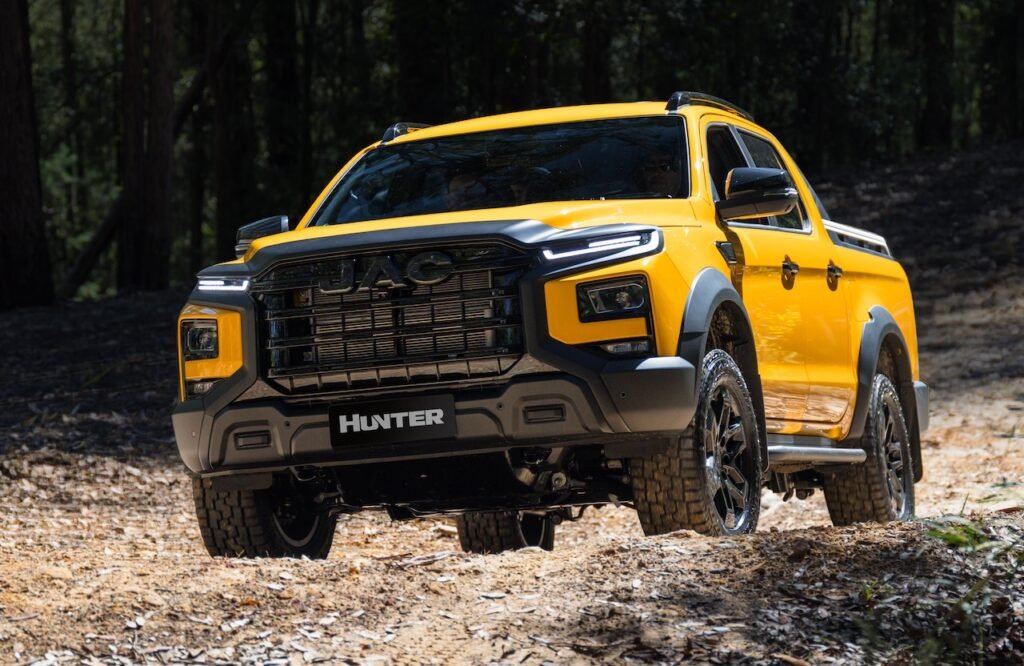
At 5330mm long and 1985mm wide the Hunter is slightly shorter but 57mm wider than a Ford Ranger, sitting on a 3110mm wheelbase (160mm shorter than the Ford).
The Hunter’s size makes it easier to manoeuvre than many other new-generation utes, but the trade-off is a good-size cabin rather than a generous one.
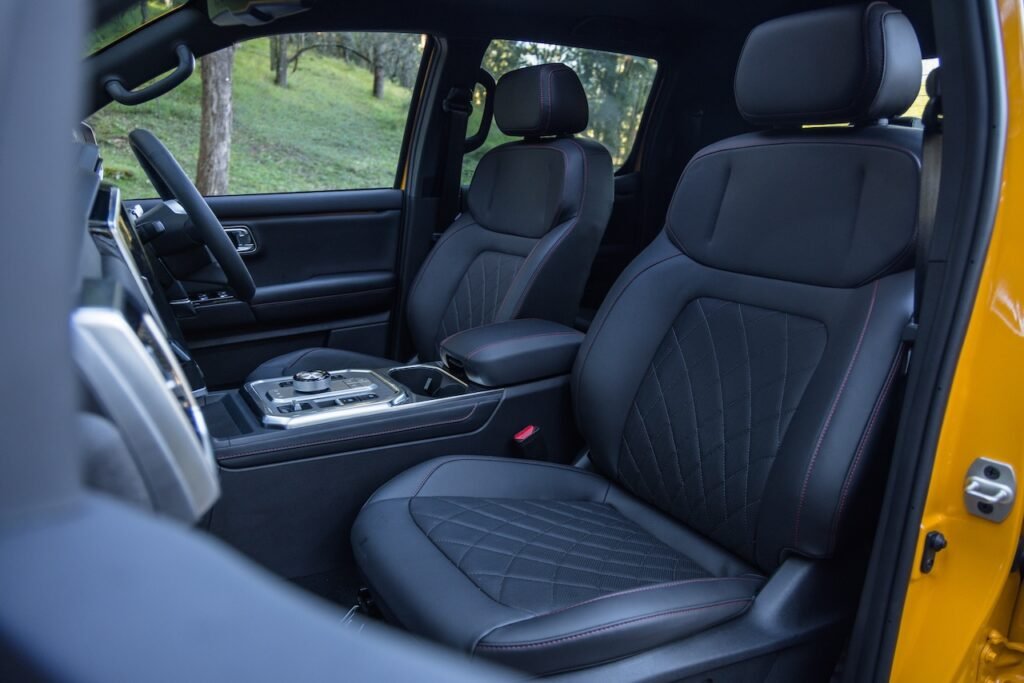
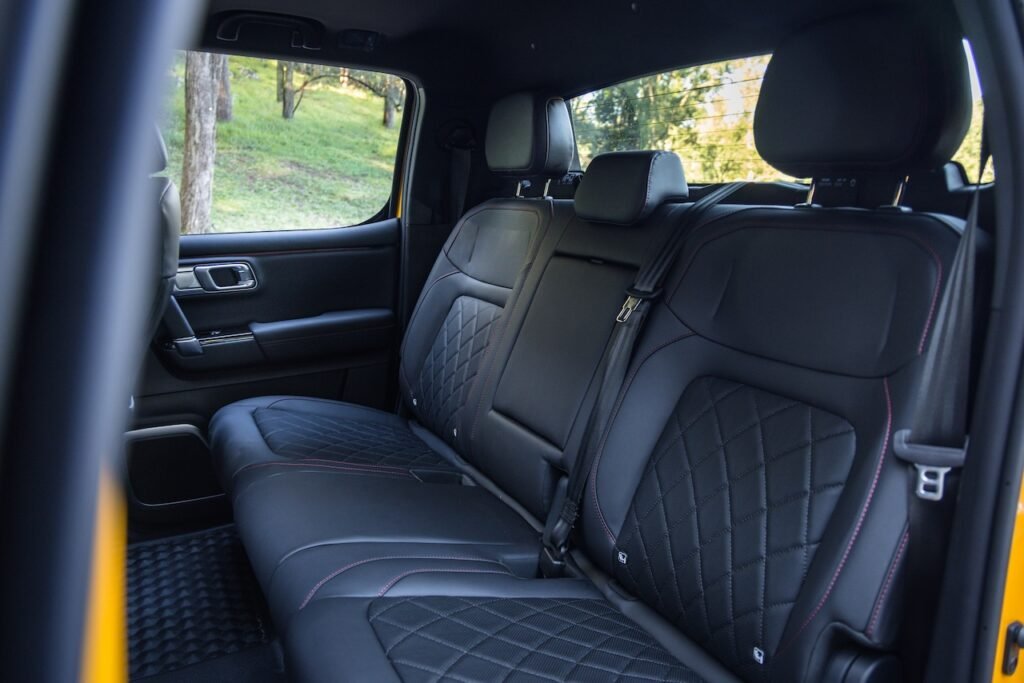
Four adults would be comfortable, helped in the back by the cup holder-equipped fold-down centre armrest and good head and toe room under the front seats.
They will find it’s simple to climb up and in as the alloy side steps are wide enough to use as a step and each door has a pillar-mounted grab handle.
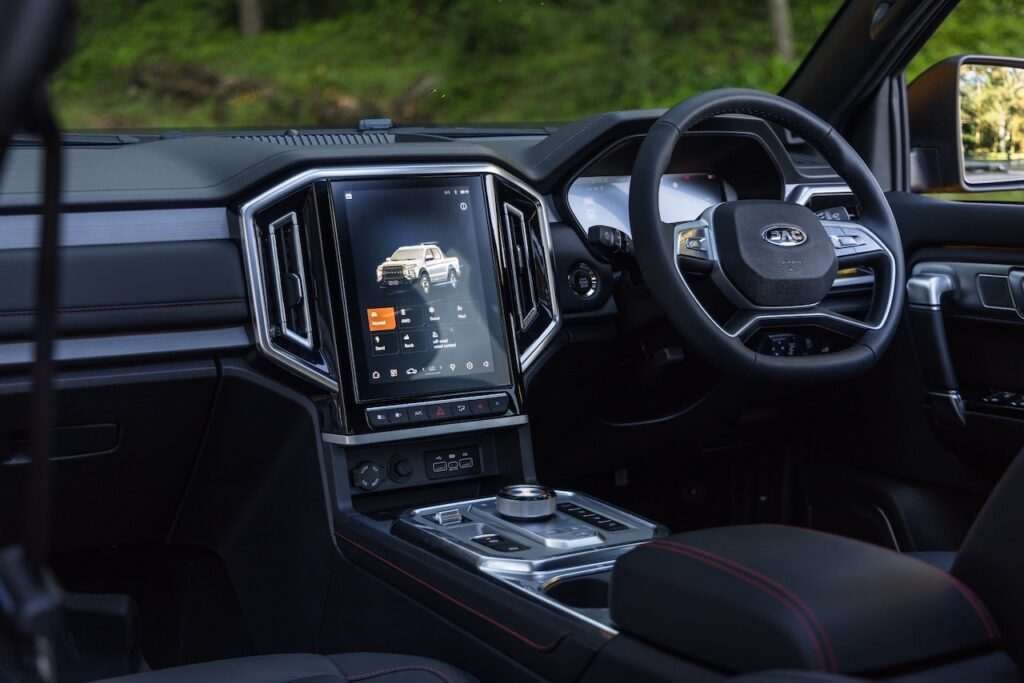
Inside is generally a nice place to spend some time, although it is rather dark and there is a lack of under-thigh support from the leather seats both in the front and back.
Other niggles include glare in bright sunshine from the painted silver surfaces around the rotary gear selector and a rather firm door handle and centre console lid where your elbows rest.
The vertical 10.25-inch centre screen is not huge and it sits rather low, requiring you to take your eyes off the road to push the screen-mounted buttons while using the wireless CarPlay, which annoyingly failed a couple of times to automatically connect to my phone.
The screen is also a little dull even at maximum brightness and some of the graphics look a little aftermarket.
Talking of screens, there are physical controls for the main A/C functions on the centre screen, but the speaker volume is either adjusted through the screen or by the smallish buttons on the steering wheel. A physical dial would be very welcome.
A drive in wet conditions showed that the air con struggles to clear the windscreen and front windows. It needs to be set so that all the air is directed to the windscreen and the fan turned up high to get the job done. That’s not good enough. And to make matters worse, the fan is quite noisy in all but the slowest setting.
Like many modern vehicles there are a lot of bings and bongs, however the constant beeping when reversing is rather silly. I know I’m reversing.
Interestingly, the Hunter will not move unless you have your seatbelt fastened. This is not ideal on a farm, work site, or just moving the JAC on your driveway.
The full array of Advanced Driver Assist Systems are a couple of taps of the main screen away from being turned off should you find them annoying. Lane Keeping Assist and the Driver Monitor come to mind.
However, this is something you have to do each time you turn the Hunter on.
2026 JAC Hunter X PHEV: Verdict
The JAC Hunter PHEV delivers a realistic and rather handy battery-powered driving range of about 75 to 80km, while retaining the towing, payload and off-road capability expected of a dual-cab ute.
Its EV-only performance is effortless and, even when the petrol engine is running, it is quieter and more refined than a traditional diesel ute.
But like all PHEVs you need to be disciplined about charging the battery. Using the engine to drive the car, fuel use steepled.
The locally developed suspension tune is also a significant improvement over the original T9 diesel ute, making the Hunter more stable, predictable and controlled, while providing more precise and natural-feeling steering.
There are things that could be further improved, including the lightly laden low-speed ride, brake feel, some cabin details and the various bings and bongs.
But at $49,990 before on-road costs for the PRO and $54,844 for the X, the Hunter PHEV combines a lot of capability with a sharp price.
Score: 3.5/5
2026 JAC Hunter X PHEV specifications
Price: $54,844 before on-road costs
Basics: Five-seat dual-cab ute, 4WD
EV range: 100km NEDC; approximately 75-80km tested
Battery: 31.2kWh lithium iron phosphate
Engine: 2.0-litre turbo-petrol, 160kW/370Nm
Front motor: 130kW/300Nm
Rear motor: 150kW/340Nm
Combined output: 360kW/1010Nm
Transmission: Four-speed automatic
AC charging: 11kW
DC charging: 46kW
V2L: 3.3kW
Fuel consumption: 1.6L/100km NEDC
Fuel tank: 77 litres
Combined range: 1044km theoretical
Towing: 3500kg braked
Payload: 915kg
0-100km/h: Sub-seven seconds
Warranty: Seven years/unlimited kilometres


