
Words by Rakshanda Bhat, with photography by Priyadarshini Ravichandran
This story was featured in Unwoven Issue 03, Textile Exchange’s annual magazine. Read the full issue here.
In the smallholder farming communities of Odisha and Madhya Pradesh, organic cotton is not just a crop—it is an inheritance, nurtured through ritual, tradition, and care for the land.
With support from the Organic Cotton Accelerator and improved market access, this inheritance is finding its place in today’s supply chains. At sunrise, Kamari village in Odisha hums to life. Birdsong mingles with the clatter of brooms sweeping mud courtyards. Mist clings to the paddy edges, while women move like clockwork through morning chores. High above, the koel sings, a reminder that a new day has begun.
Annapurna Maji starts her day in the fields. A proud organic cotton farmer, she is also a board member of a farmer-producer organization. Annapurna is a community leader, a cultivator, and a firm believer in the regenerative power of traditional knowledge.
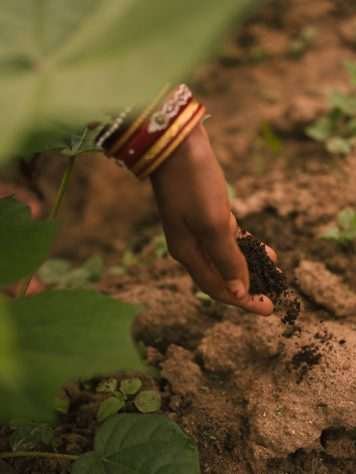
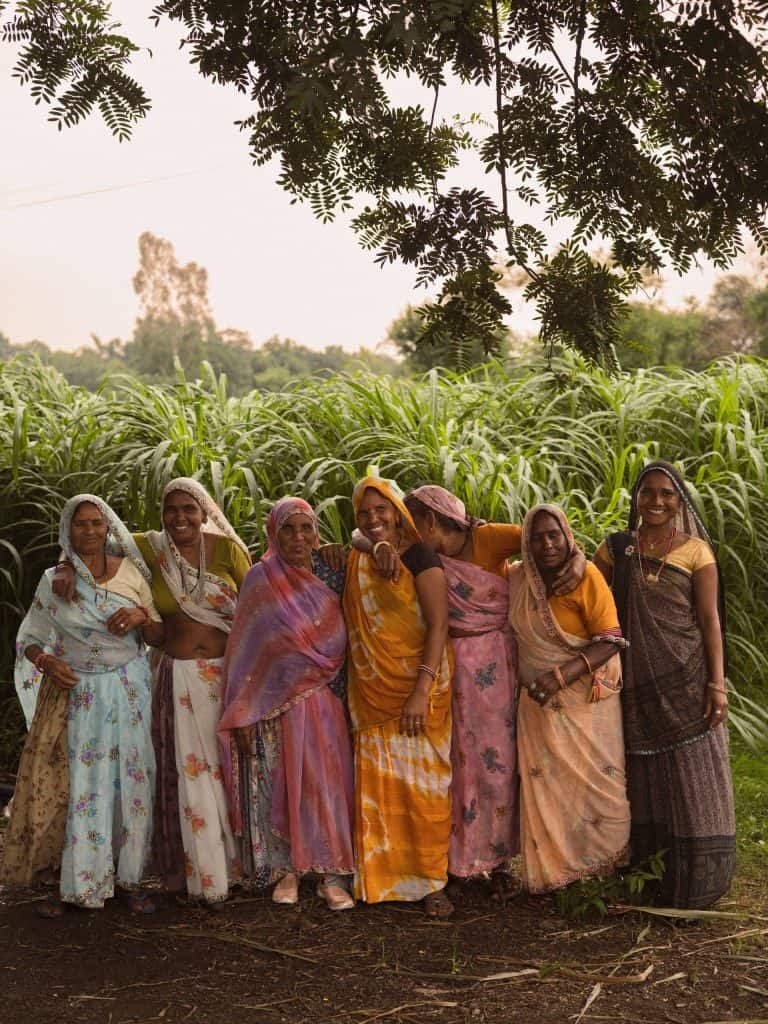
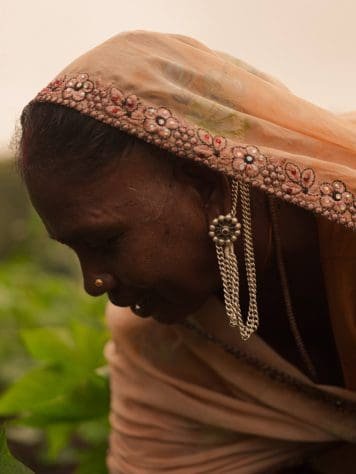

Across India, farmers like her are making the shift to organic with support from the Organic Cotton Accelerator (OCA). OCA partners with actors across the supply chain to create a transparent, resilient, and farmer-centric organic cotton sector. Through its Farm Programme, the organization provides farmers with access to training, non-GMO seed, pre-financing, and a guaranteed premium for their organic cotton.
The organization works with over 100,000 organic cotton farmers, most of them in India, but also in Pakistan and Türkiye, across more than 106,000 hectares of land. With reliable partnerships in the field, OCA also gathers data to demonstrate the benefits of organic cotton for farmers and the environment. The organization aims to go beyond measurement and reporting by empowering farmers and guiding continuous improvement in the global fashion, textile, and apparel industry.
With its support, farmers like Annapurna are earning more, farming in a way that protects their health, restores soil biodiversity, and secures the future of their land for generations to come. But it wasn’t always this way.
“When I first came to this village as a bride,” she recalls, “I was someone’s wife. I didn’t step outside much. My world was the kitchen. I didn’t imagine I would one day be leading farmers or speaking about organic cotton to visitors.”
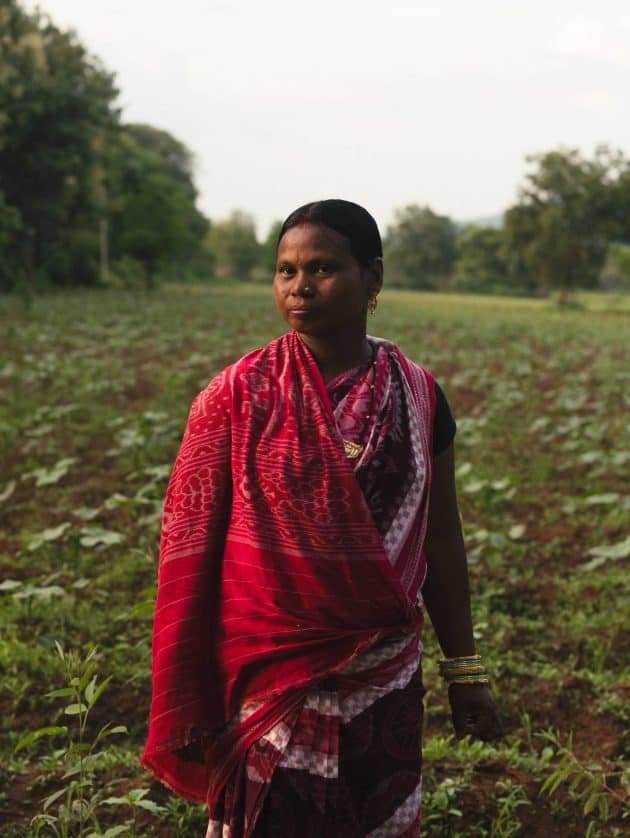
She recalls the early years of farming with synthetic fertilizers. “The plants looked healthy, and the yield was high. But slowly, I began noticing things. My soil was hard. Earthworms disappeared. And people around us were falling sick more often.”
Noticing turned into questioning, which in turn led to action. For Annapurna, transitioning to organic practices was simply a return to the past. “My ancestors didn’t call it organic,” she smiles. “It was just farming. They used compost from livestock, they planted marigolds and bitter plants to deter pests, and they respected the seasons.”
Today, she recreates those methods in her own fields, preparing compost at home, applying leaf-based pest repellents, and intercropping cotton with pigeon pea to both feed her family and boost the soil health. She avoids synthetic inputs, chooses native seeds, and relies on natural solutions. “I used to spend thousands on fertilizers and pesticides,” she notes. “Now I spend time, not money, making what I need from what I already have.”
When she began organic farming, the change started. “At first, the yield dropped. But soon, I saw tiny life returning. Earthworms. Beneficial insects. The soil became soft again. Now, my yields are stable, my cotton is strong, and my land is alive.”
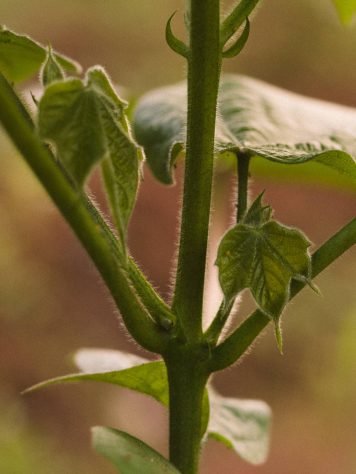
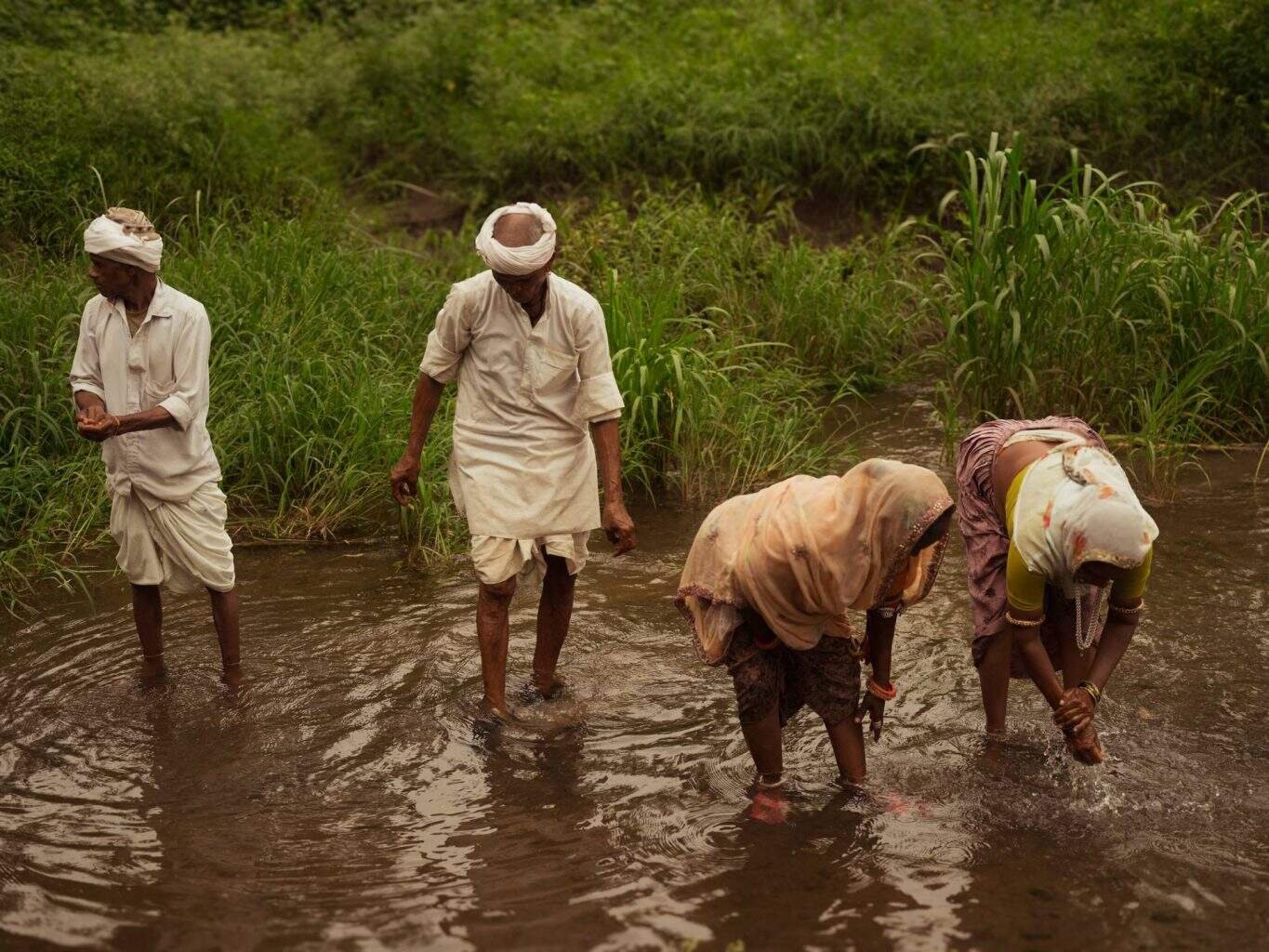
A similar story is unfolding in the village of Satrundi in Petlawad, Madhya Pradesh, where Maan Singh and Gaura Katara, a couple from the Bhil community, have been farming for over three decades. Over the last 15 years, they have returned to growing jaivik kapas (organic cotton) on their 2.5-acre plot, alongside maize, pigeon pea, green gram, mustard, okra, brinjal, and seasonal vegetables. The layout is intentional, thoughtful, and generous.
For the Kataras, before going organic, farming brought more stress than sustenance. Market-bought inputs such as chemical fertilizers and pesticides were costly and confusing. “We were told to spray something but didn’t even know what it was,” Maan Singh recalls. “It was expensive and didn’t always work.”
The decision to adopt an organic approach was in equal parts instinctual, ancestral, and economic.
“Organic is our tradition,” Maan Singh reflects. “Earlier, all farming was done without chemicals. We decided to return to that.”
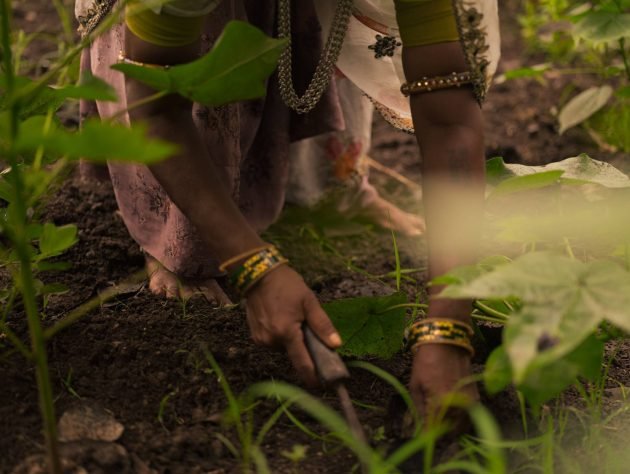
Thanks to OCA’s support, specifically the training from its field teams and help to access resources, their farm is nearly self-sufficient—from input-making to pest control. They began using jeevamrit, a living preparation of cow dung, urine, jaggery, gram flour, and soil, along with fermented five-leaf extract for pest control. Seed treatments were made from ash and buttermilk. “We prepare everything ourselves,” explains Gaura. “For pest control, we use neem, cow dung, buttermilk, and ash. We don’t have to spend money.”
“Now we understand the fields better,” Maan Singh adds. “We know what the soil needs. We know how to protect the crop.” Slowly, signs of their efforts began to show. They saw earthworms in the compost, bees returning to the bunds, and cotton bolls fuller than before. But the deeper change was personal. Household expenses fell, and a sense of fulfillment returned to the family. Their introduction of on-farm biochar, made from crop waste—which enriches the soil, improves water retention, and boosts long-term fertility—has become an example for neighboring farmers to learn from.
While cotton brings income, the rest feeds both them and the soil. Their fiber, now praised for its long length, fetches better prices too. With their profits, they recently bought seven bighas (approximately 4.4 acres) of additional land, increasing both their reach and their impact.
Higher farmer incomes create a more stable and resilient supply base, as farmers who thrive are less likely to exit farming or shift to other crops. Using on-farm inputs is one way to improve profitability, forming a strong foundation for long-term supply chain sustainability.
But for both Annapurna and the Kataras, the purpose of this approach extends far beyond their finances, connecting to their spirituality, heritage, and future legacy. It’s a reciprocal relationship —they give to the land, which gives back in return.
Before the first rains, Annapurna and her community perform puja to Dharani, their soil deity. “It’s a way to thank the land before we begin sowing,” she says.
Over in Satrundi, every morning, Gaura places a marigold garland near their Matavan grove, a sacred patch of forest they have never harvested from. “This land protects us, so we protect it,” she says, pressing her forehead to the soil.
Cotton cannot be harvested until Nawayi, a sacred offering of the first yield to the deities. This ritual is decided during Jatar, a gathering of elders and the village head, where communities cook, celebrate, and offer gratitude before receiving. “Only after we offer the harvest to the gods can we bring it into our home,” Gaura explains.

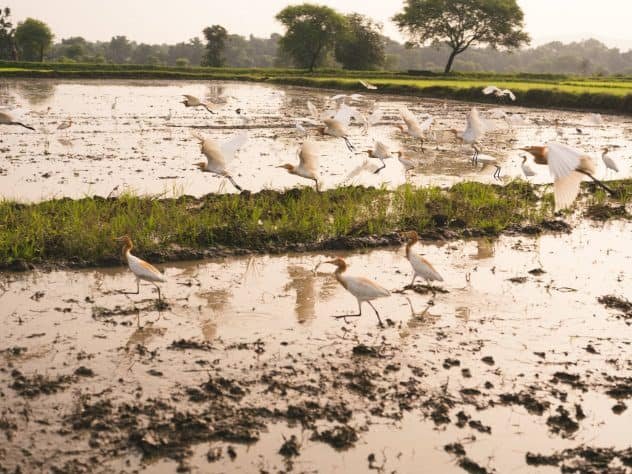
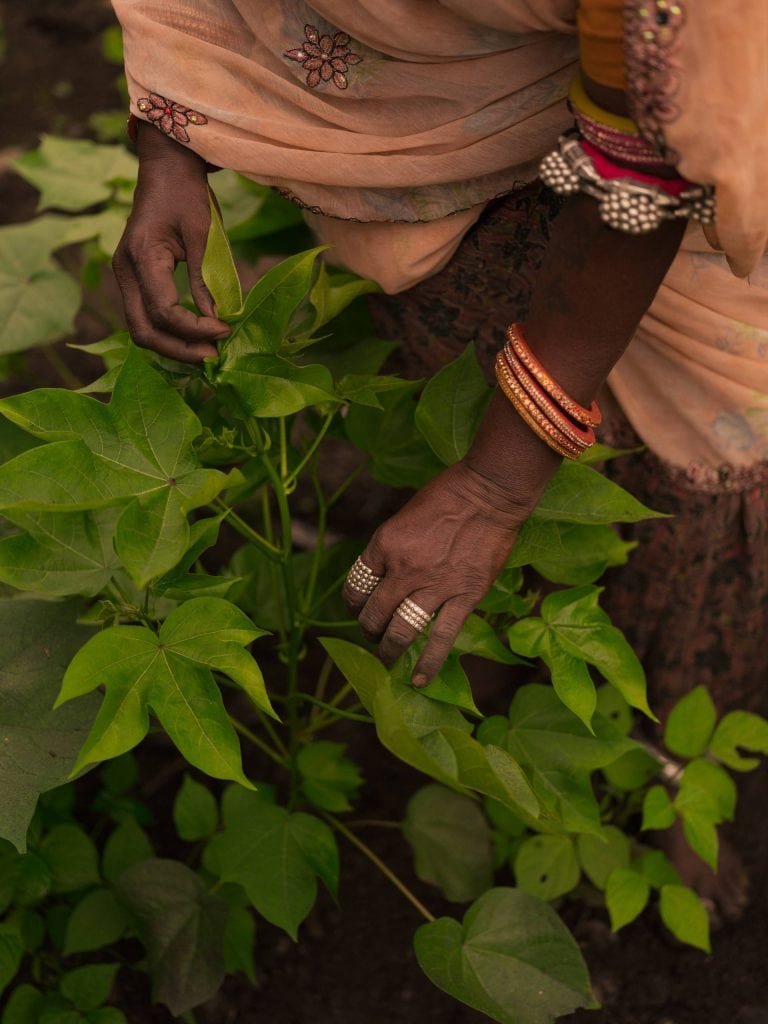
On these days, she wears her silver jewelry, using bangles, beads, and anklets as adornment and as her identity. Passed down through generations, these ornaments are slowly giving way to lighter metals, but the meaning holds.
Thanks to OCA, Gaura now works with a women’s self-help group that experiments, shares, and documents traditional techniques, spreading resilience through conversation. As she took the lead in preparing bio-inputs, their costs dropped, and confidence grew. “We get capacity-building training from the team,” she says. “If we see a pest, we know what to do. We try it ourselves, and if needed, we ask for help.”
“Without women, farming cannot happen,” Annapurna adds. “Who touches the cow dung? Who makes the compost? It’s the women.” For her, it’s the women who hold the village together.
Annapurna even remembers her grandmother predicting the weather by instinct. “Now the rains are erratic. The climate has changed,” she says. “Back then, people used bullocks, not machines. They made their own oil from linseeds. They used castor oil in their hair and mud to clean their hands.”
For her, it’s this combination of honoring her ancestry while remaining committed to carrying this legacy forward that saw her stick with the organic approach. While her neighbors were skeptical of the initial lower yields, she saw the longer-term prospects. “I want my next generation to inherit land that can still grow food, not just money,” she adds.
“I even treat the soil like a child. I feed it. I protect it. I don’t burn plastic or throw waste in the fields. I collect polythenes and give them to the local community for safe disposal.”
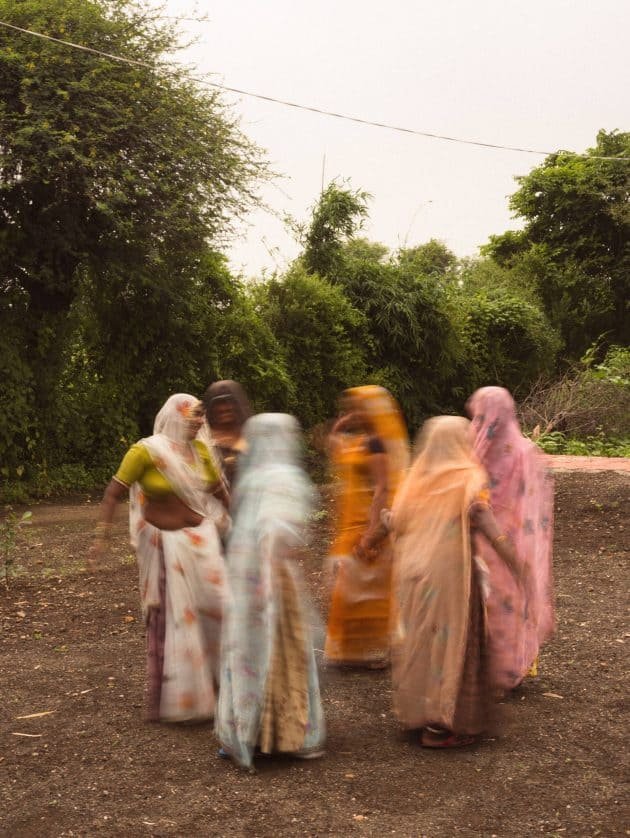
The same is true for the Kataras, who already have three decades of farming behind them. Each morning, as Maan Singh readies the oxen and checks on the compost pit and biochar unit—newer additions to their farm, yet already part of the daily rhythm—he’s preparing to hand down this routine to generations to come. “We are teaching our children and grandchildren to farm this way,” Gaura shares. “So they also learn how to take care of the land.”
For farmers like them, organic cotton is both a livelihood and a legacy—a way of farming that restores the soil, strengthens communities, and carries forward the wisdom of generations. Sustaining this future depends not only on the hands that work the fields, but also on the commitments made beyond them.
Fair partnerships, patient investment, and reliable markets form the bridge between the quiet work of dawn and the lasting prosperity of these communities. Supporting this work is more than a transaction. It is standing alongside the people who rise before sunrise to greet the soil, preserving knowledge that has outlasted seasons and markets, and ensuring the land can keep giving abundantly to those who care for it.
Special thanks to Action for Social Advancement and Vasudha Swaraj for their on-the-ground collaboration.
This story was featured in Unwoven Issue 03, Textile Exchange’s annual magazine. Read the full issue here.
The post Inside the Smallholder Tribal Communities Growing Organic Cotton in India appeared first on Textile Exchange.


