
From the drinks in our refrigerators to medicine in our cabinets, the process manufacturing industry is responsible for most of our everyday items. Today’s factories rely on “static, timer-based automation,” where systems follow a strict, hard-coded set of processes: imagine a dishwasher that runs the exact same cycle every time, whether the dishes are lightly used or caked in grease.
Laminar is transforming these traditional production lines into self-optimizing environments by targeting the massive inefficiencies in process operations where a lack of real-time data leads to excessive waste of water, chemicals, product, and production time.
The company’s solution starts with patented industrial-grade sensors that are installed directly onto existing factory pipes and equipment. These sensors use spectroscopy to see into the pipes to analyze the exact material flowing inside in real-time. This high-fidelity data is fed into custom proprietary AI models that compute real-time optimizations and communicate directly with the factory’s control systems for automatic process optimization. Instead of relying on “grab samples,” where a human must manually take a sample to a lab for testing, the system provides a continuous stream of actionable intelligence enabling the production line to continuously self-optimize.
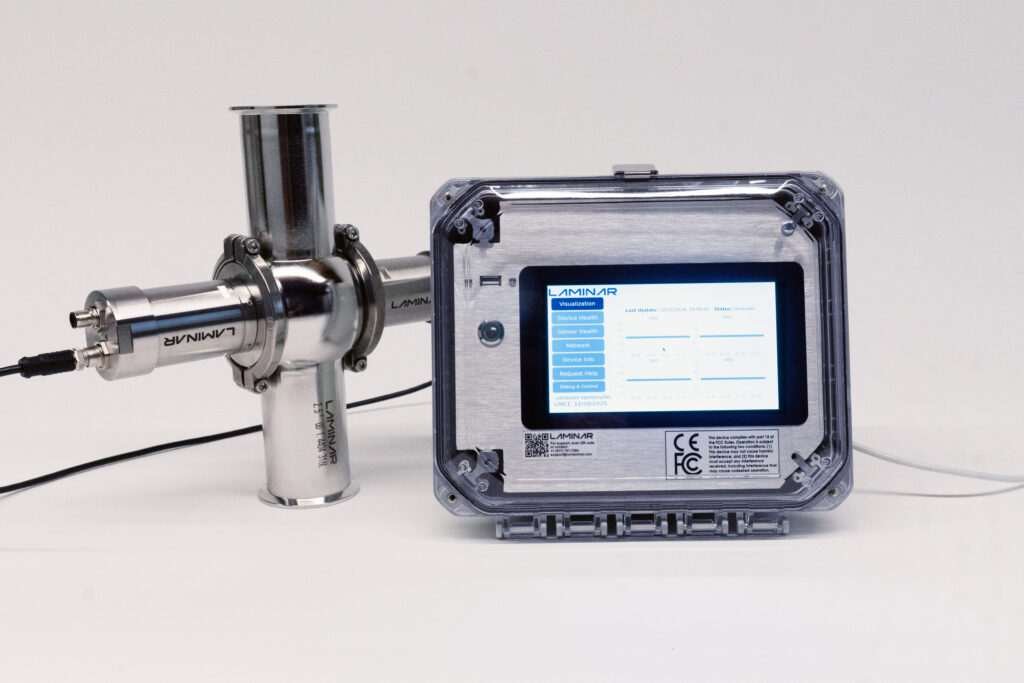
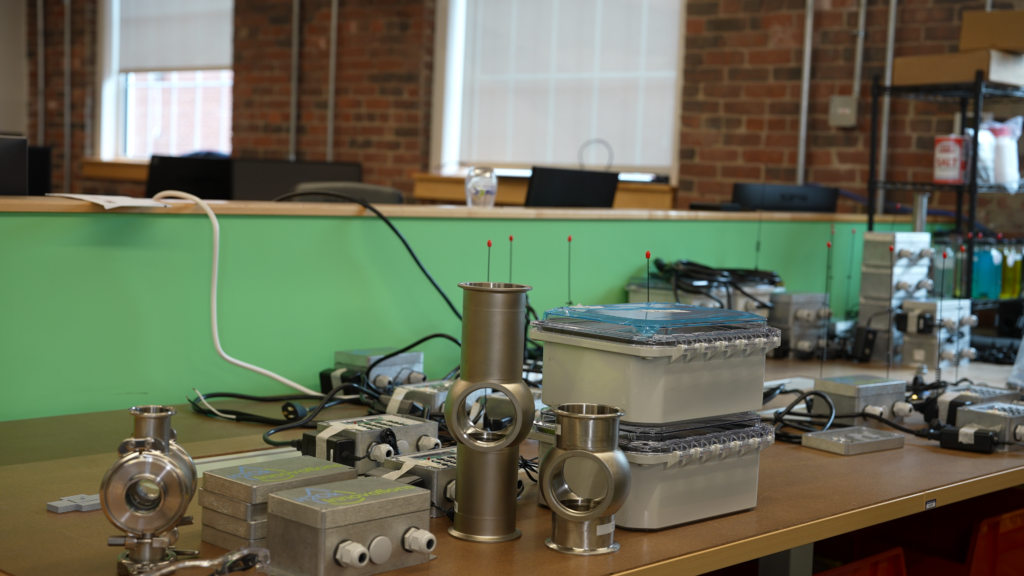
This dynamic approach has massive implications for sustainability and organizations’ bottom lines, particularly in the startup’s flagship application: Clean-in-Place (CIP) and product changeover optimization. “Clean-in-place and product changeover are by far the biggest cause of downtime and greatest use of water and chemicals in factories, after the ingredients used in the products themselves,” says CEO and Co-founder Annie Lu. “We have customers telling us they feel like they’re a CIP company, not a beverage company, due to the amount of time their lines spend in changeover.”
In nearly all process industries, factories must stop production to wash out their lines before switching to a new product variant, flavor, or batch. For example, a manufacturer like Coca-Cola flushes its fluid lines with water and caustic chemicals for a set amount of time in between running Cherry and Diet Coke. Instead, Laminar’s sensors detect exactly when the cleaning is finished, allowing the factory to advance steps or stop the cycle immediately rather than running it for an arbitrary duration. By cleaning only until the job is done, Laminar has helped customers reduce industrial chemical use by 40 percent, cut water consumption by 20 to 25 percent, and reduce cycle times by 15 percent.
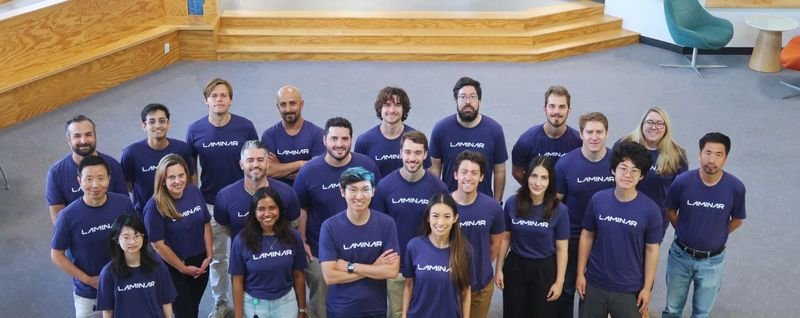
The startup’s beachhead market is the food and beverage industry, but the technology is versatile enough for pharmaceuticals, consumer packaged goods, paints, semiconductors, even engine oil production and beyond. Laminar already supports factories across six continents and works with six of the ten largest food and beverage companies in the world. Following a $12.4M Series A round last year, the 35-person team is growing as it expands its global footprint and launches a new generation of industrial telemetry devices.
Along with her older brother, David Lu, who serves as the company’s CTO, Lu grew up on factory floors, gaining a firsthand understanding of the complexities of chemical and process manufacturing. They founded the company in 2021 out of a desire to rethink decades-old processes using first-principles thinking, ultimately pioneering the industry’s transformation from static “recipe-based” automation to dynamic, self-optimizing automation, starting with CIP.
The company partially credits its success to its unique, full-stack approach. Lu explains that the team designs and builds its own proprietary sensors, combining custom hardware and software with foundational AI models. By embedding cybersecurity and network security into the DNA of the product, Laminar provides a highly specialized expertise grounded in chemistry, engineering, and industrial processes. This multidisciplinary philosophy and “customer-obsessed” mindset, Lu says, is a key reason the team is able to scale as quickly as it has, now powering more than 100,000 industrial processes globally.
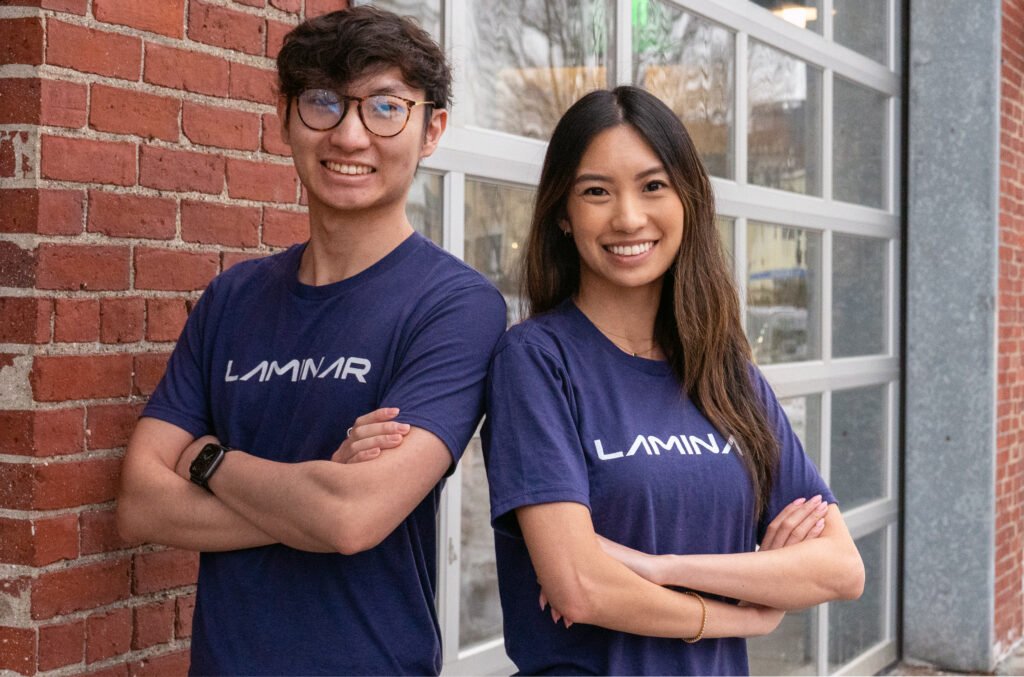
“Laminar is the number-one digital solution for CIP optimization in the world, based on the number of production lines that our technology is installed on and the number of major customers we serve.”
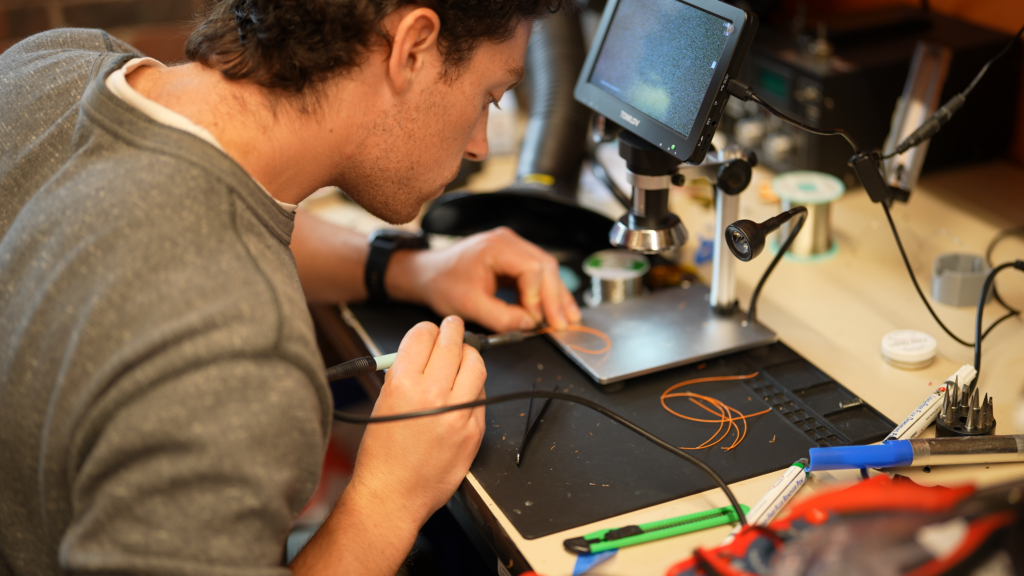
Laminar joined Greentown Boston shortly after its founding in 2021 with just three full-time employees, starting in a 100-square-foot prototype space that they rapidly outgrew, expanding their footprint multiple times until eventually growing into a 3,550-square-foot private prototyping and office suite. Beyond the incubator’s corporate partner network and “best-in-class equipment for a hardware startup,” Lu notes that the most valuable resource that Laminar has taken advantage of is actually the people.
“The community was really a big element for us: being around other like-minded individuals who are tied by the common thread of a passion for sustainability and who are building startups, whether early-stage or later in their journey. It allowed us to really exchange ideas, share notes, debug our problems, fast-track getting answers, and ultimately, help us figure out challenges that other people had already faced and already figured out.”
Timeline: How a sibling founder duo grew Laminar into the world’s leader in self-driving factory optimization
2021
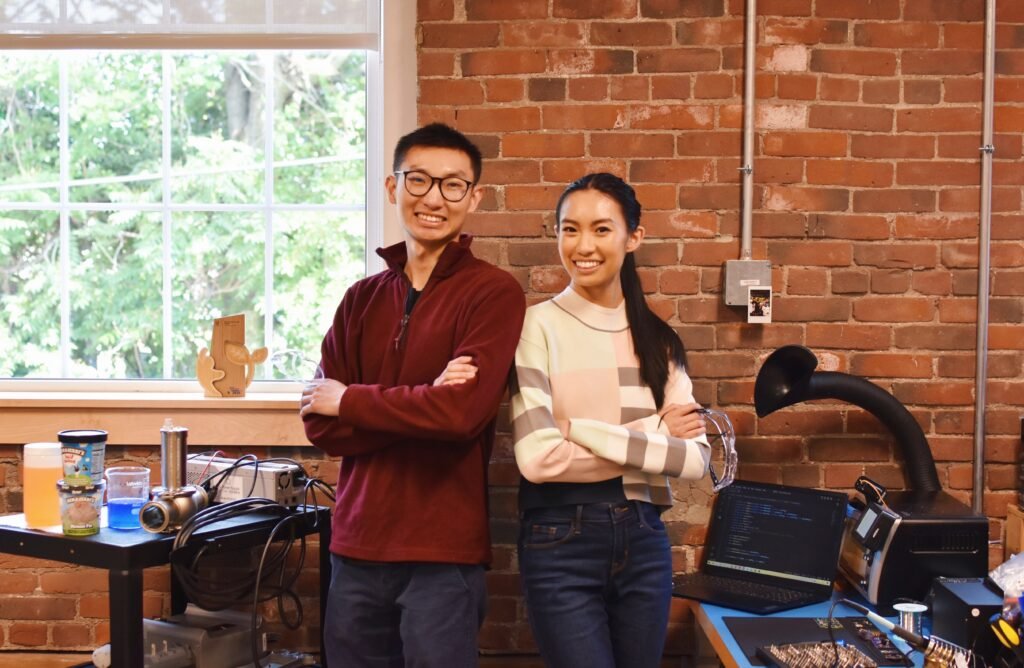
- Laminar is founded by siblings Annie and David Lu, beginning its initial prototyping at Artisan’s Asylum before moving into Greentown Labs
- Laminar is accepted to the Techstars Farm to Form Accelerator (2020/2021), where it begins building relationships with food and beverage industry giants like Cargill
- The startup raises a pre-seed round led by 2048 Ventures with participation from Flybridge Capital and 1517 Fund
2022
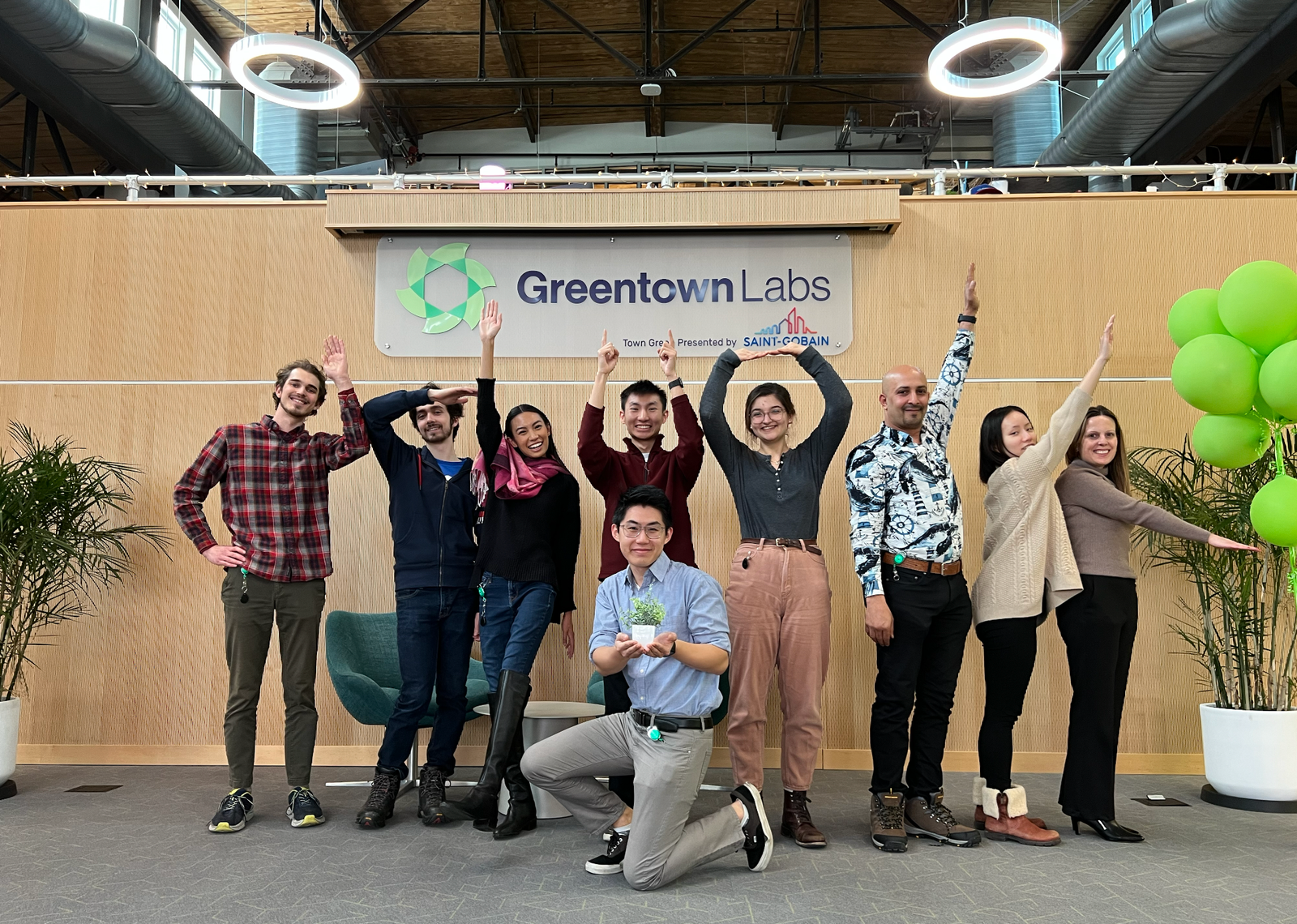
- Laminar closes a $6.8M seed round co-led by Construct Capital and 2048 Ventures
- Co-founders Annie and David Lu are named to the 2022 Forbes 30 Under 30 list
- Laminar participates in the Dairy Farmers of America CoLab Accelerator, focused on dairy manufacturing optimization
- The startup begins high-profile pilots with Unilever and Coca-Cola, focusing on CIP and changeover optimization
2023
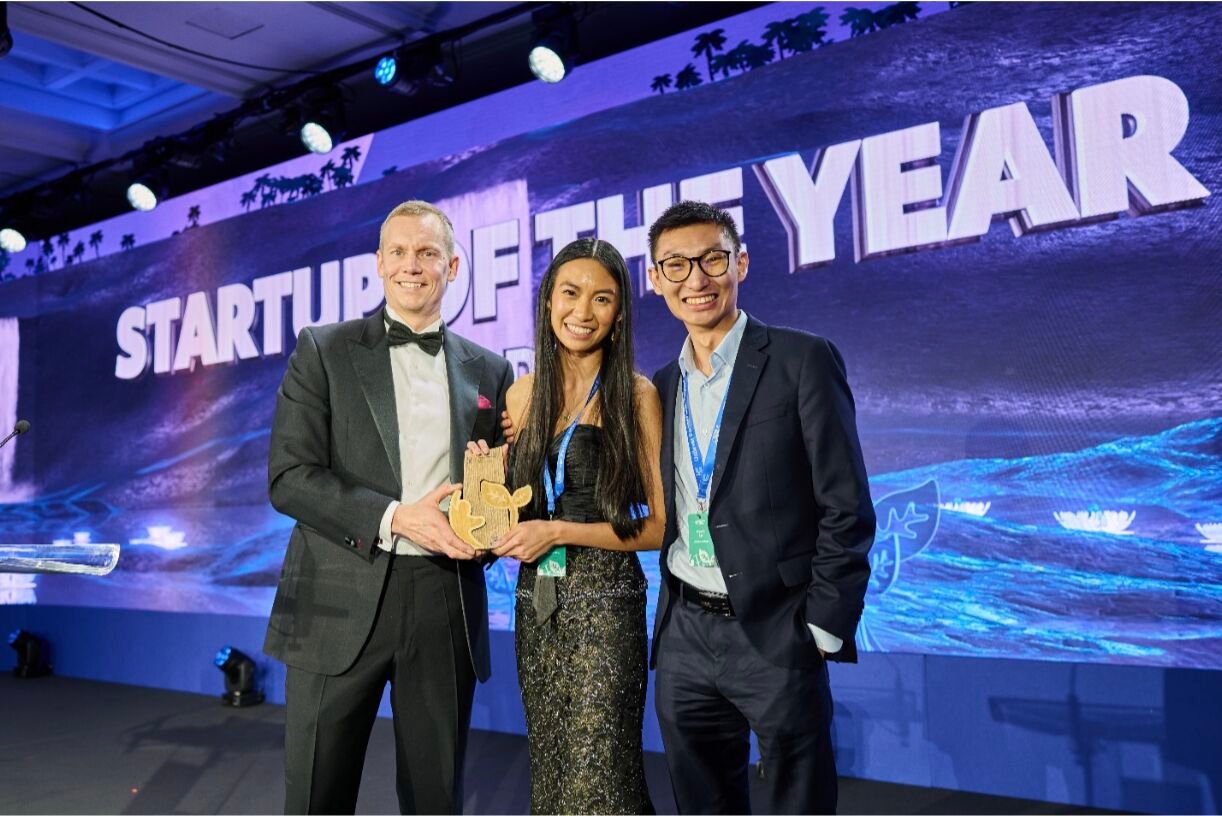
- Laminar is named Unilever’s 2023 Startup of the Year supplier out of 52,000 startups for driving a 20% reduction in cleaning downtime and significant water savings
- CEO Annie Lu is selected as a 776 Foundation Climate Fellow
2024
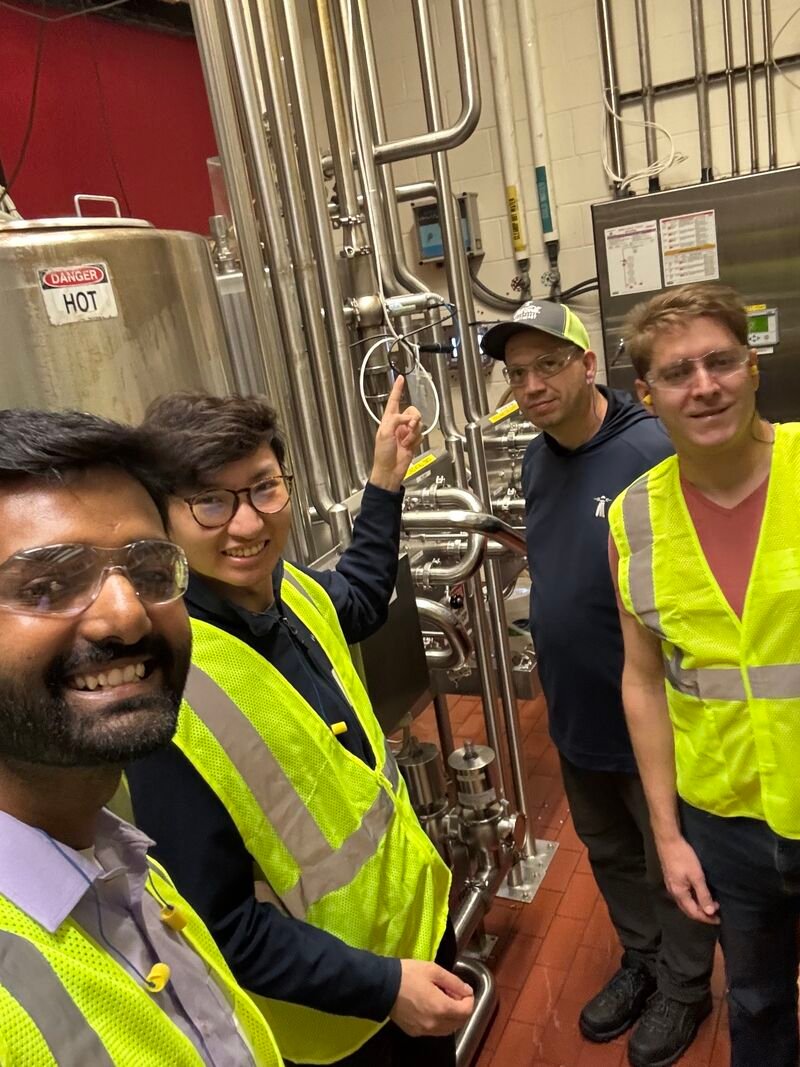
- Laminar is selected for the Uptake Alliance’s inaugural cohort
- Laminar receives the AB InBev Cheers Award for outstanding startup partnership and scaling across global breweries
- Laminar officially deploys its system on every continent except Antarctica, demonstrating verified results including 15% reduction in CIP/changeover time and 10–20% reduction in water and chemical usage for customers
- Laminar announces a partnership with Mitsubishi Electric Automation
2025
- Laminar raises a $12.42M Series A led by Greycroft, with participation from 2048 Ventures and Construct Capital, bringing its total capital raised to ~$19M
- Jim Moffatt, previous CEO of Deloitte Consulting, joins Laminar’s board of directors
- CEO Annie Lu is named to the Boston Business Journal’s 25 Under 25 list
- Laminar’s deployment at a Unilever site in India was added to the World Economic Forum’s Global Lighthouse Network for supply chain excellence
- The company officially rebrands from H2Ok Innovations to Laminar, alluding to “laminar flow” and the company’s expanded mission to serve applications beyond water
- Laminar powers and is scaling with 6 out of the 10 largest food & beverage companies in the world
2026
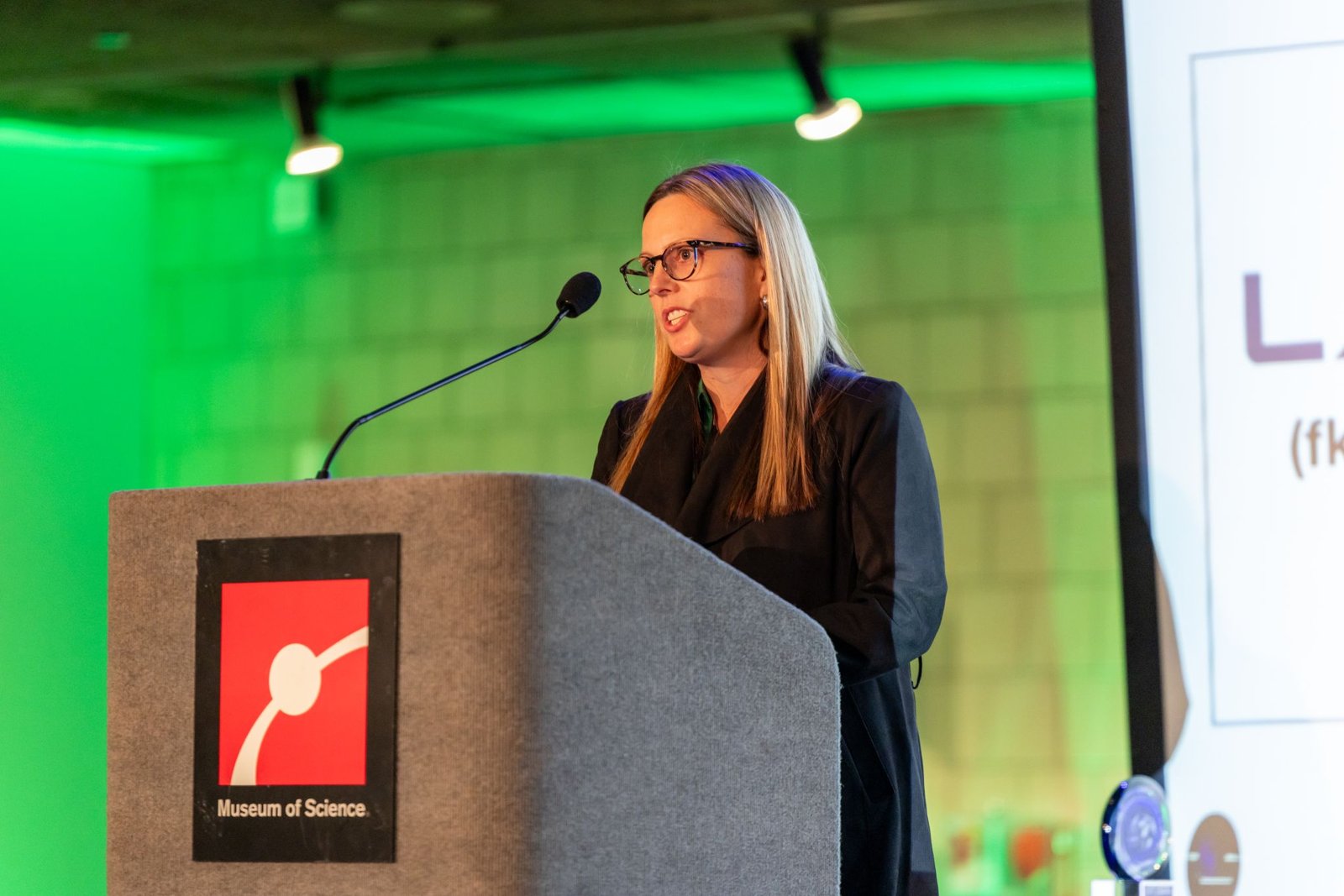
- Laminar was named a finalist for the prestigious Edison Awards, in the innovative products/services category
- Laminar is recognized by the U.S. Commercial Service as an AI technology as part of the U.S. AI Exports Program
This growth story is part of our #GreentownAt15 series, spotlighting the groundbreaking startups at the heart of our community in celebration of 15 years of Greentown Labs.
The post Laminar Combines Sensors and AI to Create “Self-Optimizing” Factories appeared first on Greentown Labs.


