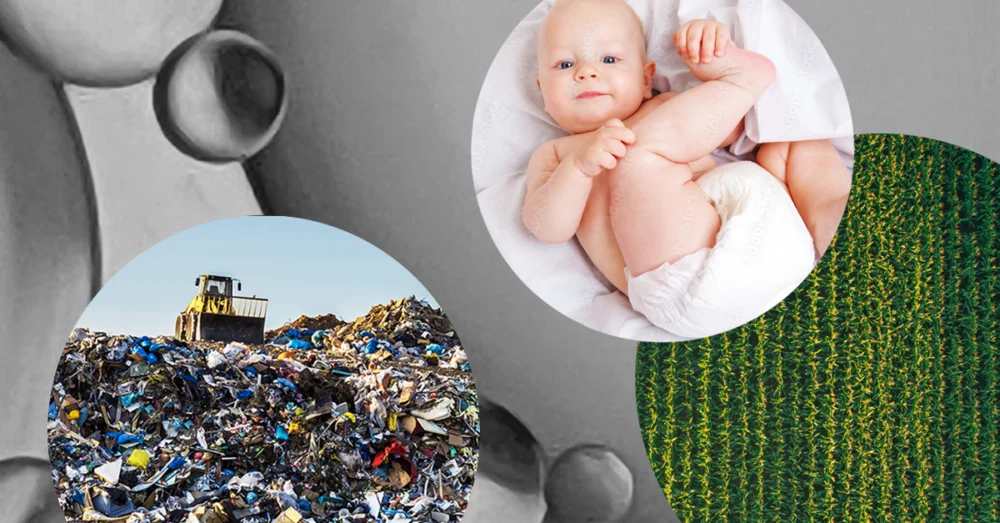
A California chemicals company says it’s solved a problem that’s stumped the hygiene industry for years: making a plant-based diaper absorbent that works as well as the plastic version.
ZymoChem released research showing its material, called BAYSE, matches or beats petroleum-based superabsorbent polymers on every major performance metric. That matters because the industry churns through more than three million metric tons of these tiny absorbent beads annually, nearly all derived from fossil fuels. They end up in landfills where they’ll sit for centuries.
The testing results are notable. Independent labs found BAYSE absorbed liquid twice as fast as leading petroleum alternatives. For thicker fluids like menstrual blood, it was 3.6 times faster. Under pressure, simulating a baby sitting or sleeping, it actually outperformed conventional materials, meaning less leakage.
ZymoChem also ran real-world trials on an industrial diaper line. They made infant size 4 diapers with four different core designs. All passed. The best one held so much fluid that even when fully saturated and compressed, virtually nothing leaked back to the surface.
This hasn’t been done before. Previous bio-based attempts always compromised somewhere, usually on absorption capacity or gel strength. Manufacturers had no viable alternative if they wanted products that actually worked.
The market is huge. Infant diapers alone account for 65% of global superabsorbent use, with adult incontinence and period products making up another quarter.
CEO Harshal Chokhawala is blunt about the implications. “If you are competing in the bio-based hygiene space, this is the material you need,” he said.
ZymoChem hasn’t announced pricing or production timelines. Whether BAYSE can scale affordably remains the open question.
The post ZymoChem claims its bio-material solves diaper industry’s plastic problem appeared first on World Bio Market Insights.