
Two beef farmers who direct-market have taken different routes, but they both have defined plans to differentiate their product and get it to the market.
Abbey Taylor started her Dawn Farm near Belmont in 2021 following a “gap-year” trek across Canada checking out models of direct-to-consumer farms that she thought might inform her future path. By 2025, her operation had grown to approximately 20 head of Red Angus/Charolais cross heifers raised on rotational pastures and marketed almost entirely through bulk sales into the surrounding communities, including St. Thomas and now spreading into London.
Pure Island Beef has been established much longer — as a brand of grass-finished and premium grain-finished beef since the early 2010s. The Manitoulin Island beef farm was started in 1998, when Jim and Birgit Martin purchased a Gore Bay property and began their adult farming careers.
WHY IT MATTERS: The two Ontario Forage Council presentations demonstrated that supporting a cattle operation through the marketing of premium beef requires a strong business plan.
Taylor developed her entrepreneurial and farming skills as a child by raising chickens on pasture and helping on her parents’ cash crop enterprise. But it wasn’t until she began studying at the University of Guelph’s Ridgetown campus that she first came into close contact with cattle. She subsequently enrolled at the university’s main campus, but in March 2020, just before the COVID-19 pandemic sent students into many months of remote-learning uncertainty, she left the program and decided she needed a gap year to travel across Canada and ponder her future.
First up was a pasture-based beef and sheep operation in Quebec’s rugged Gatineau Hills north of Ottawa.
“They actually paid me to walk around all day with fencing supplies to move around sheep and cattle,” said Taylor, noting that the work was physically demanding but enjoyable.
“It was my first chance to observe grass as a pasture and see cattle and sheep on it.”
Other stops included a harvest gang running machinery on the Prairies and a few days volunteering at a butcher shop on Saturna Island, B.C. In all, she worked at four farms and toured about two dozen others.
“When I got home, I got to work starting to build this business.” In 2021, “I rotationally grazed my two steers all summer. And I’m glad I did.”
That first year, Taylor also raised broiler chickens, turkeys and laying hens. But her focus has since shifted mainly to beef — rotationally grazed on an 18.5-acre property adjacent to her parents’ crop land. One year, when the crop rotation allowed, she experimented with putting up temporary fencing and grazing a cover crop. But mostly it’s on traditional pasture species including orchardgrass, bromegrass, white clover, trefoil and some alfalfa.
Keeping the flow of beef efficient
“It’s an all-in, all-out approach. I want to have all my beef in customers’ freezers by November.” Last year, she bought the cattle in two separate lots so she could get some of them started early and take advantage of early grazing and then another group a few weeks later. That helped spread out the processing and marketing.
Taylor does daily moves, sometimes twice daily. She wants a recovery period of 30 days or more for each paddock. She strives to have the cattle eating vegetative growth as much as possible.
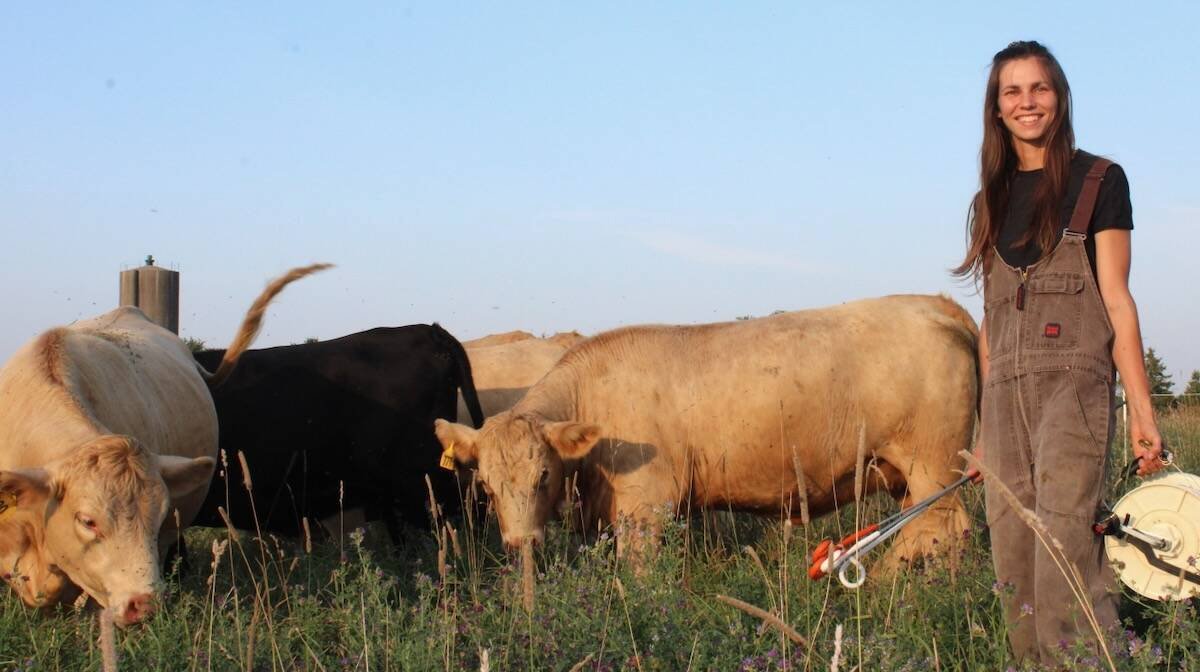
She welded bracings for awnings onto an old gravity box wagon and uses this for a movable shade structure. Water is run through an above-ground polyethylene pipe that she finds easy to move from paddock to paddock.
Around both the shade structure and water tank, she was initially concerned about the degree of soil disturbance from cattle gathering there for an extended time. But she observed how quickly the pasture recovered from that disturbance, and even decided she could sometimes use the extra fertilization and soil disturbance to work in some seed to rejuvenate the pasture stands.
Aging beef and diversifying markets
Both of the Martins, by contrast, grew up knowing cattle well — each having been raised on dairy farms on mainland Ontario. When they bought the Manitoulin farm, the beef herd on the island was dwindling due to the distance to market and the inconsistency of processing availability. But they were convinced the moderate climate and pockets of fertile soil made the region ideal for raising cattle on pasture and farm-grown winter feed.
Around the same time they developed their Pure Island brand, a community-owned abattoir was launched that was able to hang the farm’s carcasses for three weeks before cutting. Birgit Martin says this was key to being able to tell a unique story to consumers about their meat.
That abattoir has since closed but they found another with sufficient freezer space — at Val Gagné near Matheson — to hang for three weeks before cutting. It’s a long way to truck cattle and haul back meat, Martin said, but it’s worth it to be able to access the value-added service that contributes to Pure Island’s signature flavour.
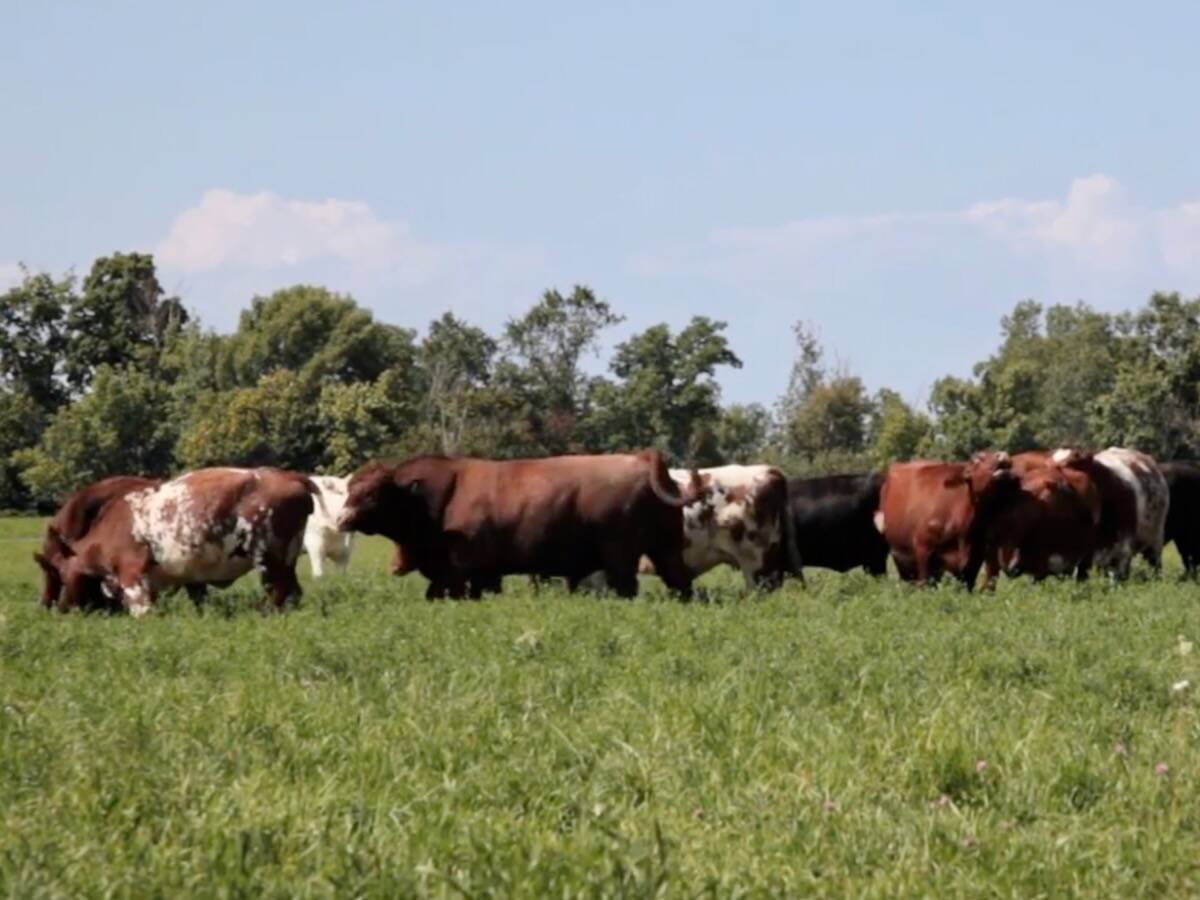
“Our cool, marine micro-climate is ideal for producing excellent forage crops for our Angus and Shorthorn herd,” the farm’s website boasts — an initiative the family first embarked on by hiring a marketing company, but has since taken over as part of their wide range of responsibilities.
From those genetics, the offspring are chosen based on physical observation to either enter the grass-finished or grain-finished stream. Martin said they used lab testing to determine the omega-3 fatty acid profile of their grass-finished product differs significantly from conventional beef — a fact they promote as part of their marketing strategy.
Most of their grass-finished beef is sold in the Greater Toronto Area, while the Sudbury area and other local customers account for the bulk of the grain-finished market.
The post Direct-marketing grass-finished beef takes a strong business plan appeared first on Farmtario.


