At one point, the Pacific Northwest lost three square miles of old-growth forest every week to clearcutting. Now, the Trump administration is returning to this practice.
In February 2026, the Bureau of Land Management (BLM) proposed changes to management plans for nearly 2.5 million acres of Oregon forests. The goal is to increase timber production fourfold and remove protections for old-growth forests and the endangered species that rely on them.
This proposal comes at a time when science is revealing even more about the importance of these forests. They are some of the best carbon-storing ecosystems on Earth, vital reservoirs of biodiversity, and essential for the communities nearby. If lost, they cannot be replaced within any human lifetime.
What Is an Old-Growth Forest?
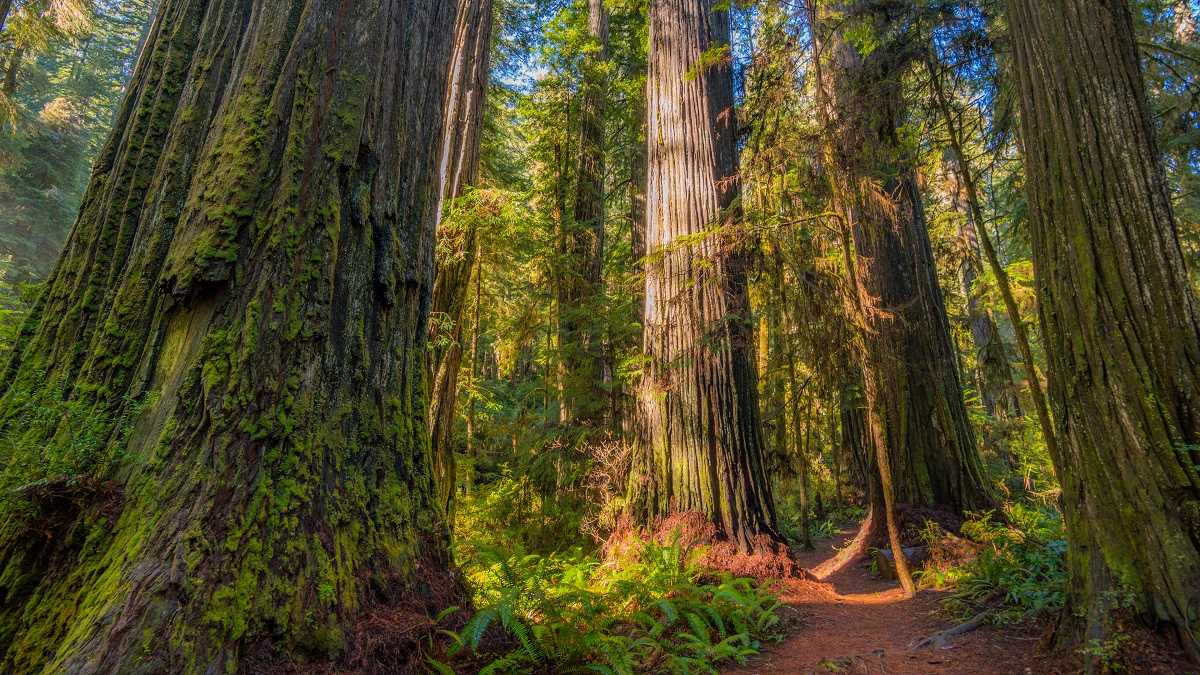
Researchers first used the term in the 1970s to describe complex, biodiverse forests at least 150 years old. Still, there is no single definition for “old growth.” In the U.S., a federal rule protects trees over 21 inches in diameter in six national forests, where most old-growth forests are found. Many environmentalists define old growth as any forest that has never been logged. All definitions focus on complexity: old-growth forests have layered canopies, fallen logs in different stages of decay, and an understory full of fungi, ferns, and centuries of stored soil carbon.
In western Oregon, this complexity shows in Douglas fir and western red cedar trees that grow up to 200 feet tall, covered in moss so thick it hides their trunks. Even today, these forests are among the most productive timberlands in the world.
The Carbon Case, Revised and Strengthened
It was once believed that only young forests accumulated carbon while old forests merely stored it. Scientists now know that is wrong. A landmark global analysis of 519 forest carbon-flux estimates found that in forests aged 15 to 800 years, net carbon balance is usually positive. Old forests keep sequestering — they are not neutral.
A 2024 study in AGU Advances compared old-growth forests in the Pacific Northwest to younger managed forests. It found that old-growth forests produce more biomass for each unit of water used, keep storing carbon even as they age, and are much more resilient to drought than replanted forests. This resilience is especially important as Oregon faces hotter, drier summers, making the drought-buffering ability of old-growth forests just as valuable as their carbon storage.
A 2025 study in Science of the Total Environment found that mature and old-growth forests are better than younger forests at tackling both climate change and biodiversity loss at the same time. Plantations and second-growth timber stands cannot match these benefits.
The numbers show that cutting down old-growth trees is a bad idea. Bev Law, professor emerita at Oregon State University, told reporters that bringing BLM harvests back to 1 billion board feet a year, as the Trump administration aimed for in 2019, would be “insanity.” These forests can live for thousands of years. The carbon stored in their wood and soil stays out of the atmosphere and keeps building up over time.
Oregon Becomes a Battleground
The main threat from the Administration is focused on western Oregon’s O&C Lands. These lands, once granted to the Oregon and California Railroad, were returned to federal ownership in 1916 and now cover about 2.5 million acres across 17 counties managed by the BLM. In the 1960s, annual timber harvests often topped 1 billion board feet, reaching a peak of 1.638 billion in 1964. Harvests dropped sharply in the 1990s after the northern spotted owl and marbled murrelet were listed as threatened, and the Northwest Forest Plan shifted management toward conservation.
In February 2026, Trump’s BLM announced plans to revise management for these lands, aiming to bring timber production back to pre-1990 clear-cutting levels. The proposal covers all 2.5 million acres across 17 counties, including well-known areas such as the Sandy River watershed, North Fork Clackamas, the Valley of the Giants, the Upper Molalla River, and Alsea Falls. Since 2000, harvests have ranged from 45 to 275 million board feet per year. The new plan would raise that to 1 billion board feet.
The public comment period closed March 23, 2026; a record of decision is tentatively scheduled for February 12, 2027. That timeline could outlast the current administration, but the proposal, once formally proposed, would constrain future management options. The idea is to strip away environmental protections for salmon and drinking water and fire and fuels to maximize timber extraction across public lands in western Oregon, said George Sexton, conservation director for KS Wild.
The Roadless Rule and the Bigger Picture
The BLM proposal is part of a larger rollback. In August 2025, USDA Secretary Brooke Rollins announced that the Trump administration plans to end the 2001 Roadless Rule. This Clinton-era rule bans road building, logging, and mining on about 58 million acres of federal forest land, including 2 million acres in Oregon. Rollins described the rule as burdensome, outdated, and one-size-fits-all.
Environmental groups immediately promised litigation. “If the Trump administration actually revokes the roadless rule, we will see them in court,” said Earthjustice attorney Drew Caputo. Oregon Rep. Andrea Salinas introduced the Roadless Area Conservation Act in June 2025 to codify the rule into law, drawing nearly 50 House cosponsors.
In early 2025, Trump signed two executive orders telling agencies to speed up timber sales and avoid environmental reviews for more than 400 threatened and endangered species, such as wild salmon, marbled murrelets, and spotted owls. A Republican budget bill passed in the Senate also required the Forest Service to increase timber production by at least 250 million board feet each year and to sign 20-year logging contracts, regardless of the environmental impact.
Worth More Standing
There is a real economic case for logging, but it has limits. Many Oregon counties have struggled financially since logging declined in the 1990s, and timber revenue is important for rural budgets. However, industry representatives admit that most mills can no longer handle large old-growth logs. Technology now focuses on smaller and medium-sized wood, according to Amanda Sullivan-Astor of the Associated Oregon Loggers. The economic setup for harvesting old-growth trees is missing, even before considering legal challenges that could delay any plans for years.
The value of old-growth forests goes far beyond timber, and this is not reflected in timber prices. These forests support a huge variety of life, including not just spotted owls and murrelets, but also salmon, elk, bears, rare fungi, and plants that cannot survive even in plantations of the same species. Old-growth forests help manage water, protect drinking supplies, prevent erosion and landslides, and shield nearby communities from wildfires. This is the opposite of what the BLM claims clearcutting would do. In fact, the BLM’s own research has shown that clearcutting old-growth rainforests actually increases fire risk.
The fungal networks under the forest floor are getting more attention from scientists and in popular books. These networks add another layer of complexity that cannot be replaced. Scientists are still learning how trees use these fungal connections to share nutrients and chemical signals over many years. These systems take centuries to form and cannot be recreated in plantations.
Any unknown benefits that old-growth forests might offer will be lost forever, all for about $1,000 per centuries-old tree, the current price for old-growth timber.
What You Can Do
The BLM’s process for revising O&C Lands management is still ongoing. Although the public comment period ended in March 2026, the Environmental Impact Statement process is still underway, and legal challenges are almost certain. Here are some ways you can stay involved:
- Follow Oregon Wild, Cascadia Wildlands, and Earthjustice for updates on litigation and comment opportunities.
- Contact your federal representatives about the Roadless Area Conservation Act and urge them to cosponsor legislation making the Roadless Rule permanent law.
- Support the Old-Growth Forest Network, which works to designate protected native forests in every county in the U.S.
- Visit and spend time in public lands. Your presence and spending as a visitor help show the value of forests beyond timber, which is important for land use planning.
- If you live in a county with O&C Lands, go to local commissioner meetings where timber revenue is being discussed. While logging does bring in money, there are also strong financial reasons to keep forests intact, protect clean water, and support outdoor tourism.
Related Reading
Ecosystem Services: Nature’s Gifts That Help Us Thrive
Restore Our Earth With Reforestation
Native Wisdom in Land Management
Biochar Was a Billion-Ton Dream. The Reality Is More Complicated.
Editor’s Note: This article was originally published by Gemma Alexander on August 9, 2021, and was substantively updated in April 2026.
The post Worth More Standing — The Value of Old-Growth Forests appeared first on Earth911.