
Grocery prepared foods are playing a larger role in how shoppers plan meals. Customers are buying ready-to-eat entrées, hot sides, chilled salads, bakery items, rotisserie meals, sushi, and grab-and-go options as convenient alternatives to restaurant meals.
The share of consumers choosing deli-prepared foods instead of restaurant meals has grown significantly in recent years, showing how important grocery prepared foods have become in today’s meal landscape.
For grocery operators, that creates a strong opportunity. But it also creates packaging challenges that are different from standard packaging for restaurants. Grocery prepared foods often need to sit in a display case, attract shoppers, maintain freshness, travel home, and sometimes be reheated later.
That means packaging is not just a container. It is part of the product experience.
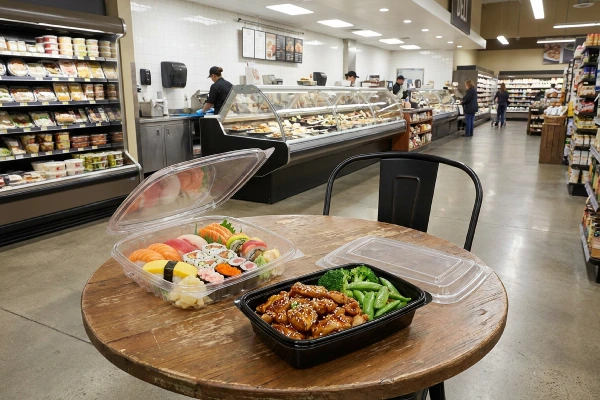
The right foodservice packaging solutions can help protect food quality, improve shelf appeal, reduce messes, and support the fast-moving demands of prepared foods departments.
Grocery Prepared Foods Need More Than Standard Takeout Packaging
Restaurant takeout packaging is usually filled after an order is placed. Grocery prepared foods are different. Many items are packaged before purchase and displayed in cold cases, hot cases, deli counters, bakery sections, or grab-and-go areas.
That means packaging for grocery deli has to perform in two key moments:
- Before purchase: It must help food look fresh, visible, and appetizing.
- After purchase: It must help protect food during handling, transport, storage, and reheating.
For grocery prepared foods programs, that combination matters. A package has to support merchandising, food protection, deli labor, and the customer experience at the same time.
Key Packaging Challenges for Grocery Prepared Foods
| Challenge | Packaging Need | Business Benefit |
|---|---|---|
| Food sits in display cases before purchase | Clear, secure, right-fit containers | Better freshness and stronger shelf appeal |
| Shoppers buy with their eyes first | High product visibility | More confidence at the point of purchase |
| Sauces and moist foods can leak | Leak-resistant closures | Fewer messes and better customer satisfaction |
| Hot and cold foods need different handling | Material-specific packaging | Better food quality after purchase |
| Deli teams pack many SKUs quickly | Stackable, easy-close formats | Faster workflow and easier stocking |
| Customers expect better packaging choices | Practical material options | Better alignment with today’s foodservice needs |
1. Keeping Food Fresh in the Deli Case
Freshness is one of the biggest challenges in packaging for prepared foods. A restaurant meal may be packed and eaten soon after preparation. Grocery prepared foods may sit longer before the customer picks them up.
During that time, poor packaging can affect texture, appearance, and perceived quality. Salads can wilt. Pasta can dry out. Fried foods can lose texture. Sauced items can shift or leak. Bakery items can lose visual appeal.
Strong prepared foods packaging should help:
- Maintain product freshness
- Protect food from drying out
- Reduce leaks and spills
- Support clear merchandising
- Keep the product looking appetizing in the case
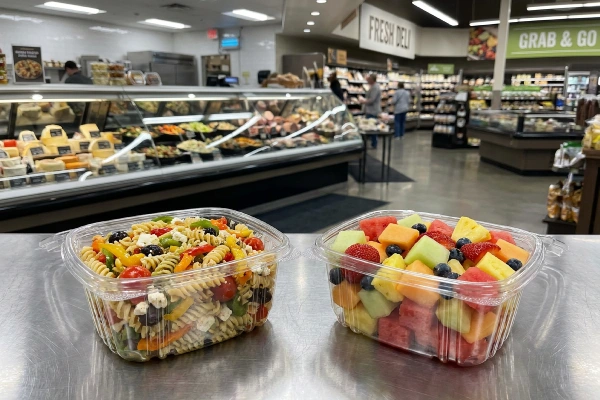
Genpak’s AD Deli Containers are designed for grab-and-go product display and deli case applications. With transparent packaging and a patented 360° seal that provides a leak-resistant closure, AD Deli containers help prepared foods look fresh while supporting the performance grocery operators need.
2. Making Prepared Foods Look Appealing Before Purchase
In grocery retail, visual appeal is critical. Shoppers often decide in seconds whether a salad, entrée, snack, or side dish looks fresh enough to buy.
This makes product visibility one of the most important requirements for packaging for grocery deli. Clear lids and transparent containers help shoppers see color, portion size, ingredients, and overall quality. That visibility can make prepared foods feel fresher, more premium, and easier to trust.
Genpak’s Grab and Go Food Containers are built around this need for visibility and portability. For grocery stores, convenience stores, schools, restaurants, and other foodservice operations, grab-and-go packaging helps products stand out while making meals easier for customers to take with them.
These formats can support popular prepared foods such as salads, sushi, cheese, meats, brownies, macaroni and cheese, meatballs, and other hot or cold grab-and-go items.
Before the customer tastes the food, the package has to present it well.
3. Preventing Leaks During Shopping and Transport
Leaks are one of the fastest ways to damage the customer experience. Grocery prepared foods may move from the deli case to the cart, from checkout to the grocery bag, and from the car to the refrigerator or microwave. If the package leaks, the customer remembers the mess more than the meal.
Leak resistance is especially important for:
- Pasta dishes
- Deli salads
- Sauced proteins
- Gravies and sides
- Fruit cups
- Dressings and dips
- Heat-and-eat meals
This is where durable closures and proper container fit become essential. A secure package helps protect the meal, the bag, the display case, and the customer’s confidence in the prepared foods program.
For grocery operators, leak-resistant packaging can also help reduce cleanup, improve shelf organization, and support a more consistent prepared foods experience.
4. Supporting Hot, Cold, and Reheatable Applications
Prepared foods departments handle a wide range of applications. One section may need cold packaging for salads, sushi, fruit, snacks, and bakery items. Another may need heat-tolerant packaging for macaroni and cheese, meatballs, hot sides, rice bowls, and entrées.
That is why material selection matters. Cold foods need packaging that supports visibility, freshness, and secure storage. Hot foods need packaging that can handle heat, moisture, venting, and transport. Reheatable meals may need microwave-safe formats that help customers enjoy the food with less friction after purchase.
Genpak’s Polypropylene Food Containers are relevant for hot, reheatable, and travel-ready meals. Genpak’s polypropylene containers are microwavable, leak-resistant, stackable, and designed to help maintain meal freshness across grocery, restaurant, and convenience store applications.
For operators, the package should match the food application. The same container is not always right for a chilled salad, a hot entrée, and a microwave-ready meal.
5. Helping Deli Teams Work Faster
Prepared foods packaging also has to work for employees. Grocery deli teams often pack many products in different sizes, formats, and temperature zones. If packaging is hard to close, difficult to stack, or confusing to match with lids, it can slow down the operation.
The right foodservice packaging solutions can help teams move faster by supporting:
- Easy filling
- Secure closing
- Stackable displays
- Organized stocking
- Multiple portion sizes
- Faster grab-and-go setup
- Cleaner merchandising areas
For high-volume grocery prepared foods programs, efficiency matters. Packaging should support the workflow, not complicate it.
This is especially important when grocery stores are building prepared foods programs that compete with restaurant convenience. The food needs to be fresh and appealing, but the operation behind it also needs to be practical and repeatable.
6. Balancing Sustainability With Real-World Performance
Sustainability is an important part of today’s packaging conversation. But grocery prepared foods still require packaging that can handle moisture, grease, temperature, stacking, transport, and food safety expectations.
That balance is important. A more sustainable package only works if it also performs in real foodservice conditions.
Sustainable packaging decisions should still account for:
- Food type
- Temperature needs
- Shelf life
- Leak resistance
- Grease and moisture resistance
- Customer convenience
- Local disposal or composting infrastructure
Genpak’s Harvest® Fiber line supports this conversation with fiber-based packaging designed for hot and cold food applications. Harvest® Fiber products are made with annually renewable fibers, are microwavable, contain no added PFAS, and are commercially compostable.
For grocery operators, the goal is not choosing sustainability over performance. It is choosing packaging that supports both customer expectations and real prepared foods applications.
Why Packaging Matters for Grocery Prepared Foods Growth
Grocery prepared foods are competing for more meal occasions. To win those moments, operators need packaging that helps food look fresh, stay protected, and deliver a reliable experience after purchase.
The right packaging for prepared foods can help grocery teams:
- Improve product presentation in the case
- Reduce leaks and messes
- Support hot, cold, and reheatable foods
- Make grab-and-go displays more effective
- Help deli teams work more efficiently
- Strengthen customer confidence in prepared meals
Prepared foods programs depend on consistency. When customers trust that a meal will look good, travel well, and taste the way they expect, they are more likely to come back. Packaging plays a direct role in building that trust.
From clear deli containers to microwave-safe polypropylene options and fiber-based alternatives, Genpak offers packaging designed to support the real demands of grocery, restaurant, and foodservice operations.
Grocery prepared foods need packaging that does more than hold food. They need packaging that helps sell the product, protect freshness, prevent leaks, and support a smoother operation from prep to purchase.
For grocery retailers, the right foodservice packaging solutions can help prepared foods look better in the case, travel more reliably, and create a better customer experience after checkout. When packaging for grocery deli is chosen with the full food journey in mind, it can support stronger merchandising, better food quality, and more consistent prepared foods performance.
The post Packaging Challenges Unique to Grocery Prepared Foods appeared first on Genpak.


