
Water is essential for life, but undetected contaminants could have a negative impact on the health of your family and livestock.
Heather Murphy told attendees of the Ontario Forage Council’s April webinar about the effects of grazing management on pathogens in livestock and the environment that a rotational beef farm tour prompted a three-year study on the health impacts of grazing systems.
“(The producers) wanted more evidence on the potential health impact of rotational grazing on their cattle,” said Murphy, who has a Ph.D. in environmental engineering from the University of Guelph and has worked internationally on projects related to water, sanitation and hygiene.
Since 2020, she has led the Ontario Veterinary College’s Water, Health and Applied Microbiology Lab, focusing on links between human, animal and environmental health.
In 2022, she launched a study to determine whether rotational beef grazing reduces the occurrence and concentration of pathogens — including antimicrobial-resistant pathogens — in livestock, water, soil and wildlife, and whether either system had better environmental, animal and human health impacts.
“We studied this on real farms instead of doing it in a controlled environment, which is nice but doesn’t always translate to the real world,” she said. “We had (the five rotational and four conventional grazing) farms matched by region to try and control for soil and climate.”
What they collected
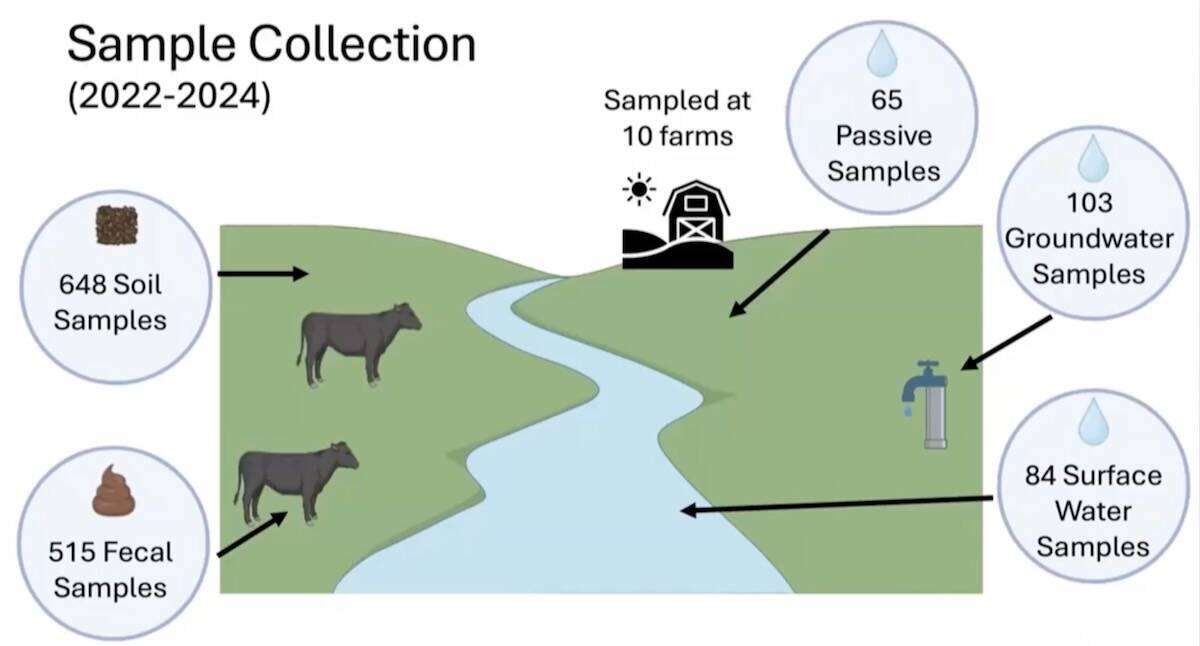
Murphy’s team of livestock producers, ruminant and wildlife veterinarians, and water and soil microbiologists collected and tested 648 soil samples, 515 fecal samples, 84 water surface samples, 103 ground water samples and 65 passive water samples over three grazing seasons from May to September.
Initial hypotheses were that rotational grazing would increase the likelihood of pathogen die-off compared to conventional grazing, reducing the number of organisms reaching ground and surface water, limiting cattle interaction with manure and lowering animal health risks.
Murphy focused on “traditional indicator organisms” of enteropathogenic E. coli, Shiga-toxin-producing E. coli, Salmonella, Campylobacter, and protozoa or parasites Cryptosporidium and Giardia using fecal, water, soil and wildlife samples, along with rainfall data and a detailed animal health survey.
“We also looked at antimicrobial-resistant E. coli in the fecal samples,” she said, because resistance can be transferred to other cattle gut organisms, which is problematic.
Murphy tested for 15 genes in the DNA of five pathogens and for ruminant Bacteroides markers, a bacterium shed in high concentrations in cattle manure. Each positive sample was tested in triplicate to confirm pathogen detection.
Murphy noted an “unknown” factor of the study was the viability of the pathogens measured, meaning whether they could infect cattle or humans.
“It’s possible some of the organisms we measured and found were actually dead, and we’re just seeing their DNA,” she explained. “But we believe a large portion of them were definitely viable.”
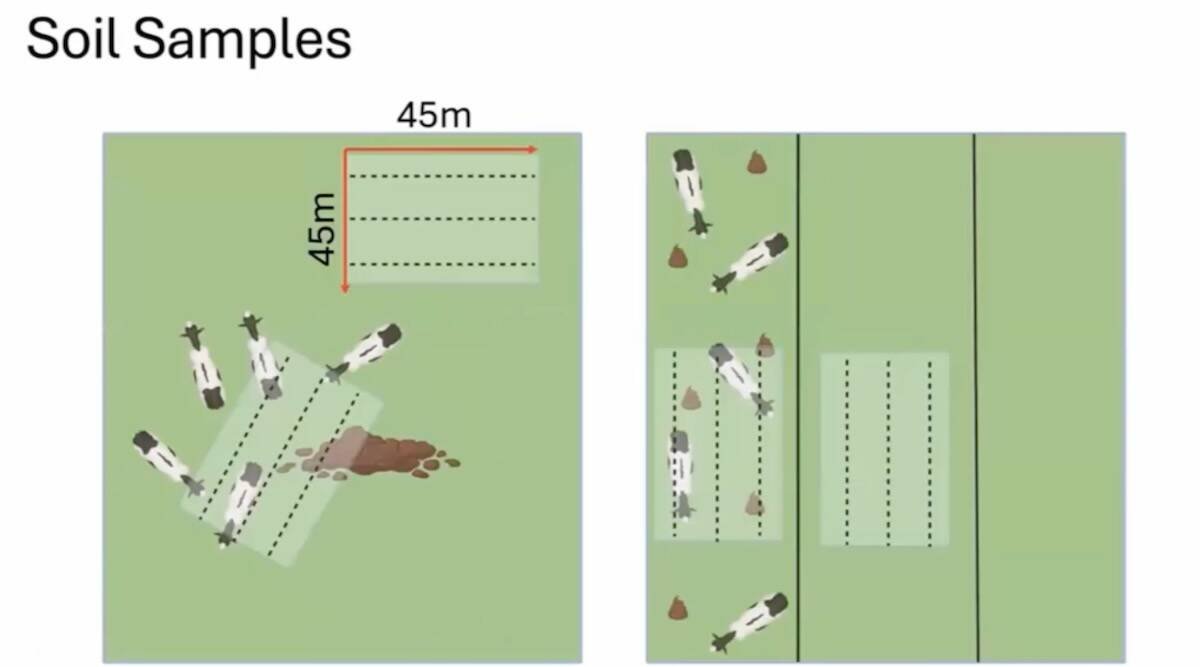
Data from the producers’ animal health survey provided insight into the farm’s production and land-use history, farming practices (conventional or rotational), including the number of days grazing, paddock rest time, stocking density, cattle age, diet, and antibiotic, vaccine and deworming history.
Murphy said research shows that rotational grazing improves soil organic content, nitrogen-fixing capabilities and plant distribution while limiting spot grazing. She said there is some evidence that water quality improves via increased stream bank stability and reduced fecal coliforms and turbidity. However, there is even less research evidence on the impact on cattle and nutritional health.
Fecal pathogens
“In terms of the pathogens we found in fecal samples, Giardia (95 per cent) and Cryptosporidium (77 per cent) were the organisms we found in most samples,” Murphy shared. “As well as Shiga toxin-producing (E. coli at 81 per cent).”
High concentrations of fecal enterococci can indicate poor livestock health, environmental contamination and may impact human health, she stated.
Pathogen shedding by cattle is complex with interrelated key factors, including: stocking density, which contributes to higher shedding rates; cattle age; pasture or paddock size; grazing days; supplemental feed; deworming; and pasture manure application.
“Features of rotational grazing seem to be beneficial for pathogen reduction in water and soils,” Murphy stated, adding that balancing stocking density and increasing pasture rest to 30 days could be managed by extending grazing by a few days on slightly larger pastures.
Increased composting time before applying manure could also limit fecal enterococci levels.
In addition to common farm management practices that influence shedding, she said rainfall or soil moisture also contributed to pathogen presence across water and soil samples.
“In terms of water samples, we collected one-litre grab samples from groundwater, so, a well if there was one on site, or surface water,” Murphy explained. “And we analyzed them for what we call traditional indicator organisms, so E coli, total coliforms and fecal enterococci.”
Test and treat water sources
Murphy’s findings indicated that cattle drinking water sources far exceeded recommended guidelines for microbial water quality and pathogens were found in all water sources, including wells.
“People believe groundwater is free of microbial contamination, especially if it’s a deep well,” she said. “But Ontario has a lot of fractured rock, which means pathogens can rapidly transport into our aquifers and contaminate our wells.”
The study found that seven wells tested positive for Cryptosporidium at some point, nine showed evidence of cattle fecal contamination, four contained Giardia, six had pathogenic E. coli, eight contained Salmonella, one had Shiga toxin-producing E. coli and 31 per cent of samples showed evidence of ruminant Bacteroides. No Campylobacter was detected.
“All of the wells (tested), but one, I believe, was being used by the household,” she explained. “A couple of our producers went out and bought treatment systems and started treating their water after we provided the results.”

One producer lost calves, and the cows had scours, Murphy stated, adding that the subsequent fecal sample tests revealed high counts of the pathogens the study had found in the water.
“We can’t say for certain that (the study’s) water quality results were indicative of the farm that the cattle were on,” she said. “Or if they were from upstream activities from other livestock, given these were really heavy regions where there’s lots of livestock activity and manure being spread.”
Chlorine treatment
Murphy recommends testing and treating for chemical contamination, since wells are rarely free of it, especially after heavy rainfall that can introduce contamination.
“You want to get it tested. If it’s naturally occurring chemicals, usually it’s pretty stable, so testing every few years is fine,” she stated. “It’s not going to fluctuate unless there’s new industrial applications of things going on near your property.”
Chlorine works to control bacteria but is ineffective against protozoa or parasites in surface water or unknown well water, because cryptosporidium and giardia are chlorine-resistant, she explained.
“I typically recommend people use UV light as a water treatment option,” she explained. “It’s an inexpensive one and it doesn’t cause taste issues for livestock.”
Murphy said the next steps include analyzing wildlife samples and launching a study this summer on the impact of water quality on cattle and calf health. She’s recruiting cow-calf operators for participation.
The post Ontario pastures show pathogens prevalent in water and soil appeared first on Farmtario.


