

Colleges and universities are under increasing pressure to improve sustainability performance, reduce waste related costs, support student expectations around environmental responsibility, and align operations with broader ESG and climate commitments. At the same time, procurement teams and facilities departments are expected to simplify purchasing processes, maintain compliance, and manage budgets efficiently.
One of the most effective ways universities can streamline the purchasing of waste and recycling infrastructure is through cooperative purchasing contracts. Recycle Away participates in the E&I Cooperative Services contract program, giving colleges and universities a simplified and compliant way to procure recycling bins, compost collection systems, landfill stations, outdoor waste containers, signage, and campus waste management infrastructure.
This guide explains how universities can leverage the E&I contract to improve campus sustainability performance while simplifying procurement and accelerating implementation.
What Is E&I Cooperative Services?
E&I Cooperative Services is one of the largest member owned sourcing cooperatives focused exclusively on education. The organization helps colleges and universities access competitively solicited contracts for products and services used across campus operations.
Cooperative purchasing agreements are designed to simplify procurement while ensuring pricing competitiveness and compliance. These agreements allow institutions to purchase from approved vendors without conducting a separate lengthy bid process for every project.
For facilities and sustainability teams, this means faster implementation of projects while maintaining procurement standards and administrative efficiency.
Why Waste and Recycling Infrastructure Matters on Campus
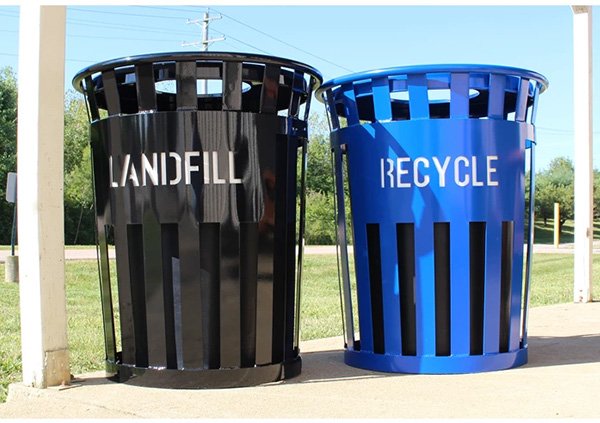
Waste management is one of the most visible sustainability systems on a university campus. Students, faculty, visitors, athletics fans, custodial teams, dining staff, and facilities personnel interact with waste systems every day.
Poorly designed systems often lead to:
- Recycling contamination
- Low diversion rates
- Overflow and cleanliness issues
- Increased custodial labor
- Confusing user experiences
- Missed sustainability goals
- Negative perceptions of campus operations
Well designed waste systems support:
- Higher recycling and compost participation
- Better campus cleanliness
- Improved operational efficiency
- LEED and sustainability initiatives
- Student engagement and behavior change
- Campus branding and aesthetics
- Measurable diversion and ESG reporting
The physical infrastructure itself plays a major role in shaping user behavior. Clear signage, standardized streams, durable containers, and properly planned collection systems make participation easier and improve outcomes across campus.
How the E&I Contract Simplifies Purchasing
Using the E&I contract with Recycle Away allows universities to simplify the purchasing process for waste and recycling infrastructure.
Benefits can include:
Streamlined Procurement
Because the contract has already been competitively solicited, institutions may be able to purchase directly through the cooperative agreement instead of initiating a separate RFP process for each project.
This can significantly reduce administrative burden and accelerate project timelines. Cooperative purchasing agreements are widely used by educational institutions to streamline purchasing while maintaining compliance.
Access to Specialized Waste Infrastructure
Universities require a wide range of waste and recycling systems across many different campus environments, including:
- Academic buildings
- Student unions
- Dining halls
- Residence halls
- <a href="” target=”_blank”> Stadiums and athletic facilities
- Outdoor campus spaces
- Laboratories and specialized facilities
- Office buildings
- Event venues
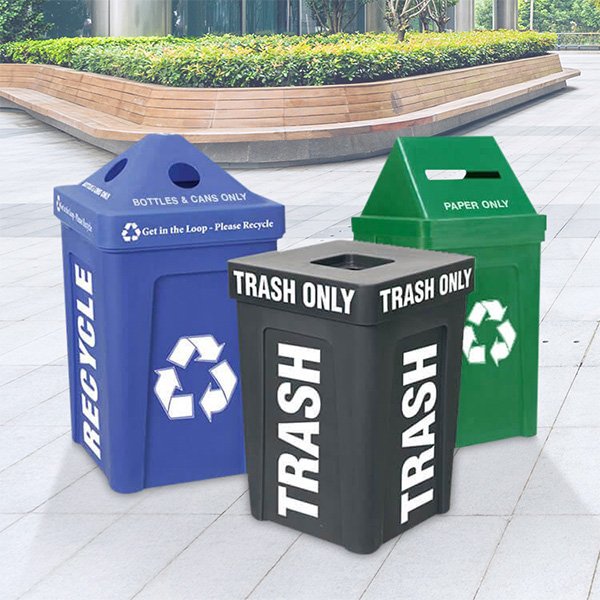
Recycle Away provides solutions designed specifically for commercial and institutional environments, helping schools standardize infrastructure across campus.
Consistency Across Campus
One of the biggest operational challenges universities face is inconsistency between buildings, departments, and collection systems.
The E&I contract makes it easier to standardize:
- Bin colors
- Openings and stream design
- Signage systems
- Branding
- Collection workflows
- Indoor and outdoor infrastructure
Standardization helps reduce contamination while making it easier for students and visitors to understand how to participate correctly.
Support for Sustainability Goals
Many universities have adopted Zero Waste, climate action, or diversion goals. Effective waste infrastructure is essential to achieving those targets.
A properly designed campus system can support:
- Waste diversion improvement
- Composting expansion
- Student sustainability engagement
- LEED initiatives
- ESG reporting
- Public sustainability commitments
- Green campus certifications
The EPA identifies recycling and waste reduction as core components of broader environmental sustainability and circular economy efforts.
How Universities Can Maximize the Value of the E&I Contract
Simply purchasing bins is not enough to create a successful campus waste program. Universities that see the best results typically approach waste management as a full operational system.
Here is how facilities and sustainability teams can maximize the value of the E&I relationship.
Step 1: Evaluate Existing Campus Waste Systems
Before purchasing infrastructure, universities should assess:
- Current waste streams
- Diversion rates
- Contamination issues
- Collection workflows
- Custodial processes
- Existing signage
- User confusion points
- Outdoor versus indoor collection needs
- Event and athletics waste generation
This creates a baseline for identifying operational gaps and infrastructure priorities.
Step 2: Standardize Waste Streams
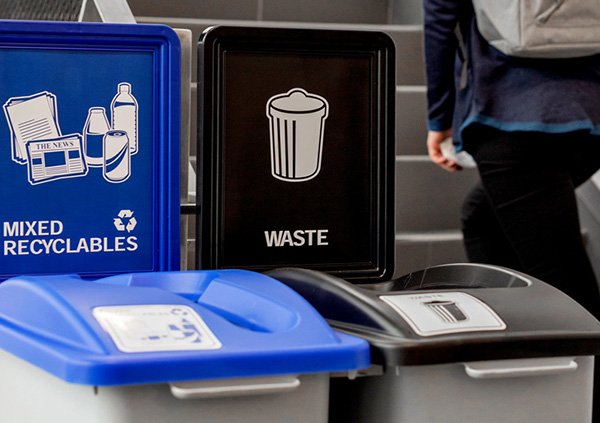
One of the most important strategies for improving campus diversion is simplifying the user experience.
Universities should aim to standardize:
- Recycling streams
- Compost streams
- Landfill streams
- Color coding
- Labels and terminology
- Bin openings
Consistency across buildings dramatically improves participation and reduces contamination.
Step 3: Design for User Behavior
Students make waste disposal decisions in seconds. The design of the system heavily influences whether materials end up in the correct stream.
Effective campus systems use:
- Clear signage
- Restrictive openings
- Visual examples
- Consistent placement
- Paired landfill and recycling stations
- High visibility infrastructure
Waste systems should be treated as part of the campus experience and behavioral design strategy, not simply janitorial equipment.
Step 4: Align Front of House and Back of House Operations
Many recycling programs fail because the front facing infrastructure is disconnected from operational realities.
Universities should evaluate:
- Custodial collection routes
- Loading dock logistics
- Dumpster and compactor locations
- Hauler requirements
- Storage capacity
- Collection frequency
- Labor efficiency
The best systems support both the user experience and the operational workflow.
Step 5: Use Waste Infrastructure to Support Campus Branding
Campus sustainability is increasingly part of institutional identity. Students and prospective families often evaluate sustainability initiatives when considering schools.
Well designed recycling infrastructure can reinforce:
- Sustainability commitments
- Campus aesthetics
- Student engagement
- Institutional branding
- Public environmental leadership
Custom signage , branded stations, and cohesive infrastructure help universities demonstrate visible commitment to sustainability goals.
Applications Across Campus
Universities can leverage the E&I contract with Recycle Away for projects including:
- Recycling rooms
- Compost collection
- Move in and move out waste management
- Student education systems
- Compost collection stations
- Tray return waste systems
- Back of house organics collection
- Food waste reduction programs
- High volume outdoor stations
- Tailgating waste management
- Fan facing recycling systems
- Event waste diversion initiatives
- Centralized waste stations
- Hallway recycling systems
- Classroom collection infrastructure
- Quad and pathway stations
- Parks and recreation areas
- Transit and bus stop collection systems
Why Cooperative Purchasing Matters for Higher Education
Facilities departments are increasingly expected to move quickly while maintaining procurement compliance and budget discipline.
Cooperative purchasing agreements help universities:
- Reduce procurement complexity
- Accelerate project implementation
- Access pre negotiated pricing
- Standardize purchasing across departments
- Improve operational efficiency
These agreements are particularly valuable for large scale campus standardization projects where consistency and speed matter.
Building a Long Term Campus Waste Strategy
The most successful university waste programs treat waste management as an integrated system involving:
- Infrastructure
- Operations
- User behavior
- Sustainability strategy
- Data collection
- Custodial workflows
- Student engagement
- Procurement planning
Using the E&I contract with Recycle Away gives universities a streamlined pathway to implement scalable waste and recycling systems that support both operational and sustainability goals.
As campuses continue pursuing Zero Waste initiatives, carbon reduction commitments, and improved student engagement, waste infrastructure will remain one of the most visible and measurable demonstrations of institutional sustainability leadership.


