
The clean energy industry has never lacked breakthrough technologies. What it has lacked is industrial discipline. For every promising product unveiled with glossy renderings and ambitious timelines, there remains the harder question… Can it actually be manufactured… repeatedly, affordably, and at the scale global infrastructure demands?
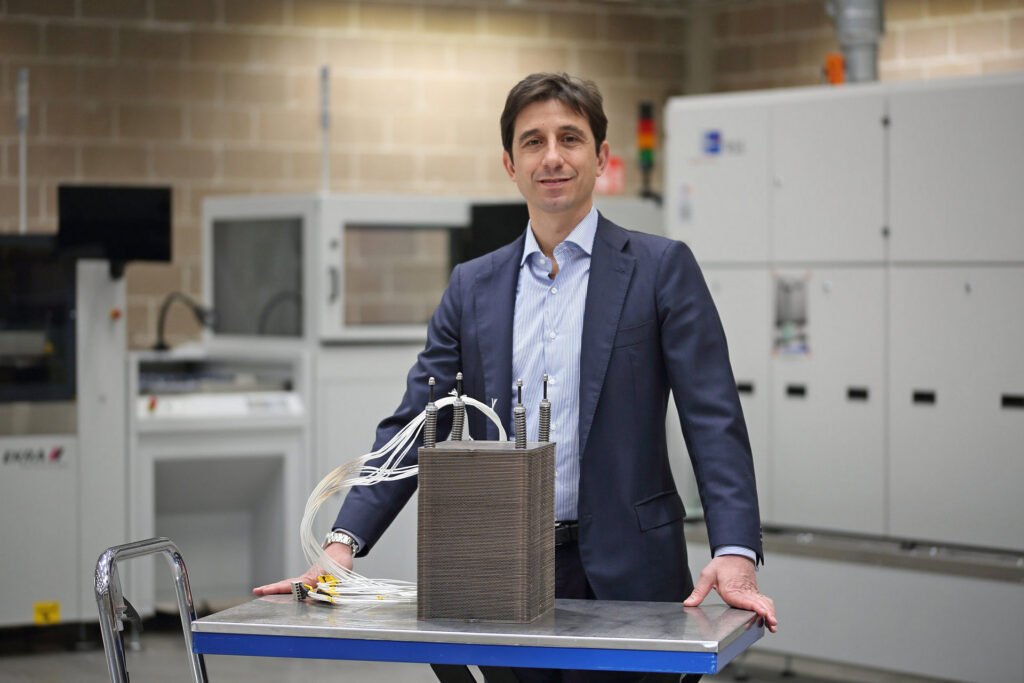
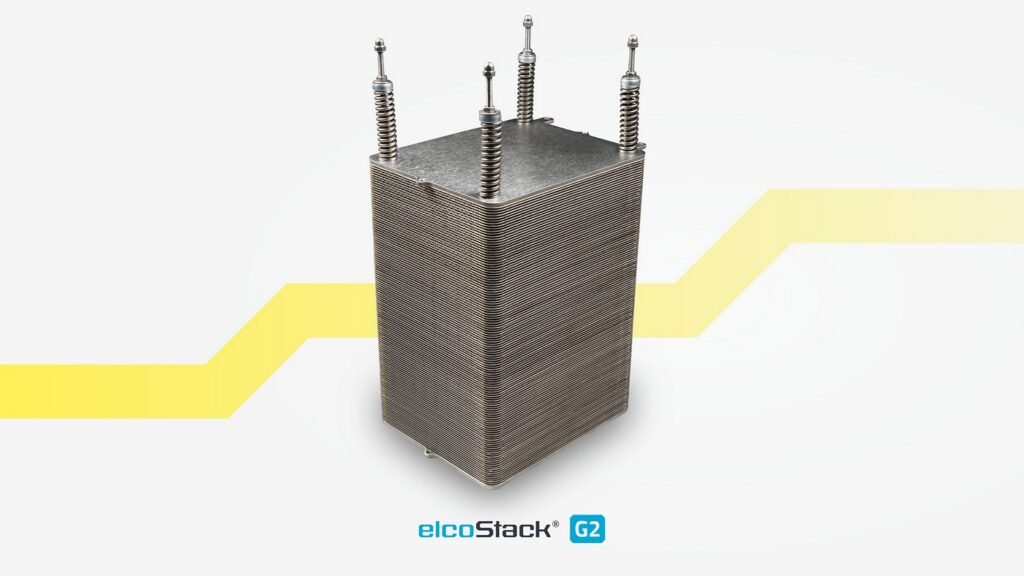
These trends informed the recent launch of the elcoStack E3000 G2, Elcogen’s next-generation solid oxide fuel cell and electrolyser stack platform. On the one hand, the announcement is about a product offering with higher efficiency, longer operational life and lower costs. In practice, however, it also signals something more consequential. And that’s a deliberate move away from bespoke engineering towards industrialised unit production. The distinction matters.
While much of the hydrogen and fuel cell sectors remain focused on performance metrics and pilot deployments, at Elcogen we are also betting that manufacturability itself will become the decisive competitive advantage. Our newly operational ELCO I facility in Tallinn, Estonia (a 14,000m² plant designed for standardised, automated, high-throughput production) sits together with the G2 stack at the centre of that strategy. And crucially, at Elcogen we do not intend for the model to remain in Estonia.
We’ve made no secret about the positioning of ELCO I as a replicable blueprint that can be licensed and localised internationally, allowing partners to manufacture solid oxide technology closer to end markets at a time when tariffs, trade tensions and local-content requirements are increasingly reshaping industrial policy. It’s arguably a pragmatic vision for a sector often dominated by future-facing rhetoric.
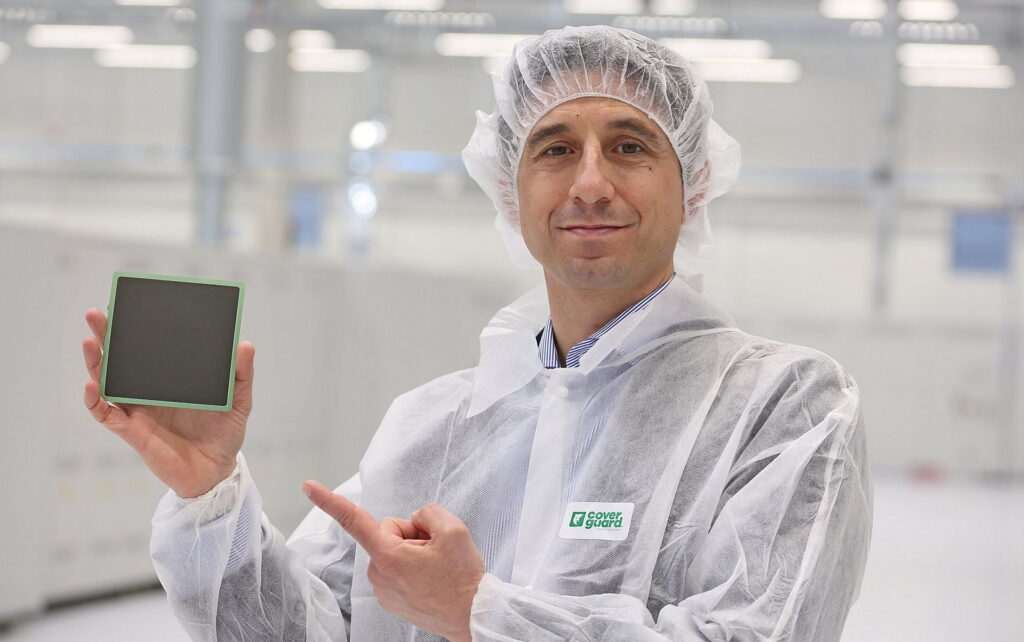
Rather than speaking exclusively about the technological breakthroughs, Stefano Piscitelli, Elcogen’s Chief Operations Officer and Executive Board Director, frames the challenge more bluntly… Clean energy technologies will only succeed if they can compete economically with established systems at industrial scale.
Since joining Elcogen in 2023, Piscitelli has led the company’s transformation into a leading global industrial manufacturer. Building on Elcogen’s best-in-class product as a solid foundation, his work has centered on scalability and cost competitiveness. That is to say… simplifying components, automating processes, and improving yields without sacrificing quality. In short, he has helped transform our solid oxide technology into a mass-manufacturable platform.
We spoke to Piscitelli about why scaling clean energy now looks as much like industrial engineering as climate innovation, why localisation is becoming unavoidable, and why he believes the companies that master manufacturing, not only technology, will define the next phase of the energy transition.
What is the core problem the E3000 G2 platform is designed to solve?
“The biggest shift is moving away from bespoke design and manufacturing towards something far more standardised and industrialised,” says Piscitelli.
“At the core of the new platform is simplification. We have reduced the number of components that make up a stack, simplified the architecture and aligned the entire product design with the realities of mass manufacturing. The product and the factory have effectively been developed in parallel. That is an important distinction. This is not an isolated technology upgrade. It is a manufacturing-led redesign intended to make solid oxide systems repeatable, scalable and commercially viable at industrial volume.”
Why is manufacturability such an important part of this development?
According to Piscitelli, the economics of clean energy technologies increasingly come down to materials science and manufacturing efficiency rather than theoretical performance alone; in other words, how well a component performs is shaped as much by the system within which it sits as by the potential we engender within it, and innovation succeeds not when it maximises any single metric in isolation, but when it fits coherently within the broader scheme of things.
“We now understand solid oxide technology at an extremely granular level… down to the atomic cost structure,” he says. “We know precisely which costs come from raw materials and which come from processing.”
Unlike technologies such as PEM electrolysers or lithium-ion batteries, Elcogen’s platform does not depend heavily on scarce noble metals or constrained supply chains.
“One of the key advantages of solid oxide technology in general, and of Elcogen in particular, is that we rely on widely available and comparatively affordable materials, both in the ceramic powders used within the cells and in ferritic steel enabled by our lower operating temperatures. If we genuinely want to compete with incumbent technologies such as internal combustion engines or alkaline electrolysers, efficiency alone is not enough. Performance matters, durability matters, but ultimately the technology must also compete on capital cost”.
“As long as these systems remain niche, expensive and produced at small scale, they will never unlock their full market potential. The only way to break through is through simplified, automated and highly scalable manufacturing.”
From a manufacturing perspective, what were the biggest operational challenges in moving from the first-generation E3000 to the G2 platform?
“The biggest challenge was ensuring that scale-up did not compromise quality,” Piscitelli explains.
“That is precisely why we deliberately separated the factory validation phase from the ramp-up phase. We inaugurated the new facility in September 2025 and spent the following months proving that the new production processes could consistently deliver the required quality standards before pushing for higher volumes.”
In practice, he says, automation has improved both consistency and yield.
“Quality control is automated and integrated directly into the new production equipment. Environmental conditions are cleaner, and most process steps and material handling are now automated. Together, these improvements further enhance the already competitive quality and yields achieved in the previous pilot facility. Only once we fully validate the process do we begin ramping up production.”
Where does this technology sit within the wider energy landscape?
Elcogen’s strategy is intentionally application-agnostic, operating across both fuel cell (SOFC) and electrolysis (SOEC) markets. Piscitelli sees those markets evolving through very different journeys.
“We are seeing extremely strong demand for reliable, on-site power generation, particularly as grid connection queues continue to grow,” Piscitelli says. “Fuel cell systems can provide resilient, decentralised power with much faster deployment timelines.” he says. “One major player has already demonstrated that the demand exists at gigawatt scale, particularly for stationary power applications such as data centres”.
“Our objective is to enable our customers to compete in that market by giving them scalable, high-performance core technology at lower cost.”
Unlike our competitors in the sector that develop and sell fully integrated end-to-end power systems, Elcogen focuses on the underlying stack and cell technology that sits at the centre of those systems. Rather than pursuing vertical integration, we supply core components that allow OEMs and system integrators to build differentiated solutions around a common high-performance platform. That approach gives us exposure to multiple applications and markets without being tied to a single system architecture or business model.
The electrolyser market, meanwhile, is following a slightly slower but potentially larger trajectory.
“The hydrogen market today is becoming more focused and more realistic than it was several years ago,” he says.
“Previously, it was green hydrogen everywhere and at any cost. Now the market is concentrating around sectors where green hydrogen genuinely makes sense… steel, ammonia, e-fuels, and other hard-to-abate industries.”
Those sectors align particularly well with solid oxide electrolysis because of their existing waste heat streams that can be easily incorporated, allowing efficiencies of 75% to exceed 90%.
“These heavy industries already operate high-temperature processes, which allows SOEC technology to leverage waste heat very efficiently. That creates a strong operational fit.”
“But unlike fuel cells, electrolysers are typically deployed at very large plant scale. Those projects will not reach final investment decision unless the technology is proven, bankable and manufacturable on a scale. In this process, the key enabler is the deployment of sizable field demonstration plants, which Elcogen is actively pursuing through its customers.”
Beyond the factory itself, what operational and logistical challenges exist in scaling solid oxide technology globally?
Piscitelli believes localisation will become one of the defining industrial trends of the next decade.
“ELCO I was conceived not only as one of the largest mass-manufacturing facilities for solid oxide technology, but also as an industrialisation platform and a blueprint for scalable deployment,” he says.
That blueprint matters, as successful and rapid global expansion increasingly relies on localisation.
“Certain parts of the manufacturing process will inevitably need to be localised closer to customers, and the markets they serve” he says. “Not only for logistical and cost competitiveness reasons, but also due to politics, tariffs, and local-content requirements”.
This, he says, is where Elcogen believes it has an advantage.
“We now have a proven manufacturing model that has already gone through the difficult phase of validation, process optimisation and industrial scale up. That gives us a much stronger position when it comes to licensing and localisation.”
What are your key lessons in transferring high-performance manufacturing without compromising quality?
Piscitelli is clear that operational discipline matters as much as speed of execution.
“Production scale-up cannot come at the expense of quality. Performance and reliability are what differentiate our products from the competition, and we are not willing to compromise either in pursuit of higher capacity or lower costs.”
Elcogen’s approach has been to validate every process incrementally before scaling further.
“We deliberately kept some operations manual during the initial deployment phase [of ELCO I] because it allowed us to build trust in the process and better understand operational behaviour.”
“Now that we have validated the system, we can progressively introduce higher levels of automation into material handling and future production lines.”
What comes next for the E3000 G2 and for Elcogen more broadly?
Piscitelli describes the current phase as only the beginning of a much larger industrialisation effort.
“The immediate priority is utilisation,” he says. “We now need to fully ramp up the factory and drive volume through the G2 platform.”
At the same time, Elcogen plans to continue refining the technology in parallel with scale-up.
“This is an important evolution of the platform architecture, not the final destination by any means,” he says. “We already have further process improvements and automation upgrades under development.”
Future production lines, he says, will incorporate the operational lessons learned from ELCO I.
“The next lines will benefit from everything we have already learned… all the operational pain, all the process optimisation, all the validation work”.
“That is ultimately what we are licensing. The technology itself, but also the industrial experience behind it.”
Text: Laura Quinton | Photos: Andres Tarto
The post Inside the challenge of scaling clean power with Elcogen COO Stefano Piscitelli appeared first on Bridging the Energy Transition.


