
Diagnostic approaches continue to evolve in veterinary medicine, and this article will review some of the more novel developments in swine disease surveillance.
There are many reasons diagnostic tests are performed. In swine production, we may be trying to assure a population, or a certain stage of production, is free from specific diseases.
Modern pig production often requires weaned pigs to be moved from the sow farm where they are born to nursery or finisher sites, often great distances away. Various diagnostic approaches will help us with trace-in or trace-out movements to understand disease spread and establish biocontainment strategies.
A good example of this diagnostic approach is when a farm breaks with porcine epidemic diarrhea (PED) virus and we need to know how this farm became infected and whether this farm infected other farms “downstream.”
Farms that are actively eradicating diseases, for example, porcine reproductive and respiratory syndrome (PRRS) or mycoplasma, will require diagnostic testing to establish herd pathogen stability, then reduction of pathogen presence, followed by a final elimination of those specific pathogens.
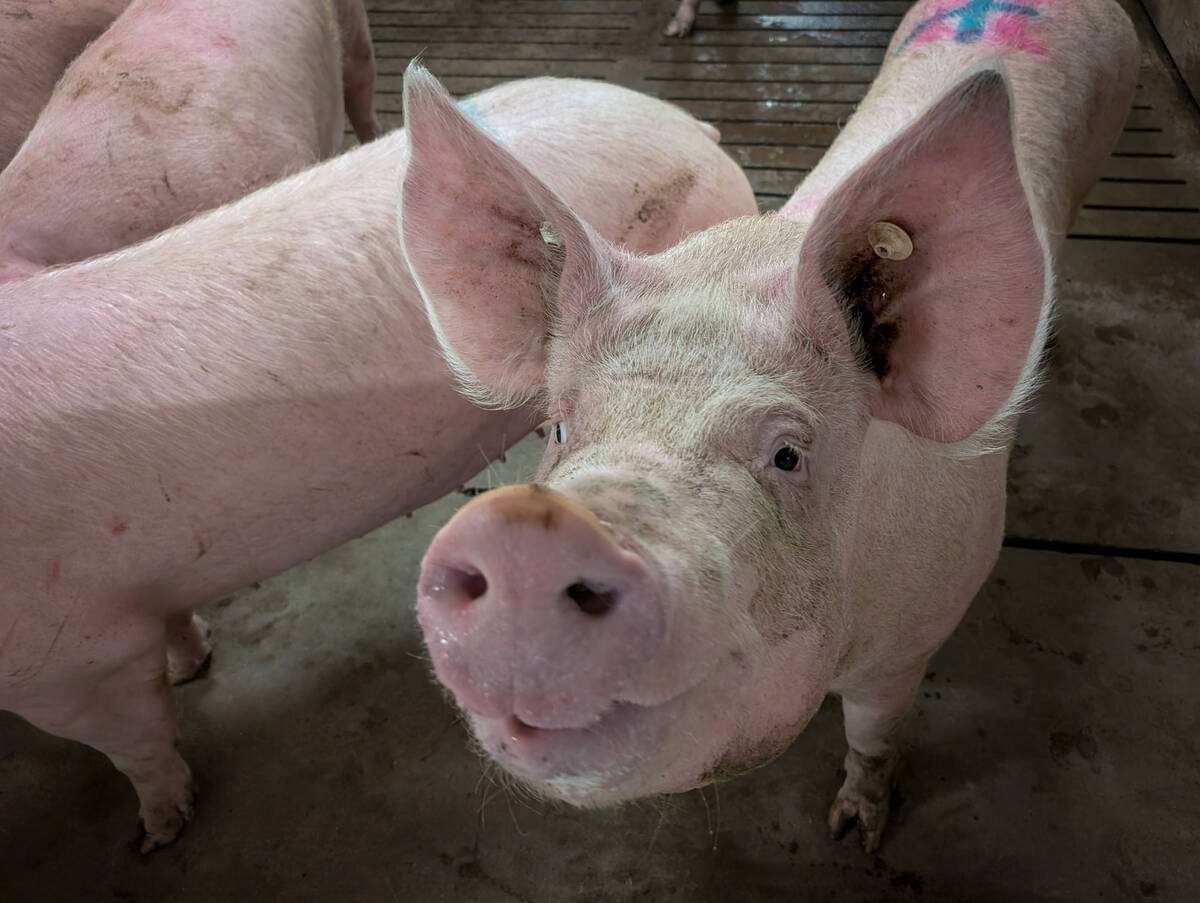
Current or ongoing infection
Broadly speaking, there are two types of tests — those that indicate there is currently an infection and those that indicate there has been a previous, or ongoing, infection.
A polymerase chain reaction (PCR) test determines the presence of the genetic material of a specific pathogen.
While extremely sensitive, a drawback to this test is that we can only determine that the organism is present, not necessarily that the organism is still alive and infectious. Certain types of PCR tests will also indicate how much pathogen is present.
We can do PCR testing on many different types of specimens, such as organ tissues, blood, manure, saliva, nasal secretions and the environment.
Antibodies
Conversely, tests that detect antibodies will help us understand if animals have been exposed to pathogens in the past, leading to an immune response to that challenge and subsequent production of measurable antibodies.
Generally, it takes two to three weeks or more for antibodies to be produced by the body at a detectable level. Therefore, if we find antibody-positive pigs, we know the infection happened at least two to three weeks prior to the sample being collected.
Antibody tests, such as enzyme linked immuno-sorbent assay tests, are typically done on serum or saliva. We often will use a combination of PCR and ELISA testing in our diagnostic approach to population medicine.
Determining PED status
When determining the PED status of a farm, we will rely on PCR testing. This can be done on manure samples, taking rectal swabs or fecal samples from the floor. We often pool samples together to allow our testing budget to go further, testing more animals.
If we are interested only in the status of a population, we will commonly use mass-pooled sampling.
Pigs are inherently curious animals, and will continuously be licking, chewing and checking out everything in their environment.
Sample collection
We can collect saliva by hanging a rope in a pen, in which case, in 15 to 20 minutes, we can often have a large percentage of the group chew on the rope, leaving us with their saliva sample. The saliva sample does represent the pig’s environment, including manure, so this is a great sample for PCR testing.
This dramatically increases our sample size, and with three or four ropes, we can sample hundreds of animals. Some viral diseases result in viral shedding in the saliva and, in some cases, antibody secretion in the saliva, allowing us to test by PCR and ELISA.
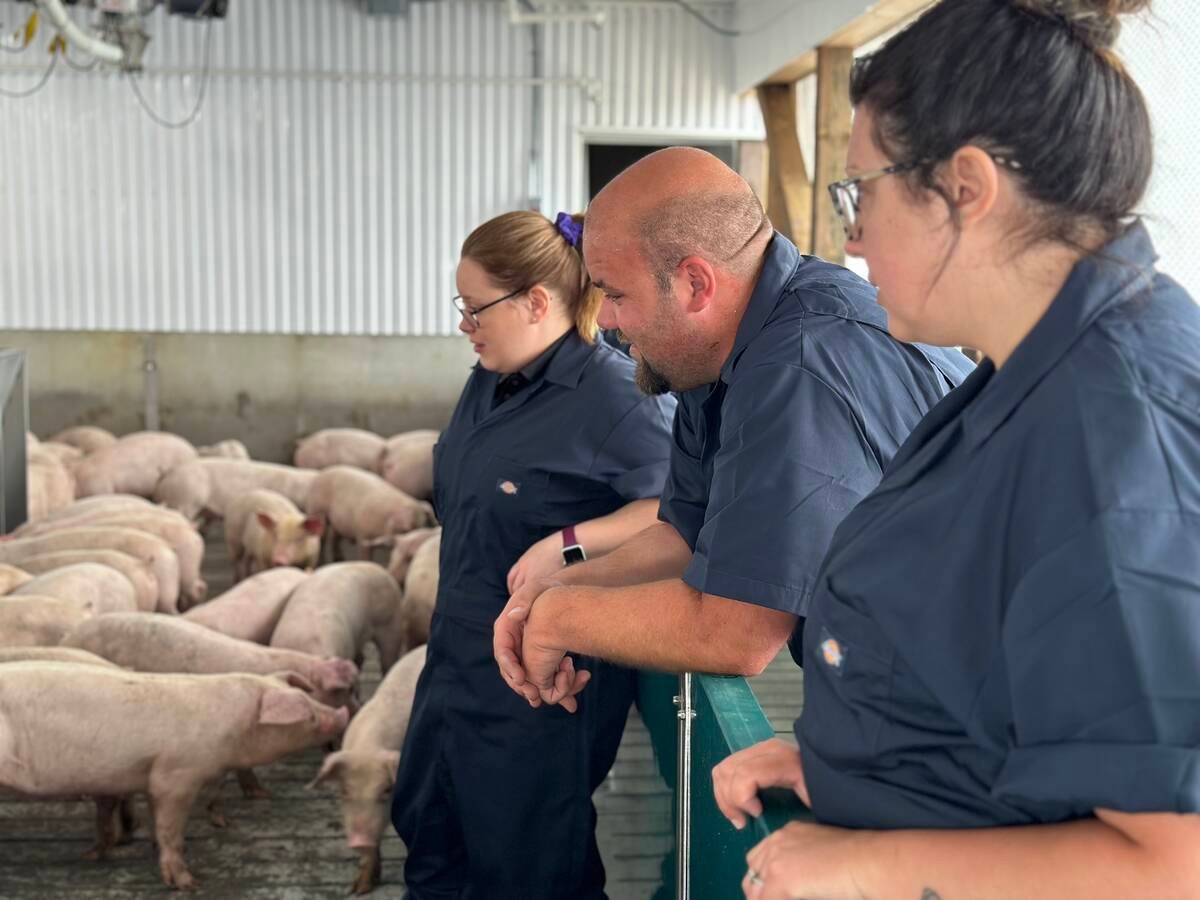
A novel approach to PED testing of entire barns is to slip disposable shoe covers over your boots and walk the pens.
The shoe covers pick up bits of manure from everywhere you walk, and because the PCR test is so sensitive, the shoe cover rinse water collected after walking around the barn literally tests each pen you have walked through.
Influenza
Influenza testing is often performed on farms to identify causes of coughing in groups of pigs.
When suckling pigs nurse their mothers, they will leave traces of nasal secretions on the mammary glands. By wiping the udder with a damp Swiffer pad and collecting the fluid from the cloth, we can test for flu by PCR.
Alternatively, hanging a rope in the farrowing crate to allow the sow and piglets to chew and leave behind saliva can provide a good test sample.
Sampling processing fluid
Understanding PRRS stability on a sow farm can be done by determining if newborn piglets are infected only days after birth. Common practice is for male piglets to be castrated between one and four days of age. To check if piglets are born with PRRS infection (infected in utero by the mother), we can take blood samples from piglets to test the blood for circulating PRRS virus.
A much simpler sampling technique is to collect “processing fluids.” There is blood and extracellular fluid in the testicle and spermatic cord. If the collected testicles are placed in a bag and refrigerated overnight, a small amount of blood and fluid will pool in the bottom of the bag.
We call this fluid sample “processing fluid.” It is a very good sample to test for PRRS and other viruses that can be passed from sow to fetus during pregnancy.
The list of sample types and strategies for disease surveillance on swine farms is long and constantly evolving. Veterinarians continue to develop novel testing methods to help manage swine diseases.
The post Veterinarians offer offbeat ideas to help diagnose hog herds appeared first on Farmtario.


