
Words by Zoë Goodhead, with photography by Luisa Bravo
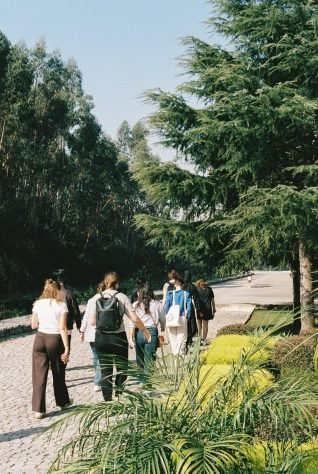
After a winding journey through the cobbled streets of small villages in Guilhabreu, on the outskirts of Porto, Portugal, the landscape opens out into green hillsides and fields. On an unassuming road lies the home of Valérius 360’s operations, a large factory facility where new life is breathed into would-be textile waste.
The staff are proud of their location: “The north of Portugal has the most beautiful countryside,” boasts one member of the team, by way of a welcome.
It might seem unexpected that this quiet landscape, seemingly unchanged for generations, would now be host to a center of innovation. But Valérius 360 represents a different kind of inheritance—where progress feels rooted, shaped as much by reverence for the land as by the technology redefining the future of textiles.
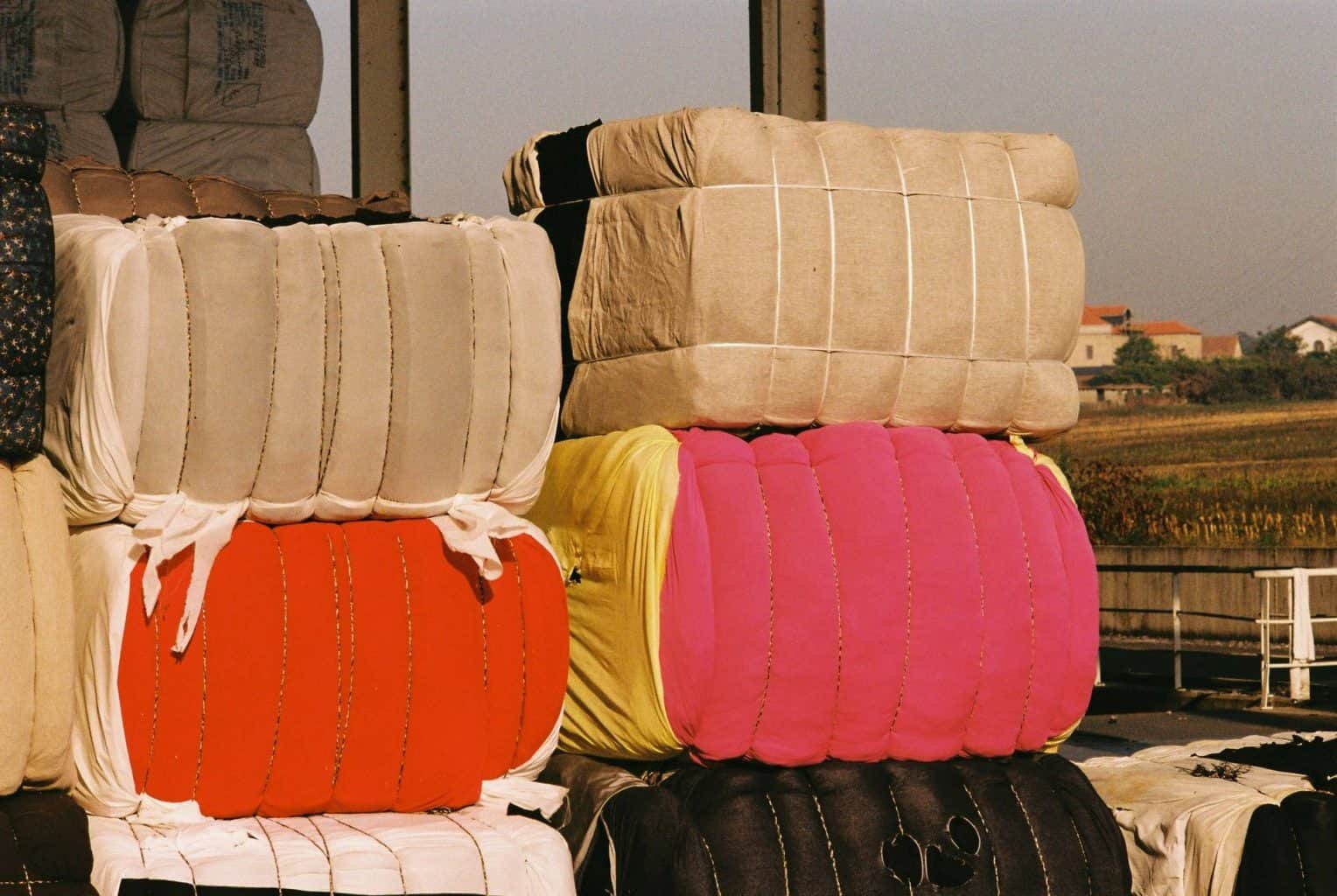
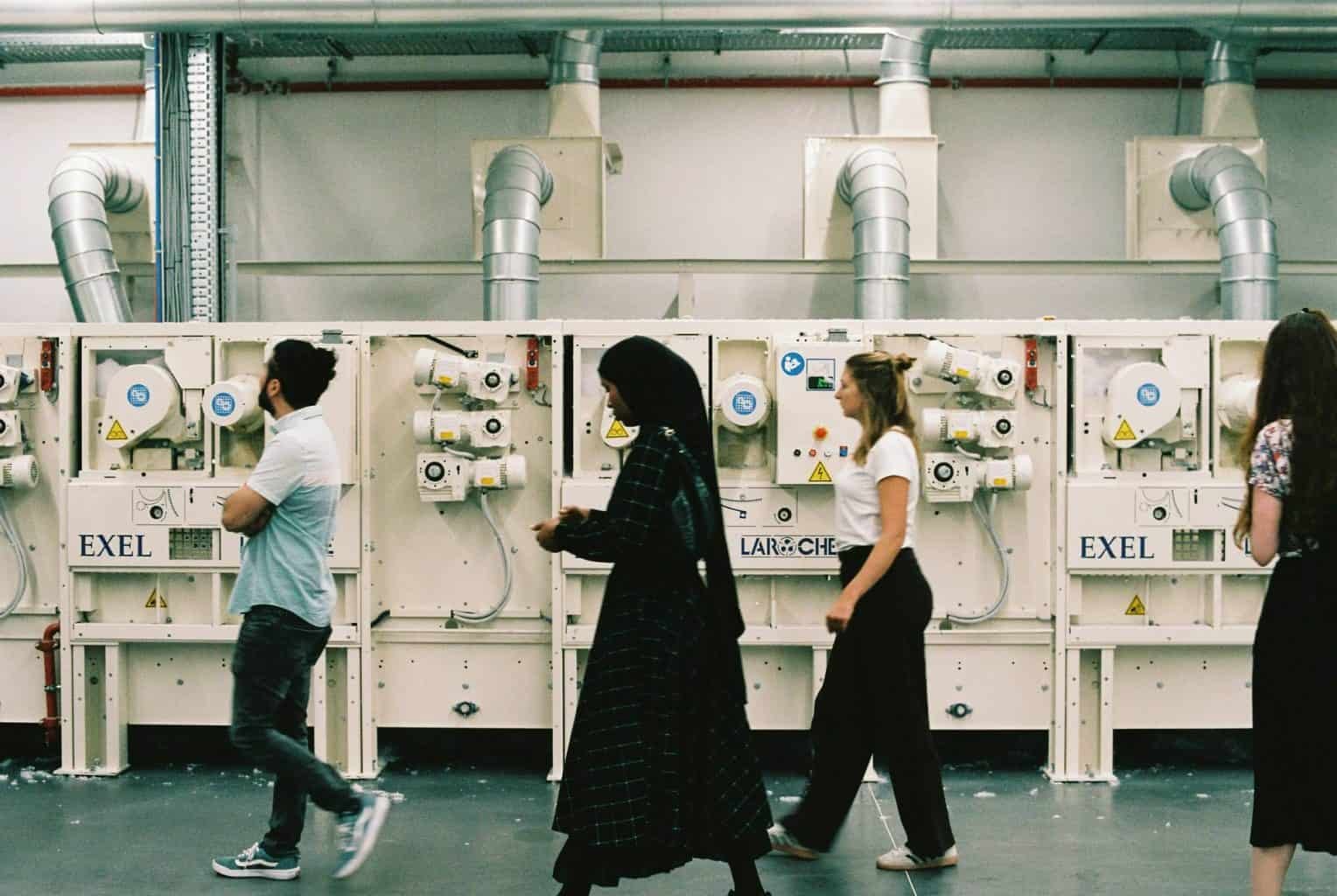
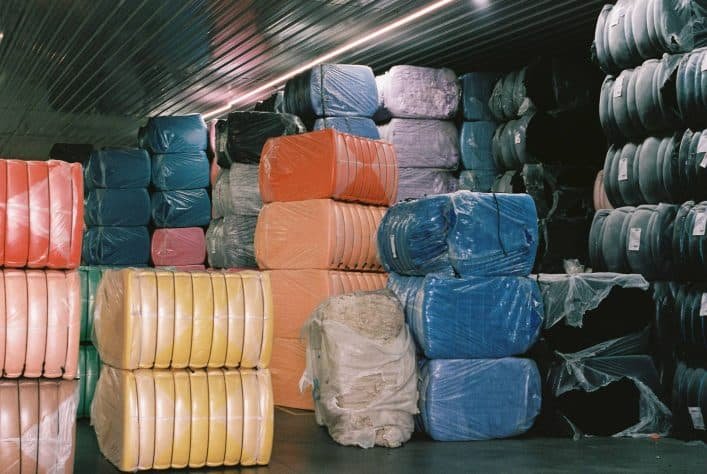
Inside, the factory is humming with activity. Large rooms are full of whirring machines and bales of colorful post-industrial textile waste. Even the design of the space is intentional; low ceilings reduce air circulation and the facility has been constructed to optimize power. This is all part of the wider vision to ensure the entire production process is thoughtfully considered, from the first step to the final product.
Large open doors offer a window back out onto the surrounding green fields of the countryside, juxtaposing the sparse, industrial-looking warehouses inside.
This is Valérius 360, established in 2017 and just part of what’s known as the Valérius Universe: a number of connected manufacturing plants across Portugal and Morocco.
Though the maze of rooms and numerous large pieces of equipment prove the mechanical recycling process to be complex, the goal is simple: to close the loop. According to the team, this is the most logical next step for the textile industry.
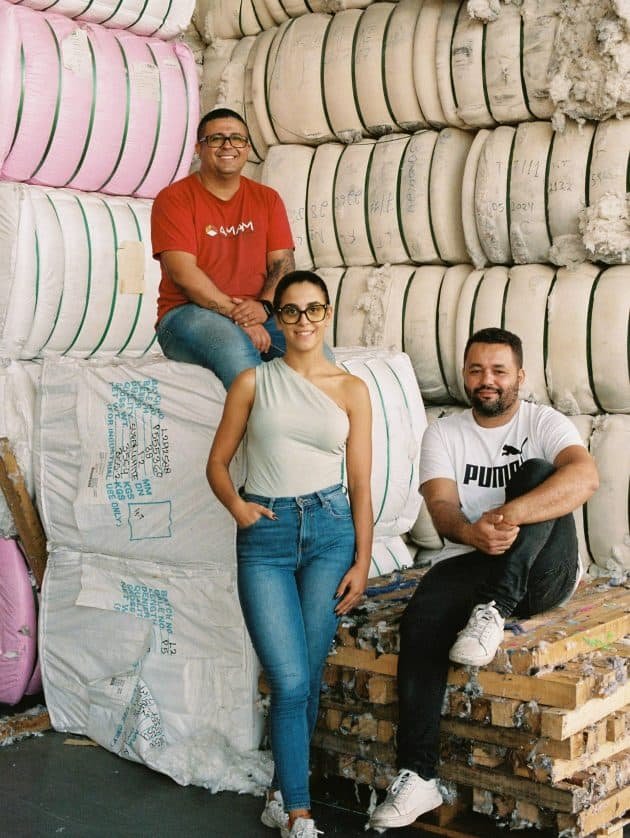
Ana Tavares, CEO of RDD Textiles, a partner of Valérius, conducts a tour around the factory, detailing each step of the process of transforming post-industrial and post-consumer textile waste into recycled fibers and new yarns, which can be used to create jersey fabrics and high-quality garments.
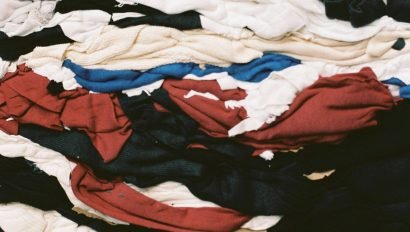
Feedstock usually comes from partner brands, who see the entire process through to receive finished items made from their original input. 80% of feedstock Valérius 360 works with is post-industrial, usually offcuts and scraps from the cutting process. 20% is post-consumer, which arrives pre-sorted by a partner company in Spain who know the requirements in terms of what the hub can process. Zips, buttons, and large prints must be removed so they don’t clog the machines. 100% cotton is preferred, and stock is sorted by color and composition.
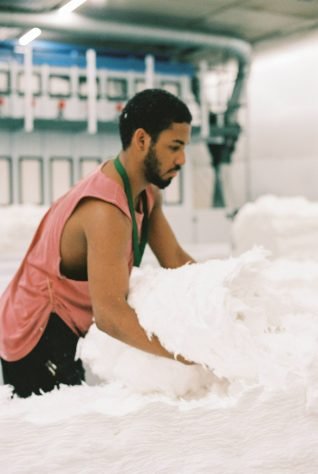
Once the waste textile has arrived at Valérius 360, it is cut into smaller pieces and pulverized with a solution that softens the material. In the next room, these pieces are shredded, making them even smaller. The resulting recycled fiber has a fluffy, cloud-like texture that is soft to the touch—as though the cotton has been returned to its pre-processing state.
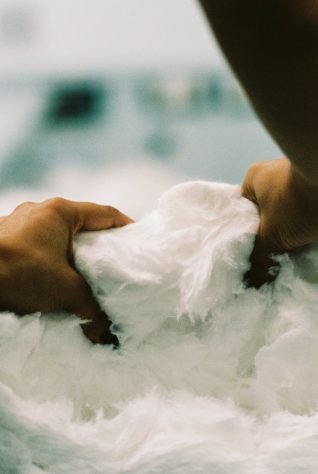
Quality is always a priority. “We don’t use the fibers if they are less than eight or nine millimeters,” Ana explains, “because we know that would compromise the quality.”
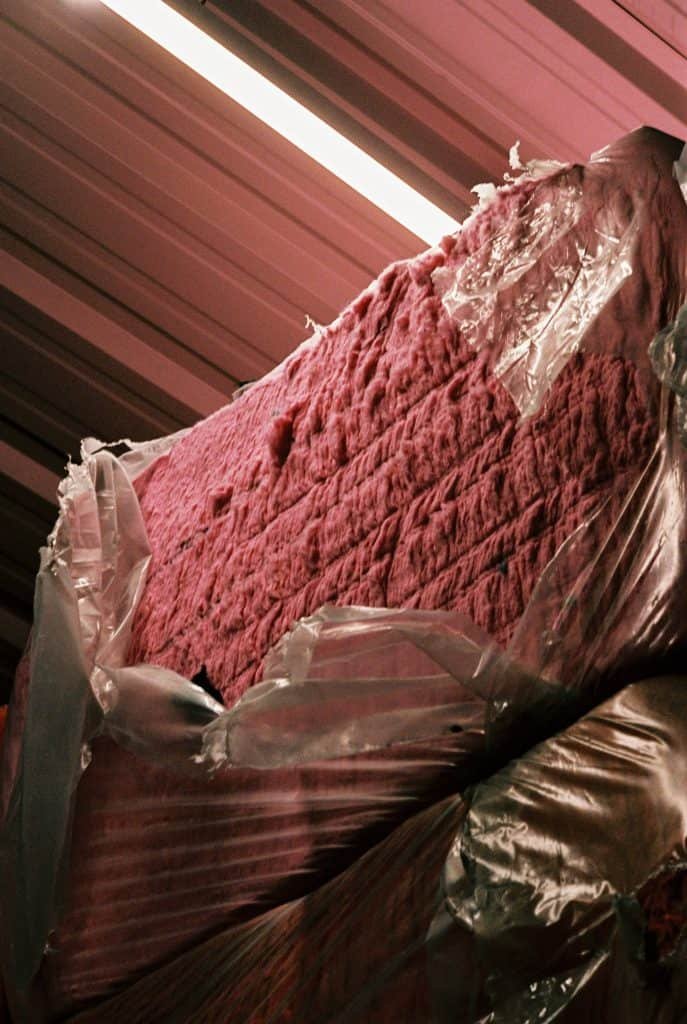
Large bales of soft fibers line the warehouse, each one a different color; alongside bright whites and pure blacks, there are vibrant greens, pinks, and blues. To avoid contamination and keep the white fibers pure, they are processed on one side, and the black and colored fibers are processed on the other side, in identical machines.
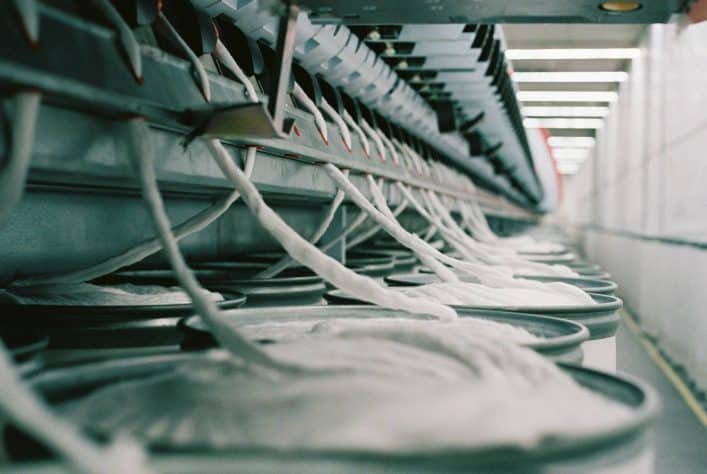
Then, the recycled fibers are blended with virgin fibers and prepared for the spinning process by being worked into a continuous sliver. These long strips are curled up neatly and piled high in large drums, ready to be spun into yarns by open-end spinning machines.
Ana can hardly be heard over the loud hum of the machines as she explains that many yarns can be spun in the same machine. At any moment, one unit can be simultaneously producing yarns of different classifications, for example, fine NE 30 yarns alongside coarser NE 20 yarns. Of the four lines in operation, one is dedicated just to whites, again to avoid any contamination at this stage. The machines extend far into the distance, running the full length of the low, long-ceilinged warehouse.
In the showroom, Ana shows some examples of Valérius 360’s work, and what can be created out of the 360 recycled yarn. She mentions a case study from a well-known restaurant chain who came to Valérius 360 to recycle their staff uniforms. On first glance, the new polo shirts look plain gray, but on closer inspection, tiny flecks of red can be seen in the knit. This is evidence of the input material, which was black garments with red embroidery. There is something special about how the history of a garment can be seen so clearly, the message of the power of recycling so evident.
There is a catalogue, each page made of a different colored square of cotton, to show the different colors of yarns that can be produced. But Ana is keen to reiterate that these are just examples. They can combine colors together to make a melange effect, but it still depends on the feedstocks, and they can’t always predict what color feedstock they will get. “There are a lot of different possibilities, but it’s difficult to imagine if you are not working with the material,” she says. “It’s not easy to explain, especially if you are not seeing it. So, that’s why we want all our clients to come here and see the process.”
The clients who do come here must be impressed by the efficiency; every effort is made to maximize material usage and reduce waste. Shorter fibers, those that are not of a high enough quality to be recycled into new yarns, are processed into cotton paper, made from 100% textile waste.
The fibers are pulped, using large reactors. The heavy chemicals often used in the paper industry are not needed here; the refinery is done using just water and enzymes. Then, it crosses to the other side of the warehouse, to the dryer, which acts with a high pressure and temperature to evaporate the water and press the material, resulting in a thin sheet of paper.
As with the cotton yarns, they don’t do any dyeing. If the cotton feedstock is red, the paper will be red. Ana gets out three large sheets of paper, all different colors and varying thickness. There is a navy one that’s 200 grams, a blue one that’s 300 grams, and a red one that’s 350. Writing paper is usually 80 grams, so this is much sturdier, and can be used in packaging. The example she cites is for socks, the thick cotton paper being used as a header to keep socks together and display branding and other information such as size.


Valérius 360 is just one part of the recent wave of textile-to-textile recycling expansion across Europe. However, according to Textile Exchange’s 2025 Materials Market report, less than 1% of the global fiber market comes from pre- and post-consumer recycled textiles—showing that there is still a long way to go. New EU legislation, including the rollout of the Digital Product Passport, part of the Ecodesign for Sustainable Products Regulation (ESPR), could be the key to unlocking much-needed growth in the textile-to-textile recycling space.
When asked about the Digital Product Passport, Ana reflects on the future. “We receive all the feedstock together—cotton and recycled cotton—because for us at the moment, it doesn’t matter if it’s recycled or not. In the future, we might have to separate it, and identify whether it’s on its first recycle, second, third. But if we don’t have that information from our suppliers, it’s impossible for us to know.”
But there is a level of tracking in place. As part of Valérius 360’s commitment to a more viable future, they use certification schemes including the Global Recycled Standard (GRS), Recycled Claim Standard (RCS), and Organic Content Standard (OCS). Conforming to standards such as these ensures there is a documented record as the material passes through the supply chain, including where the material originated and where the fabrics end up. “From transaction certificates, we know exactly what we have, who we buy it from, and where—these kinds of things we can trace,” she explains. So, with increased tracing requirements, there is scope for a sturdier tracking and tracing system, and she isn’t ruling it out.
That is what feels exciting about Valérius 360, and, more broadly, the textile-to-textile recycling sector. It feels fresh and new, reactive to what the current needs are and open to adapting to what will be needed in the future.
Here at the recycling facility, there is hope for the future. A circular future where waste is transformed into high-quality, certified recycled yarns that make beautiful garments—and where innovation reigns.
The post How Portguese Recycler Valérius 360 is Transforming Waste into a Resource appeared first on Textile Exchange.


