

Earlier this summer, the Science Based Targets Initiative (SBTi) unveiled its new Corporate Net Zero Standard, expanding its guidance on the permissible uses of carbon credits. Importantly, SBTi introduced a new section on “Ongoing Emissions Responsibility” (OER), which sets up a voluntary recognition program for companies that choose to offset or compensate for 1%, 10%, and 100% of their Scope 1 and 2 Emissions (with some caveats, see table below):
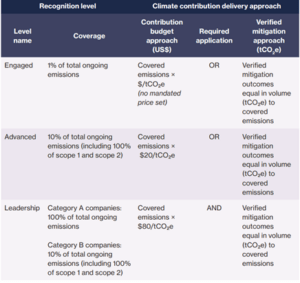
While the new OER guidance is getting a lot of well-deserved attention in the carbon market, SBTi’s guidance on addressing “activity pools” of Scope 3 emissions also opens up a potential avenue for companies to take action. The activity pool approach recognizes that for companies that rely on agricultural inputs (such as beef or wool), there is no realistic way to track those inputs to a specific farm or ranch– instead, most companies only have visibility into the geographic “supply shed” that they (and in many cases, their competitors) source from. Recognizing this constraint, SBTi is now allowing companies to use market instruments (e.g., carbon credits) to address their Scope 3 emissions, although the impact of these actions must be reported as a “system contribution claim”, rather than a company level or physical inventory claim. There are several caveats, but a few notable requirements include:
Companies shall demonstrate that sector-level and enabling actions occur within the same system, or within geographically or systemically relevant systems from which the company sources
Companies shall ensure that actions are not double counted. For project outcomes and market instruments, companies shall use or implement systems that provide unique identification (e.g., serialization) and tracking of outcomes and attributes, allowing co-claiming where appropriate
Companies shall not use GHG credits used for the SBTI’s OER program for target implementation. The same applies for GHG credits sold or transferred to a third party.
Let’s look at an example to try and make this clearer– imagine a large corporation that sources beef from the Northern Great Plains region, and calculates the land use emissions associated with that beef every year. If they have a Scope 3 target but don’t have traceability to the ranches that their beef comes from, the new guidance suggests that they could use a serialized carbon credit (that hasn’t been used for an OER claim or been sold to another company) from a regenerative cattle grazing project in the Northern Great Plains to make a system level decarbonization claim. It’s a pathway towards a beef company’s Net Zero goals with the added benefit of beef supplier resilience and productivity. Although this might sound like uncharted territory, Native has been helping our clients communicate their system level decarbonization impact for decades while bringing real impact to communities– if you or someone in your organization is interested in learning more, please contact us at business@native.eco.
The post A Pathway to Market-Based Mechanisms for Climate Action: Science Based Targets Initiative (SBTi) unveiled its new Corporate Net Zero Standard appeared first on Native.


