
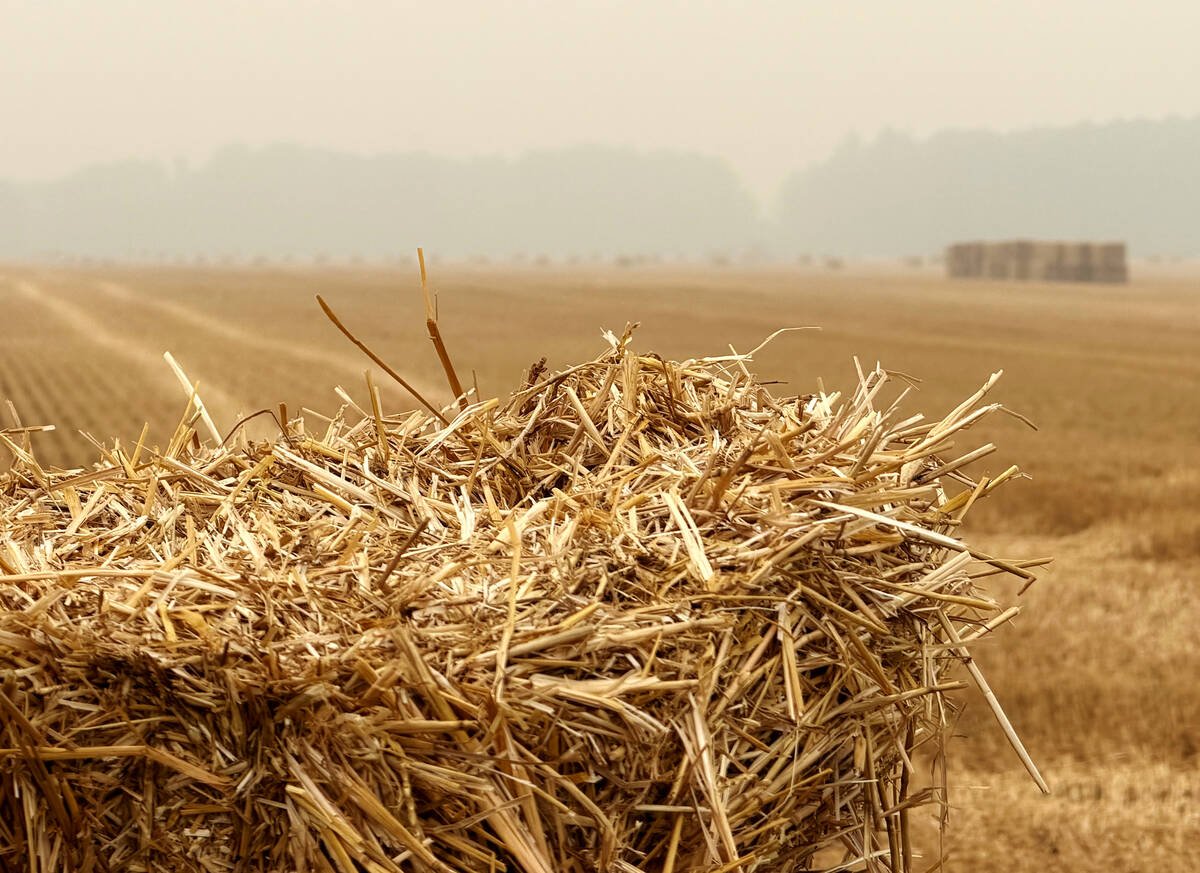
Smoke from wildfires in northern Ontario descended on southern Ontario in July during an important time for crop development.
Farmers harvested winter wheat during smoky days, but most of them were protected in combines and tractors with cabs and air conditioning.
However, other growing crops such as soybeans and corn could be affected as they approach their flowering and tassel and silking stages.
A Farmtario article from the last time Ontario’s farmland had a smoky summer highlighted several areas where crops could be affected, according to Grain Farmers of Ontario agronomist Marty Vermey and OMAFA resources. Smog consists of many tiny particles that reflect sunlight away, resulting in reduced sunlight intensity, which means plants will operate at a lower efficiency.
Lower levels of solar radiation could mean slower plant growth.
Chlorophyll helps plants convert light to energy and produce sugars. When light is blocked, fewer sugars will be created.
Ozone occurs when pollutants produced by wildfires react to sunlight. Ozone enters the plant during respiration and can cause growth issues.
There can be positives, including diffuse light which penetrates the canopies and lower leaf temperatures, which means more retained moisture.
There’s little research around smoke and crops, as there have been few widespread, predictable periods of smoke in the atmosphere affecting major crop-growing areas.
The post An unusual wheat harvest appeared first on Farmtario.


