U.S. Battery Capacity Growth Forecast: 2026–2031
Key Takeaways
- U.S. battery capacity is projected to more than double between 2025 and 2028.
- Growth slows after 2028, which creates a opportunity for needed storage development.
America’s power system needs more flexibility as electricity demand climbs and renewable generation expands. Battery capacity helps meet that need by storing power, shifting load, and supporting reliability.
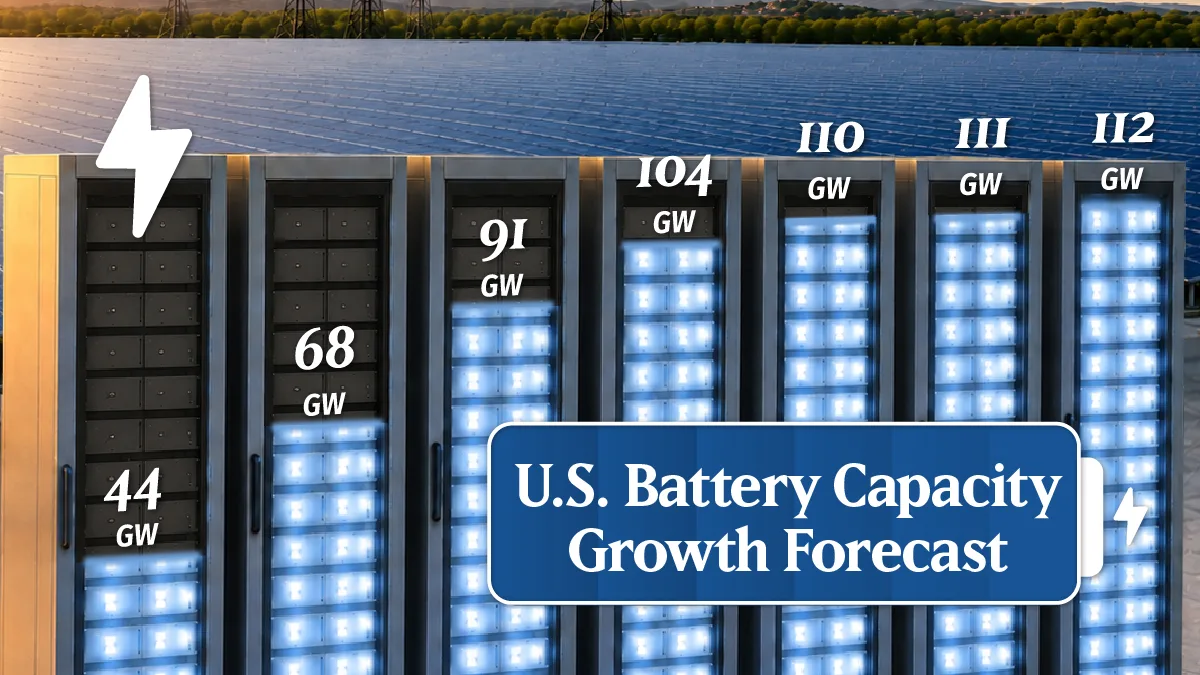
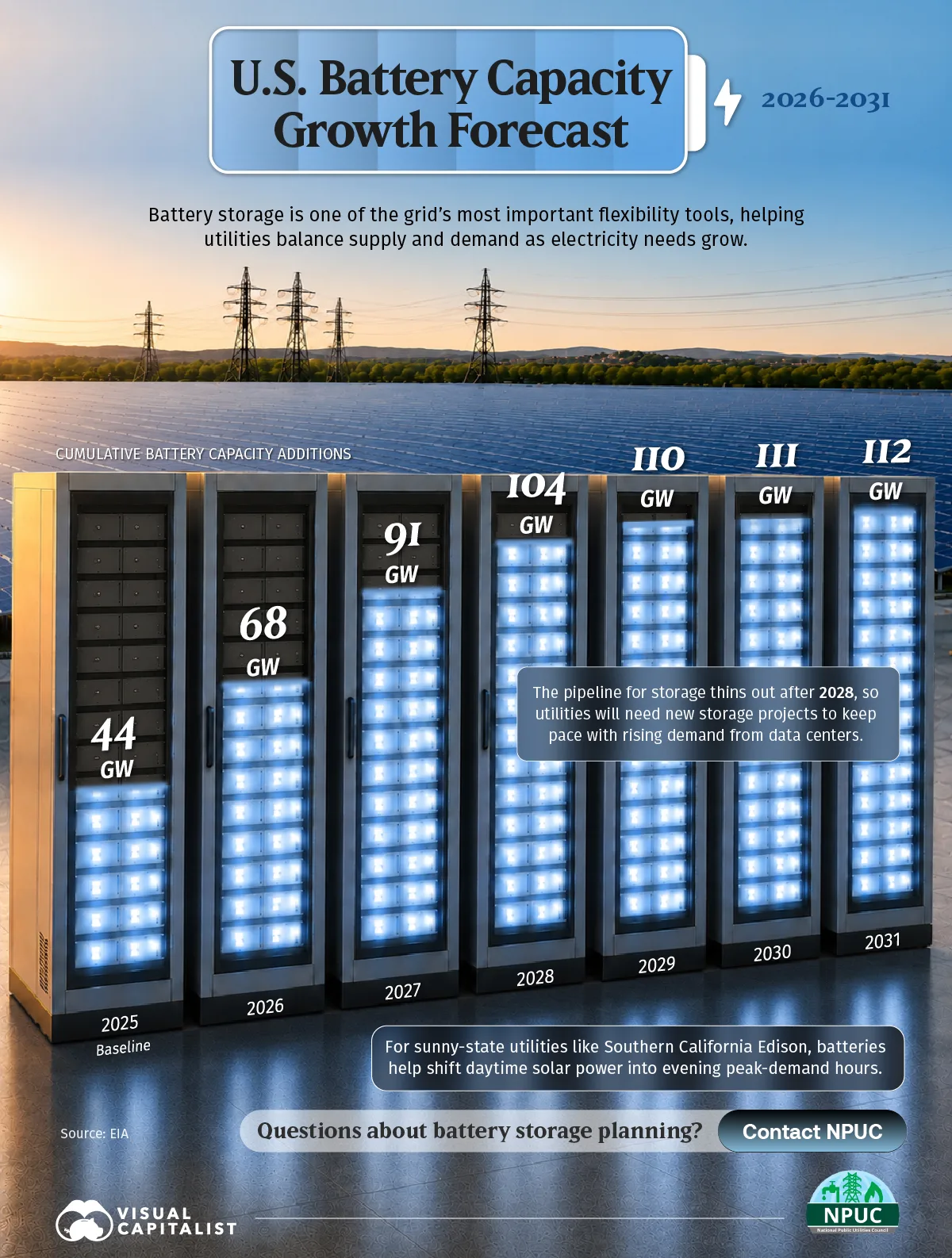
This graphic, in partnership with The National Public Utilities Council, shows projected U.S. battery capacity growth from 2026 to 2031 using data from the EIA.
Why Battery Storage Matters
Battery storage is one of the grid’s most useful balancing tools. EIA research shows batteries can move midday solar generation into evening peak-demand hours.
For sunny-state utilities like Southern California Edison, that flexibility can reduce pressure during high-demand evening periods. It can also improve the value of daytime solar output.
Here is a table that shows projected cumulative U.S. battery capacity from 2025 through 2031.
| Year | Cumulative U.S. Battery Storage Power Capacity (GW) |
|---|---|
| 2025 | 44 |
| 2026 | 68 |
| 2027 | 91 |
| 2028 | 104 |
| 2029 | 110 |
| 2030 | 111 |
| 2031 | 112 |
Methodology
The near-term buildout is steep. U.S. battery capacity rises from 44 GW in 2025 to 68 GW in 2026, then reaches 104 GW by 2028.
That represents about 60 GW of added capacity in only three years. Meanwhile, utilities gain more room to manage peaks, integrate renewables, and strengthen local reliability.
The Future Plateau Creates Opportunities
After 2028, the growth curve begins to flatten. Capacity rises to 110 GW in 2029, 111 GW in 2030, and 112 GW in 2031.
However, this slower pipeline creates an opportunity rather than a dead end. Utilities can still advance new projects before power needs accelerate further after 2028.
For example, California regulators approved 620 MW of Southern California Edison storage contracts in 2025, with projects scheduled to come online between 2026 and 2028.
Moreover, the EIA generally collects planned operating dates for these generators only within a five-year window, so later projects may not yet appear in the current pipeline.
What Comes Next
The timing of a coming plateau matters, as U.S. data center electricity demand is projected to rise sharply. New storage can help utilities respond without sacrificing reliability.
Therefore, the next phase will depend on proactive planning, faster procurement, and durable investment signals. Utilities that move early can secure flexibility before demand pressure intensifies.
Overall, the forecast points to a strong market for the next wave of battery capacity. That outlook supports utilities, regulators, developers, and grid resilience.
-
 Energy4 weeks ago
Ranked: Countries Building the Most Small Modular Nuclear Reactors
Small Modular Nuclear Reactors are moving from concept to siting, with the U.S. leading at 28 announcements as power demand surges.
-
 Energy10 months ago
Ranked: The Top 10 Cleanest Operating Utilities In The U.S.
Just four U.S. utilities operate with over 80% carbon-free generation. This graphic ranks the top 10 cleanest utilities by their fuel mix.