
Sponsored content: This article contains sponsored content.
As UK water and sewerage companies progress Industrial Emissions Directive (IED) improvement programmes, secondary containment is becoming an increasingly important part of site upgrade planning. For sludge treatment facilities with above-ground storage, containment systems must often retain significant spill volumes while still allowing tanker movements, maintenance access and normal day-to-day operation.
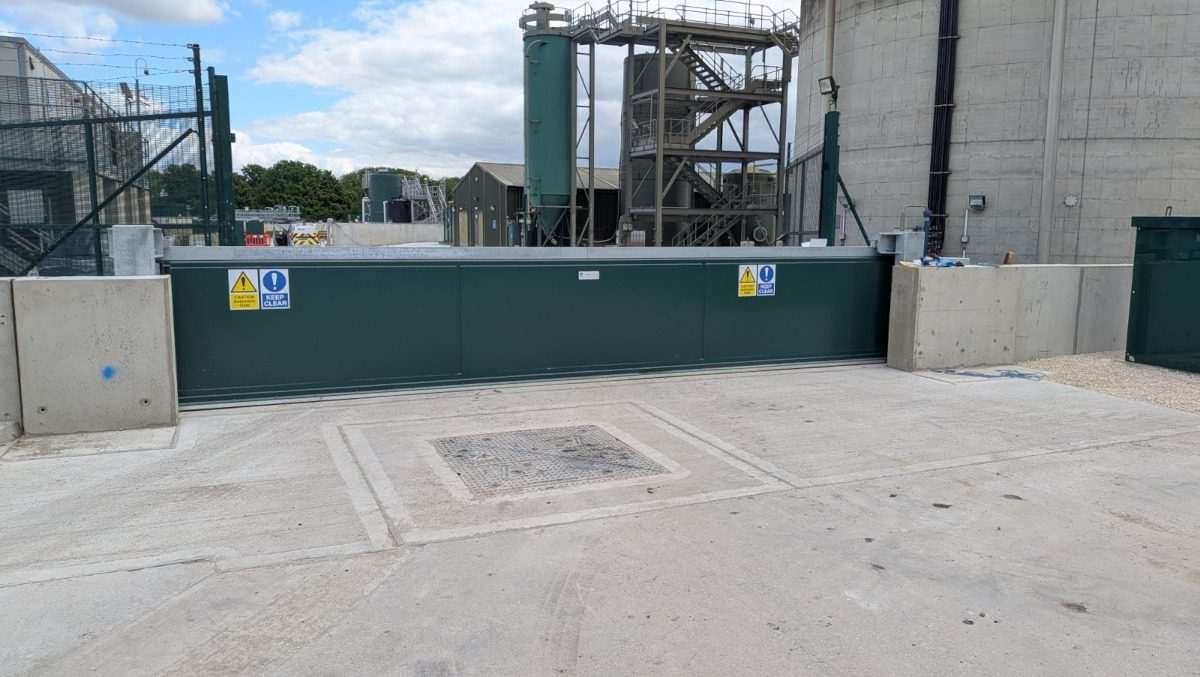
This is where automated sliding floodgates can provide a practical engineering solution. Unlike fixed bund walls, ramps or manual barriers, a sliding floodgate can remain fully open during normal operation, preserving unrestricted vehicle and pedestrian access, then close automatically to form a sealed containment boundary when required.
Automation is particularly valuable in spill or emergency scenarios, especially on unmanned or partially manned sites. Gates can be triggered by level sensors, process alarms, push-button controls or building management systems, removing reliance on manual intervention and supporting faster containment response.
Flood Control International designs each automated sliding floodgate to suit the site, rather than offering a one-size-fits-all product. Existing civils, access widths, tanker turning circles, containment heights, control philosophies and client asset standards can all influence the final design. Early engagement with civil, mechanical, electrical and operational teams helps identify constraints before construction begins.
Key features can include protection heights up to 2.8 metres, spans up to 12 metres, level thresholds, low-resistance rolling operation, positive seal compression, automated locking, status monitoring and integration with site alarm or BMS systems. Gates can also be retrofitted to existing concrete openings, helping reduce civil works where appropriate.
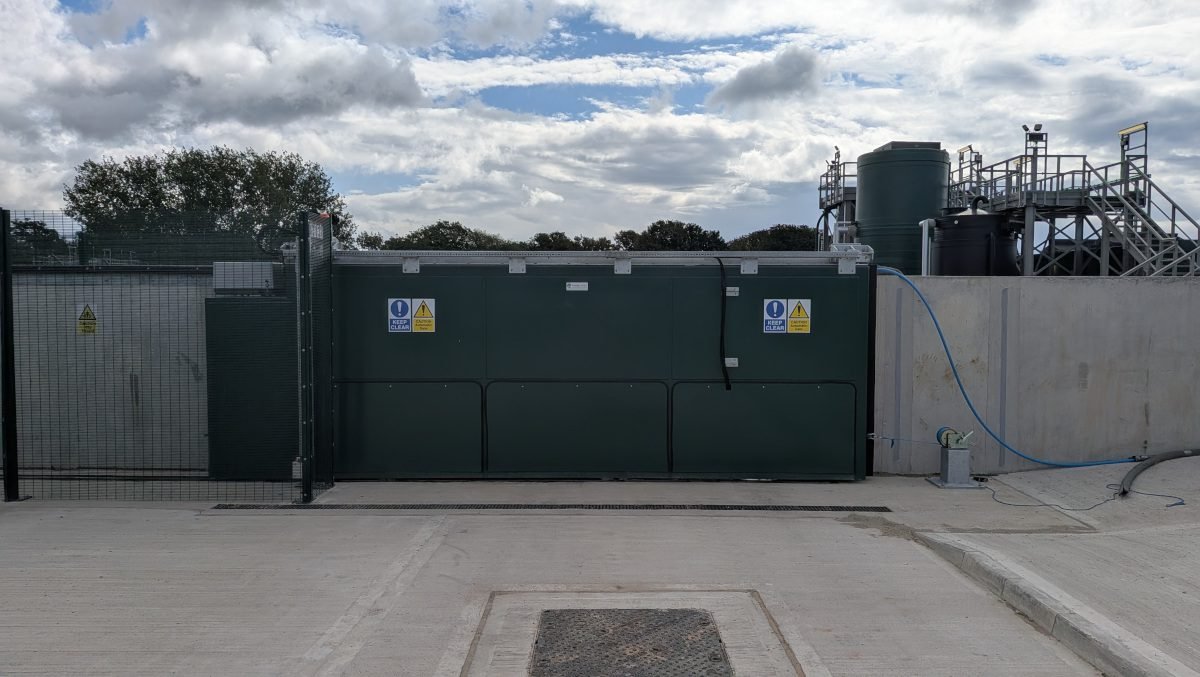
For wastewater environments, robust construction, corrosion protection, instrumentation, electrical installation and health and safety requirements are all central to successful delivery. FCI can support projects from site survey and design through manufacture, installation, commissioning and ongoing technical support, helping reduce coordination risk across complex capital programmes.
As IED permit improvement conditions move into implementation, automated sliding floodgates offer water companies a flexible way to integrate secondary containment without compromising site access. By tailoring each system to individual asset requirements, containment can become part of normal operation rather than an obstacle to it.
To discuss your IED secondary containment requirements, contact Flood Control International at enquiries@floodcontrolint.com or visit floodcontrolinternational.com.


