
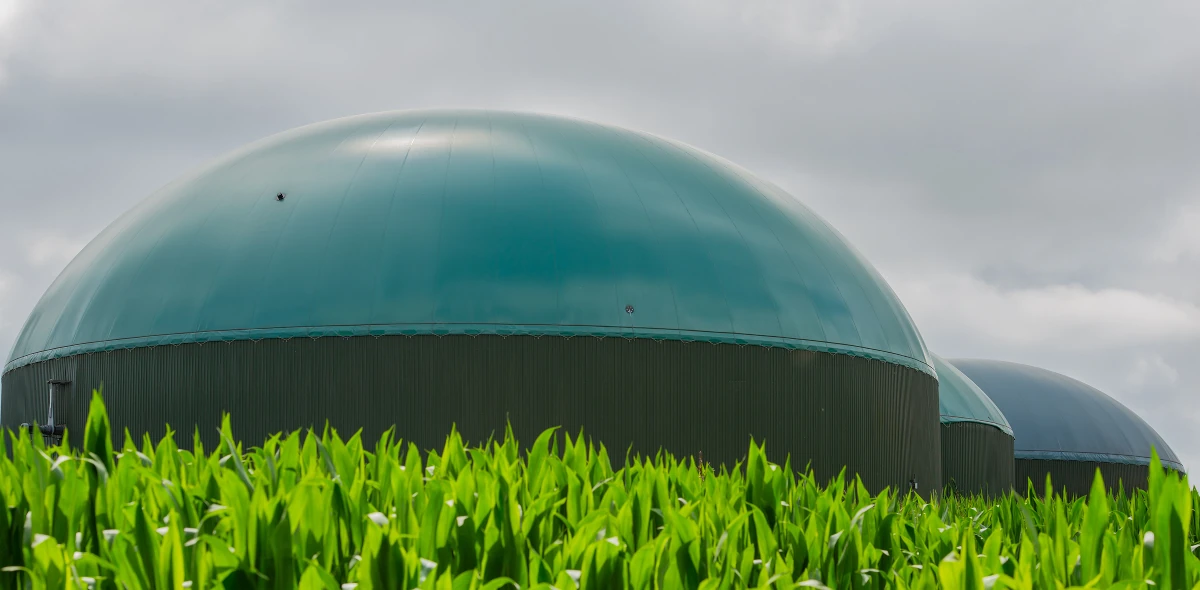
The Anaerobic Digestion and Bioresources Association (ADBA) has welcomed NESO’s report Exploring the Role of Biomethane in the Energy System to 2050, which concludes that biomethane “could deliver significant value across the energy system”.
NESO reports that around 30 TWh a year is achievable by 2050 before any feedstock trade-offs arise, five times current output, and that “there is substantial scope for continued growth”, with analysis identifying 108 TWh of feedstock potential (page 22).
As an ADBA comment explains, NESO’s modelling shows that “using biomethane in power generation can reduce the costs of the future power system”, and that biomethane may be “the most practical or economic long-term route to reducing emissions” for dispersed industrial sites outside the clusters – which account for around half of GB’s hard-to-electrify gas demand.
Echoing calls from ADBA and others in the sector, NESO warns that without a timely successor to the Green Gas Support Scheme, “growth in the sector is likely to stall”.
Chris Huhne, Chair of ADBA, said: “NESO has settled the argument. The feedstock is there, the costs stand comparison, and biomethane lowers the cost of the power system rather than adding to it. Thirty terawatt hours is a floor, not a ceiling.
“What is missing is government ambition. The GGSS budget is exhausted and France and Germany each injected more than twice our volumes last year. Ministers should set a production ambition, bring grid-injected biomethane into the UK ETS, and publish their plans for a successor scheme.”


