
NEW ORLEANS, LA. — This morning, U.S. Wheat Associates (USW) and the National Association of Wheat Growers (NAWG) joined organizations representing wheat, rice and sorghum growers as well as the U.S. milling and maritime industry, the World Food Programme (WFP) and U.S. Department of Agriculture (USDA) officials in celebrating the latest donation of U.S. commodities through the Food for Peace program at a portside event in New Orleans, Louisiana.
The U.S.-flagged Liberty Grace was loaded with 28,420 MT of Louisiana rice and will now travel to Houston to be loaded with 19,980 MT of U.S. HRW wheat before departing for the Port of Mombasa in Kenya. Through distribution under the World Food Program, the shipment is estimated to feed more than one million people facing starvation for an entire year.
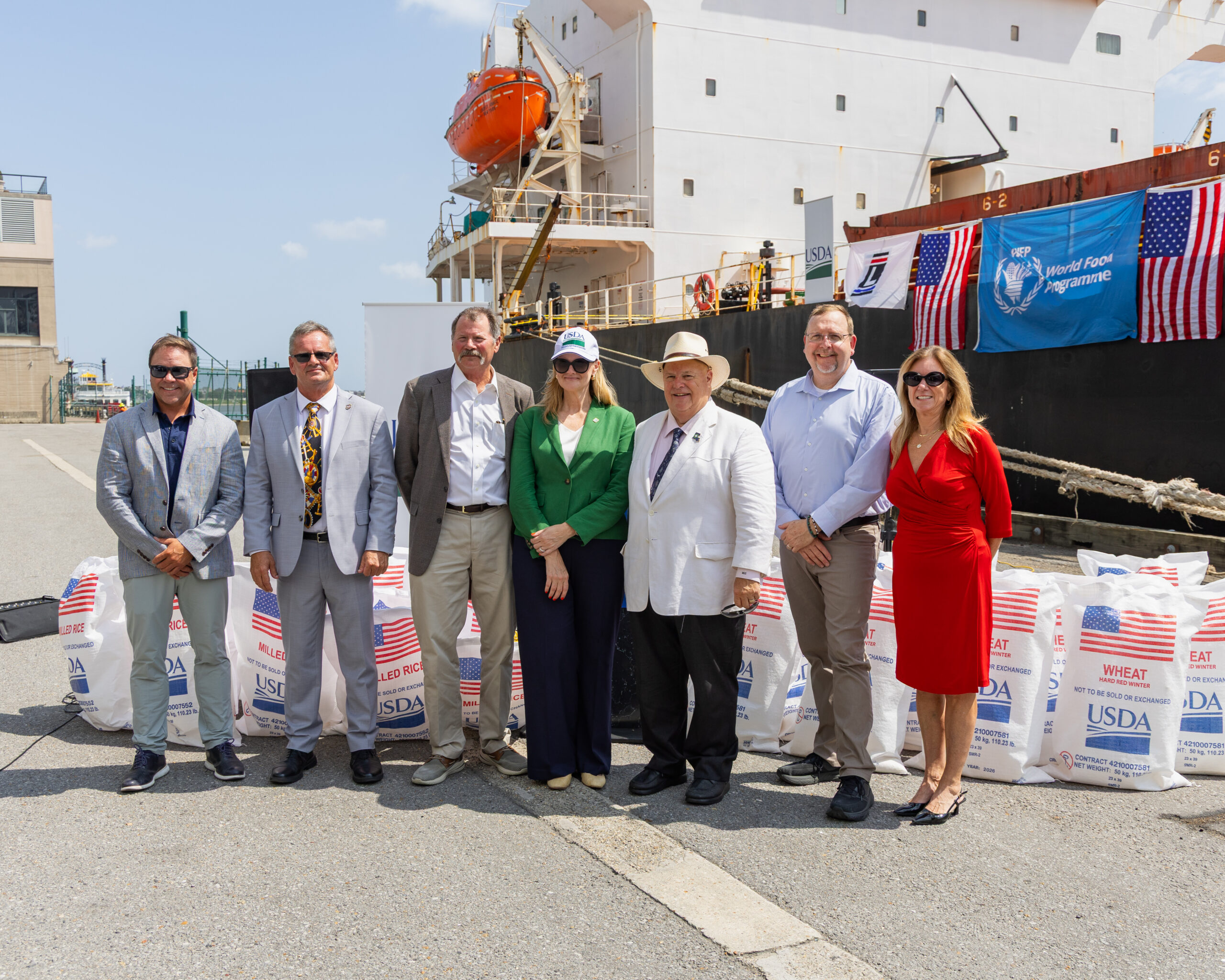
The New Orleans event also commemorated the shift of the administration of the Food for Peace program to USDA. USDA Deputy Under Secretary for Trade and Foreign Agricultural Affairs Michelle Bekkering attended the event in recognition of the agency’s new leadership for this program and its proven track record in administering the other U.S. in-kind food assistance programs.
“The shipment we’re sending to help those in dire need around the world is a testament not only to the abundance of U.S. agriculture, but more importantly, to the generosity of the American farmer and the bounty they produce,” said Deputy Under Secretary Bekkering. “This massive shipment also showcases the strength of our historic partnership with U.S. commodity groups, our friends at our merchant marine workforce, and the World Food Program. Together, we’re helping those in need today and fostering true self-reliance tomorrow. Through our suite of USDA food assistance programs, we’re not just saving lives, we’re changing them.”
This is the second bulk vessel loaded with Food for Peace donations that the USDA has shipped this summer, both of which contained substantial volumes of U.S. wheat. The earlier departure of the U.S.-flagged Liberty Glory from Houston carried a Food for Peace shipment of 9,200 MT of U.S. HRW wheat and 37,700 MT of U.S. sorghum bound for Ethiopia.
The U.S. has a long history of administering the largest, most reliable and most effective international food assistance programs in the world. Wheat farmers have been champions of U.S. food aid assistance since before today’s programs came into existence. U.S.-grown wheat has remained an important commodity for food assistance, often representing half of the bulk in-kind aid and routinely using around one million metric tons of U.S. wheat annually.
“Wheat farmers have championed U.S. food aid assistance for more than 70 years, since a northwest Kansas farmer first proposed that sharing abundant harvests could help feed those in need around the world,” said Gary Millershaski, USW chairman and Kansas wheat farmer. “Today, we are proud to be here with USDA and support the agency as they take the helm of the Food for Peace program. This bulk vessel will carry U.S.-grown wheat across the ocean to help feed hungry families. As a farmer, this echoes the lessons I was taught being raised on the farm: If a neighbor is in need, you lend a helping hand. It’s just what we do.”
“As a farmer, I take great pride in helping feed the world’s most vulnerable populations. Today’s shipment underscores the vital role U.S. commodities play in international food aid. U.S.-grown wheat is a cornerstone of global food security and humanitarian response, providing nutritious food to those in need while creating demand for American-grown crops that supports rural economies, farm families, and America’s leadership around the world. USDA has been an outstanding partner in administering the Food for Peace program, and we urge congress to make this transfer permanent,” said Jamie Kress, NAGW president and Idaho farmer.
The Food for Peace shipments demonstrate the success of putting food in the hands of those who need it most, while also supporting U.S. farmers. Through this program, U.S. farmers have helped feed more than four billion people in more than 150 countries, which is why it has the strong support of the organizations representing U.S. farmers, millers and more, including USW, NAWG, the USA Rice Federation, National Sorghum Producers (NSP), and the North American Millers’ Association (NAMA).
Additional Comments:
“In a world of plenty, no one should go to bed hungry. For more than 60 years, the World Food Program (WFP) has partnered with the U.S. government and Food for Peace, bringing American-produced, life-saving food and nutrition to hungry communities around the globe,” said Matthew Nims, director of the World Food Programme Washington Office. “Over the past decade, nearly $5 billion in food has been purchased from U.S. farmers and producers through Food for Peace and donated to WFP to feed the hungry. The U.S. government through USDA, along with farmers, producers, shippers and port workers are helping WFP save lives, and together, we are building a more stable and food secure future for all.”
“U.S. millers are proud of the role they play in alleviating world hunger through international food aid,” said NAMA Vice President, Government Affairs Kim Cooper. “Today’s shipment puts into focus exactly why USDA’s steadfast leadership in administering this life-saving program is so important. We need Congress to make USDA’s operation of this America First program permanent in the next farm bill so that American farmers, millers, and mariners can continue to serve as the link between American-grown grain and the highly nutritious products that help feed those facing famine emergencies around the world.”
“Rice is the most widely consumed grain in the world, and these 28,420 metric tons of Louisiana rice will play a vital role in helping feed those facing famine,” said John Owen, USA Rice Chair and Louisiana rice farmer. “At a time when our rice markets are in dire need, this in-kind commodity donation is a shot in the arm for our industry and makes us more optimistic about the future of Food for Peace under USDA’s leadership. As Congress continues to debate the farm bill, we encourage them to make permanent the transfer of this program to USDA to ensure it can continue delivering American-grown commodities to families facing food insecurity around the world.”
“Today’s event highlights the reach of Food for Peace and the American farmers, processors, ports and mariners who make it possible,” said Amy France, chair of National Sorghum Producers and farmer from Kansas. “Sorghum farmers are proud to be part of that mission. Earlier this summer, a 108-car train carrying approximately 400,000 bushels of U.S. sorghum departed western Kansas for Food for Peace programs in Africa, marking the first sorghum shipment since USDA assumed administration of the program. It is a powerful example of American-grown food helping people around the world while creating dependable value for farmers and rural communities here at home. We appreciate USDA’s leadership and urge Congress to make its administration of Food for Peace permanent.”
“In addition to the important work Food for Peace does providing crops to those in need, it also supports America’s maritime workforce,” said Sara Fuentes, president of the Transportation Institute. “From seed to ship, there are tens of thousands of people who make this program possible, each one of them working to support a life for themselves and their own families. Those voyages keep American mariners sailing, preserve the skills of our Merchant Marine, and ensure our nation has the maritime capacity it will need when called upon.”
“Today’s shipment is a powerful reminder that American generosity reaches the world aboard American ships,” said Elizabeth Bayly O’Connor, executive director of American Maritime Congress. “Every Food for Peace voyage supports not only families facing hunger overseas, but also the American mariners, ports and U.S.-flag fleet that make these missions possible. Moving Food for Peace to USDA strengthens that successful partnership, ensuring American-grown food reaches those in need while continuing to sustain the U.S. Merchant Marine.”
###
Julia Debes, Director of Communications and Stakeholder Outreach, U.S. Wheat Associates
jdebes@uswheat.org
Ralph Loos, Director of Communications and Global Outreach, U.S. Wheat Associates
ralphloos@uswheat.org
The post Wheat Groups Celebrate Food for Peace Shipments at the Port of New Orleans appeared first on U.S. Wheat Associates.


