
Brazilian carbon removal company Mombak has reached an important milestone. The company has delivered its first carbon removal credits more than two years earlier than planned. The early delivery shows that large forest restoration projects can remove carbon at commercial scale and meet their commitments.
The first issuance includes more than 21,000 verified carbon removal credits. These credits were originally expected in 2028. Buyers include Google, McKinsey & Company, McLaren Racing, Bain & Company, Climeworks, Commons, and Union Square Ventures.
Mombak expects to issue more than 55,000 additional carbon credits before the end of 2026, increasing the total volume delivered this year.
The early delivery matters because many carbon projects have struggled to meet their timelines. Mombak is showing that high-quality carbon removal projects can deliver earlier than expected.
Restoring the Amazon, One Tree at a Time
Mombak does not protect existing forests. Instead, it restores land that has already been cleared.
The company buys or partners with owners of degraded cattle pasture in Brazil’s Amazon region. It then plants native trees to rebuild the rainforest. As the trees grow, they remove carbon dioxide from the air. This creates carbon removal credits, not avoided-emissions credits.
So far, Mombak has planted nearly 15 million native trees across 12 restoration projects in the state of Pará. At dense planting spacing, over 30 square miles, the trees would completely cover Manhattan, New York, and overflow into parts of Brooklyn.
The removal company uses more than 80 native Amazon tree species to rebuild forests that closely match the original ecosystem. Their restoration projects also provide other benefits. They improve biodiversity, restore soil, protect rivers, and create jobs for local communities.
The projects are certified under Verra standards. They also include 100-year permanence commitments, meaning the carbon is expected to stay stored for the long term. While Mombak uses Verra frameworks for baseline monitoring, this historic early credit issuance was officially issued via the scientific registry Isometric.
Mombak Chief Commercial Officer Dan Harburg noted:
“The carbon market has unfortunately had a lot of challenges with underdeliveries and late deliveries from suppliers across the board. Being two years early in some of our first deliveries is really valuable for the relationships that we build with existing buyers and with other buyers.”
Why Google and Microsoft Are Backing Mombak
The latest delivery builds on several major agreements.
Google first agreed to buy 50,000 tons of carbon removal from Mombak. It later expanded the deal to 200,000 metric tons in late 2025, making it one of Google’s biggest nature-based carbon removal purchases.
Microsoft signed an even larger agreement. It plans to buy 1.5 million metric tons of carbon removal through 2032. The deal supports Microsoft’s goal of becoming carbon negative by 2030 and removing all of its historical emissions by 2050.
Mombak is also the first restoration partner selected by the Symbiosis Coalition. The coalition includes Google, Microsoft, Meta, and Salesforce. Together, the group plans to buy up to 20 million metric tons of high-quality nature-based carbon removal by 2030.
These agreements show that major technology companies are putting more money into long-term carbon removal instead of relying only on traditional carbon offsets.
A Fast-Growing Carbon Removal Company
Mombak is still a young company. It was founded in 2021 but has grown quickly.
The startup has raised more than $200 million from investors. These include Bain Capital, AXA IM Alts, Lowercarbon Capital, Kaszek Ventures, and Union Square Ventures. Earlier this year, it raised another US$30 million to expand forest restoration projects across Brazil.
The company has also signed about $150 million in carbon removal agreements with corporate buyers. Mombak says demand continues to grow as more companies look for trusted carbon removal projects to help meet their net-zero goals.
Mombak’s business model is different from many forest carbon developers. Instead of protecting existing forests, it restores degraded cattle pasture into native rainforest. The company either buys land or partners with landowners, then plants diverse native tree species and manages the forests over the long term. This approach creates measurable carbon removals while helping restore biodiversity and improve local ecosystems.
Early Delivery Builds Trust in Carbon Removal
The early delivery sends an important message. The voluntary carbon market (VCM) has faced criticism in recent years. Some projects delivered fewer credits than promised. Others missed their timelines. That has made many buyers more careful.
Mombak is moving in the opposite direction. It delivered verified carbon removals years ahead of schedule. That gives buyers more confidence that nature-based carbon removal projects can deliver real results.
As demand for carbon removal grows, companies that consistently deliver high-quality credits on time—or even early—could help set a new standard for the global carbon market.
Carbon Removal Demand Is Accelerating Worldwide
Mombak’s early delivery reflects a bigger trend.
More companies are buying carbon removal credits to help meet their net-zero goals. Many have already cut emissions from their own operations. Now they need durable carbon removal to deal with emissions that are harder to eliminate.
The market is growing quickly.
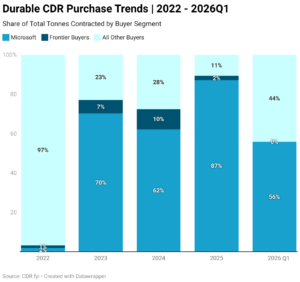
According to CDR.fyi, companies signed contracts for a record 8 million metric tons of durable carbon removal in 2025. Technology companies remained the biggest buyers. Microsoft, Google, Amazon, Meta, and Stripe continue to lead the market by supporting both nature-based and engineered carbon removal projects.
Scientists say demand will need to grow much further.
The Intergovernmental Panel on Climate Change (IPCC) estimates the world will need to remove billions of tons of CO₂ every year this century to help limit global warming to 1.5°C. The International Energy Agency (IEA) also says carbon removal will be needed alongside deep emissions cuts to reach global net-zero emissions.
Brazil Has Become a Global Carbon Removal Leader
Brazil is well placed to help meet that demand. The country holds about 60% of the Amazon rainforest, the world’s largest tropical forest. It also has millions of hectares of degraded pasture that can be restored without clearing new land.
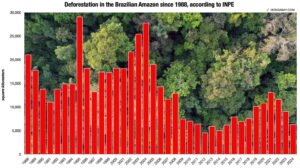
The World Resources Institute (WRI) estimates Brazil has more than 50 million hectares of degraded pasture with strong restoration potential. Turning even part of this land back into native forest could remove large amounts of carbon while improving biodiversity and water quality.
That opportunity is attracting more investment. Companies like Mombak are showing that restoring forests can produce verified carbon removal while creating jobs, improving local ecosystems, and supporting rural communities.
A Milestone That Could Strengthen the Entire Carbon Market
Delivering carbon credits early does more than help one company. It helps strengthen confidence in the entire carbon removal market.
Corporate buyers want projects that can deliver real carbon removals on time. Early delivery reduces execution risk and shows that high-quality nature-based projects can perform as promised.
That could become even more important as demand grows.
High-quality carbon removal credits remain in short supply, while many large companies are increasing their purchases each year. Projects that consistently deliver verified removals may attract more buyers and stronger pricing over time.
For Mombak, the early issuance marks an important milestone. For buyers like Google, McKinsey, and other corporate partners, it provides verified carbon removals sooner than expected, helping strengthen their long-term climate strategies.
More broadly, the achievement shows that restoring the Amazon rainforest can produce high-quality carbon removal credits at commercial scale. As more projects deliver on time—or even early—nature-based carbon removal could become a larger and more trusted part of the global effort to reach net zero.
- READ MORE: BTG Pactual Closes Record $1.24B Reforestation Fund as Forest Carbon Markets Enter the Big Leagues
The post Brazil’s Mombak Delivers Amazon Carbon Credits Early, Giving Google a Climate Win appeared first on Carbon Credits.


