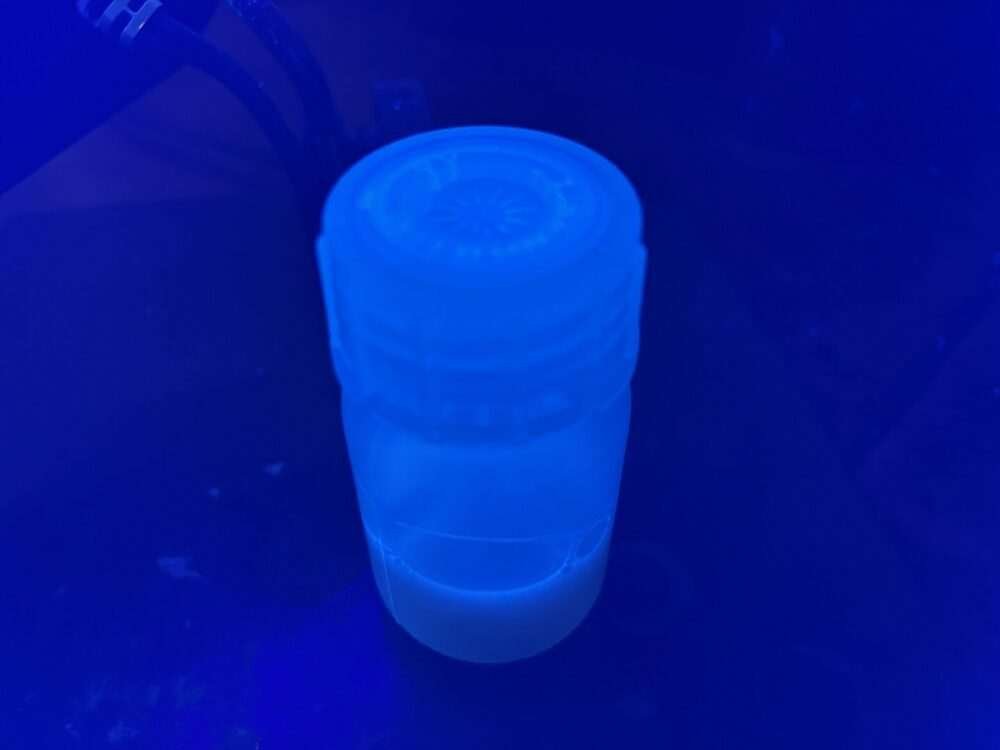
Japanese green tech company Green Science Alliance has developed a pest repellent made from carbon quantum dots synthesized from organic waste. The materials include wood, plant, and food waste.
Quantum dots are nanoparticles just a few atoms wide. Their tiny size gives them unusual optical and electronic properties, which is why they’re already used in solar cells, displays, and LEDs. Green Science Alliance has now applied that same technology to pest control.
Researcher Dr. Ryohei Mori synthesized the quantum dots from biomass waste and tested them against adult sweet potato whiteflies. He confirmed a repellent effect, something the company believes may be the first documented case of carbon quantum dots working this way.
Most commercial repellents rely on synthetic chemicals like DEET, which raise concerns about toxicity and environmental impact. Natural alternatives are generally seen as safer, though effectiveness can vary. This new approach offers a potential middle ground: a bio-based repellent that avoids petroleum-derived chemicals while using cheap, abundant waste material as its source.
The exact mechanism behind the repellent effect isn’t fully understood yet. Mori has proposed a few possible explanations. The particles may be small enough to penetrate insect cells and damage DNA. They might emit light at wavelengths insects avoid. Or their photocatalytic properties could generate damaging effects when exposed to sunlight. Further research is needed to confirm which mechanism, if any, is responsible.
Safety testing also remains a future step before any commercial rollout. Green Science Alliance plans to continue producing quantum dots from other types of biomass waste and evaluate their repellent potential.
The post New pest repellent made from biomass waste appeared first on World Bio Market Insights.