
Diverse and active soil ecosystems improve crop health, productivity and resilience in the face of adverse environmental conditions. Without soil organic matter, however, living below-ground ecosystems cannot function.
Fortunately, a range of production practices can help improve and maintain soil organic matter levels in the field. As soils in many parts of the country continue to face significant degradation risk, employing more best management practices makes good business sense in both the short and long term.
Why it matters
Soil organic matter forms the foundation of the many physical, biological and chemical functions important to below-ground ecosystems. In crop production, improving organic matter levels results in across-the-board fertility and resiliency gains.
What is soil organic matter?
Soil organic matter is comprised of plant and animal material, both living and dead, approximately 58 per cent of which is carbon. It feeds soil life, helps soil store nutrients and water, provides protection against erosion and compaction, and supports crop root growth. It supports healthier, more resilient crops by making the soil environment itself more robust.
Soil organic matter levels are generally included in standard soil fertility test results, reported as what percent of your soil samples’ total solid material is made up of organic matter, rather than sediment. The five tests identified as critical to soil health are:
Five indicators of soil health
- Soil organic matter
- Active carbon
- Respiration
- Potential mineralizable nitrogen
- Aggregate stability
Source: Soils at Guelph
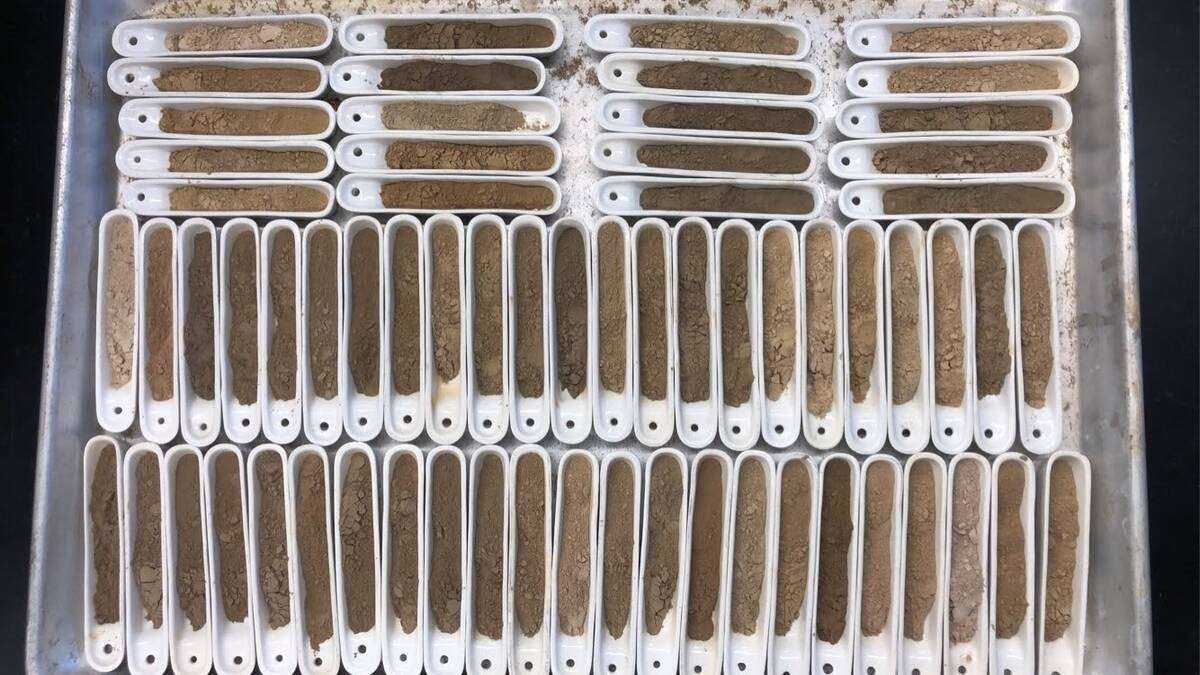
In Ontario, farmland ranges from about one to eight per cent organic matter. Different soil types naturally feature different ranges in soil organic matter, with sandy soils generally having lower levels and clay or silt loams higher ones.
Kimberley Schneider, researcher and professor in the University of Guelph’s department of Plant Agriculture, says those levels can be used as a shorthand means of determining a field’s overall bill of health.
“Organic matter affects the physical properties of the soil by providing structure, less compaction and enabling more root growth,” she said. “It also affects the chemical properties. Some nutrients are found in soil organic matter, like nitrogen, phosphorus and sulfur. The more organic matter you have, the more the soil can supply those nutrients. That can help sustain crop growth throughout the season.
“One of the key benefits is soil organic matter helps water infiltrate, as opposed to running off the surface of the field. That helps store water for when we have drought periods.”
Lose quick, build slow
When the soil and organic matter within it is disturbed, through tillage for example, it becomes exposed to oxygen. Microbes then decompose the organic matter, transforming it into carbon dioxide, which goes into the atmosphere. Soil disturbance also exposes organic matter to weather, increasing the risk that fine organic particles will be lost to wind and water erosion.
According to Agriculture and Agri-Food Canada, Ontario and eastern Canada saw an overall loss of soil organic carbon, and by consequence, soil organic matter, between 1981 and 2021. Much of Ontario is also considered to be at high risk of continued soil organic carbon degradation.
Building soil organic matter is a slow process in comparison to the speed at which it can be degraded. Improvements are nonetheless possible, however, through a variety of different best management practices.
Four ways to build organic matter
- Reduce tillage. Less disturbance means less oxygen reaching organic matter and less exposure to wind and water erosion.
- Add roots with cover crops. Living roots feed soil biology between cash crops.
- Diversify the rotation. Perennials in particular. A 24-year Guelph study found keeping winter wheat in rotation was enough on its own to increase soil organic carbon.
- Apply organic amendments. Manure and compost add material directly.
Source: Soils at Guelph
Schneider said the speed at which growers can improve soil organic matter levels is highly variable, depending on soil type, weather, the number of best practices being employed and other factors. Those bringing soils from a poor starting point might chart improvements more quickly than those working soils already in better shape.
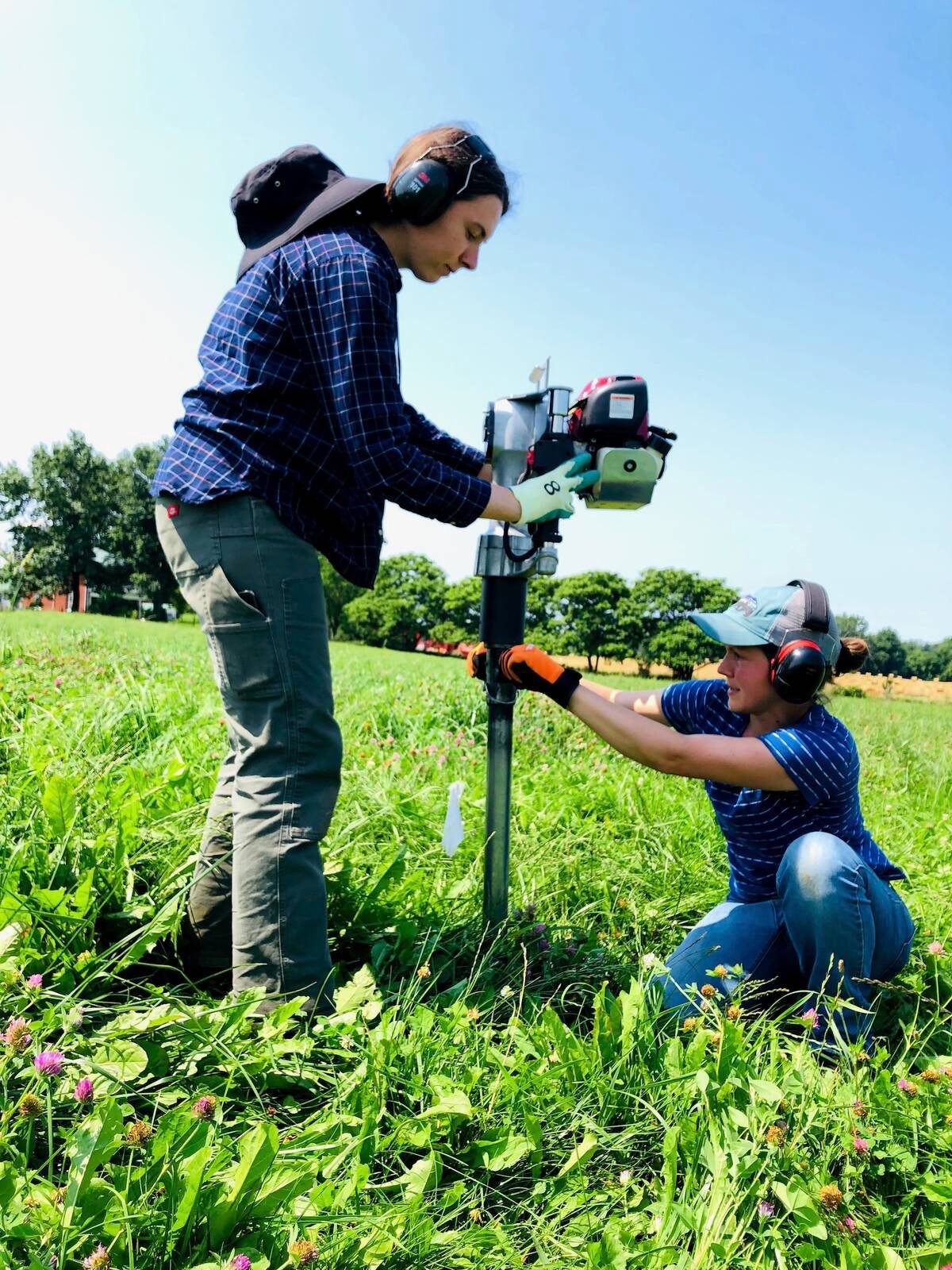
“In research, if we’re looking for a change in soil organic matter or organic carbon, we would normally wait five years from our first analysis before looking again. Usually, it’s not going to change fast. That’s also related to how many practices you are changing,” said Schneider.
Crops benefit
How soil organic matter levels impact yield pertains to roots — specifically, their opportunity for crops to expand root systems.
Writing in spring 2020, University of Guelph researchers Alison King and Cameron Ogilvie said the traditional assumption was more organic matter acted “like a sponge,” holding more nutrients and water “to supply plants as needed.” However, more recent analysis indicates higher levels of organic matter reduce waterlogging through better water infiltration and help leaven soil compaction. Crop roots are then able to spread wider and deeper to access available resources.
“While water holding capacity and nitrogen release impact the supply of resources to the crop, root development impacts the crop’s ability to access what’s already there,” wrote King and Ogilvie. “If increases in soil organic matter promote root growth, that alone will better meet the demands of a bigger crop.”
More recently, a 24-year University of Guelph study concluded increasing soil organic carbon — the main component of organic matter — was possible just by maintaining winter wheat in crop rotations. Doing so, the authors wrote, contributes to enhanced corn and soybean yield stability and long-term soil resiliency.
The message, for Schneider, is clear. Taking steps to improve soil organic matter leads to better root growth, more water storage, less runoff and associated environmental risk, plus more nutrition for when crops need it most.
This is part two of an article series highlighting Soils at Guelph’s five soil health indicators, and the Making Sense of Soil Health campaign. Additional resources are available via Soils at Guelph.
Soils at Guelph is an effort to increase awareness of research initiatives, facilitate collaboration and knowledge exchange, and to educate on the importance of soil health.
The post Organic matter goes fast and comes back slowly appeared first on Farmtario.


