
As global energy demand continues to climb, geothermal is standing out as a breakout technology for its ability to bring always-on clean power to homes, businesses, and communities. According to the Clean Air Task Force, just 1% of the world’s hottest underground resources could generate eight times more energy than today’s global electricity supply. Elemental has been investing in geothermal for several years, in companies like Fervo and Bedrock Energy, but we are still at the beginning of the story.
Elemental’s newest investment, Hephae (pronounced HEH-feh and named after the Greek god of fire and volcanoes), is building high-temperature drilling technologies that help geothermal developers reach deeper, hotter energy resources. Unlike conventional drilling equipment, originally designed for oil and gas, Hephae’s technology can withstand more extreme temperatures found deep underground.
We sat down with CEO Steve Krase to learn more about how this technology is reducing drilling delays, lowering project costs, and unlocking more reliable, always-on clean power.
Spoiler alert: don’t miss the musical interlude at the end. You came for geothermal, but you’ll stay for the tunes.
___
Geothermal has traditionally been limited to certain geographies, yet it’s having a breakthrough moment. What’s changed, and what role is Hephae playing in making geothermal viable in many more places?
Historically, geothermal only worked in very specific places with volcanic or tectonic activity. But advances in drilling technology—including oil and gas techniques like horizontal drilling and hydraulic stimulation—have fundamentally changed what’s possible. Now, instead of relying on existing hydrothermal systems, the industry is moving toward engineered geothermal, where you create an artificial reservoir to then extract heat to the surface.
That shift is only possible because directional drilling technology has improved significantly over the past decades. The challenge is no longer just finding heat, it’s building tools that can survive long enough downhole to reach it.
Hephae is focused on solving that bottleneck by commercializing high-temperature drilling technologies for developers to reliably access these deeper resources and expand geothermal beyond its traditional limits.
Enhanced geothermal has been gaining momentum as an emissions-free way to generate reliable power, with DOE projections estimating that it has the potential to supply as much as 12% of U.S. electricity demand. What still needs to happen for geothermal to reach its full potential?
The resource opportunity for next-generation geothermal is enormous, but accessing it reliably and affordably is still the challenge.
There are two things we need to do to move the industry forward. First, you have to put the well in the right place. We know how to do that. That’s where measurement-while-drilling (MWD) and rotary steerable systems (RSS) come in. But those systems typically only operate up to about 175°C. That is plenty for oil and gas but, for next-generation geothermal, it is almost 100°C short of where we need to be.
That brings us to the second thing. The hotter the rock, the lower the cost of electricity becomes. If we can reliably reach higher temperatures, geothermal can compete with (and eventually be more affordable than) the cost of natural gas.
To take the next step toward scale, the industry needs drilling systems that can operate reliably in deeper, hotter environments, along with continued investment, supportive policy, and collaboration across the energy sector.
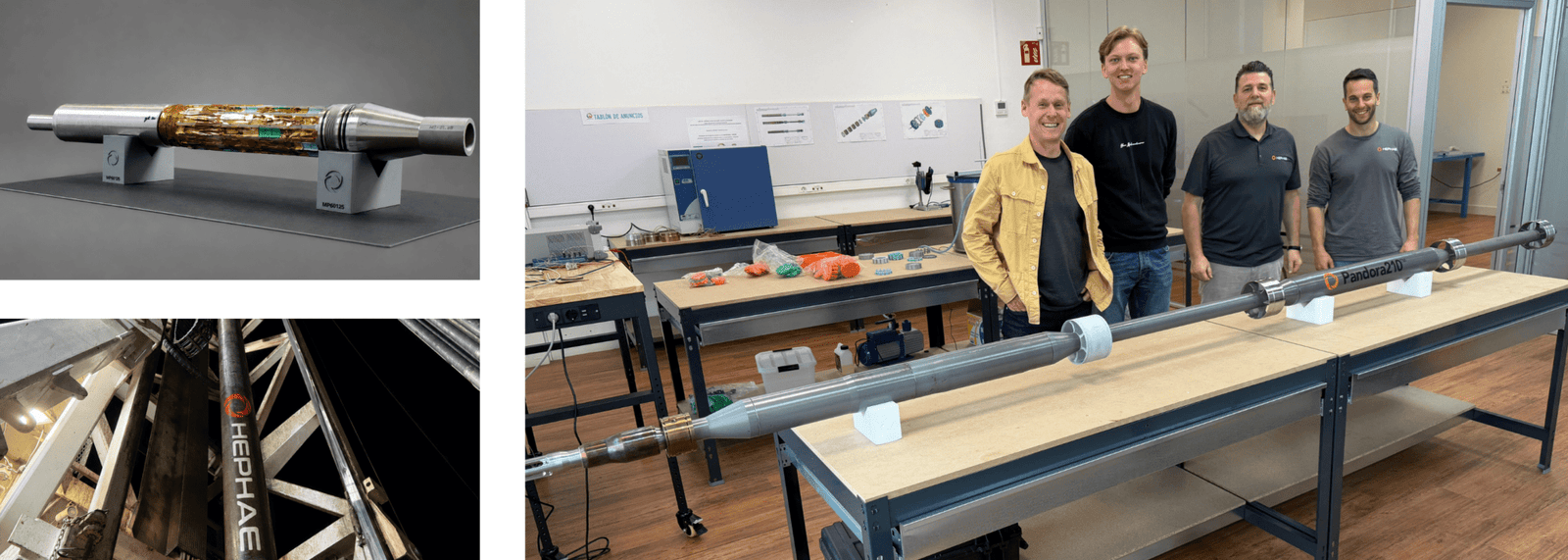
Hephae is focused on helping geothermal developers drill in much hotter conditions. Why is heat such a challenge for the industry, and why does solving it matter?
Hotter is better in geothermal, but the electronics inside conventional drilling systems were never built for the temperatures that next-generation geothermal needs. At a certain point, they literally start to fail or melt.
Hephae’s MWD system acts as the eyes and ears of the drill, featuring a patented circular electronics architecture that improves heat management, while providing real-time measurements from deep underground. Paired with Hephae’s RSS, which precisely steers the wellbore, the integrated technologies enable developers to drill deeper and more accurately without the temperature limitations of conventional drilling systems.
Reliable high-temperature systems mean fewer failures, less time spent cooling wells, and fewer costly workarounds. They also help developers reach deeper, hotter resources, where each well can produce more energy and improve the economics for each site—making geothermal projects more investable. Solving these pieces can help geothermal become a larger source of clean power for communities, businesses, and the grid.
Elemental’s investment will support Hephae as it moves from field trials toward commercialization. What are the biggest milestones you’re focused on in the next one to three years?
When we started, we didn’t really know how hot we needed to go. People throw around these big temperatures—300°C, 400°C—but our customers helped us understand what actually matters in the field.
What they told us was pretty simple: if you give us a 210°C tool, we’ll drill at 210°C. If you give us 230°C, we’ll go to 230°C. If you give us 250°C, we’ll go there next. So our milestone is not just “get hotter” for the sake of it. It is to keep pushing that operating temperature up in a way that developers can actually use.
Our immediate priorities are moving from field trials into broader commercial deployment: expanding manufacturing capacity, growing our fleet of commercial tools, and supporting more customer deployments in the field. At the same time, we’re continuing to advance our roadmap toward even higher-temperature electronics and a broader product line that can support more of the geothermal lifecycle.
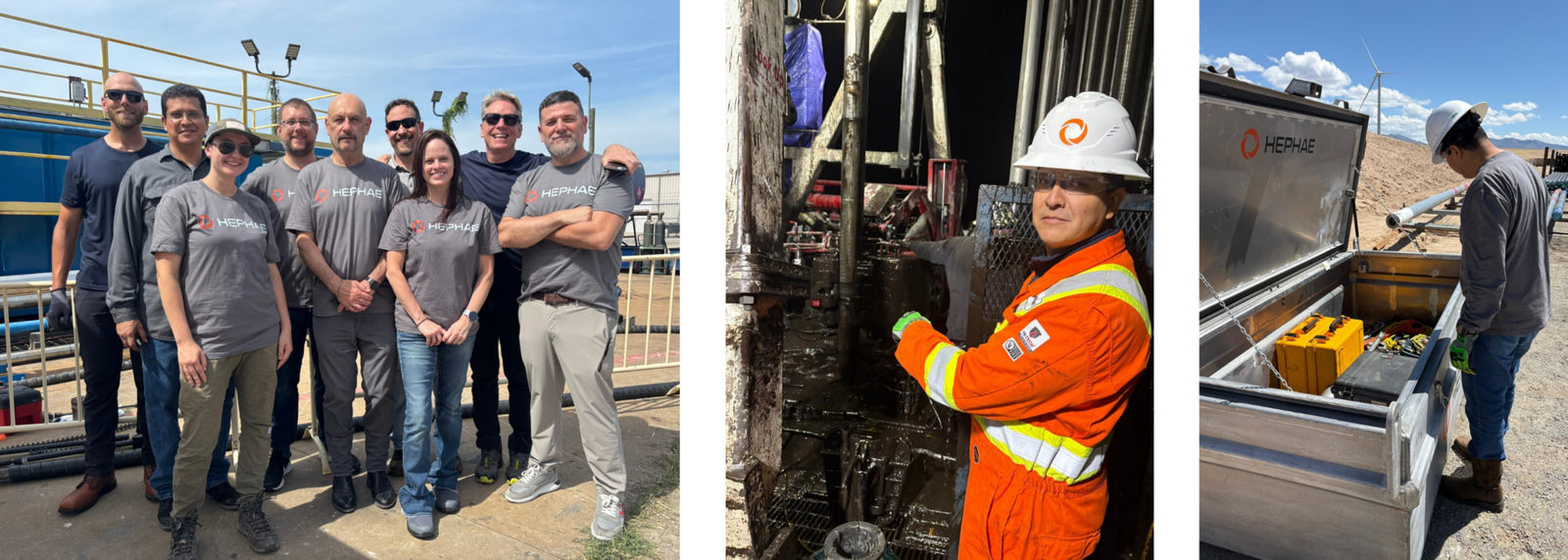
Scaling next-generation geothermal will require a new generation of technical talent. How are you thinking about building the workforce for high-temperature robotics and electronics?
We think the fastest way to strengthen the geothermal workforce is actually to build on the expertise of the people already doing this work in the field.
What we are trying to do is make our tool fit into that workflow without forcing people to change everything around it. They do not need Hephae equipment until the well gets hot. Until then, they can use an existing MWD system. When it is time to switch over, our goal is for that transition to feel almost invisible. Same people. Same computers at the surface. We send the tool down, and it works inside the system they already know.
The other piece is building a team that can rethink what these tools look like. Our headquarters are in Texas, with a team that brings oil and gas expertise to the table. But a lot of our engineering work is happening in Bilbao, Spain, with people who come from aerospace and other advanced industries. That differentiated and fresh perspective is a big reason the system looks the way it does today.
We like to say: if you want to do something impossible, take it somewhere people do not know it is impossible. For decades, this industry has been trying to add five degrees at a time. To get from 175°C to 300°C, we needed a fresh start.
If Hephae had an entrance song, what would it be — and can we convince Steve to play us a few bars?
The post Hephae is unlocking scalability for next-generation geothermal appeared first on Elemental Impact.


