
In just fourteen years, we’ll hit the year 2040.
Fourteen years really isn’t that much time in the grand scheme of things, and yet, think about what’s changed since 2012. The iPhone, for example, was only five years old then. Now, think about how much the world has changed over the last 14 years, how our social, informational and entertainment habits have changed with the smartphone’s ubiquitous presence. A lot can happen in 14 years. Conversely, a lot can not happen if we’re too reckless in some ways or not forward-thinking enough in others.
Which prompted me to wonder: what will farms look like in the near future? Not so far away as to be Jetson-like in their futuristic ways (sorry for that ancient reference, younger readers!), but not so close as to require a need to plan today. So, I guess, in a Goldilocks spot: somewhere “just right” where we need to start considering how what we do today, the decisions we make, the technologies we implement will affect our farms and farm families, but we’ll still have time to take action or make adjustments, if required.
You’ll also want to stay tuned for more articles in this Future Farm series over the summer, including a column on signals watching. Wondering what “signals” are and how they will affect your farm? Make sure to keep reading Farm & Family throughout the summer, online, in print, via our weekly newsletter or on social media. Younger readers, a.k.a. gen Z and millennials — you’ll want to pay close attention because you’ll be the full-time farmers in 2040!
Below, contributor Delaney Seiferling asked four Canadian ag leaders for their thoughts on what a farm in 2040 might look like, and where the opportunities and challenges might be.
~April M. Stewart, editor, Farm & Family
Technology will transform farming, but family farms will remain at the centre
Ted Cawkwell is a Saskatchewan farmland real estate specialist, fourth-generation farmer and founder of the Cawkwell Group.
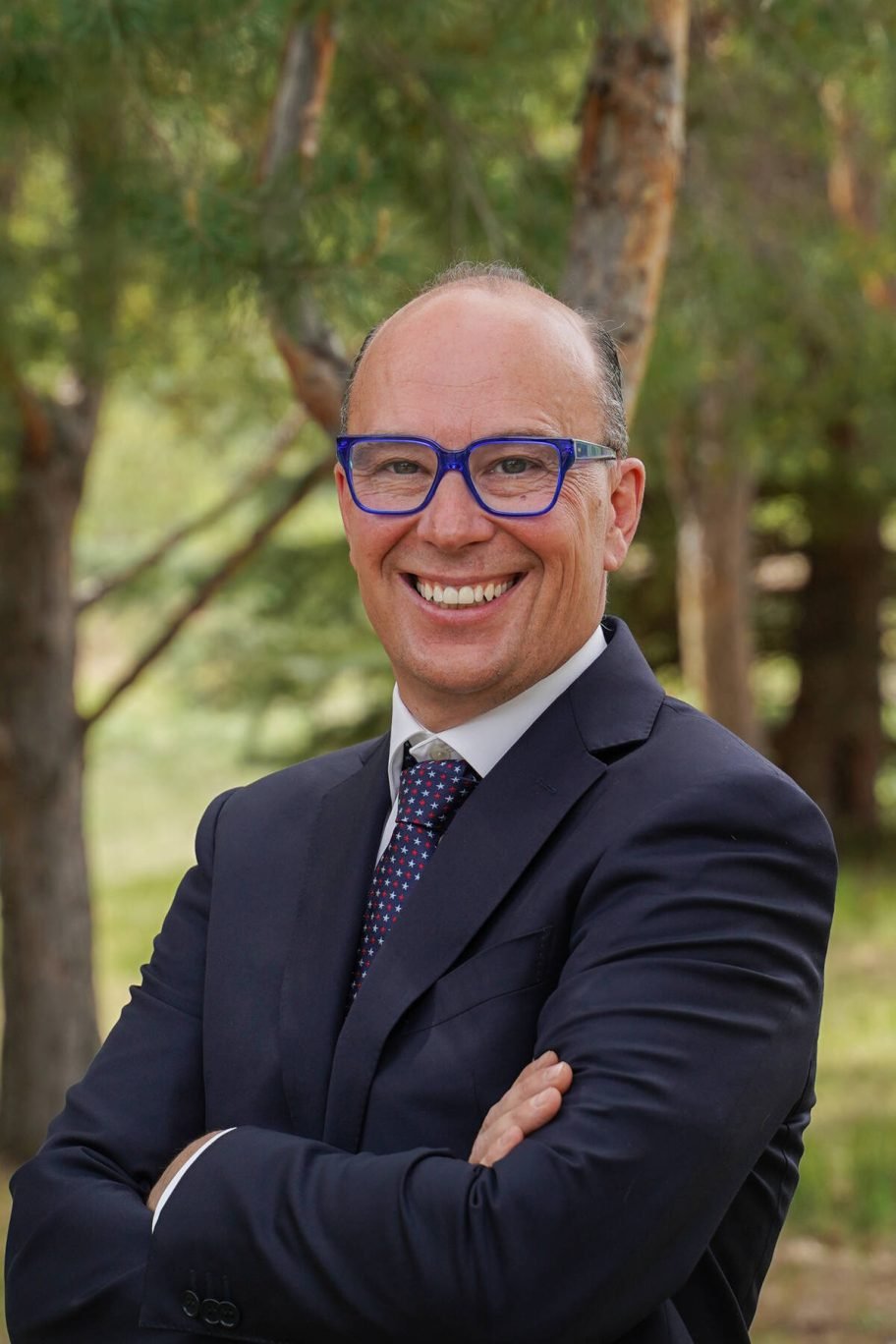
Despite rapid technological change in recent years, this Western Canadian farmland expert believes the basic structure of prairie agriculture will remain surprisingly familiar by 2040.
Although farms will continue to grow in size, family ownership will remain dominant, says Cawkwell.
“That’s been a trend ever since the homesteading days, when my grandpa homesteaded a quarter of land in Kelvington, Sask., and I think that trend will continue.”
And while there have been many concerns lately about private and corporate farmland ownership, Cawkwell is skeptical that investors will fundamentally reshape the landscape.
“In Saskatchewan, 98 per cent of the land is owned by farmers, and about two per cent is owned by investors. It’s impossible to predict, but I don’t see that changing.”
Instead, he expects family farms to remain the foundation of the industry.
“I think it’s going to be primarily farm families operating farms the way they always have. That’s the way it’s always been, and I don’t think that’s going to change.”
Where Cawkwell does expect to see dramatic change is in the technologies used to operate those farms. In fact, he envisions a future where autonomous machinery, drones and increasingly sophisticated seed technologies become commonplace on Canadian farms.
“I think that technology is going to change farming the same way that it did for my grandpa when he went from horses to the diesel engine. I think we’re going to have advances that are that monumental or bigger in the years between now and 2040.”
In light of this, Cawkwell sees adaptability as one of the most important skills for farmers. He says his own grandfather, who was among the first in his area to own a tractor, taught him that farmers must embrace new technology rather than fear it.
“He taught me, whatever innovation is coming along, you’ve got to lean into it and find a way to make it work for your farm … because you can’t stop this stuff from coming.”
He also believes farmers’ success will increasingly depend on strong business management skills, financial literacy and a willingness to seek outside expertise.
“The farmers that have even got to this point today have had tremendous business acumen.”
Overall, Cawkwell believes the future is bright for the Canadian agriculture industry, despite the challenges ahead.
“If someone would have told us 50 years ago that there’s going to be eight billion people and agriculture will sustain it, we’d be like, ‘That’s impossible.’ Somehow humans keep adapting and keep surviving, and I think farmers will too.”
The future farm will be bigger, smarter and more specialized
An engineer by trade, Jeff Wilkinson farms approximately 7,200 acres near Yellow Grass, Sask., alongside his brother on a fifth-generation family farm.

While some envision dramatic change by 2040, farmer Jeff Wilkinson expects the future farm to be recognizable to today’s farmers.
He foresees changes that are more evolutionary than revolutionary — much like those that have transformed agriculture over the past two decades.
“When I think back (about) what’s changed in those years, it hasn’t been revolutionary. We’ve got a lot better at a bunch of things, and the technology has moved forward, but you would definitely recognize the farm.”
He expects drones, robotics and artificial intelligence to become increasingly integrated into farm operations, but not to completely replace people.
“It won’t be fully automated. I think all the machinery will look similar, but it’ll be AI-embedded and a little bit smarter and doing some new things.”
A mechanical engineer by trade, technology remains one of the areas Wilkinson is most excited about, particularly as artificial intelligence (AI) becomes integrated into farm equipment and decision-making tools.
“I’m pretty excited for it. I think it’s just really interesting what’s going to happen once AI starts to integrate into drones and machines and some of those things.”
However, he cautions that new technology must be adopted strategically and ultimately improve profitability.
“At the end of the day, it has to grow you more grain or save you money or do something else that you can actually afford to pay for it with.”
As farm technology becomes more sophisticated, he also believes farm sizes will grow, which also means management responsibilities will become more complex.
In light of this, Wilkinson believes by 2040 the role of the farmer will increasingly resemble that of a business manager co-ordinating a team of specialists and that success will depend not only on agronomic knowledge, but also on skills ranging from human resources and recruitment to marketing and communications.
“There’s the world market piece, and there’s managing HR properly and recruiting, and things like social media outreach and marketing, and a bunch of skills that farmers haven’t traditionally had to deal with.”
For Wilkinson, the most successful farms will be those willing to adapt, looking for new ways of doing things, and making continual improvements, skills he learned in his engineering training.
“The mindset (farmers have) around measure and improve, look for solutions and not accept the status quo … I think it’s been pretty helpful.”
And while he sees significant challenges ahead, including rising input costs, tighter margins and increasing regulatory requirements, he also sees tremendous opportunity as aging farmers retire and farmland changes hands.
“I think the opportunities are everywhere.
Technology and transitions may change farming, but people will drive its future
Craig Klemmer is manager of thought leadership at Farm Credit Canada, where he leads research and analysis on the long-term trends shaping Canadian agriculture.

The most significant changes between now and 2040 won’t necessarily be visible in the crops farmers grow or the livestock they raise, says Klemmer.
Instead, they’ll be found in the technologies helping farmers make decisions.
“I think the big thing that’s going to be so different is the inclusion of technology and the connectiveness of agriculture systems. There’ll be a lot more technology helping to accelerate decision-making.”
As farms become increasingly connected, farmers will have access to more data than ever before, he says, creating new opportunities to improve efficiency, manage inputs and respond more precisely to changing conditions.
“We’re just going to have more data collection points, and I think that’s going to be something very interesting.”
Klemmer believes those changes will continue a long-running trend in agriculture toward greater precision and sustainability. Practices such as zero tillage and precision agriculture are already delivering environmental and economic benefits, he says, and that momentum will only continue.
“I think a lot of the environmental sustainability practices are here to stay, and more and more of that is actually providing value add.”
While technology will continue to evolve over the next 15 years, he does not expect the family farm to disappear. Farm consolidation will likely continue, driven by demographics, labour shortages and the cost of equipment, but he sees room for farms of different sizes to remain successful.
“I do still see lots of room for the family farm and growing responsibly. Right now, with the rise in farmland values, the fairly decent margins over the last decade, we see lots of farmers and the children of those farm(er)s wanting to come back to the farm and remain part of the system.”
One of the biggest challenges facing the sector, however, will be passing farms from one generation to the next, Klemmer says, which will bring financial challenges.
“The reality right now is we have 50-plus billion dollars in assets that need to transfer from this generation to the next generation of farmers.”
That transition, he says, will require innovation not only on the farm but also in how agriculture is financed and structured.
At the same time, Klemmer remains deeply optimistic about agriculture’s future role in society. From food security to climate solutions, he sees agriculture positioned at the centre of some of the world’s most pressing challenges.
“When we look at some of these major challenges globally, agriculture and the food system is front and centre to helping solve and address some of these challenges.”
To capitalize on those opportunities, farmers will need to continue expanding their skill sets beyond agronomy and on-farm production. Increasingly, the role of the producer will include business management, financial oversight and technology adoption.
“The skill sets of the farmer, the CEO of the farm, continue to evolve. We’ve evolved to (be a) part-time mechanic. We’ve become accountants and financial people. Technology is the next wave of it.”
Despite the challenges ahead, Klemmer sees plenty of reasons for optimism, particularly when he looks at the next generation entering the industry.
“I think there’s a lot of exciting things coming in agriculture, and I do think that we have the farms and the people who are passionate about it. The next generation … is going to have incredible ideas to fix the challenges that continue to emerge.”
“I think we’re on the cusp of some really, really great things.”
Canada’s greatest advantage could be producing what the world needs most
Al Mussell is an agricultural economist and policy analyst, serving as research lead and founder of Agri-Food Economic Systems and a senior research fellow with the Canadian Agri-Food Policy Institute.

When Al Mussell thinks about agriculture in 2040, he starts with the global picture. Rising incomes, changing diets and continued population growth in parts of the world lead him to believe that food will become increasingly valuable.
“Food’s expensive now, it’ll probably be more expensive then.”
That doesn’t mean a world facing famine, he says, but rather one where food security becomes a growing concern, and countries compete more aggressively for access to reliable supplies.
For Canada, however, those trends could create significant opportunities.
“Canada is among the few significant net exporters,” he says, adding that this positions us to benefit from growing global demand.
“We have food to sell internationally, and so far, climate change for agriculture has not been a negative for Canada; it’s actually been positive.”
Mussell also believes technology will play a major role in supporting Canada’s competitiveness and that artificial intelligence has the greatest potential to transform agriculture.
The ability to process enormous amounts of information and identify patterns that humans would never recognize could unlock significant productivity gains across the sector, he says.
“All the unfathomable tasks, where there’s just more data than anybody could ever deal with, the AI will be able to deal with it. It’ll make connections that you know that would just be beyond us otherwise.”
Still, he cautions that the technology’s benefits won’t come without challenges.
“That could hold great promise. It’s also going to be very disruptive.”
In light of all this, Canada must think differently about its competitive position in agriculture, he says.
While the country exports enormous volumes of agricultural products, it does not enjoy the same scale advantages as many larger producing nations.
“We’re not large producers.”
That distinction, he says, may be one of the most important mindset shifts facing the sector. Because Canada cannot always compete solely on volume or cost, future opportunities will increasingly come from differentiation, value-added products and producing things competitors cannot easily replicate.
“The pressure (is) on us to upscale our product, differentiate it, make it a little bit different than everybody else’s. It allows you to carry this disadvantage around scale and (the) resilience in demand.”
Overall, despite the growing uncertainty around trade, geopolitics and global food systems, he remains optimistic about Canada’s future.
“For Canada, there is reason to be optimistic. We’re going to be in an environment where the world will want a lot of things that we have to sell, and we’re going to be in a good position to sell it.”
The post Farming in 2040: What will change and what will stay the same? appeared first on Farmtario.


