

Chinese carmaker Zeekr will push into six-figure territory with its 8X and 9X luxury SUVs that will add plug-in hybrid power and lashings of tech to the top end of the market.
The Geely-owned brand has confirmed its two largest SUVs will come to Australia, with the pair due to arrive from late 2026 and through 2027.
Both the 8X and 9X are plug-in hybrids, while the X, 009 and popular 7X Zeekr already sells here are EVs. The 7X has been the cornerstone of the brand reaching 10,000 sales in Australia in less than two years.
And they are both aimed squarely at established German and British luxury metal.
Between them they will target the rarefied SUV air dominated by the likes of BMW, Mercedes-Benz and Range Rover.
READ MORE: Zeekr 7X RWD review
READ MORE: 2026 Zeekr 7X Performance AWD Review: Take note, Tesla fans, because this could be the best Chinese EV yet!
READ MORE: Zeekr 8X revealed: PHEV hybrid’s looks and tech detail have been exposed in China
READ MORE: Zeekr 9X is China’s new uber SUV, complete with 42,242 laser engravings
This move is indicative of the aspirations of Chinese car makers to head upmarket, with BYD-owned Denza and GWM also aiming high.
Zeekr 8X to target BMW X5, Mercedes-Benz GLE
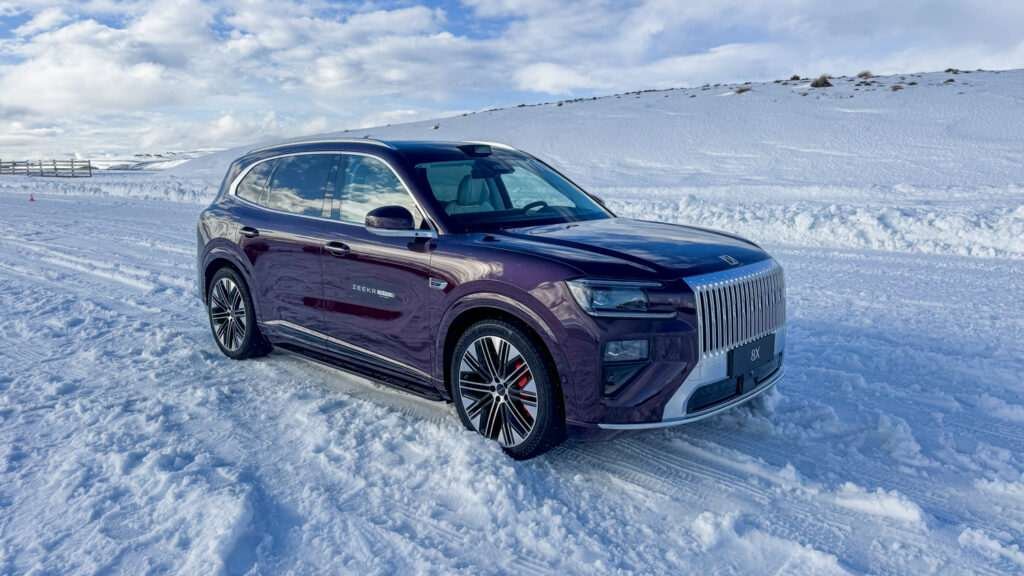
At 5100mm long and with a 3069mm wheelbase, the Zeekr 8X has a similar footprint to a BMW X5 or Mercedes-Benz GLE, with the Audi Q8 and Range Rover Sport also in the firing line.
The difference is the ask. The 8X is expected to arrive priced below $100,000, a $20,000 to $30,000 advantage over entry versions of the German competition – and a far larger gap against their plug-in hybrid variants.
BMW’s X5 xDrive50e, the closest direct comparison technically, starts at $154,900 before on-road costs (a new X5 is due within months).
Under the 8X’s skin is a 2.0-litre turbocharged four-cylinder petrol engine paired with either two or three electric motors.
The dual-motor version produces a combined 660kW and 935Nm, good for a claimed 0-100km/h in 3.7 seconds. The tri-motor flagship steps up to 1030kW and 1410Nm, with a claimed 2.9-second sprint.
If those numbers hold up – the triple motor version makes more power than an F1 car – those acceleration figures are supercar quick.
Battery options in China run to 55.1kWh and 70kWh and include a 900-volt architecture for fast charging.
Chinese CLTC figures quote 380km of electric-only running from the larger pack, with combined range approaching 1416km.
WLTP figures for Australia are yet to be confirmed, but expect them to land a fair bit lower.
The 900V system also allows a claimed 20 to 80 per cent top-up in around nine minutes.
8X could also compete with Prado, Everest
There’s a second, less direct set of rivals for the 8X.
At more than five metres long with three rows and serious towing and touring pretensions, the 8X could conceivably be cross-shopped against the Toyota Prado and Ford Everest.
The promise is more power and more luxury for a similar price tag.
More directly, it squares up against the new wave of large Chinese hybrids, chief among them the Denza B5 and GWM Tank 500.
Buyers making that comparison should note a fundamental difference. Both Zeekrs use monocoque construction rather than a separate ladder-frame chassis, and both are tuned more for the road than challenging off-road conditions.
They inevitably won’t have the suspension articulation, low-range gearing or heavy-duty focus that defines the Prado, Everest, B5 or Tank 500.
Think fast, comfortable highway tourer rather than serious off-roader.
Zeekr 9X aiming at the top end of town
The Zeekr 9X is the more audacious of the two new Zeekr models.
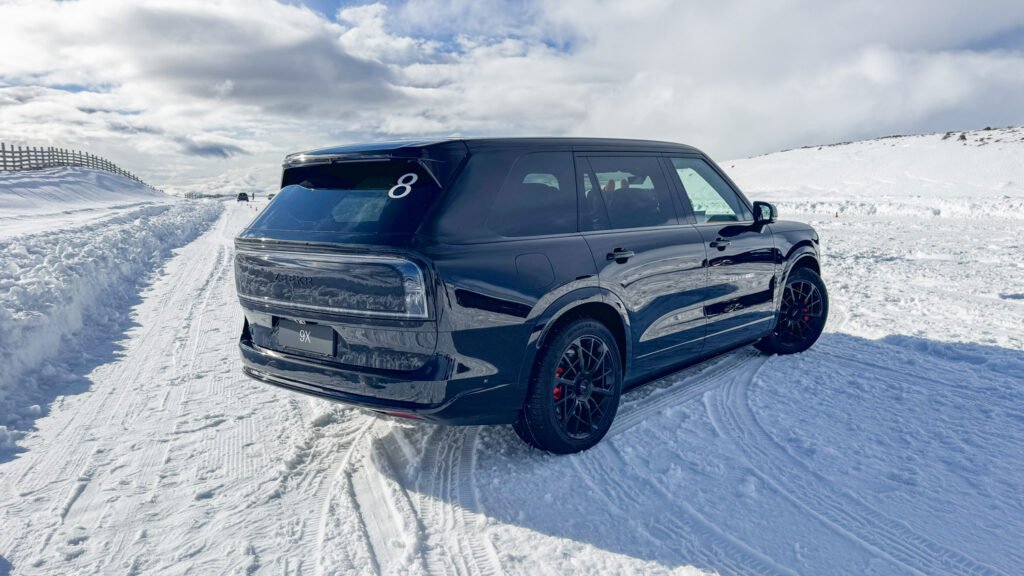
At 5239mm long, 2029mm wide and riding on a 3169mm wheelbase, it’s a genuine full-size three-row luxury SUV.
It has already been dubbed the Hangzhou Bay Cullinan – a reference to the Rolls-Royce that Zeekr’s engineers say they benchmarked.
The target list is accordingly rarefied: Range Rover, BMW X7, Mercedes-Benz GLS.
Australian pricing is expected to be somewhere around $150,000 – and possibly further north.
That’s thin air for any brand, let alone one that has nothing like the reputation and longevity of established rivals.
Volume will likely be modest, but Zeekr appears quietly confident it can take a healthy slice of a segment where badge equity has traditionally been everything.
The 9X offers a 2+2+2 six-seat layout with Nappa leather, second-row zero-gravity recline with extending footrests, massage functions, a 47-inch augmented reality head-up display, dual 16-inch centre screens, a 17-inch rear ceiling display and a 32-speaker Naim audio system.
Powertrain hardware mirrors the 8X: the same 2.0-litre turbo-petrol, the same 55.1kWh and 70kWh battery choices, the same 900V architecture. Entry versions produce 660kW and cover a claimed 300km on electric power alone under CLTC testing, with combined range of about 1200km.
The flagship Obsidian Black Edition runs three motors for a combined 1030kW and 1410Nm, with a claimed 0-100km/h of 3.1 seconds. That’s more power than a modern Formula 1 car.
At least, that’s the claim. Chinese plug-in hybrids have a habit of arriving at combined outputs by adding together the peak figures of each drive source, which assumes every motor and the engine are delivering maximum output simultaneously – something that rarely happens in practice. The seat-of-the-pants experience often doesn’t match the number on the spec sheet.
At up to 3150kg, the 9X is a genuinely heavy vehicle – around half a tonne more than a Range Rover or BMW X7, and more than a Toyota LandCruiser 300.
Blame it on the sizeable battery pack and petrol engine.
Big grilles, softer options
As with the Zeekr 009 people mover, the 8X and 9X get big toothy grilles.
Buyers wanting less presence than the glistening chrome can order the grille in body colour to tone things down.
Zeekr has confirmed the 9X will lead the charge, arriving in late 2026 or early 2027, with the 8X following roughly six months later.
Both were engineered as battery-electric vehicles before the combustion engine was added, leaving the door open to full EV versions down the track.


