
Easing labour crunches during traditionally busy periods is one of the major benefits of robotics in agriculture often touted by promoters of the technology.
During the July 22 AgRobotics Working Group Demo Day at the Simcoe Research Centre, several presenters showed how this is working in practice.
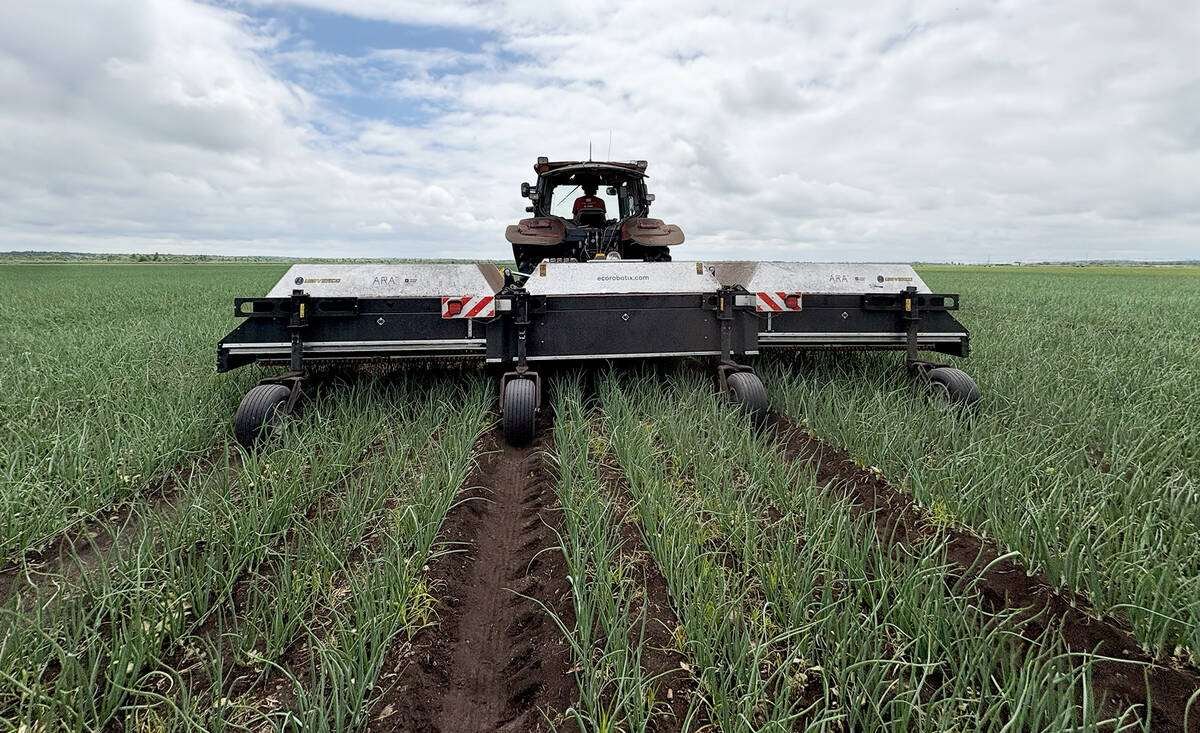
Anthony Sloetjes from Quebec-based Univerco, dealers in Canada for the Swiss-built Ecorobotix precision sprayer, said one horticulture grower near Chatham purchased two of the units and now runs them day and night through the times when weeding is most crucial for each crop.
The six-metre-wide units are tractor-driven — for propulsion mainly, except that a power take-off shaft activates the alternator to charge the batteries running the sprayer — so they require suitable field moisture conditions for equipment traffic.
Otherwise, daylight isn’t needed for the sensors detecting the weeds and deciding which of the unit’s 156 spray nozzles to activate to target those weeds.
But given factors such as machinery breakdowns and the value of sometimes decades of intuition and knowledge contained in a human worker’s brain, it’s not necessarily a straightforward calculation about how many employee-hours one machine can replace.
Drone spraying
Justin Shieck of Norfolk Drone Services demonstrated a Chinese-made EAVision J-70 drone as it followed a previously programmed map to spray water over a field of research centre soybeans. He said drones can have other uses around the farm, such as carrying items or monitoring crops.
He tells farmers who ask about purchasing their own that they should “hire the (custom drone operator) first and see if you like it. Then you can decide if you want to buy one yourself and go through the work of learning how to operate it.”
He was pleased to report that recently updated Health Canada ministry regulations cleared the way for any pesticides allowed for helicopters or airplanes to now also be sprayed by drones.
Sloetjes said the level of comfort that farmers have with robotic technology can understandably be slow to develop.
“The one thing we hear a lot is that, in the first year, they’re testing (the Ecorobotix precision sprayer) out with lower spray rates and larger safety zones” separating the spraying operation from other crops. “Year one is often a year of learning and adapting. And year two is when you’re doing the full program.”
Time is money
He also shared thoughts about the commonly held concern that the expense and time delay for repairs and maintenance could quickly eliminate the financial advantage of robotics.
Due to the electronic basis to so much of the technology, he said, many repairs can be dealt with using the photo, video and audio technologies available on smartphones.
But it was clear during the AgRobotics Working Group event that timely repair remains a factor in robotics decision-making.
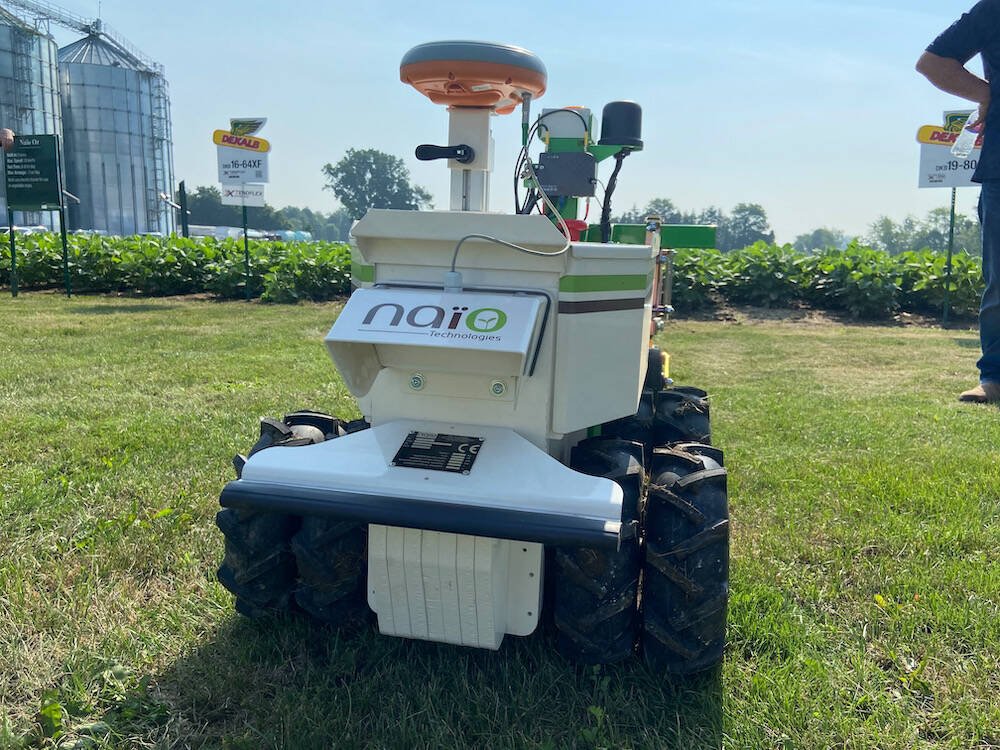
Torin Boyle, manager at the University of Guelph-operated research station, outlined a trial currently being run in collaboration with Haggerty Robotics using a made-in-France autonomous buggy for between-row weed control cultivating in squash.
The Naïo company’s Oz model also air-seeded a part of the crop and the plan was to have it spray herbicide. But breakdowns prevented the full utilization of the buggy during the 2026 season in those other operations.
For all the repairs, they had parts on hand, but if they didn’t, the parts would have had to come from France.
The post Repairs a part of the learning curve with ag robotics appeared first on Farmtario.


