
When the air starts to feel crisp and the leaves turn golden, the kitchen becomes one of the coziest places in the home. A few thoughtful changes can bring that wonderful autumn feeling indoors without requiring a complete makeover. With warm colors, natural textures, seasonal accents, and simple DIY touches, it’s easy to create a welcoming space that feels ready for the season.
The best part is that seasonal decorating doesn’t have to be expensive or complicated. A bowl of apples, a few pumpkins, a soft kitchen towel, or a garland of dried leaves can completely change the mood. The following fall kitchen decor ideas focus on practical ways to add warmth while keeping the room comfortable and functional. And there’s a charming little secret: sometimes the smallest detail becomes the feature everyone notices first.
Create a Warm Pumpkin Display
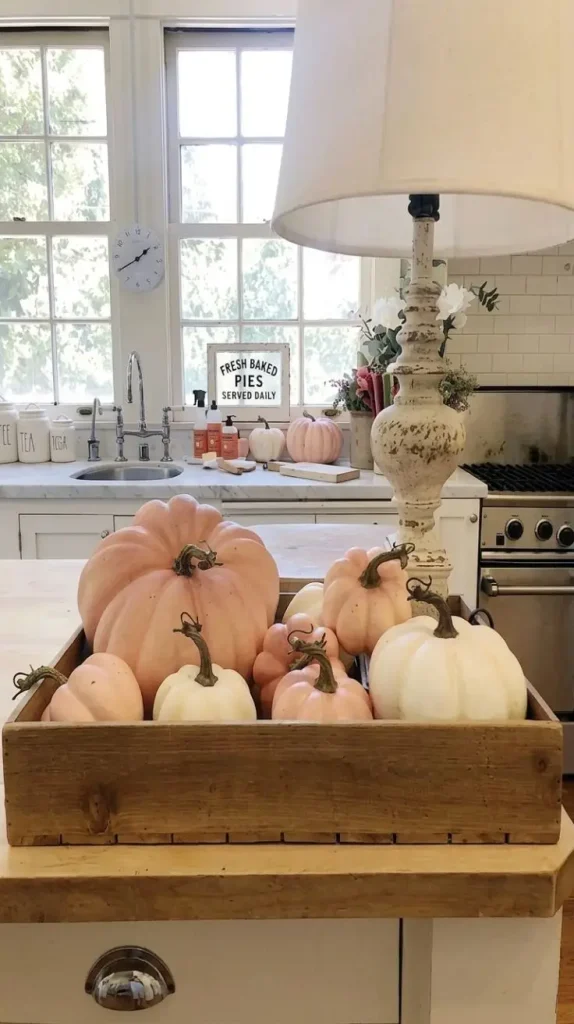
Pumpkins are one of the easiest ways to bring an autumn mood into the kitchen. Instead of placing them randomly around the room, a carefully arranged display can become a beautiful seasonal focal point. Small white pumpkins, classic orange pumpkins, green heirloom varieties, and miniature gourds can all work together beautifully.
A wooden tray makes a wonderful foundation for the arrangement. Place a few pumpkins at different heights, then add pinecones, faux leaves, or small branches around them. For a more rustic farmhouse feeling, use a weathered wooden crate instead of a tray.
The display can sit on a kitchen island, breakfast table, open shelf, or countertop corner. Keeping the arrangement compact makes it easier to work around when preparing meals. A small ceramic pitcher filled with dried wheat can add another layer of texture.
For a softer appearance, combine pumpkins with cream, beige, muted green, and natural wood. For something more traditional, orange pumpkins paired with burgundy and brown create a rich seasonal palette. This simple arrangement brings fall charm into the room without overwhelming the kitchen.
Add Seasonal Colors Through Textiles
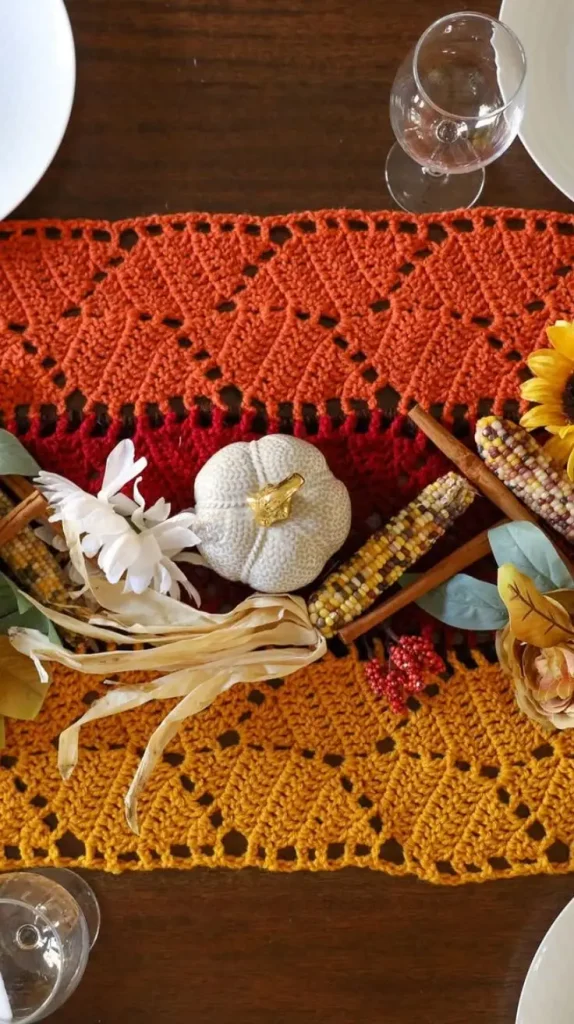
Changing textiles is one of the quickest ways to refresh a kitchen for autumn. Kitchen towels, table runners, cloth napkins, seat cushions, and small area rugs can introduce seasonal colors without making permanent changes.
Warm shades such as rust, burnt orange, mustard yellow, deep red, olive green, and warm brown naturally complement an autumn decorating scheme. These colors can make a neutral kitchen feel noticeably cozier.
A striped or plaid runner across the dining table creates instant seasonal character. Nearby, matching or coordinating dish towels can tie the look together. If the kitchen already contains lots of wood, cream, or white, deeper colors can provide a welcome contrast.
There’s no need to make every textile match perfectly. In fact, mixing patterns often produces a more relaxed and lived-in appearance. A simple plaid towel can sit beside a subtle botanical print without looking out of place.
For a polished result, repeat one or two colors throughout the room. This creates visual connection while still allowing individual pieces to stand out.
Decorate Open Shelves With Natural Elements
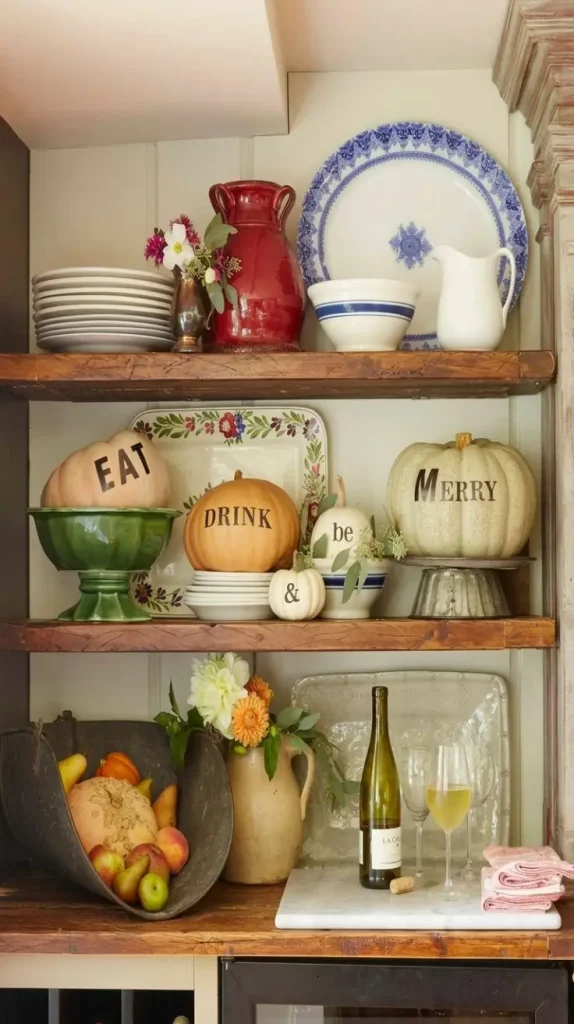
Open shelves offer an excellent opportunity to bring seasonal character into the kitchen. Rather than filling every shelf with decorative objects, combine everyday dishes with a few carefully selected autumn accents.
Stack cream-colored plates beside a small wooden bowl filled with pinecones. Add a ceramic vase containing dried grasses or wheat. A tiny pumpkin tucked beside a stack of bowls can provide just enough seasonal detail.
Natural materials work particularly well during autumn. Wood, woven baskets, stoneware, rattan, dried flowers, and branches create visual warmth and texture. These materials also pair beautifully with modern, farmhouse, rustic, and cottage-style kitchens.
One useful trick is to vary the height of objects. Place taller pieces toward the back and shorter items in front. This keeps the shelves interesting without making them appear cluttered.
A few cookbooks with neutral or earthy covers can also become part of the display. When practical kitchen items and decorative accents share the same space, the room feels authentic rather than overly staged.
The goal is simple: let the shelves tell a small seasonal story while keeping frequently used items easy to reach.
Bring in a Rustic Farmhouse Touch
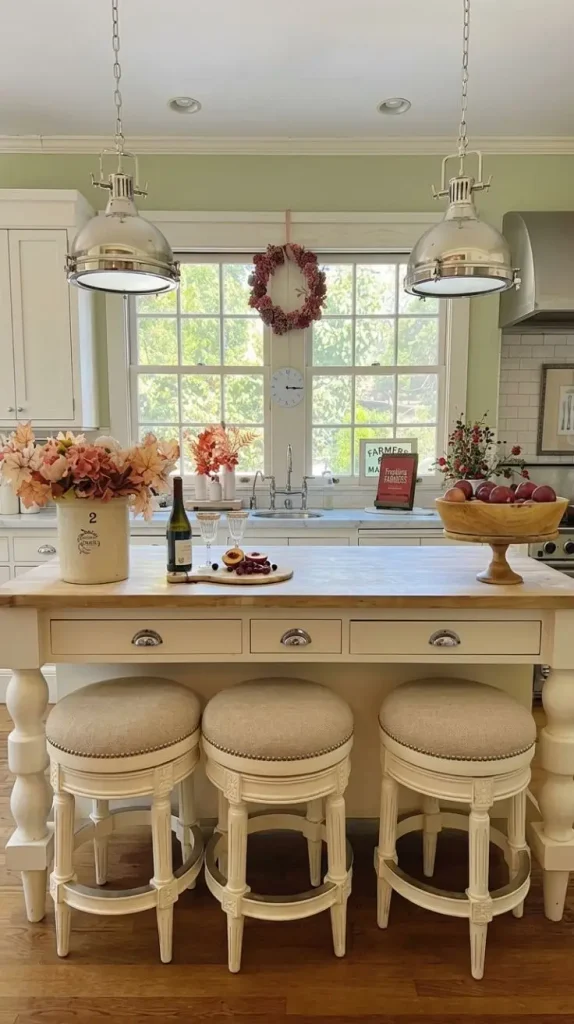
Rustic farmhouse style works beautifully with autumn decorating because both styles celebrate warmth, simplicity, and natural materials. A few farmhouse-inspired accents can give the kitchen a comfortable country feeling without turning it into a themed space.
A distressed wooden sign, galvanized metal container, woven basket, or vintage-style cutting board can add character. Wooden utensils displayed in a ceramic crock are another practical choice that doubles as decoration.
For an especially cozy look, combine aged wood with creamy white ceramics and warm textiles. A small basket filled with apples or pears can sit on the counter, while a simple wreath can decorate a nearby wall or pantry door.
Farmhouse decorating doesn’t require everything to look old. New pieces can work beautifully when mixed with natural textures and slightly worn finishes.
The key is balance. Too many rustic objects can make a kitchen feel crowded. Instead, choose a few meaningful accents and allow plenty of open space around them. That little bit of breathing room helps each piece feel intentional.
Style the Kitchen Island as a Seasonal Focal Point
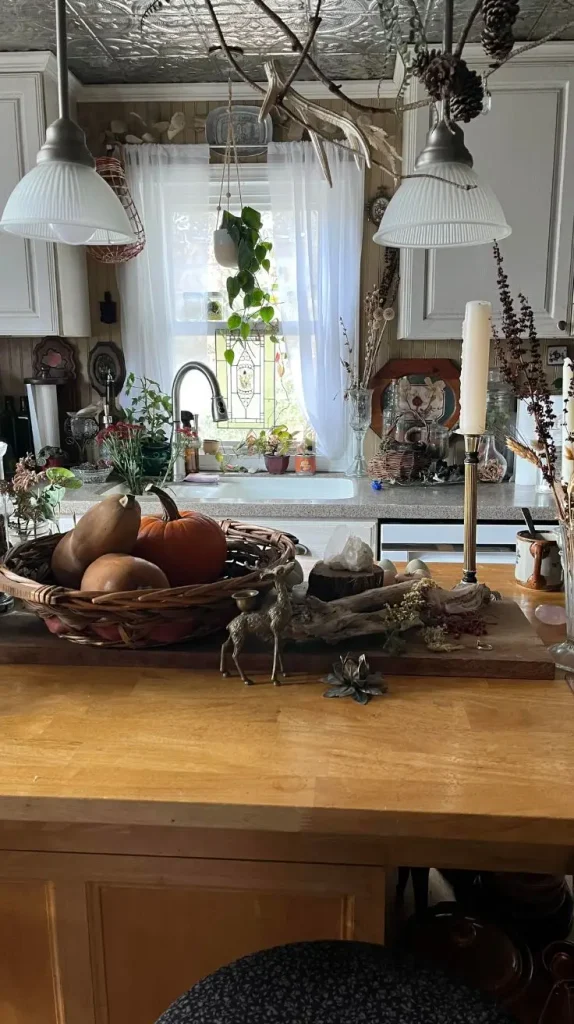
The kitchen island often occupies the visual center of the room, making it a natural place for seasonal decoration. However, the island also needs to remain practical, so decoration should never interfere with cooking or food preparation.
A large wooden tray can solve this problem. It keeps several small decorative items together and makes them easy to move when the counter is needed.
Try arranging a ceramic vase with dried branches alongside a bowl of miniature pumpkins. Add a candle in a warm autumn scent and perhaps a small wooden cutting board. The combination creates layers without using too much space.
For larger islands, two separate arrangements can work better than one oversized centerpiece. One end might hold seasonal produce while the other contains flowers or greenery. Think about height, texture, and shape when creating the arrangement. A tall vase, rounded pumpkins, and a flat tray create contrast that naturally draws attention.
A beautifully styled island can become the heart of the kitchen, especially when family and friends gather around it for meals, conversation, and seasonal celebrations.
Use Autumn-Inspired Centerpieces
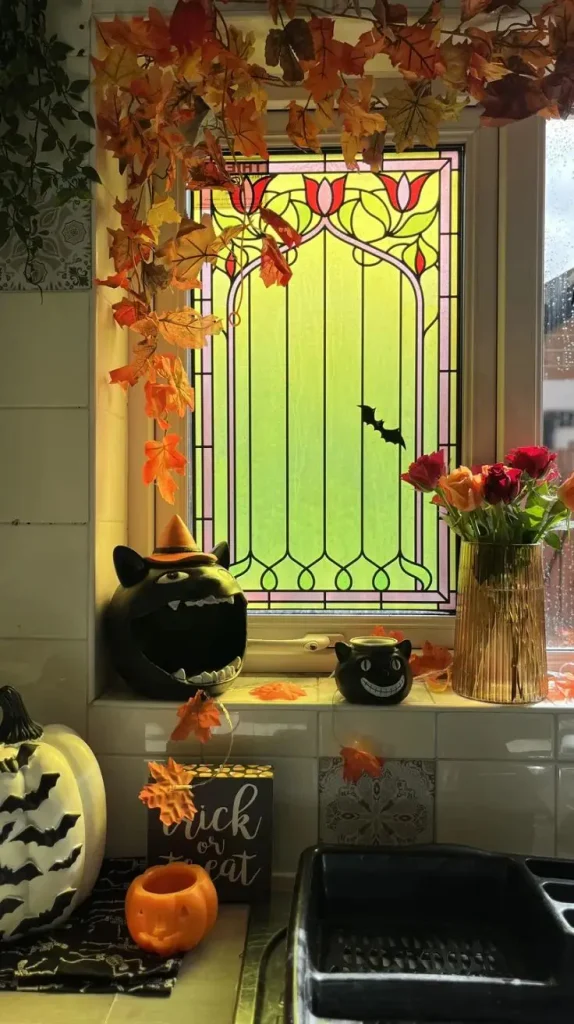
A seasonal centerpiece can instantly change the atmosphere of a kitchen dining area. It doesn’t need to be elaborate. Some of the most appealing arrangements use ordinary items in unexpected ways.
A wooden bowl filled with apples, pears, miniature pumpkins, and pinecones can make an attractive centerpiece in just a few minutes. Another option is a low ceramic vessel filled with dried flowers, eucalyptus, wheat, or ornamental grasses.
Keeping the centerpiece low is particularly useful when the table is used for meals. Everyone can see across the table, and the arrangement won’t interfere with conversation.
Candles can add another layer of warmth. Choose unscented candles during meals if strong fragrances might compete with food aromas. Small lanterns or simple candleholders can also create a soft evening glow. For a rustic appearance, use natural wood and woven textures. For an elegant kitchen, choose ceramic, glass, brass, or matte metal accents.
The most effective centerpiece usually feels connected to the rest of the room. Repeating a color or material from nearby shelves or countertops helps the entire kitchen feel thoughtfully decorated.
Add Dried Flowers and Wheat
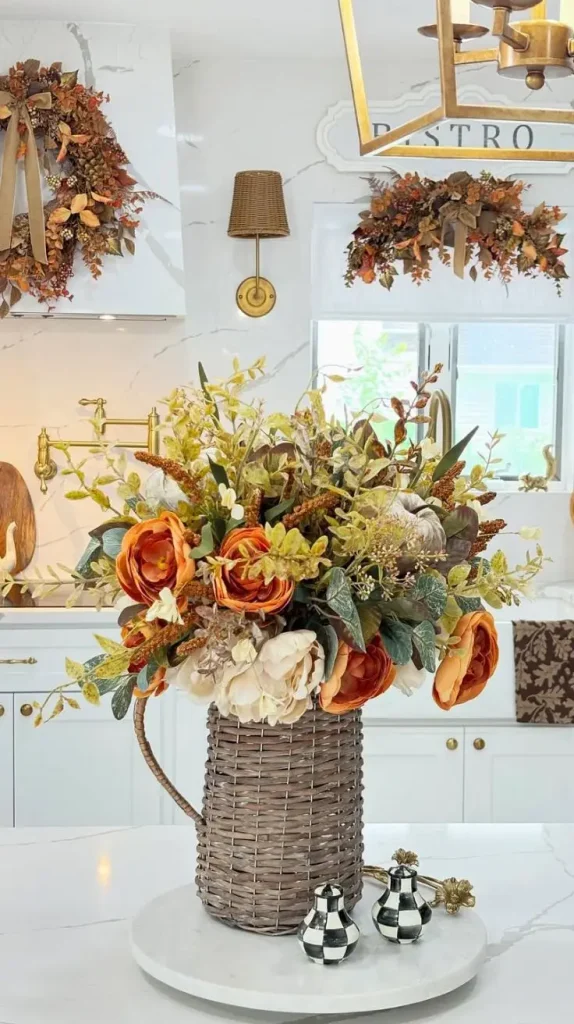
Dried flowers offer an easy way to introduce texture and seasonal beauty without demanding regular maintenance. They can remain attractive for weeks and work particularly well with autumn’s earthy color palette.
Wheat stems are especially popular because their golden color naturally complements the season. Place several stems in a tall ceramic pitcher or glass vase for a simple arrangement.
Dried hydrangeas, pampas grass, eucalyptus, bunny tails, and preserved leaves can create different effects. Soft grasses give the kitchen an airy appearance, while darker dried flowers can create a richer and more dramatic look.
A small arrangement can sit beside the coffee station, on an open shelf, or near a window. Larger arrangements can become a focal point on an island or dining table. Natural dried materials also pair well with pumpkins, wood, woven baskets, and neutral ceramics. This makes them easy to incorporate into existing kitchen decor.
For a more modern approach, keep the vase simple and allow the dried stems to provide most of the visual interest. For rustic spaces, use a vintage pitcher, stoneware crock, or recycled glass bottle.
Create a Cozy Coffee or Hot Cocoa Station
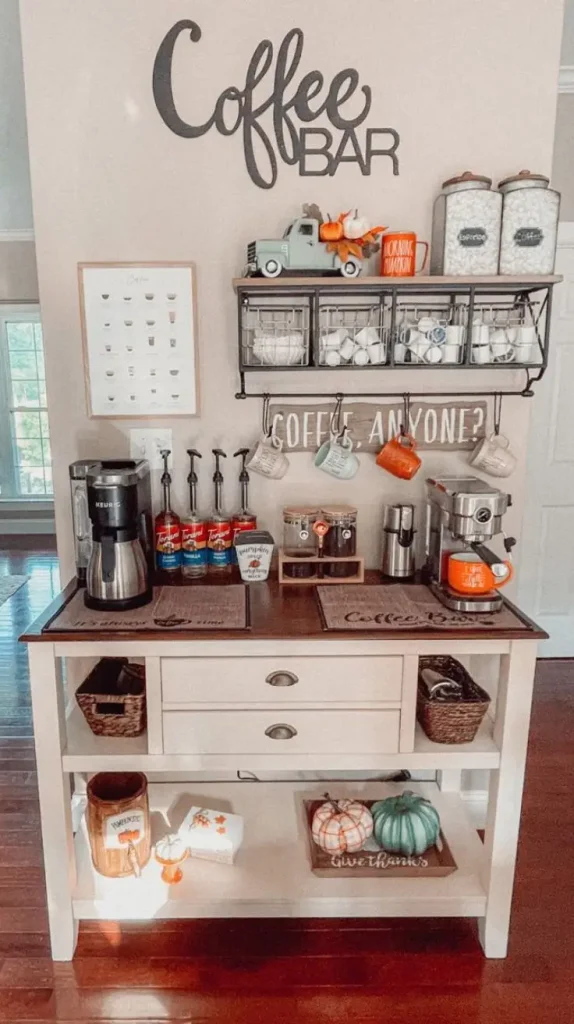
Cooler autumn mornings make warm drinks feel especially comforting. A small beverage station can turn an ordinary kitchen corner into one of the most inviting areas in the home.
Start with a tray or small section of counter space. Add mugs in warm colors, a jar of coffee, tea containers, or hot cocoa supplies. A small wooden sign or seasonal mug can provide a decorative touch without taking up much room.
Add a few autumn details around the station. Miniature pumpkins, cinnamon sticks, dried orange slices, or a tiny vase of flowers can bring seasonal personality to the setup. A wooden shelf above the station can hold mugs and jars, while a basket underneath can store extra supplies. Keeping everything organized makes the area attractive and useful.
This idea works particularly well for families because the station becomes part of the daily routine. Morning coffee, afternoon tea, or evening cocoa suddenly feels like a small seasonal ritual.
The beauty lies in its simplicity. A practical corner becomes a cozy feature simply by introducing thoughtful colors, textures, and accessories.
Decorate With Seasonal Produce
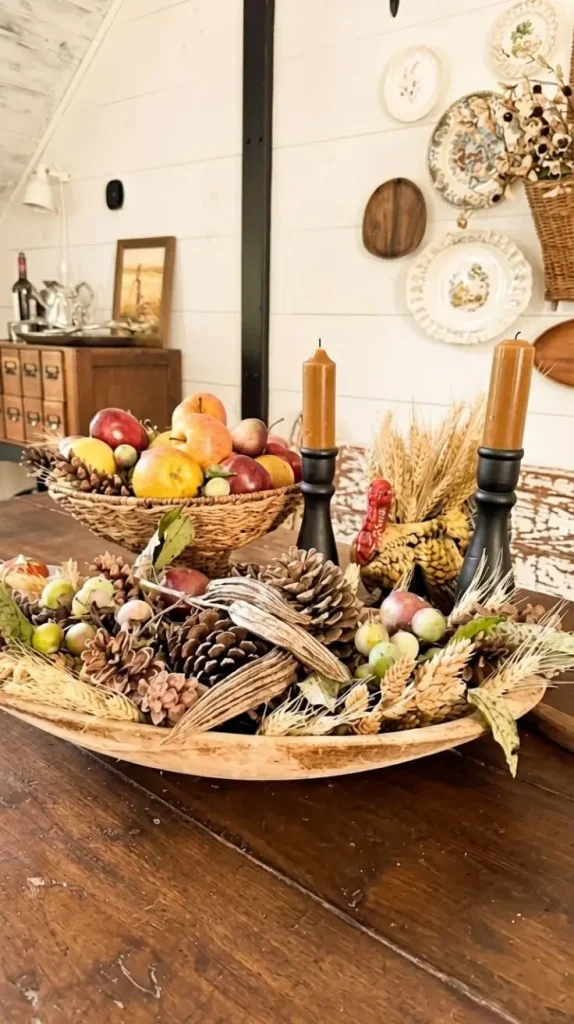
Autumn produce can become part of the kitchen’s decoration while remaining completely practical. Apples, pears, squash, pumpkins, and colorful gourds bring natural color and texture into the room.
A large wooden bowl filled with red and green apples can sit on a counter or island. Small squash can be arranged in a basket, while pears can add softer yellow and green tones.
Using real produce makes the kitchen feel connected to the season. It also avoids the overly decorative appearance that can sometimes happen when every object is clearly intended only for display. A woven basket filled with produce works especially well in farmhouse and rustic kitchens. For a contemporary space, choose a simple ceramic bowl or sleek wooden container.
Try grouping produce by color instead of mixing everything together. For example, green apples and cream pumpkins can create a calm neutral arrangement, while red apples and orange gourds create a more traditional autumn feeling.
This approach proves that seasonal decorating can be both beautiful and useful. The decorations can eventually become part of meals, which makes the arrangement feel natural rather than wasteful.
Hang a Seasonal Wreath
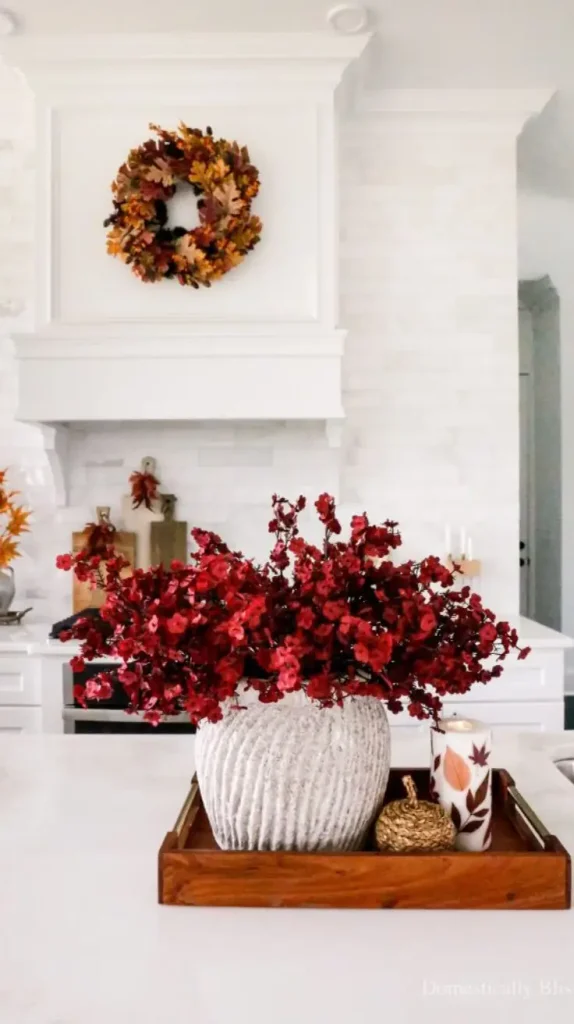
A wreath doesn’t have to belong only on the front door. Inside the kitchen, it can add a charming seasonal accent to a pantry door, cabinet area, wall, or window.
Choose a wreath made from dried leaves, eucalyptus, wheat, berries, twigs, or faux autumn foliage. For a traditional appearance, orange and red leaves work beautifully. For a softer look, use beige, cream, olive, and muted brown tones. A small wreath can hang on the front of a pantry door. Larger wreaths can decorate an empty wall or sit above a sideboard.
If the kitchen already contains many decorative elements, choose a simple wreath with a restrained color palette. A minimalist design can provide seasonal warmth without competing with other features. For a more rustic appearance, combine twigs with dried flowers and a simple fabric ribbon.
A linen or cotton ribbon can soften the arrangement and add a handmade feeling. This small detail can be surprisingly powerful. A previously overlooked door or empty wall suddenly becomes part of the seasonal design.
Introduce Warm Lighting for Evenings
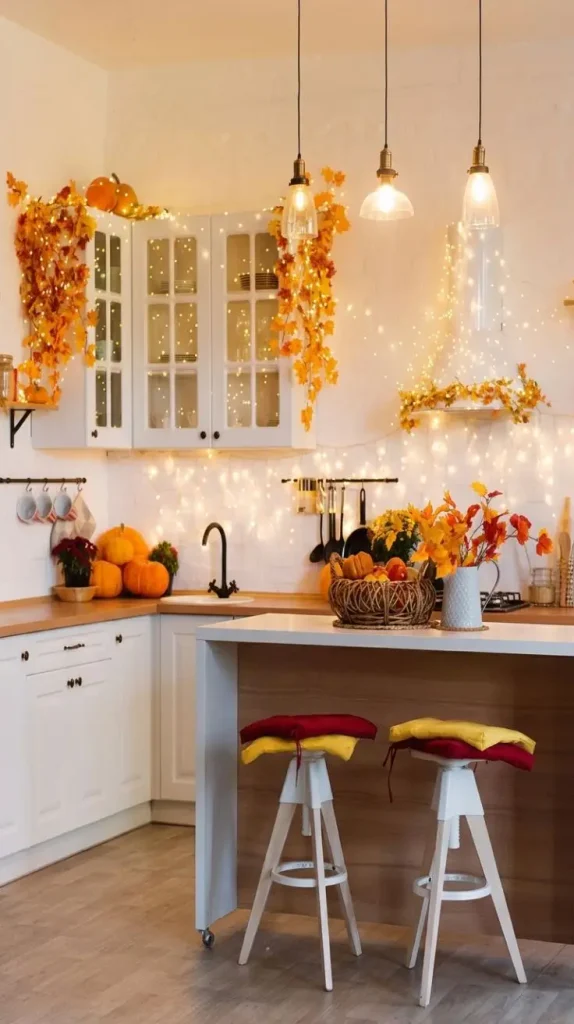
Lighting can completely change the mood of a kitchen once the sun begins to set earlier. During autumn, warm and gentle lighting can make the room feel especially comfortable.
Small lamps, battery-operated candles, lanterns, and decorative string lights can add soft illumination. Place them carefully so they provide atmosphere without interfering with food preparation.
Under-cabinet lighting can also make countertops feel warmer in the evening. If the kitchen already has bright overhead lights, switching to softer lighting during dinner can create a more relaxed environment.
Lanterns placed on a dining table or island can complement pumpkins, dried flowers, and wooden accessories. Candleholders in brass, black metal, ceramic, or glass can add subtle elegance.
Lighting works best when it supports the rest of the decor rather than becoming the main attraction. A warm glow across wood surfaces and neutral textiles can make the entire kitchen feel more inviting.
After all, autumn isn’t only about what the room looks like during daylight. Some of the most memorable moments happen after sunset, when the kitchen becomes a cozy gathering place.
Finish the Look With Small Seasonal Details
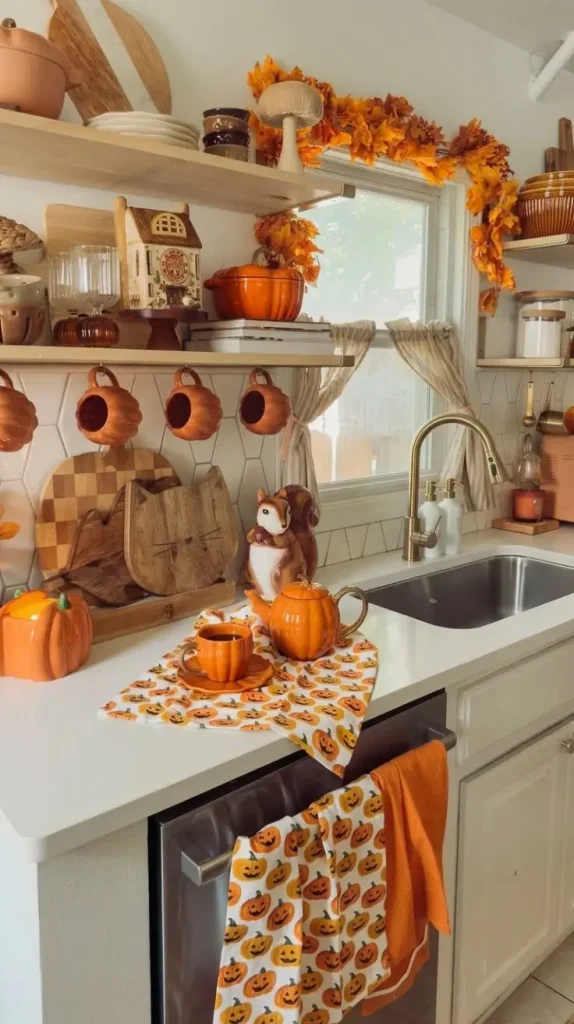
The final layer of autumn decorating often comes from the smallest details. Seasonal details don’t need to dominate the kitchen. In fact, subtle touches can create a more sophisticated result.
Consider replacing everyday hand towels with autumn-inspired patterns. Add a ceramic pumpkin beside the sink, place cinnamon sticks in a decorative jar, or display a small seasonal print near the breakfast area.
A wooden spoon collection, amber glass bottles, woven placemats, or neutral ceramic dishes can reinforce the warm color scheme without looking overly themed.
One effective approach is to walk through the kitchen and look for empty spaces that naturally attract attention. Perhaps there’s a small corner beside the stove, an unused shelf, or an empty section of wall. A single carefully chosen accent can make that area feel finished.
Avoid adding decorations simply because there is space available. Too many accessories can make a kitchen feel busy and harder to clean.
The strongest seasonal design usually combines practical objects with a handful of decorative pieces. That balance keeps the kitchen beautiful while preserving the comfortable, lived-in feeling that makes autumn decorating so appealing.
How to Keep Seasonal Decorating Simple
A beautiful autumn kitchen doesn’t require a large shopping trip or an expensive renovation. Start with items already available around the home. Wooden bowls, baskets, neutral dishes, glass jars, cutting boards, and pitchers can all become part of the seasonal arrangement.
Next, choose a simple color palette. Warm neutrals, rust, orange, cream, brown, olive, and muted yellow work particularly well. Repeating these shades throughout the room creates a cohesive appearance.
Natural textures can do much of the decorating work. Wood, linen, ceramic, rattan, dried flowers, and woven materials bring depth without needing complicated arrangements.
It also helps to decorate in layers. Begin with a large anchor piece, such as a centerpiece or tray. Add medium-sized elements like bowls and vases. Finally, introduce small accents such as pinecones, miniature pumpkins, or candles.
Most importantly, leave enough space for everyday life. A kitchen should still be easy to cook in, clean, and move around. Seasonal beauty becomes much more enjoyable when it doesn’t create extra frustration.
Choosing a Style That Fits the Home
Not every kitchen needs the same approach. A farmhouse kitchen can handle rustic wood, galvanized metal, plaid, pumpkins, and woven baskets. A modern kitchen may look better with fewer accessories, neutral colors, sculptural ceramics, and simple greenery.
A cottage kitchen can embrace floral patterns, vintage dishes, dried flowers, and soft autumn colors. A traditional kitchen may suit richer shades such as burgundy, copper, deep green, and burnt orange.
The secret is to adapt seasonal decorating to the existing room instead of trying to force an entirely different style into it.
For a small kitchen, focus on vertical spaces, shelves, windows, and compact countertop arrangements. For a large kitchen, an island centerpiece, dining table arrangement, and larger wreath can create stronger visual impact.
Seasonal decor should feel like a natural extension of the home. When colors, materials, and proportions work together, even a few simple changes can make the entire room feel refreshed.Final Thoughts
Creating a welcoming autumn kitchen is less about buying more and more about choosing the right details. Warm textiles, natural materials, pumpkins, seasonal produce, dried flowers, soft lighting, and rustic accents can work together to create a space that feels comfortable and inviting.
The most successful fall kitchen decor ideas don’t make the room feel like a showroom. They make it feel lived in. A bowl of apples waiting for breakfast, a cozy towel hanging near the sink, dried wheat catching the afternoon light, or a softly glowing lantern on the island can make everyday moments feel a little more special.
Start small, build gradually, and pay attention to how each addition changes the atmosphere. A few thoughtful touches may be all that’s needed to turn an ordinary kitchen into a warm autumn retreat.
And when the first cool evening arrives and everyone gathers around the kitchen, those little seasonal details suddenly feel like much more than decoration. They become part of the memories made there.


