
Maybe not early or late in the growing season. Right now, however, is a different story.
Concerns for Ontario’s corn yield rose as parts of the province experienced prolonged dry and hot conditions through late June to early August in some parts of the province. Other areas have too much rain.
The good news, says Ben Rosser, corn specialist with the Ontario Ministry of Agriculture, Food and Agribusiness, is that early-season heat and drought stress should have a negligible negative impact. And in some areas, more recent timely rains should help shepherd the crop through the most critical period – ear set and fertilization.
“The very late vegetative stages, silking and right after tasseling, that’s the most sensitive time for stress. Impacts go down at grain fill as kernel numbers are already set,” says Rosser. “With the ear forming at those later stages, it becomes much more important for setting and fertilizing the ear.”
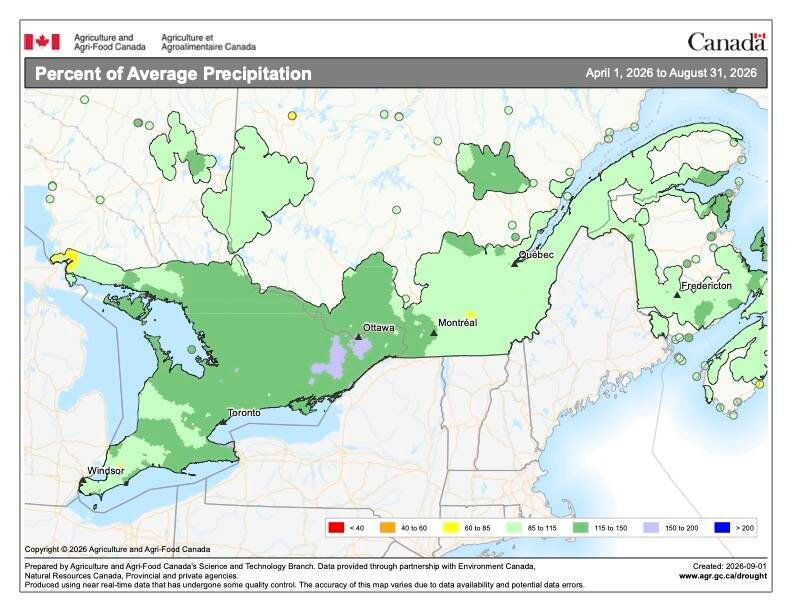
Soil moisture
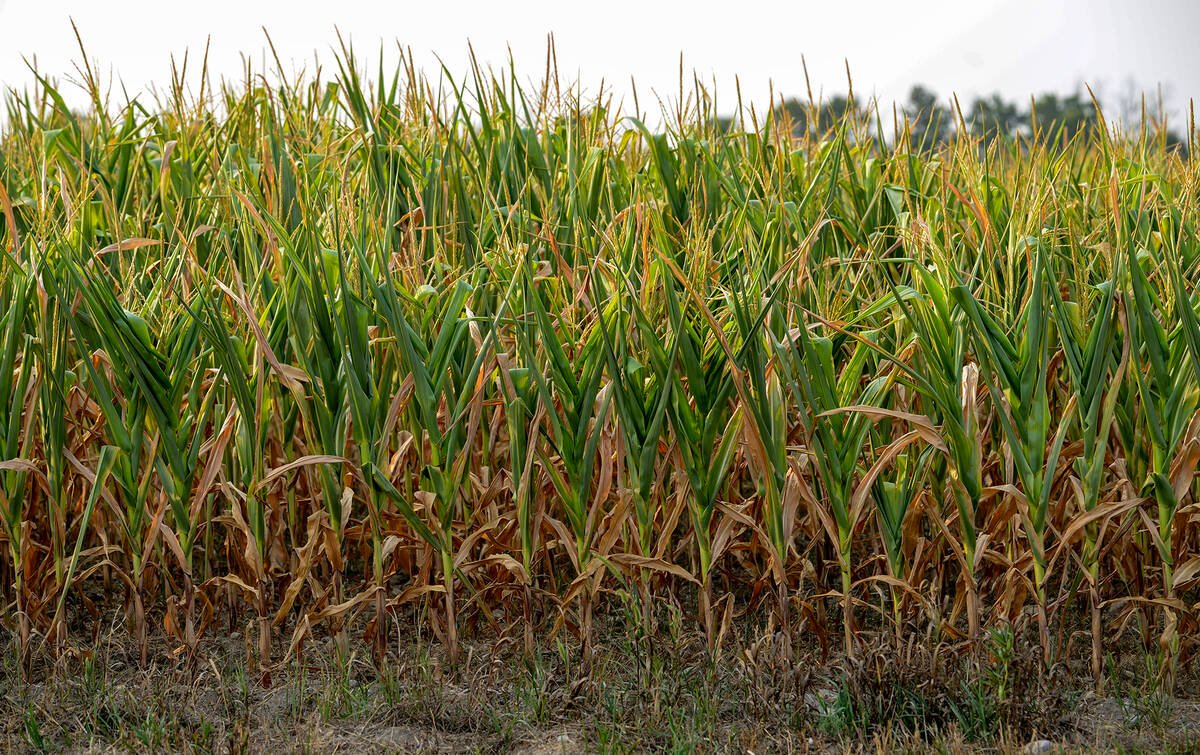
Soil moisture conditions across the province are, as is typical, highly variable. Rosser says leaf firing, where insufficient nitrogen causes lower leaves to turn yellow prematurely, may continue to be observed in areas where dry and hot weather persists. Leaf firing is also particularly concerning in corn planted into sandy soils.
“Those sandy areas or drought-stressed knolls, that’s where you’ll see the difference,” says Rosser.
The difference between sand and finer soil types is certainly evident in Essex County, where Emma Epp, agronomist and owner of Epp Ag Solutions, says recent rains may have been too late to save some corn crops. She adds leaf firing is also much more noticeable on heavily compacted ground.
Rosser stresses signs of nitrogen deficiency do not necessarily mean a lack of sufficient fertility. That nitrogen could well be in the right place, in the right amount, but has been unable to be absorbed due to a lack of moisture. He adds signs of potash deficiency, indicated by the yellowing of leaf edges, is also something to watch.
“If there’s a silver lining to a dry year, they tend to be a low disease year. If the temperature moderates and rainfall is higher, that could shift.”
Disease risk
For Paul Sullivan, certified crop advisor and owner of P.T. Sullivan Agro, the prospect of greater moisture-induced disease risk is something corn growers in parts of eastern Ontario are willing to chance after the prolonged drought experienced in 2025. On the whole, though, he says the dry conditions experienced in his area last year were somewhat of an anomaly.
“I go back to 2024. We had four years until 2025 where we had very good crops with our customers. In Renfrew, in 2024, they have crops that were better than Essex County. Maybe not as good as Huron and Perth, but our customers were getting 225-bushel corn.”
Looking ahead, Sullivan is very optimistic for the corn crop in his working area. Moisture levels have been good all summer, 35 millimetres in May, 100 mm in June, 175 mm in July, and 80 mm to-date in August — and the crop is thoroughly “healthy and green.”
“It’s very unusual to go into a field right now and see lower leaf firing…We’re ahead of schedule. I think we’ll have corn denting by Sept. 1. We have a higher-than-average number of corn acres sprayed, so that’s a good thing. We don’t have yet tar spot. It doesn’t look like we have a lot northern (leaf blight) this year,” Sullivan says.
“Just watch the cobs fill…It almost sounds unreal, but it is. We just have a phenomenal crop.”
The post Corn can recover from early-season lack of rain appeared first on Farmtario.


