
Almost no public-sector meat scientists work in Canada, a gap that could affect Canada’s quality advantage in meat markets and its ability to train new meat experts.
The decline in meat science research and faculty is the result of a complex mix of public funding focus on plant proteins, university and government prioritization, and chronic underfunding of post-secondary education, especially in Ontario.
WHY IT MATTERS Meat science expertise is thinning out just as protein demand climbs, pushing up prices for most livestock and changing how milk is priced across the country. Guelph still has the only university meat lab in Canada, with nobody on faculty to run research in it.
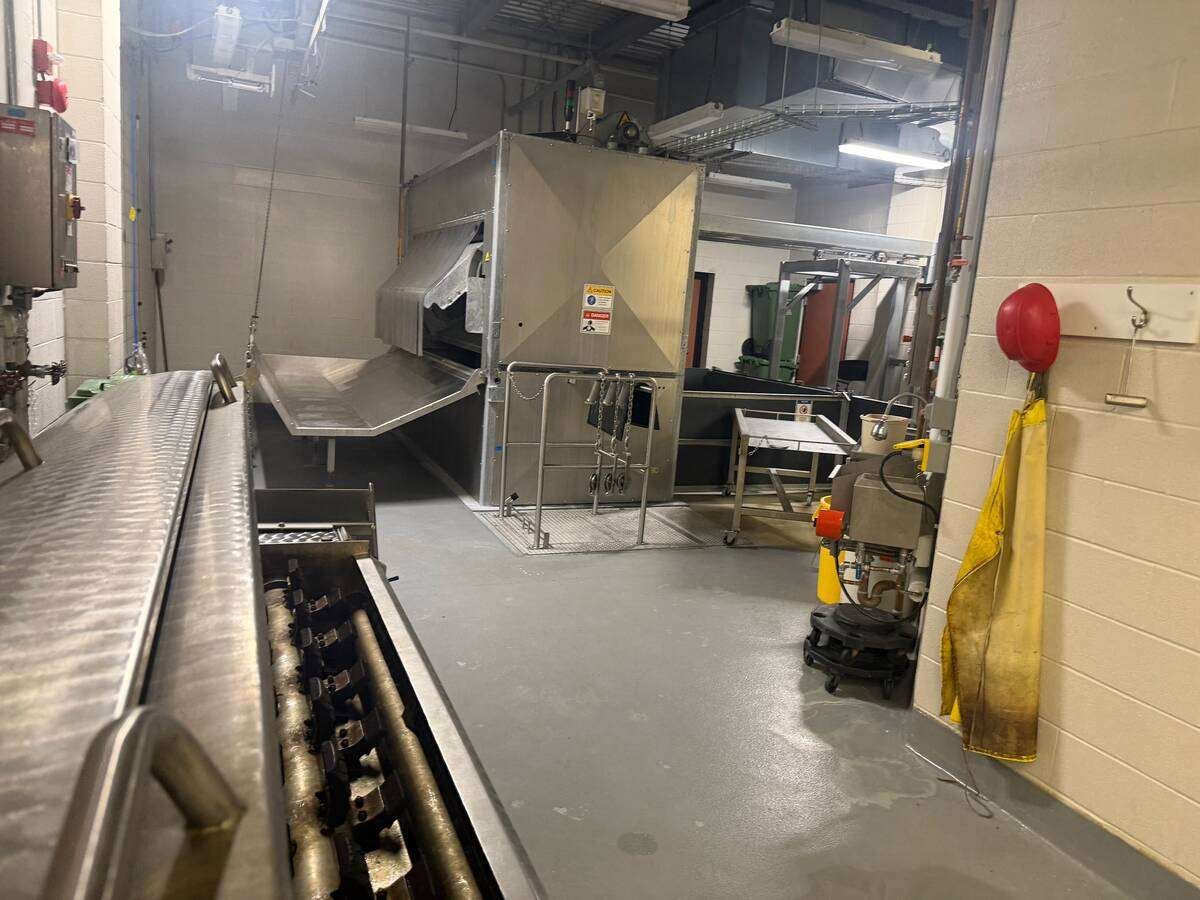
At the University of Guelph, there are no meat science faculty, as five meat science professors who worked at the university have dropped to none. The Guelph facilities include a meat science laboratory, the only meat science facility that can process livestock from slaughter to end product at a university in the country.
The university is trying to reverse the decline in meat science expertise.
“The hope is that through some work with our industry partners, by demonstrating our capacity and the fact that Ag Canada’s trusting us with two employees and their programs, that people start to see a value proposition for renewed investment that would help us hire these new faculty members,” says John Cranfield, dean of the Ontario Agricultural College at the university.
Two scientists on loan from AAFC
A first step includes the relocation of two meat scientists to the university from Agriculture and Agri-Food Canada, who were slated to be a part of the Lacombe, Alta., research station closure.
Óscar López-Campos and Nuria Prieto, both with doctorates in meat science, will be funded to work at Guelph for the next two years by AAFC. They will arrive in the next couple of weeks in Guelph to start their work. They won’t, however, be faculty at the university.
“We need superstars in the classroom as well to motivate, spark interest and to get people into these fields,” says Christine Baes, the associate dean of External Relations for the Ontario Agricultural College, and a Canada Research Chair in Livestock Genomics.
López-Campos and Prieto will bring with them data from their years of research and equipment new to the Guelph meat science laboratory. López-Campos is an expert in carcass quality and has helped align Canada’s grading system with that of other countries to make exports easier.
“I’m dying to get them here,” says Jim Reynolds, who is the director of the Centre for Meat Innovation and Technology based at the Guelph meat science laboratory.
Reynolds hopes they can work on a Pork Innovation Canada project to prove that pork can safely be cooked to a lower temperature, as is the standard elsewhere in the world, which makes for a better pork-eating experience.
Meat faculty funding
Finding money for meat science has been challenging in the past decade as climate activists and government departments have vilified meat as contributing to environmental problems.
For example, the federal government created Protein Industries Canada in 2018 as one of its five Global Innovation Clusters.
The organization has funnelled hundreds of millions of dollars in funding to plant-based and other alternative proteins since.
That focus on plant proteins and lab-derived proteins pulled funds from what Baes and Cranfield say is a $32-billion meat industry that continues to grow, but hasn’t had its share of funding. Indeed, in areas like meat science, Canada’s capacity has atrophied.
There’s now much more interest in the quality of protein in human diets, and that has driven voracious demand for meat and dairy proteins to the detriment of plant proteins in the marketplace.
Chronic underfunding of post-secondary education is also an issue, says Cranfield, as universities have had to prioritize programs and faculty.
Attracting new faculty is challenging, especially around how to fund their first couple of years at the university as programs and courses are set up and there’s enough momentum in a program to attract undergraduate and graduate students. Eventually, it’s expected that tuition will fund the professor’s salary, but that can take a few years. That’s where industry and family-endowed chairs come in.
“When we hire a tenured faculty member, it’s a 40-year investment,” says Cranfield.
MEAT SCIENCE BY THE NUMBERS
- 5 to 0: meat science professors at the University of Guelph
- 2: AAFC meat scientists moving to Guelph, funded for two years
- 2018: Protein Industries Canada created as a federal innovation cluster
- $32 billion: size of the meat industry Guelph says has gone without its share of funding
- 52: Guelph faculty whose research connects to protein
- 40 years: what Cranfield calls the investment in one tenured hire
The University of Guelph is uniquely positioned to bring together the value chain, from soil health to growing food and feed, to livestock production, meat processing and human diet, food preferences and then economics and trade, says Cranfield.
Co-ordinating and aligning research and priorities among all of those interests is challenging, but as Canada aims to be more ambitious, those are the sorts of industry-wide projects that can create information and efficiencies that no one has imagined.
“We’ve been talking a lot with the different commodity groups and industries, and there’s some frustration from beef and pork in particular, where they say we’re not getting traction on our research calls,” says Baes.
Some of that is a lack of meat science faculty. The industry is recognizing the need for more beef quality research. Beef Farmers of Ontario recently named its first recipient of a scholarship in the name of Ira Mandell, a well-known meat science researcher and professor at Guelph.
The first recipient, Madeline McLennan, is a PhD student in Guelph’s Department of Animal Biosciences, exploring nutritional strategies that could improve the performance and efficiency of finishing beef cattle while enhancing carcass value and meat quality. Specifically, her research examines how supplementation with guanidinoacetic acid (GAA) and rumen-protected methionine affects muscle energy metabolism, feed efficiency and beef quality.
Aligning under protein
Baes recently brought together 52 faculty whose research work connects to protein.
The current interest in protein is another area in which the university has unique depth, from plant-based, alternative proteins to dairy and meat.
“I think with the protein innovation initiative, generally, it’s more about taking all the sources of protein that we could possibly have and looking at them,” says Baes.
The university is looking to industry and government to step up to fund more meat science research.
Funding meat research is in the interest of the broader population, says Baes.
“If you want safe, affordable food for millions of Canadians and global citizens, you have to do it.”
Neglect it too long, and it might not be there.
The post Canada’s meat scientists have nearly vanished, and Guelph wants them back appeared first on Farmtario.


