
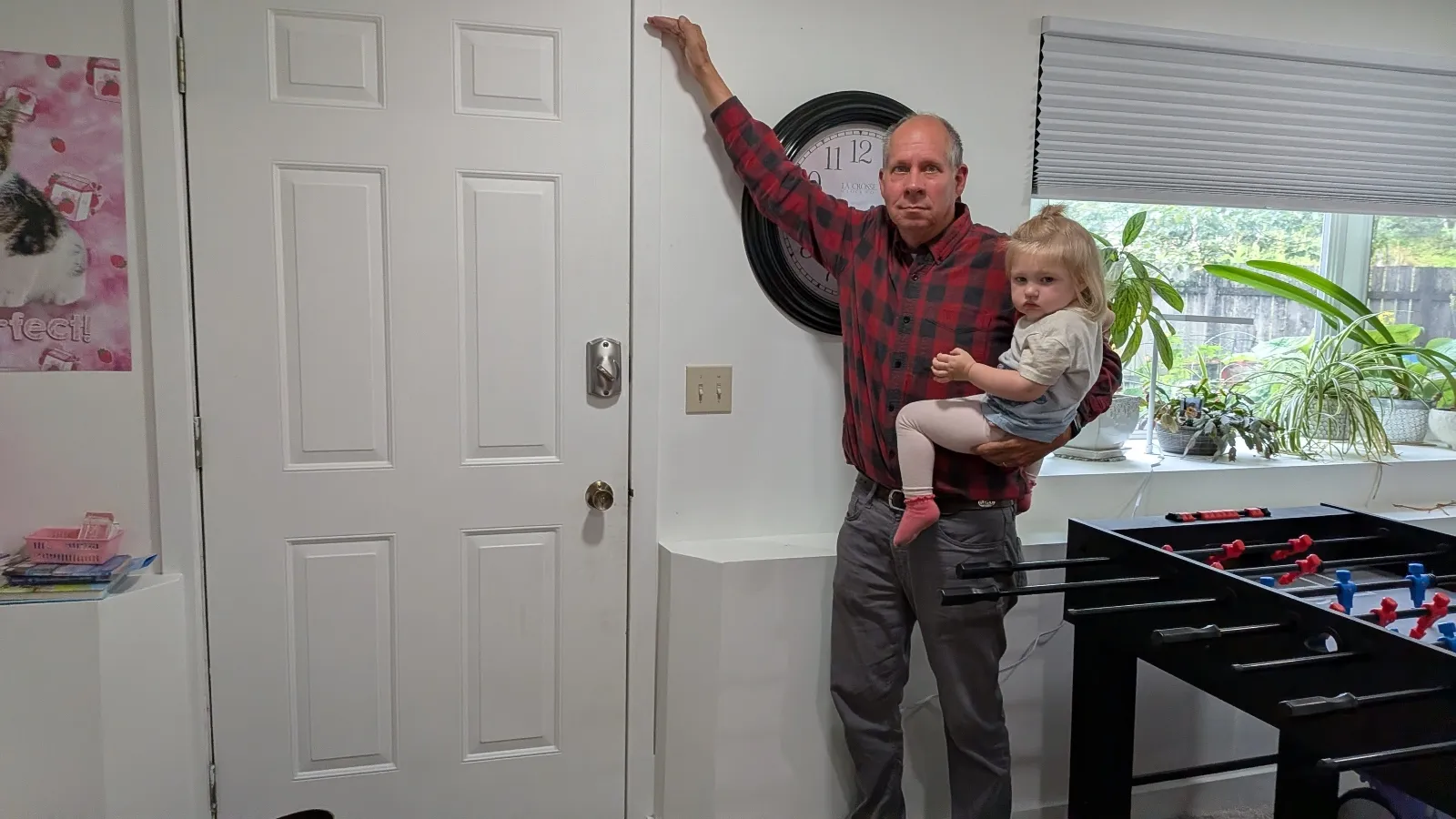
Two years ago, John Lowrey woke to the roar of water surging into his home. The 65-year-old retiree and father of five rushed toward his basement just as a 3-foot wave slammed through the door, tearing it from its hinges.
Water crashed through his bay windows, drowning the family’s piano and heirloom cedar chests. His 29-year-old daughter piled family photos on a bed until it started floating. The inundation ruined documents, appliances, and insulation, and repairs cost the family $150,000. “We lost everything,” Lowrey said.
What Lowrey didn’t know then was that the flood that wrecked his home would return the following summer. And the summer after that.
Alaska is warming at two to three times the global average, and the changing climate poses a particular risk to Juneau. Since 2011, meltwater and rain collecting in a basin beside the Mendenhall Glacier have periodically flooded neighborhoods along the Mendenhall River. For more than a decade, the floods remained relatively small. Then, in 2023, the river reached a record high of nearly 15 feet. New benchmarks followed in 2024 and again in 2025.
Another flood came last month. Scientists expect them to return annually for decades to come.
That has forced Juneau to confront a problem that communities around the world are increasingly facing: How do you prepare for a natural disaster when you know it will come back?
Juneau is beginning to find an answer. Scientists and local officials are putting increasingly sophisticated flood forecasts directly into the hands of residents. The online dashboard rolled out in 2025 translates complex glacier and hydrology data into information they can use to decide when to protect their belongings, prepare for rising water, or leave their homes.
The forecasts are changing how Juneau responds to the threat by providing officials and thousands of people in the flood zone more time to act before the water arrives. The approach could offer lessons far beyond Alaska as communities elsewhere contend with floods, hurricanes, and other climate-driven disasters that strike again and again.
Juneau sits amid the mountains and wilderness that define much of southeast Alaska. Although it is the state capital and home to 32,000 people, it is accessible only by air or sea. Lowrey’s family has deep roots in this rugged landscape. He recounted his story standing beneath the hide of a brown bear his grandfather shot decades ago. Still, the flood traumatized his family. His daughter tears up thinking about it.
“We didn’t know anything,” he said. “We didn’t understand the nature of the basin. We thought it was a 100-year flood.”
They quickly learned otherwise. Each summer, the basin beside the Mendenhall Glacier fills with meltwater and rain. The glacier acts as a dam until enough water accumulates to trigger a flood downstream. In 2023, one of those floods inundated roughly two dozen homes, sweeping a house into the river and causing millions of dollars in damage. A year later, another flood damaged nearly 300 homes.
Marina Lopes
Glacial outburst floods are not unique to Juneau. They occur in Iceland, the Alps, the Himalayas, and other regions with glaciers. In Alaska’s capital, however, residential neighborhoods sit directly in the flood’s path, leaving thousands of residents exposed to the recurring threat.
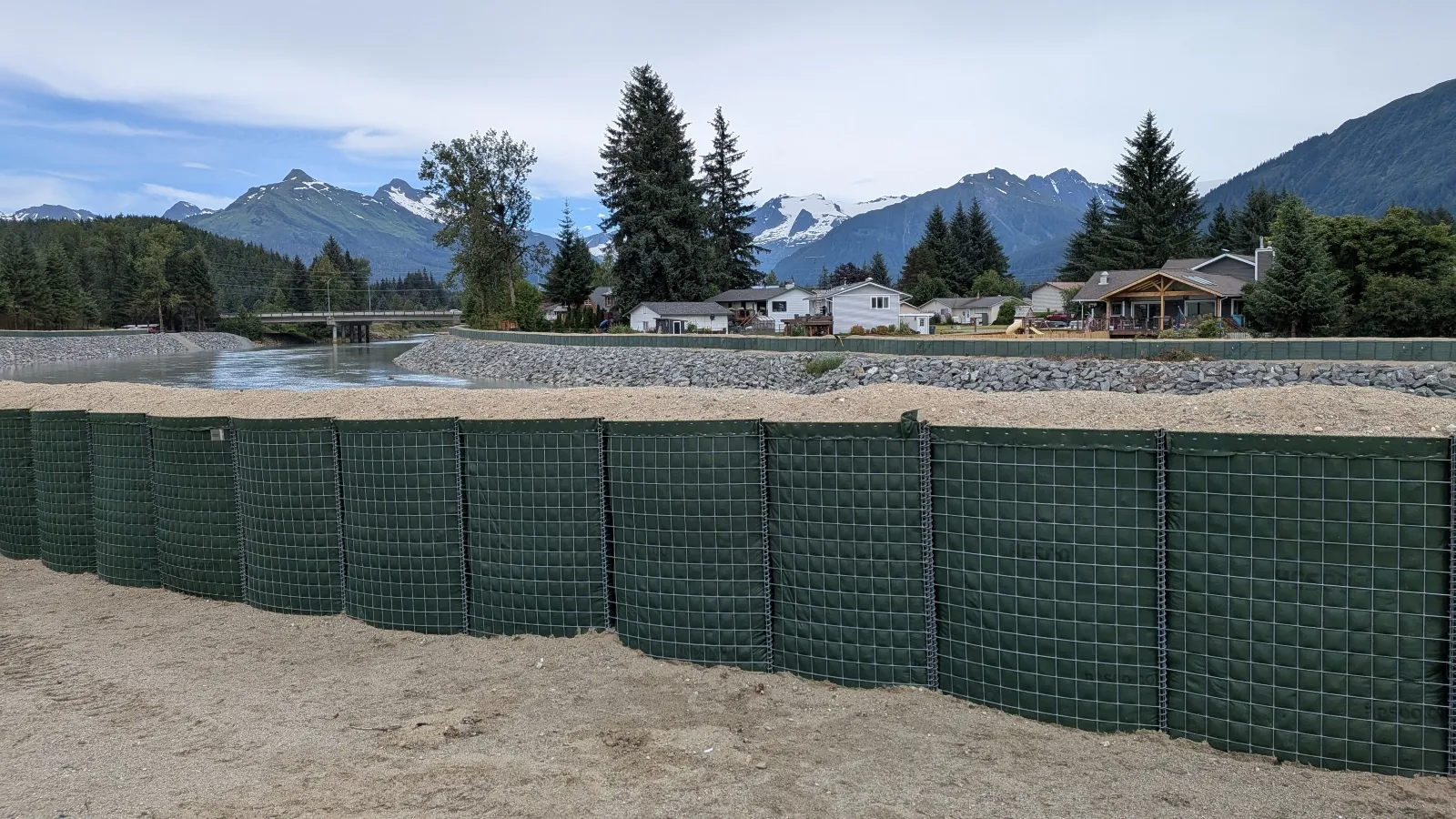
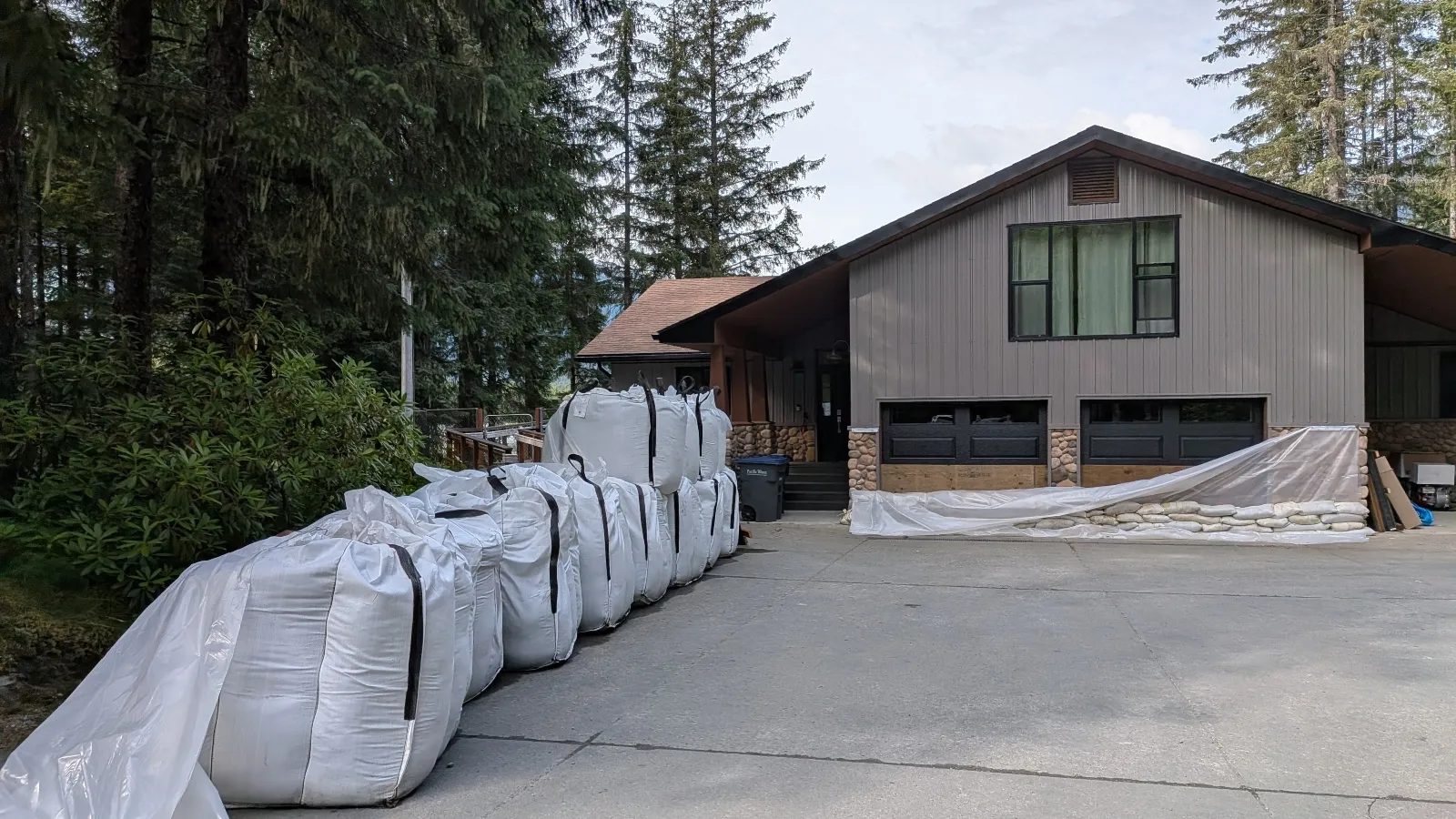
“For Sale” signs dot the valley, but it’s a buyer’s market in the flood zone. Those within it have had little choice but to adapt to the annual floods. Some have dug moats. Others have raised their houses several feet above the ground. The city has built roughly 6 miles of barriers between the Mendenhall River and residents’ homes.
Amid the uncertainty, the dashboard has become a source of comfort. Mark Miller, 75, checks it every day, waiting for the warning he knows is coming. “It’s pretty much on my mind constantly,” he said.
Two years ago, the sound of water pouring into the crawl space beneath his home jolted Miller awake in the wee hours. When he ventured into the garage and opened the door, a wall of gray slush surged toward him.
By the time the water receded, 16 inches of water filled the garage and mud and silt streaked the walls. Setting it all right took seven months and cost $35,000. Tears still fill his eyes at the memory of it all. Now, he prepares for each flood by placing sandbags on both sides of his doors to hold them in place against the water’s pressure. He turns to the dashboard to understand what happened and what is coming.
“It can accurately predict the height of [glacial] floods within hours, which is pretty amazing,” he said.
Last year, more than 15,000 people accessed the dashboard for real-time updates on the floods. In addition to flood maps and forecasts, it offers an interactive explanation of how the basin formed and how glacial outburst floods happen.
It was there that Miller learned the science behind the water that invaded his home.
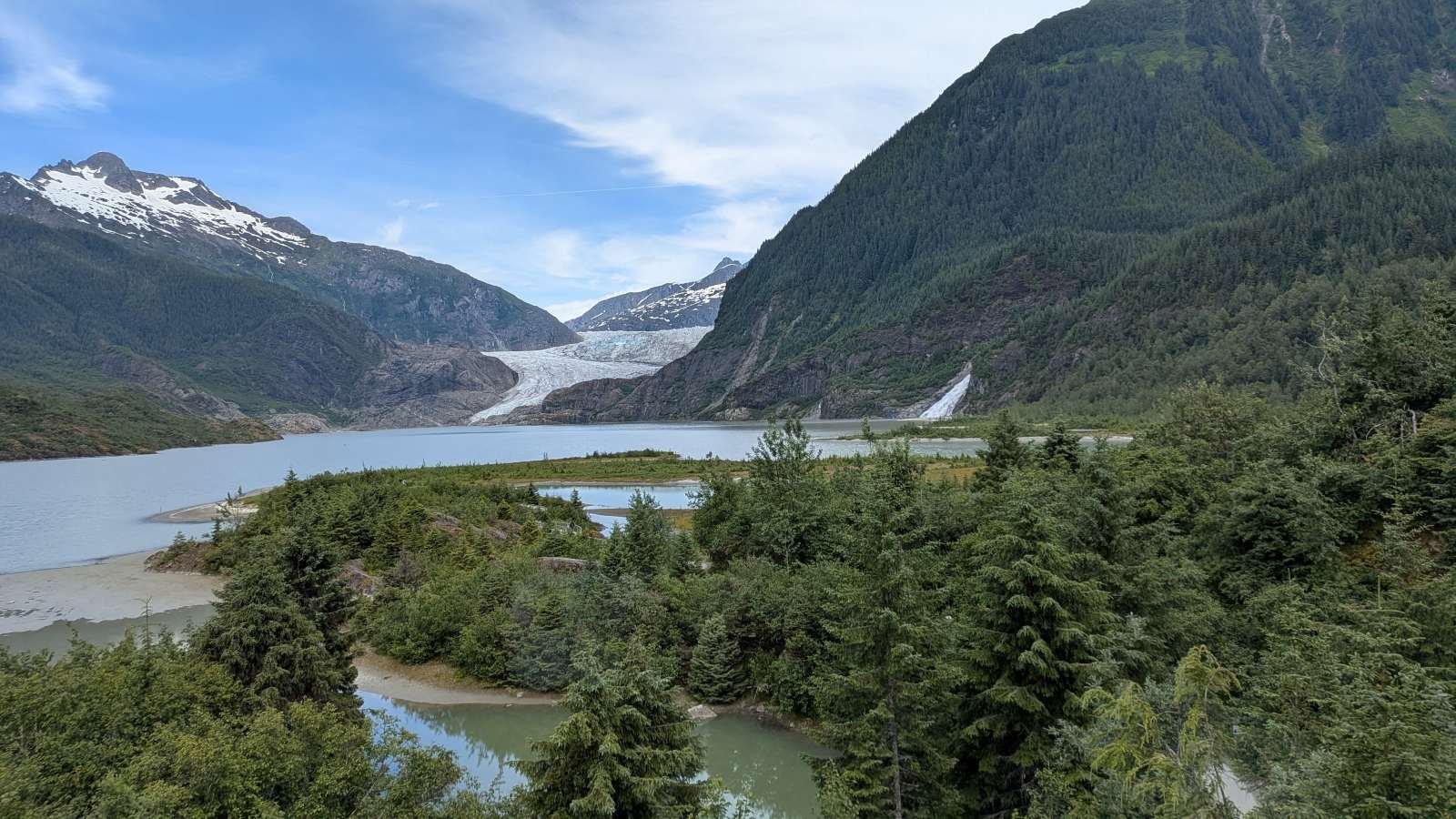
The Mendenhall Glacier peeks out behind verdant mountains in the summertime, a vast block of ice streaked with blue and gray that has long drawn tourists and scientists to Alaska’s capital.
The basin beside the glacier is known as Suicide Basin. As the water accumulates, the pressure can lift the expanse of ice, creating a drain that sends a torrent rushing toward the Mendenhall River. During a large outburst flood, the basin can release upward of 15 billion gallons, enough to fill 22,000 Olympic-size swimming pools.
Mendenhall Valley first flooded in 2011, but scientists had no idea why. They hopped in a helicopter and discovered that water in the basin behind the glacier was leaking.
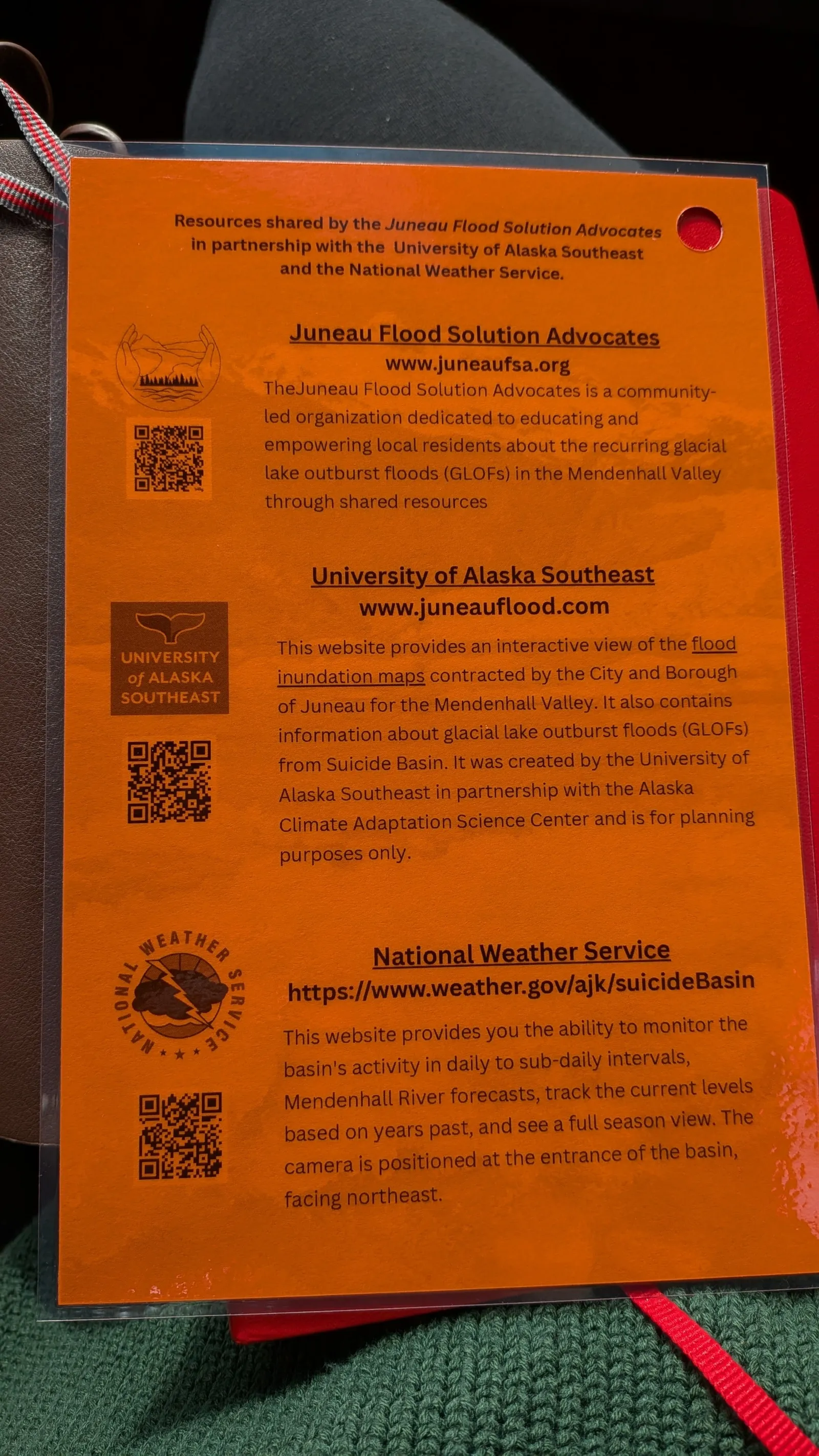
Looking for a way to communicate directly with residents, researchers at the University of Alaska Southeast and the Alaska Climate Adaptation Science Center collaborated with the city to develop the dashboard. They then worked with residents to distribute flyers and magnets with QR codes that directed people to the dashboard.
Marina Lopes
Eran Hood, one of the environmental scientists who developed the tool, said he sees a broader lesson in Juneau’s experience.
“You can do the same thing with hurricanes, storm surges,” he said. “You could do the same thing with floods on rivers like the Mississippi.” The goal, he said, is to “find the best way to provide people with information that gives them the power to make decisions. That to me is the biggest lesson from this.”
The flood data and forecasts are also shaping the city’s response. In 2024, officials started studying them to determine where to build miles of temporary walls along the Mendenhall River to protect homes from future floods.
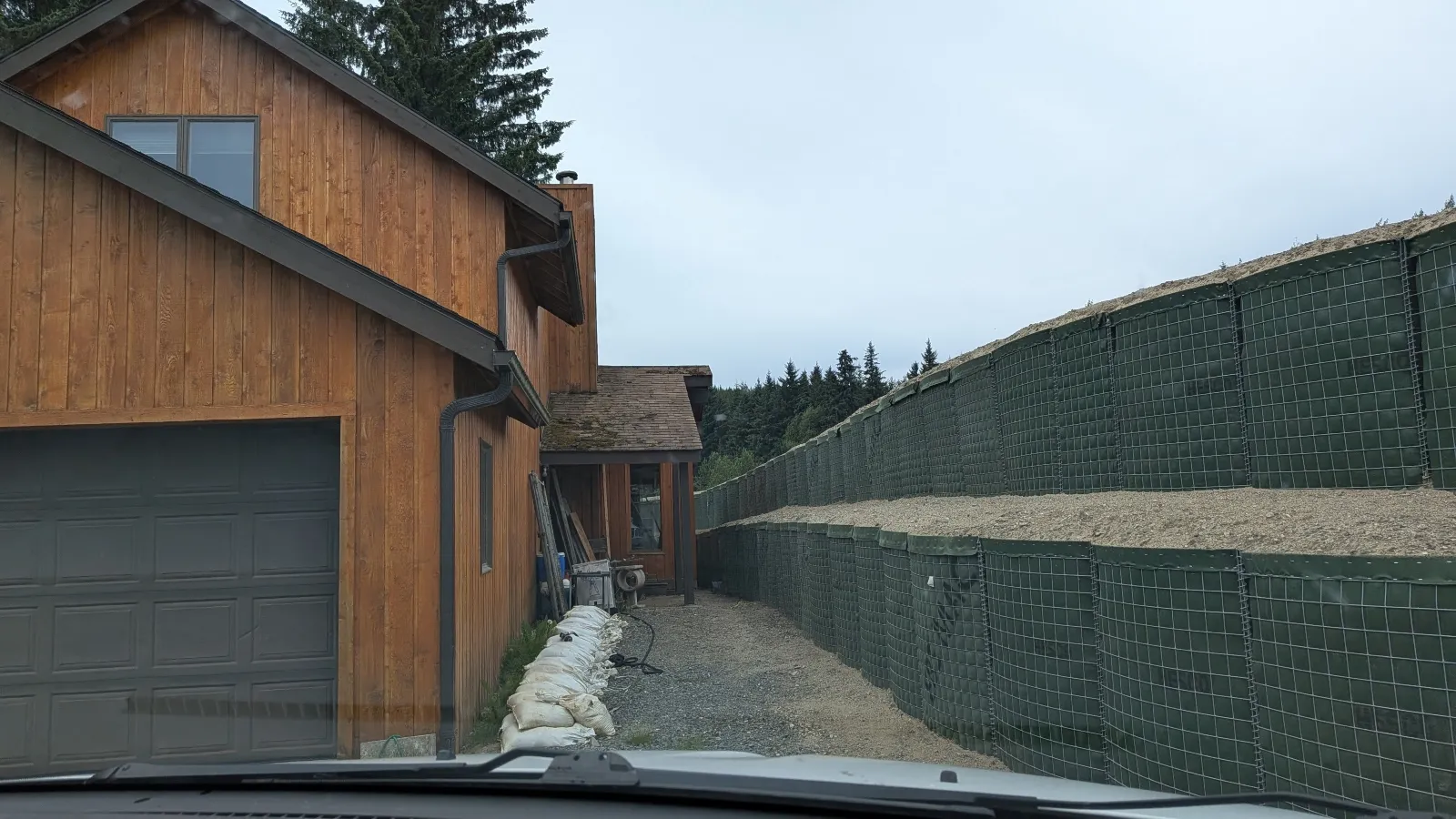
On a rainy July afternoon, Nate Rumsey, deputy director of engineering and public works for the city, stared up at stacks of army-green, dirt-filled barriers lining the river to protect residents from a deluge that came on August 13.
Another severe flood “could put the viability of our community at risk,” he said.
The defenses, known as Hesco barriers, snake through town, behind the library and elementary school and past homes, sometimes coming within inches of windows. The fabric-lined wire-mesh baskets, which are filled with sand and gravel, connect like Legos, stacked two, three, or four high. Rumsey spent months working with the Army Corps of Engineers to map out and oversee their installation.
The dashboard helped homeowners watching soldiers carry barriers into their backyards understand the threat they faced and the city’s response, Rumsey said.
“We recognized early on that the community needs to have information pertinent to this available to them for their own decision-making,” he said.
Residents could use the online tool to see how high the water might rise on their property without the barriers, and understand what those defenses were designed to prevent.
Marina Lopes
Marina Lopes
The dashboard has also changed how residents understand the landscape around them.
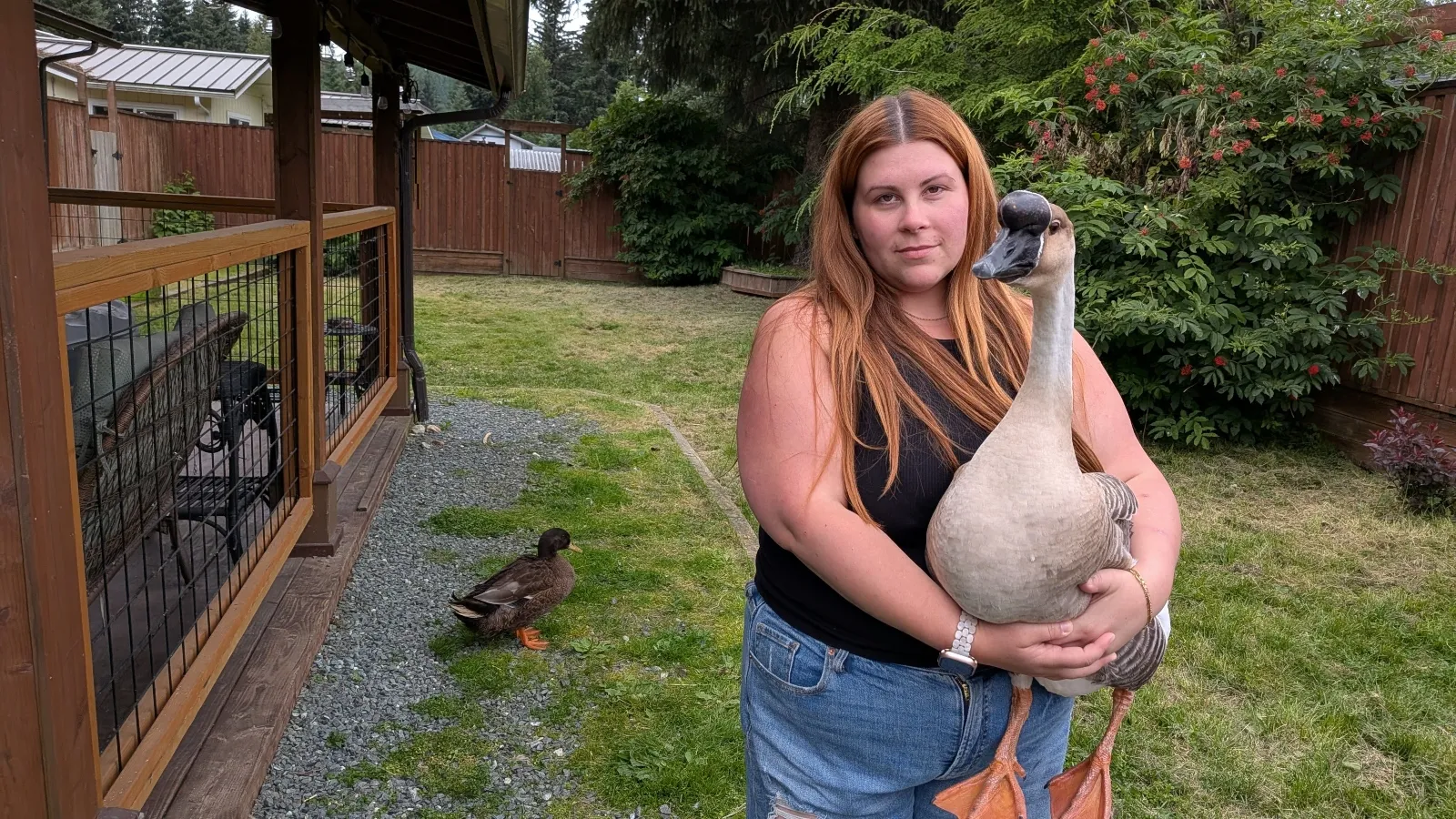
Alyssa Fischer never gave much thought to the glacier towering over her house until she woke at 2 a.m. to find her street had turned into a river.
As the water rolled into her garage and swept away her front porch, the 33-year-old single mother decided it was time to go. She grabbed her 8-year-old daughter and 4-year-old son and carried them through knee-deep, icy water, shouting to wake her neighbors. She put her pet duck, quail, and goose in the bed of her red pickup as water rose above the wheels.
Marina Lopes
Like so many residents in Juneau, Fischer now speaks the language of the scientists studying the ice above her. She talks about how rainfall can change a flood’s timeline and how many cubic feet of water could spell disaster for her and her neighbors. During flood season, she checks the dashboard hourly.
“Before it impacted my life, it was, like, ‘Oh, that’s interesting,’” she said. “Now, I want to know what’s happening.” That knowledge shapes decisions about her home, her children, and her future. “It’s your life,” she said. “It’s your money and your investment, and understanding what’s actually happening in the world around you and how it’s going to affect you.”
Armed with a radio, flashlights, and the dashboard, she awaits the next flood.
This story was originally published by Grist with the headline Juneau can’t stop the floods, but it’s learning to see them coming on Sep 17, 2026.


