
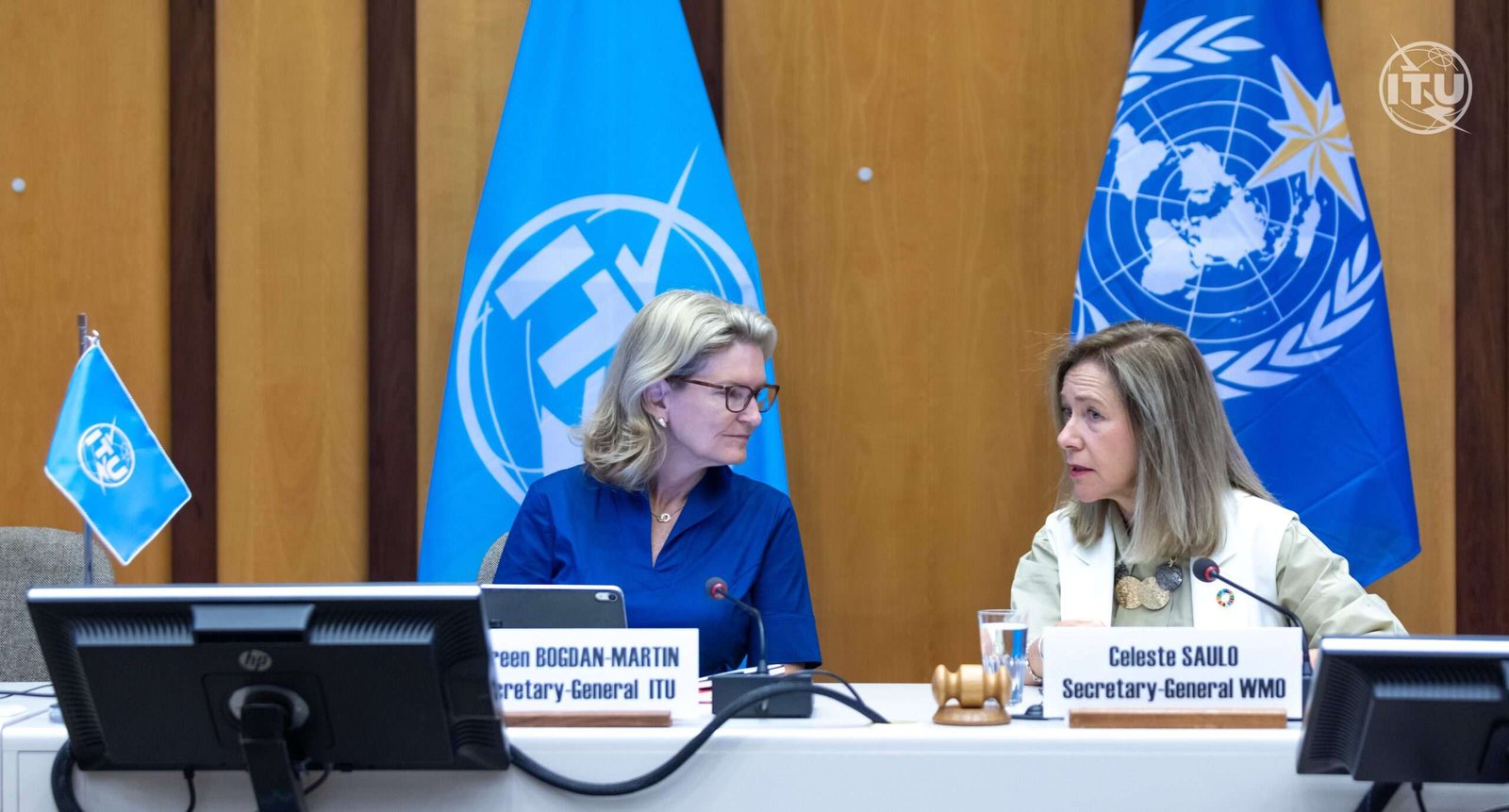
Growing demand for radio spectrum from wireless communications and satellite services could interfere with frequencies needed for weather forecasting, climate monitoring and environmental observations, two UN agencies have warned.1
The International Telecommunication Union (ITU) and World Meteorological Organization (WMO) are calling on governments and regulators to protect access to radio-frequency spectrum used by meteorological and Earth observation systems.
The warning coincides with the release of an updated joint handbook, Use of Radio Spectrum for Meteorology: Weather, Climate, Water and Related Environmental Applications, providing guidance on the frequencies used by environmental monitoring systems and the risks posed by harmful interference.
Radio spectrum is used both to gather environmental observations and to transmit data. Systems dependent on particular frequency bands include weather radar, lightning detection, hydrological monitoring, aircraft and marine observations and satellite-based instruments.
Passive satellite sensors are particularly sensitive to interference. Rather than transmitting a signal and measuring its return, these instruments detect naturally occurring radio-frequency energy emitted by the Earth and atmosphere. The measurements can provide information on variables including atmospheric temperature and humidity, precipitation and ocean conditions.2
Because these natural signals can be extremely weak, transmissions interfering with the frequencies concerned can degrade the quality or availability of observations. This in turn has the potential to affect weather forecasts, early warnings and long-term climate records.
WMO Secretary-General Celeste Saulo said the frequency bands used for some meteorological observations are determined by physical properties of the atmosphere and cannot simply be substituted with other parts of the spectrum.
“Meteorology relies on specific bands — determined not by choice, but by the physical properties of the atmosphere itself: they enable observations that no other frequencies can provide,” she said.
“These bands must be protected.”
The new handbook sets out the technical and operational characteristics of meteorological and environmental monitoring systems, the frequency bands they use and criteria for assessing harmful interference. It is intended as a reference for meteorologists, policymakers, spectrum regulators and the radiocommunications sector.
Its publication comes as Earth observation itself is changing, with new satellite constellations and sensing technologies adding to established meteorological systems, while cloud-based platforms are increasingly being used to process and distribute environmental data.
At the same time, growing demand from other radiocommunication services is placing additional pressure on the available spectrum, according to the ITU.
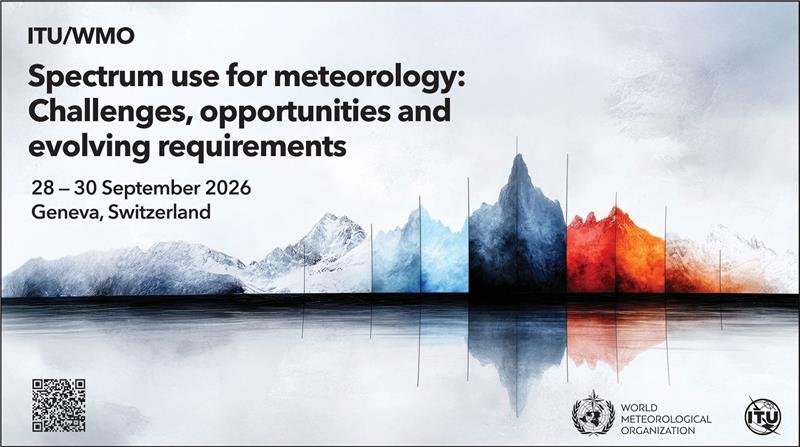
The handbook was launched on 28 September at the opening of the Global ITU-WMO Seminar on Spectrum Use for Meteorology in Geneva. The three-day meeting brings together meteorological agencies, regulators, scientists, satellite specialists and industry representatives to consider spectrum requirements and interference risks.
Discussions will also contribute to preparations for the ITU’s World Radiocommunication Conference in 2027 (WRC-27), where international spectrum arrangements will be considered. Preparatory work for WRC-27 includes a number of issues affecting meteorological services and Earth observation systems.3
ITU Secretary-General Doreen Bogdan-Martin said preventing harmful interference was a public-safety issue, adding that interference-free spectrum helps maintain the accuracy of forecasts, warnings and climate data.
The handbook itself is available free of charge from the ITU publication page.
References
[1] World Meteorological Organization and International Telecommunication Union, “ITU and WMO call to protect radio spectrum for weather, climate and water services”, 28 September 2026. World Meteorological Organization
[2] International Telecommunication Union, “Protecting spectrum for weather, climate and early warnings”, 21 September 2026. ITU
[3] ITU/WMO, Global Seminar on Spectrum Use for Meteorology: Challenges, Opportunities and Evolving Requirements, 28–30 September 2026. ITU


