

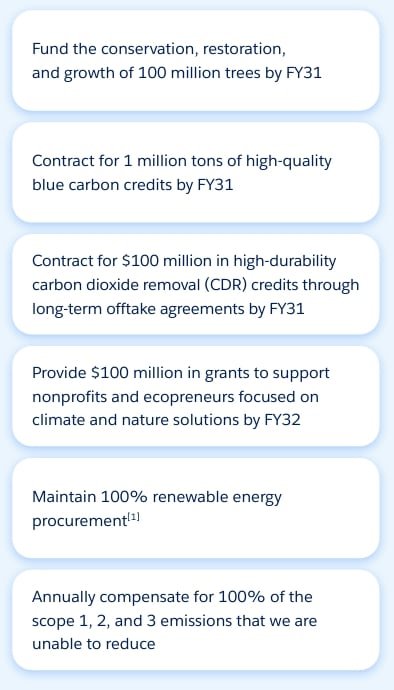
Salesforce is supporting new early-stage carbon dioxide removal (CDR) projects. The company aims to contract $100 million in durable carbon removal by 2030.
Through Milkywire, Salesforce has pre-purchased 3,661 tonnes of durable carbon removal from eight suppliers. This portfolio includes direct air capture (DAC), ocean alkalinity enhancement, and biomass storage. Projects are located in Europe, Canada, India, and the U.S.
The press release says these purchases follow a larger round announced in January, where Milkywire bought over 12,500 tonnes from 19 suppliers. That earlier portfolio featured biochar, BioCCS, enhanced rock weathering, mineralization, biomass storage, and next-generation DAC.
Therefore, the company is not only focusing on commercially available carbon removal. Instead, it uses Salesforce funding to support technologies that need testing and investment.
Salesforce Aims for Early-Stage Carbon Removal
Salesforce plans to contract $100 million in high-durability CDR credits by fiscal 2031, aligning with 2030. The company started investing in early-stage CDR suppliers through partners like Milkywire and Frontier in FY25.
The strategy addresses a major challenge in the carbon removal market. Many new technologies require years of development before they can deliver large volumes of verified removals. Startups often struggle to get funding during this early stage.
Early purchases can provide revenue and help developers prove their technology.
“Catalytic” Purchasing
Milkywire calls this approach “catalytic” purchasing. Instead of buying the most tonnes available, it targets projects where early funding can advance technology.
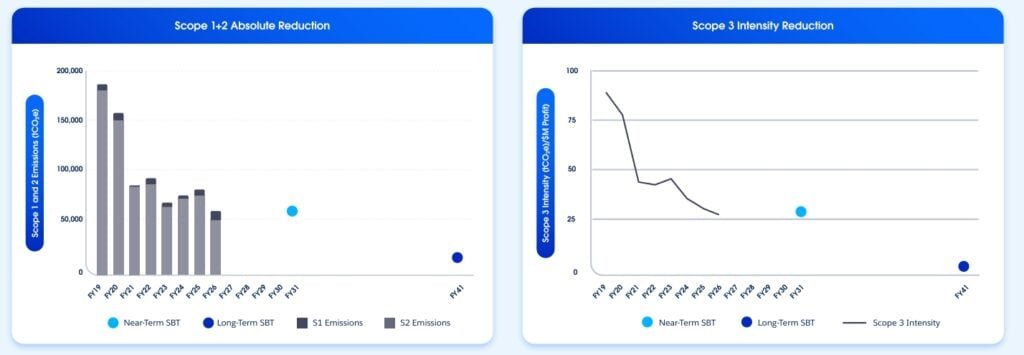
For Salesforce, these purchases fit into a broader climate strategy. The company plans to use durable carbon removal credits to offset its remaining emissions after reducing them across its value chain. It aims for durable carbon removals to equal 100% of its remaining Scope 1, 2, and 3 emissions by 2040.
Four Projects Boost Direct Air Capture
Four of the eight purchases support direct air capture projects at various stages.
- Sirona Technologies is developing a commercial DAC project that integrates a heat pump. The goal is to test if this can improve energy efficiency in DAC.
- Yama operates France’s first DAC pilot and is creating a facility to remove 365 tonnes of CO₂ each year.
- In the Netherlands, Brineworks combines electrochemical DAC with green hydrogen production. This method captures CO₂ while creating another low-carbon product.
- Deep Sky in Canada is developing a DAC project that combines carbon capture with mineralization at Thetford Mines in Quebec. Mineralization stores CO₂ in solid forms for long-term storage.
These projects tackle the challenge of reducing energy use and costs in removing CO₂ directly from the atmosphere.
Ocean Carbon Removal Expands
The new portfolio also features two ocean alkalinity enhancement (OAE) projects.
OAE aims to boost the ocean’s capacity to absorb and store CO₂ by adding alkaline materials. This method is still emerging, with developers working to show its effectiveness and scalability.
PRONOE runs the EU’s first land-based OAE system linked to an industrial desalination plant.
In India, Alkamy Carbon is using wastewater treatment facilities in the Mumbai area to enhance alkalinity. This project should provide valuable data on wastewater-based alkalinity in tropical conditions.
The India project is crucial because carbon removal developers need more real-world data from diverse climates. This data helps researchers understand how these methods perform in different environments.
Biomass Storage Provides Another Pathway
The last two purchases focus on storing biomass in durable forms.
Carba converts waste biomass into stable biocarbon before burying it in landfills. This process prevents carbon in organic waste from quickly re-entering the atmosphere.
Cowboy Clean Fuels injects agricultural residues into unmineable coal seams in Wyoming. Microorganisms underground convert the biomass into CO₂, which binds permanently to the coal.
These projects illustrate how durable carbon removal can involve various technologies and storage methods.
The eight purchases are:
- Alkamy Carbon: 667 tonnes
- Brineworks: 500 tonnes
- Carba: 816 tonnes
- Cowboy Clean Fuels: 500 tonnes
- Deep Sky: 394 tonnes
- PRONOE: 131 tonnes
- Sirona Technologies: 390 tonnes
- Yama: 263 tonnes
This totals 3,661 tonnes.
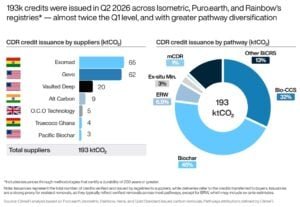
Credit Issuance
Why Early Buyers Matter for the CDR Market
These latest purchases come as the carbon removal industry faces challenges.
While the sector has seen significant investment, many companies developing new technologies encounter high costs, long timelines, and limited demand.
Milkywire says the market needs buyers who will back technologies early on. Without early demand, promising projects might find it hard to secure funding. They may also struggle to transition from pilot stages to commercial operations.
This approach can also yield technical insights. A first-of-a-kind project may remove small amounts of CO₂, but its operation can provide data to improve performance and reduce costs.
Notably, Milkywire has enabled more than $12 million in carbon removal purchases. This includes over 45 projects in 20+ countries.
The latest portfolio spreads funding across multiple technologies instead of focusing on one method.
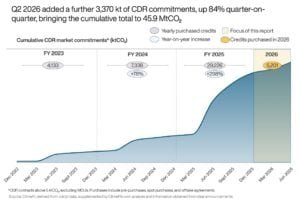
CDR Market Growth
For Salesforce, these purchases further its long-term carbon removal strategy. The company announced its $100 million durable CDR commitment in 2022 as part of the First Movers Coalition.
As the CDR market grows, these early purchases could help identify which technologies move from pilot to commercial deployment. For developers, funding means early buyers. For the industry, these projects offer real-world data on effective pathways for durable carbon removal at scale.
The post Salesforce and Milkywire Back 3,661 Tons of Carbon Removal Across 8 Projects appeared first on Carbon Credits.


