

Pamela Worth contributed to these interviews.
Thousands of government scientists have been pushed out of their public service careers since the second Trump administration took office. Some were fired, while others left because their work was targeted for political interference. Nearly 95,000 science employees are no longer in federal service.
This massive loss doesn’t just affect individual scientists or their agencies, but everyone in the country. Federal scientists carry out lifesaving medical research; monitor and help communities prepare for severe weather; protect consumers from foodborne illnesses; study pollution impacts to ensure we have effective public health rules; and do work that helps keep us safe, healthy, and prosperous.
Under the Trump administration, science is under attack like never before. These are just a few of the stories of scientists whose important, public-serving work was callously discarded, and what this means to us and for the relationships the US scientific enterprise has cultivated over decades with institutions and countries around the world.
Tom DiLiberto
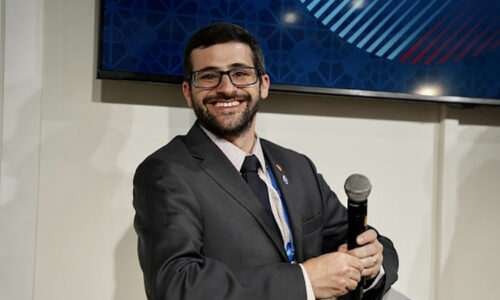
Former position: Public affairs specialist/climate scientist/meteorologist, National Oceanic and Atmospheric Administration (NOAA)
Current position: Media director, Climate Central
I’ve known I wanted to be a meteorologist since I was in third grade. For me, there’s meaning in providing information for families and communities that they can use to stay safe. I wanted to help people, and that’s why I went into federal service.
I was working at NOAA when I was fired. It’s a weird experience to see all the work that you did just—poof—disappear within six months. My entire career has been almost completely wiped away. And it’s not just me. It’s the people forecasting your weather, making sure your seafood is safe to eat, anyone doing research on climate.
It took decades to build up some of these programs, and now the people aren’t there to be able to do it. You can’t just stop research and restart it in 5 or 10 years. As taxpayers, we pay for these services, and we’re getting a degraded service. We’ll see the impact of that, which is that people are going to get hurt needlessly.
The United States was lucky last year because we didn’t have too many extreme weather events happen. But we can’t count on that. So, whether we see hurricanes ahead, heat waves, or wildfires, I have less trust that the government can do what it needs to do. The people in government who are still there are going to try their best. But there’s only so much they can do. And that scares me.
Whether that lost expertise can be replaced . . . well, who would want that job now? It’s a lot easier to burn something down than it is to build it up.
Melinda Laituri, PhD
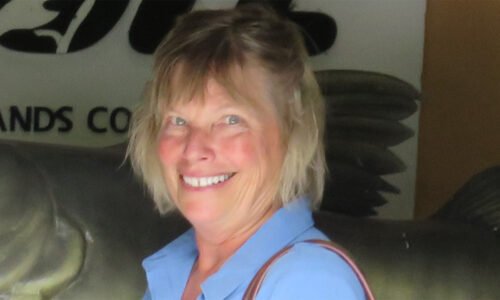
Former position: Jefferson Science Fellow, US Department of State; federal contractor
Current position: Retired
In 2014, I started a yearlong program—the Jefferson Science Fellowship—with the State Department. My division created maps based on both satellite data and community-based information, to help decisionmakers place humanitarian resources and infrastructure where they’re needed.
As a professor at Colorado State, one important aspect of collaborating with the federal government was what you could bring back to your teaching, your research, the institution—to show young people how issues of policy relate to science. The ability to share what I knew was incredible.
More recently, I was a contractor working with the State Department on the Secondary Cities Initiative, a follow-on from my fellowship. This is a global network of geospatial experts working together to tackle issues like security, resilience, and disaster response. I’ve traveled all over the world for this work. Through this project, I’ve worked with regional environmental officers serving at US embassies. I’ve developed partnerships with people on the ground, including helping cities and universities develop maps. The Secondary Cities Initiative gave rise to an important COVID-19 mapping and mitigation project. The on-the-ground experts I’ve met were amazing people, with local knowledge and expertise, who were able to make the Secondary Cities Project possible.
Our initiative recently submitted a proposal for a grant from USAID, and then USAID went away. Now it’s on hold.
So much of what I did was built on this network and these partnerships. The relationships are strong enough to maintain, but the funding to support that work is gone. I still am in touch with many of the colleagues I worked with around the world. A lot of them are just mystified by what’s happening in the United States.
Aubrey Paris, PhD
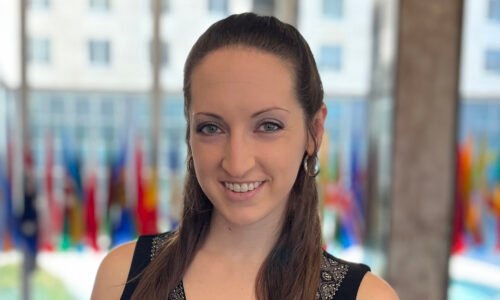
Former position: Senior policy advisor for gender, climate change and innovation, the Secretary of State’s Office of Global Women’s Issues
Current position: Director, Parlee Center, Ursinus College
My portfolio with the Office of Global Women’s Issues covered the ways climate change affects women.
I worked with different State Department bureaus to understand how the “gender-climate nexus” affected their topic or their region, and I coordinated across 14 different federal agencies to develop policy and strategy. I did a lot of travel, meeting with partners in different countries, and training State Department staff through the Foreign Service Institute.
My office created the Innovation Station initiative, helping to identify women—including scientists and entrepreneurs—who were developing solutions to climate and energy challenges in their countries. In many places women are noticing these challenges first and know their community enough to identify and come up with solutions to problems. We helped them share their work locally and build relationships internationally. That’s some of the work I’m proudest of: helping promote these women and expand the impact of their innovations.
Our work was under attack from Inauguration Day. With little guidance and an overall atmosphere of fear, all of our colleagues proactively self-censored. It seemed like the administration wanted women’s empowerment work to disappear without having to say it explicitly.
In April 2025, the New York Times leaked the State Department reorganization plan, and we weren’t on it. That’s how we knew it was over.
We’ve lost hundreds of years of expertise, years of hard work, academic and professional expertise in how to effectively advance women’s rights and empowerment in ways that benefit all of society.


