
Canada’s Outdoor Farm Show is where innovation and agricultural technology merge.
This year’s show demonstrated that farmers are increasingly in the driver’s seat when it comes to defining their crop production goals and using technology to achieve them.
Drone technology
The drones were hard to miss, soaring above the demonstration plots at COFS. More than a scouting gadget, drones have become a key tool for spraying, multispectral imaging, crop mapping and thermal imagery.
This year the big difference is the sheer number of drone supply companies, drone brands and new companies coming into the marketplace, such as Forward Robotics, a Cambridge, Ont. company with a fixed-wing drone for crop spraying.
Farmers are finding the price point attractive compared to a large sprayer and are integrating the technology into their operations to improve yields and data collection.
Battling rootworm
Until recently, Ontario had an effective corn rootworm management strategy, but, like many pests, resistance has begun to emerge.
COFS allowed farmers to explore rootworm management options, including Syngenta Canada’s Opello. The new liquid, soil-applied insecticide for corn growers controls corn rootworm from the roots up, protecting root development, yield and standability.
“Corn rootworm remains a damaging pest and history tells us it requires more than one management approach when corn is grown consecutively,” says Laura Smith, technical lead for insecticides and herbicides with Syngenta Canada. “Opello can complement existing trait options and crop rotation, helping growers strengthen their resistance management strategy for long-term success.”
Syngenta’s NK seed brand also launched its Durastak three-trait stack for rootworm control. Its unique combination of traits is a first for the industry and will be available for the 2027 growing season.
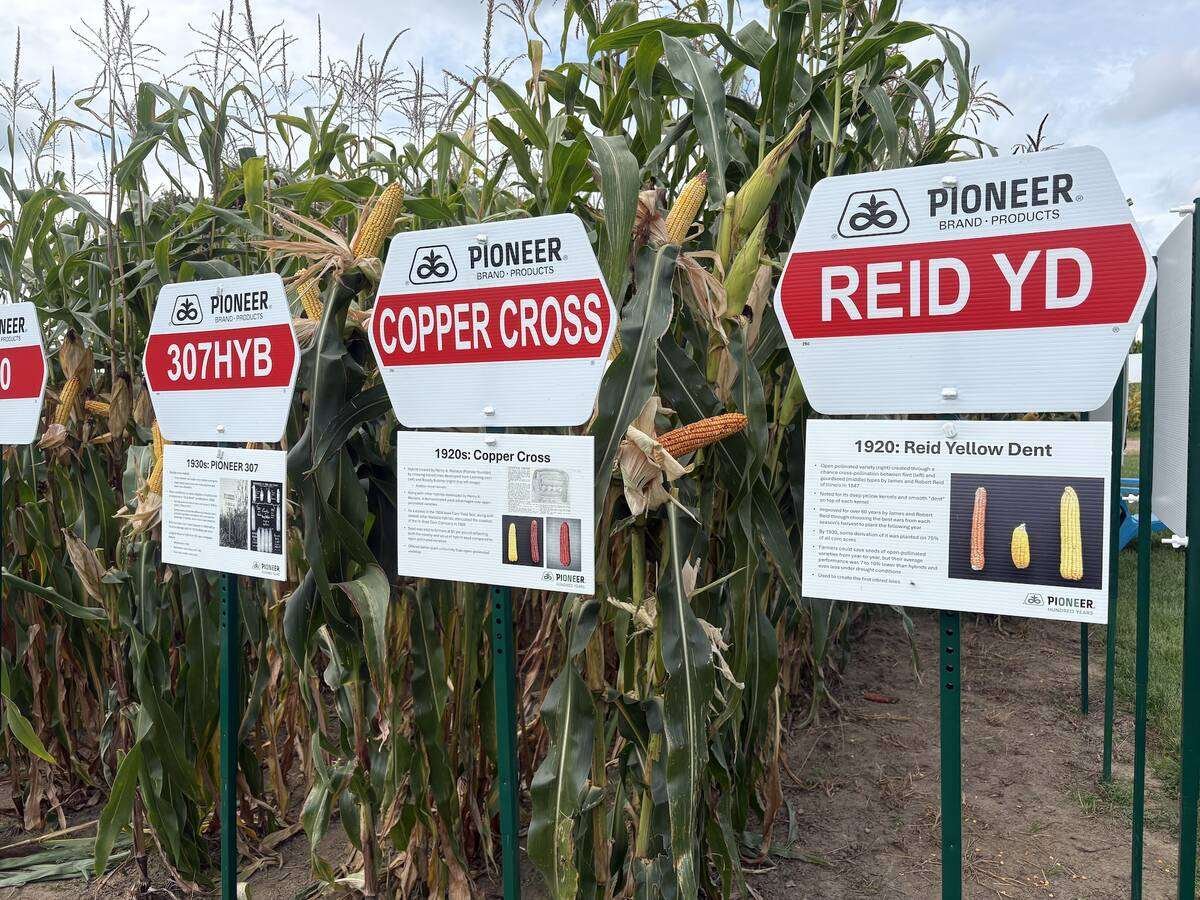
In-field results
One of a farmer’s biggest expectations is proven in-field results, with today’s machinery and technology increasingly designed to produce results faster, allowing for better predictions, reduced input costs and improved labour efficiency.
Demonstration plots set up to compare crops under different conditions and management strategies, with in-row agronomists and researchers available for questions, reflect a continuing appetite for side-by-side, real-world evidence rather than technology pitches alone.
OMAFA crop innovation specialist Ian MacDonald said the organization’s tillage demonstrations explored how different tillage implements performed, including how they tilled the soil, moved soil particles and incorporated dry fertilizer granules and cover crops.
“All of this was done by placing a band of corn kernels across the slope halfway down the downward sloping space perpendicular to the direction of the tillage treatment installs,” he said, adding that the tillage implements were all run on the Monday before the event.
Each tillage implement was left at the bottom of the pass, lined up for easy inspection of tillage effect relative to the configuration of each unit and its impact on the soil, with walkways in front of the tillage tools and above the corn band.
“The purpose of the walkway above the corn band was to let people see how each implement moved the proxy soil particles, cover crop seed and fertilizer granules represented by the corn kernels, which really showed how individual particles moved both in distance and incorporation,” MacDonald said. “It is really revealing to look at tillage implements in this manner to see the significant differences in how they interact with soil.”
The demonstration was not about ranking implements, he explained, but showing the differences and using that comparative knowledge to judge whether a farmer’s current tillage practices meet their needs in terms of crop production and problem-solving.
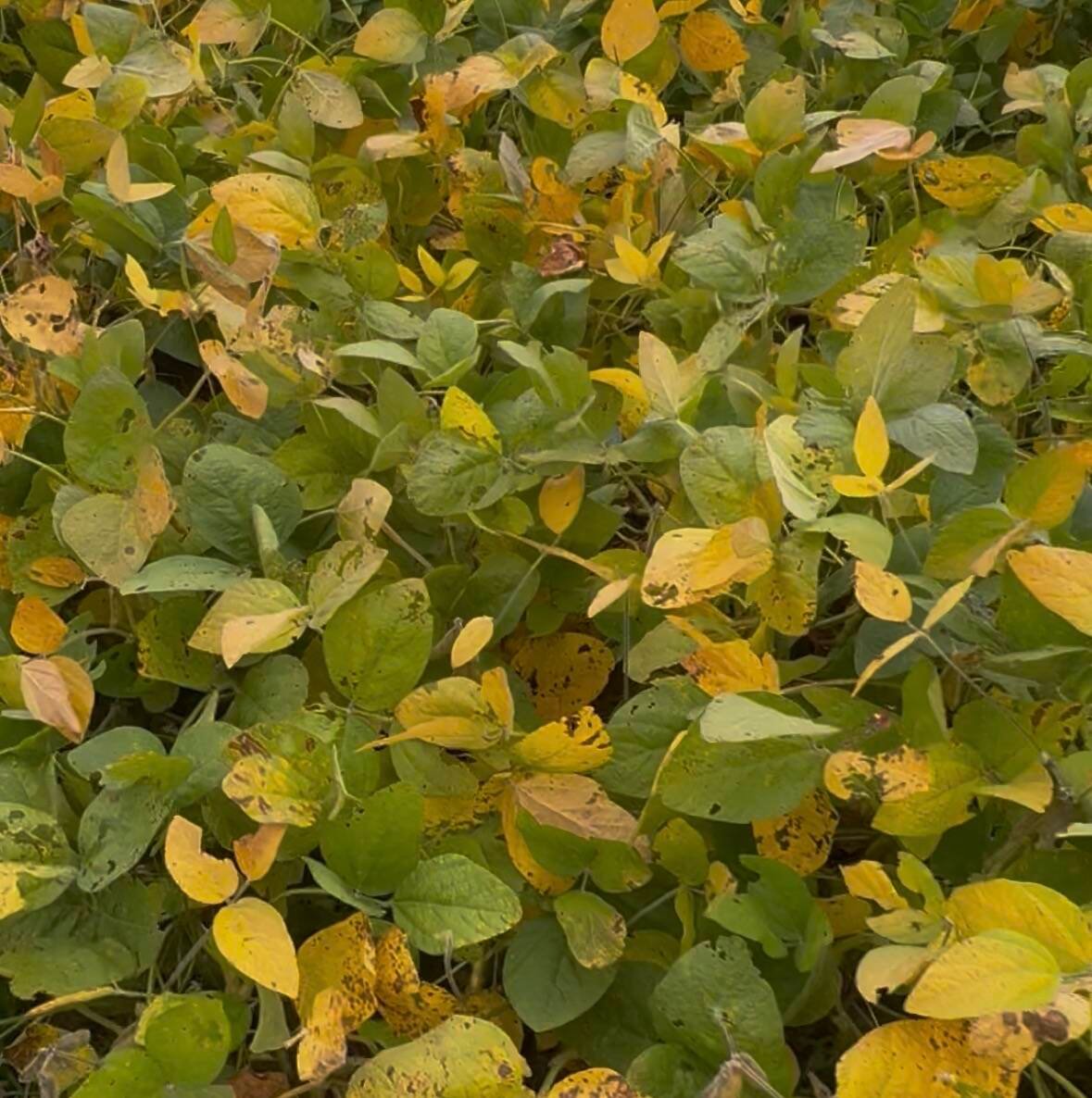
Photo: Sarah McGoldrick
Input application
Precision nutrient application continues to shift toward precise application.
COFS featured several technologies designed to adjust fertilization patterns and improve nutrient application accuracy.
Traditional precision application relies on soil tests, yield maps, satellite imagery and historical data to allow fertilizer applicators to apply different rates in different zones. Traditional fertilizer spreaders continue to evolve, with the Amazone system, new to North America for 2027, which uses radar to see and to automatically adjust its spread pattern.
Upside Robotics is advancing technology with the Maize Runner, an autonomous machine that travels between 30-inch corn rows and applies precise doses.
Next-generation machines use soil and crop data to define what each specific field area needs and provide nutrients directly where required.
Overall, COFS confirms that the economics of crop production is increasingly shaped by more than yield alone. Farmers are looking at how technology can help capture greater value from every acre with precise decisions about seed, nutrients, crop protection, equipment and timing.


