For more than a century, monitoring moth pests in apple orchards involved a simple routine: put out a sticky trap, return periodically and count what’s caught to inform pest control decisions.
British Columbia-based CropVue Technologies is putting a digital spin on that familiar tool, using cameras and artificial intelligence to give growers daily information about pest populations in their fields and orchards.
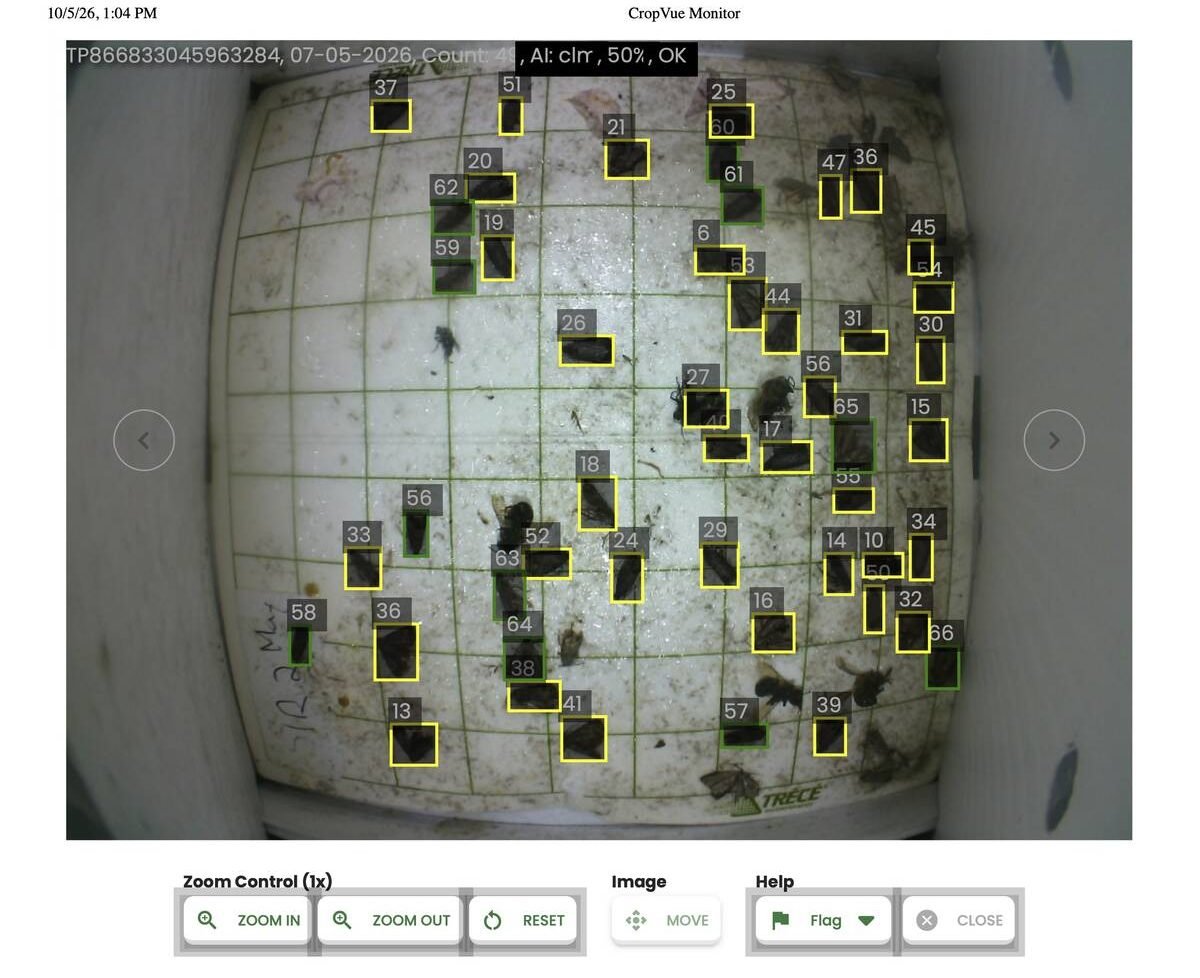
The company’s connected traps automatically photograph captured insects and use AI to identify target pests. Results are sent to a mobile- and desktop-accessible dashboard.
“We get a day-by-day resolution rather than every seven to 10 days, so it’s easier to identify trends in pest populations,” says Amy Jancewicz, president of CropVue.
Founded in 2019, CropVue works with farmers in Canada and the United States. Although apples are their biggest market, its technology is also being used in pistachios, hazelnuts, almonds, macadamia nuts and mangoes. Models for field crops such as canola, soybeans, corn, wheat and cotton are in development.
Conventional traps use pheromones or other attractants to draw target insects onto a sticky surface. Someone must then travel to the trap, identify what has been caught and record the numbers. CropVue uses the same basic approach but adds a camera that captures an image of the insect soon after it arrives.
That provides clearer identification before the insect begins to deteriorate, making pest population trends easier to identify while reducing scouting labour. The system can also alert users when individual traps need servicing.
Jancewicz says digital trapping costs roughly the same as manual monitoring once travel, labour and data quality are considered; the bigger potential return, however, lies with forecasting.
CropVue is developing models that combine pest observations with field-level weather data to predict insect development and activity.
“If you’re looking at weather, what you care about is next week, not three days ago,” she says.
Knowing when pests are likely to reach specific life stages could help growers better time chemical or pheromone applications or potentially avoid a spray altogether.
Support from the Canadian Agri-Food Automation and Intelligence Network is helping CropVue tackle a more difficult identification challenge in the apple industry.
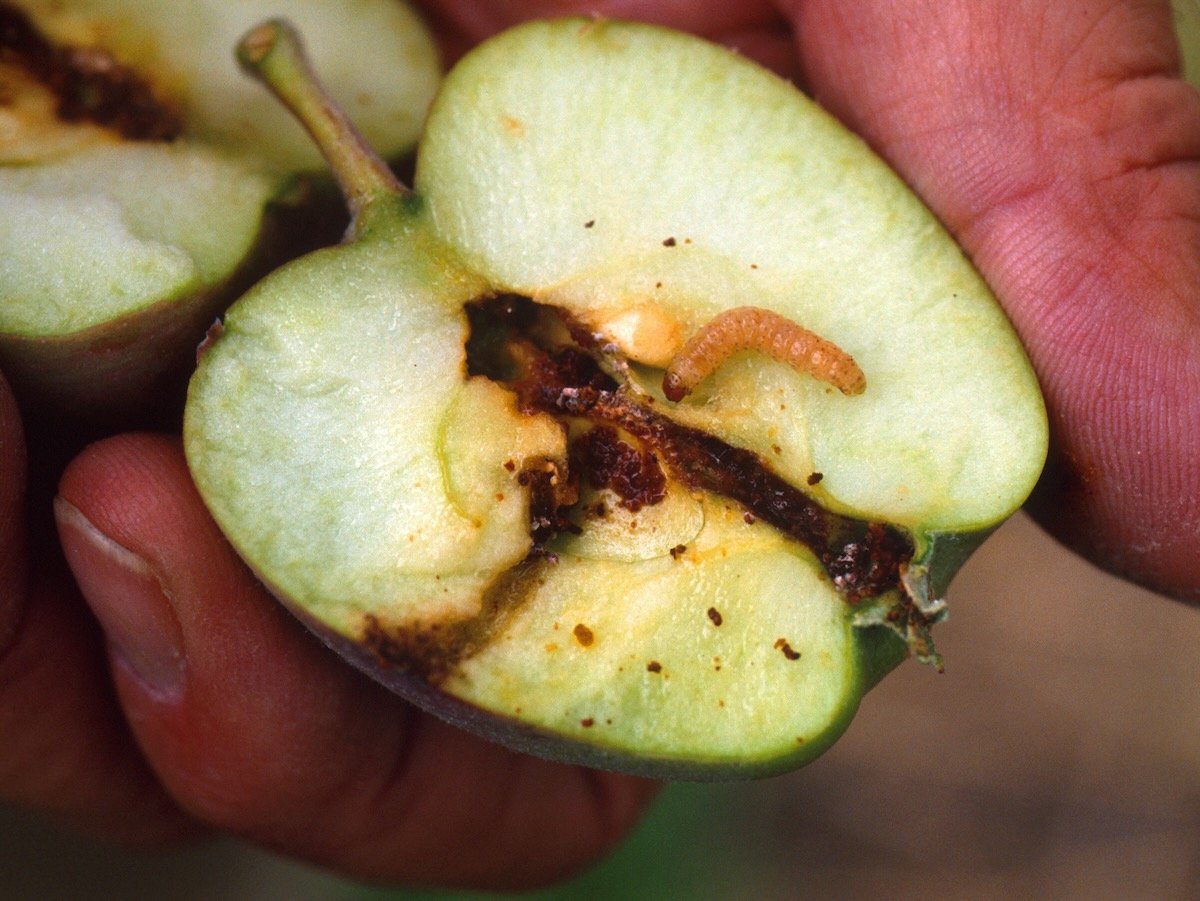
Codling moth is a major apple pest, with larvae feeding inside the fruit and causing damage that can make it unmarketable. Sterile codling moths are being released to disrupt mating with wild moths, reducing the pest’s population.
CropVue is working with the Okanagan-Kootenay Sterile Insect Release program to determine whether its insect pest monitoring technology can distinguish sterile from wild moths caught in the traps, field-testing about 40 digital traps in the Okanagan Valley.
OKSIR monitors about 3,000 traps manually, according to Jancewicz, with trained staff distinguishing between sterile and wild moths. Sterile moths are raised on a diet containing red dye, which colours their digestive systems, and researchers are now testing imaging techniques to detect that difference, as well as fluorescent markers and lighting modifications that could make sterile moths easier to identify automatically.
It was CAAIN’s support that made it possible for a small company like CropVue to pursue development of a technology that carries considerable technical and commercial risk.
“CAAIN was a game changer,” she says. “We wouldn’t have gone down the route with this without the funding.”
Founded six years ago, CAAIN has committed more than $42 million in federal funding to 56 projects in support of agricultural technology development, demonstration and commercialization. This past August, the federal government announced another $50 million in project funding for CAAIN.
CropVue’s next step is continuing to improve forecasting while expanding into more crops and more Canadian markets. Jancewicz says their ultimate objective is straightforward: give farmers better information for making management decisions.
“We’re trying to ensure growers have enough data to make good decisions for their businesses,” she says.