
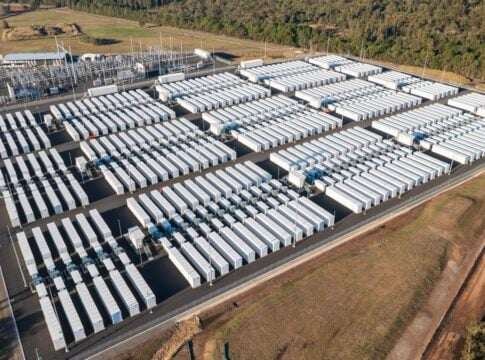
Australian battery storage developer Akaysha Energy has secured an A$1.75 billion (approximately US$1.22 billion) portfolio financing facility to refinance debt linked to four battery energy storage system (BESS) projects. Founded in 2021, the company develops, owns and operates large-scale batteries designed to support electricity grids as renewable generation increases.
Significantly, BlackRock’s Climate Infrastructure business acquired Akaysha in 2022, marking its first battery storage investment in the Asia-Pacific region.
The press release says eleven banks supported the financing, including ANZ, BNP Paribas, Bank of China, CIBC, Commonwealth Bank of Australia, Deutsche Bank, DNB, ING, Mizuho, MUFG and Rabobank. The deal brings existing project loans under a single financing structure and gives the company greater flexibility to develop additional storage assets.
Akaysha Consolidates Debt Across Four Battery Projects
The agreement comes as Australia expands battery storage to support renewable energy, improve grid reliability and manage fluctuations in electricity supply. For investors, the deal highlights how portfolio-level financing can help developers manage capital requirements as battery projects grow in scale.
The new facility refinances debt associated with four Australian projects: Brendale and Ulinda Park in Queensland, Orana in New South Wales, and Elaine in Victoria. Three assets are operational, while Elaine remains under construction and is expected to be completed in the second half of 2027.
The financing includes three facilities with terms of five, seven and ten years. It also provides revolving liquidity and contingent instrument facilities, giving Akaysha additional flexibility to manage funding needs as its projects advance.
Andrew Wegman, Managing Director and Chief Financial & Investment Officer of Akaysha Energy, said:
“This is an important milestone for Akaysha and it was pleasing to see continued strong support from lenders for our operating portfolio, our pipeline and Australia’s energy transition. As well as refinancing our existing operating and construction assets, this portfolio-level facility gives us the flexibility to accelerate our next wave of projects while we continue deploying capital where we see the strongest opportunities across the pipeline. We’re grateful to our fantastic bank group, our advisors and of course the broader Akaysha team, all of whom worked tirelessly to get this done.”
The transaction creates a common financing platform for operating and construction-stage assets. Rather than managing separate project-level loans, Akaysha can use the consolidated structure to support portfolio growth and allocate capital across development opportunities.
- READ MORE: Ark Energy Secures FID for $1.3B Richmond Valley Solar Farm and Battery Project in Australia
Australia’s Battery Storage Market Is Expanding
Australia’s battery storage industry is attracting investment as the country adds renewable generation and prepares for the retirement of ageing coal-fired power stations.
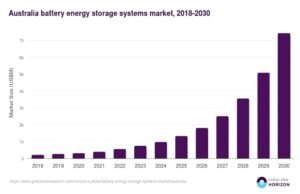
The Australian BESS market generated an estimated US$988.9 million in revenue in 2024, according to Grand View Research. Its market outlook projects revenue of US$7.42 billion by 2030, representing a compound annual growth rate of 41.1% from 2025 to 2030. These figures are commercial market estimates, rather than a measure of installed battery capacity.
Utility-Scale Battery Additions
Deployment is also accelerating. The Clean Energy Council reported that nine utility-scale battery projects, representing 2.3 gigawatts (GW) of power capacity and 7.1 gigawatt-hours (GWh) of storage, began operating in the first half of 2026. For comparison, Australia added 2 GW and 5.1 GWh during the whole of 2025.
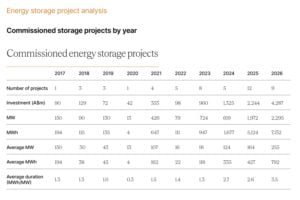
The first half of 2026 delivered more new storage capacity than the whole of 2025.
This shows that the market is moving beyond pilot projects toward larger, commercially operated assets. Batteries can store surplus electricity when supply is high and release it when demand rises. They can also provide fast grid services that help maintain stable electricity supply.
How Much Battery Capacity Will Australia Need?
The Australian Energy Market Operator (AEMO) published its 2026 Integrated System Plan in June, outlining the investment needed to maintain a reliable electricity system as coal generation declines and electricity consumption grows. The plan identifies renewable generation supported by storage and transmission as a cost-effective route to a lower-emissions grid.
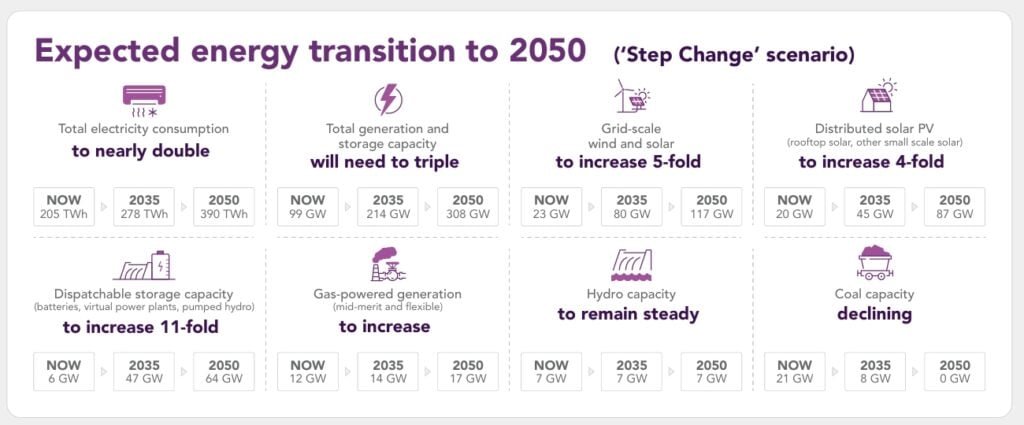
Under the plan’s development pathway, the National Electricity Market (NEM) is expected to need approximately 27 GW of total storage capacity by 2030. This includes different storage durations and technologies. Longer-term requirements extend to around 33 GW of utility-scale storage by 2050, including 27 GW of grid-scale batteries and 6 GW of pumped hydro.
These are planning requirements, not guaranteed installation targets. Actual deployment will depend on project economics, grid connections, electricity market conditions, permitting, and financing.
Household batteries are expanding too. The Clean Energy Council reported that 276,011 home batteries were installed in the first half of 2026, bringing the number of Australian homes and small businesses with battery systems to more than 700,000. This distributed storage can complement large grid-scale facilities by storing rooftop solar power for use later in the day.
Akaysha’s Pipeline Offers Further Growth Potential
Akaysha’s financing supports a reported Australian development pipeline of approximately 6 GW of power capacity and 25 GWh of storage across the NEM. This pipeline gives the company opportunities to expand as demand for flexible electricity supply increases.
The company has also advanced the Waratah Super Battery in New South Wales, which reached final commercial operations in September 2026. The project has a power capacity of 850 megawatts (MW) and storage capacity of 1,680 megawatt-hours (MWh), making it a major source of grid support.
Waratah Super Battery in New South Wales
For investors, the refinancing is significant because it combines debt across several projects and provides a structure that can accommodate further development. However, the facility is primarily a refinancing transaction, not entirely new construction capital. Future growth will still depend on project delivery, operating performance, electricity market revenues and access to additional funding.
White & Case, RBC Capital Markets, and Chatham advised Akaysha Energy. Allens acted for the lenders, while several technical, financial, insurance and other advisers supported the due diligence process.
Australia’s growing storage requirements create a substantial opportunity for battery developers. Akaysha’s ability to turn its pipeline into operating assets will determine how effectively it can use this financing platform to capture that opportunity.
- ALSO SEE: Amazon’s $2.8 Billion Clean Energy Push in Australia: Why Battery Storage Matters • Carbon Credits
The post BlackRock-Backed Akaysha Energy Secures A$1.75 Billion Financing for Australia’s Battery Storage Growth appeared first on Carbon Credits.


