

Ten renewable energy startups pitched their businesses this year in the fifth Startup Pitch Competition, hosted by Mercom Capital in partnership with RE+.
The ten startups made pitches before a panel of three judges including Stephanie Annerose, director of investments at HASI, a global expert in acquisition, capital raises, project finance and corporate lending; Alexander Carbone, vice president at Clairvest, an investor specializing in energy, power and utility investments; and Raj Prabhu, CEO of Mercom Capital Group, a specialist in global clean energy markets.
“The quality of startups this year was outstanding. What really stood out was that all ten finalists were tackling some of the most pressing challenges facing the market today,” said Raj Prabhu, CEO of Mercom Capital Group. “These are solutions the industry needs now, and I hope these companies secure the funding they need to scale, succeed, and keep innovating.”
The ten finalist startups included:
Cosmic Robotics is bringing autonomous construction equipment to utility-scale solar projects with its flagship product, Cosmic-1. This tracked, battery-electric robot loads its own pallet of solar modules, and the company reports it places panels on single-axis trackers or fixed-tilt racking reportedly with precision of plus or minus 5 millimeters. Cosmic Robotics says the robot positions one module every 30 to 45 seconds and that a three-person crew operating Cosmic-1 can install 400 to 500 or more modules daily
evPower.ai bring AI-powered energy management to public electric vehicle (EV) DC fast-charging hubs. It uses software to analyze vehicle charging patterns, equipment limitations, driver behavior and energy costs to intelligently distribute electricity between vehicles, batteries and the grid, thus potentially increasing sales while maintaining charging performance. The company reports its machine learning models have demonstrated 98.5% prediction accuracy across dozens of sites. Based on solutions deployed in the United States, Canada and Israel, the company reports it has delivered 20% higher energy sales and a 40% reduction in demand charges.
Noble Carbon helps homeowners to monitor and remotely manage electricity use with its modular smart circuit breaker platform that reportedly avoid electrical infrastructure upgrades. The solution brings energy monitoring, remote switching, cloud connectivity and automated load management to individual household circuits, letting homeowners monitor electricity consumption, control appliances remotely, schedule energy use and prioritize electrical loads.
Axentum is developing solar and battery storage platform to help speed up construction of data centers while reducing costs and electrical infrastructure requirements. The proposed system, intended to be installed by robots, comes pre-assembled and combines standard utility-scale solar modules with distributed lithium iron phosphate battery storage, integrated controls and proprietary mechanical connections.

SWIF Rack offers elevated commercial rooftop solar racking systems designed to protect roof integrity, simplify installation and improve solar production. The company describes its SWIF TEN racking solution as UL 2703-certified and Class A fire-rated, including its UL 2703-certified, Class A fire-rated.
Fordje offers a centralized, searchable intelligence platform intended to help clean energy developers navigate zoning, permitting, interconnection, and building requirements. It structures regulatory information across more than 28,000 U.S. jurisdictions, identifying potential project barriers. The company reports its technology automatically retrieves 80 to 300 regulatory documents per jurisdiction and that a feasibility report can provide an initial assessment of whether a site is buildable in approximately 30 seconds. More comprehensive reports identify permitting obligations, active moratoria and regulatory changes. Fordje supports residential, commercial and utility-scale projects across solar, energy storage, EV charging and HVAC, and makes its jurisdictional data available for integration into third-party software platforms.
Matrix Power Inc. offers power conversion technology by combining its proprietary xPowerOS platform with energy routers, solid-state transformers and power converters. The result, the company says, is to enable flexible energy management, improve grid stability and support AI data centers. The technology is designed to support different hardware configurations while enabling bidirectional power conversion, grid-forming in less than a millisecond, automatic grid synchronization and rapid detection of electrical load spikes. Because it allows power output to be reconfigured in the field, Matrix Power reports it can potentially reduce the need for specialized equipment.
O&M Robotics develops robotic solar module cleaning technology. Its flagship SolTrek system can reportedly clean up to 15,000 panels a day. It uses patented ZeroWeight technology to avoid additional weight on the modules by ensuring that only the cleaning elements contact the solar panel surface. O&M Robotics reports that the cleaning system is compatible with fixed-tilt, single-axis and dual-axis solar installations and can clean up to 15,000 panels daily with a cleaning efficiency of 99% or more. The system offers manual and semi-autonomous operation, with fully autonomous capability currently under development.
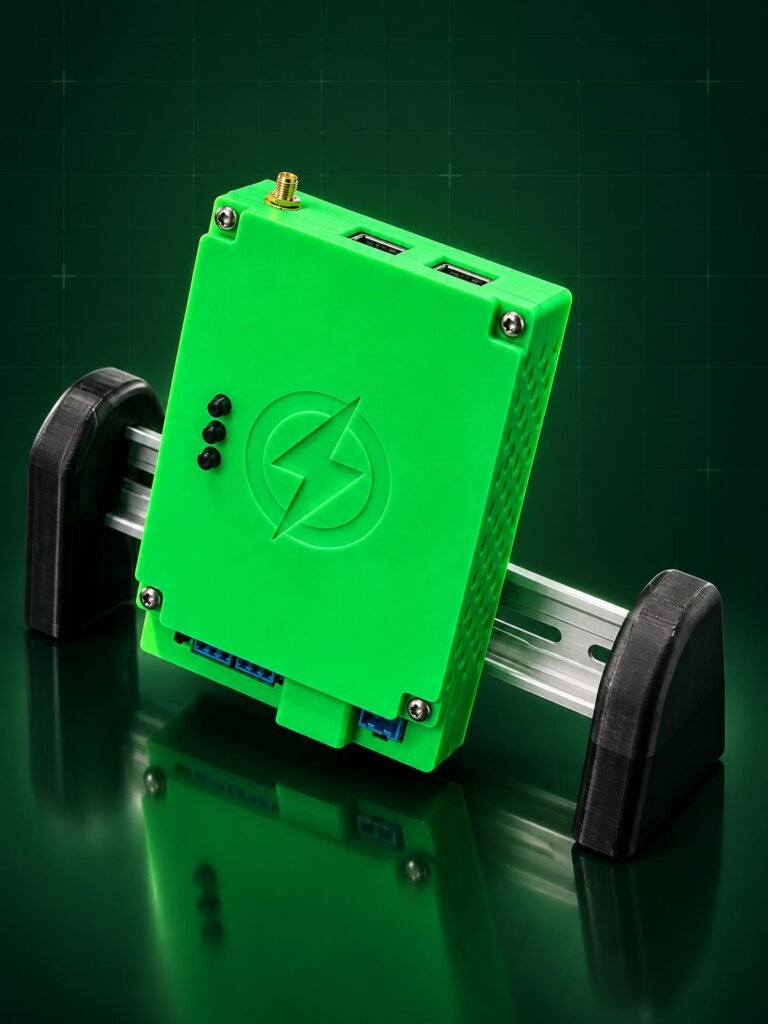
LexaVolt’s Secure DER Gateway is designed to offer a cybersecurity barrier between the grid and solar inverters, using encrypted communications, secure authentication, and protected data storage. LexaVolt’s gateway reportedly acts as a security barrier, receiving commands through encrypted, authorization-based communications standards and translating them into instructions for connected inverters. The company says it has built in cybersecurity protections including secure boot functionality, an encrypted file system and a secure element for cryptographic key storage that prevents sensitive credentials from being exposed externally.
The winner of the live Startup Pitch Competition at RE+ 2026 is Magnefy, a California-based company that designed a solution to help detect electrical faults in transformers and central inverters.
Magnefy’s noninvasive sensing technology can capture electrical signals across a wide frequency range. The startup reports it can identify early signs of transformer insulation degradation, partial discharge, harmonics and other anomalies. In controlled transformer testing, Magnefy says it achieved more than 98% accuracy in classifying partial-discharge faults and is targeting monitoring costs approximately one-tenth those of incumbent systems.

Magnefy, one of ten finalists in the competition, earned the title of RE+ Start-Up of the Year, along with a communications package from Mercom Capital Group and a booth at RE+ 2027.
The post Ten innovative renewable energy startups give their pitch at RE+ appeared first on pv magazine Global.


