
While several segments of the global nonwovens industry have faced overcapacity in recent years, airlaid remains relatively balanced in terms of supply and demand. However, limited available capacity could constrain opportunities for new product development and expansion into emerging applications.
.mobile-only {
display: none;
}
.scroll_to_continue:after {
content: ‘F282’;
position: absolute;
content: ‘F282’;
top: 21px;
transform: translateY(-50%);
right: 16px;
width: 10px;
height: 15px;
background-repeat: no-repeat;
background-size: 10px 15px;
background-position: center center;
font-family: “Bootstrap-icons”;
opacity: 1;
font-size: 16px;
right: 100px;
}
@media only screen and (max-width: 768px) {
.mobile-only {
display: block;
}
}
var labelText = “SCROLL TO CONTINUE”; //set custom “advertisment” awareness text label
var clickMacro = “/users/signupnewsletter/5” //set clickURL destination
var linkTarget = “_blank” //set link target attribute, by default “blank”
var hei = document.documentElement.clientHeight * 0.65;
/* == generator code == */
var container = document.getElementById(“inscroll-banner”);
//container.setAttribute(“style”,”height: 121vh; position: relative; margin: 55px 0;”);
var adlabel = document.createElement(“div”);
adlabel.classList.add(“scroll_to_continue”);
var lt = document.createTextNode(labelText)
adlabel.appendChild(lt);
//adlabel.setAttribute(“style”,”position:absolute; z-index:9; margin-top:-26px; color:#FFFFFF; background-color:#603577; text-align:center; width:100%; left:0;font-size:14px; padding:3px 0; height:26px”);
adlabel.setAttribute(“style”,”position: relative; z-index: 9; top: 21px; color: #FFFFFF; background-color: #603577; text-align: center; width: 200px; left: 0;font-size: 14px; padding: 0;line-height: 50px; margin: 0 auto;”);
var inner = document.getElementById(“banner-core”);
//inner.setAttribute(“id”,”banner-core”);
//inner.setAttribute(“style”,”width: 100%; top:49px; left: 0; clip: rect(0,100vw,100vh,0); overflow-x: hidden; overflow-y: auto; position: fixed; -webkit-transform: translateZ(0); -moz-transform: translateZ(0); transform: translateZ(0);”);
//var art = document.createElement(“img”);
//art.setAttribute(“src”,imagePath);
//art.setAttribute(“style”,”width:100%”);
//inner.appendChild(art);
//inner.appendChild(cm);
container.appendChild(adlabel);
//container.appendChild(inner);
window.onscroll = function(){
var pos = container.getBoundingClientRect();
inner.style.clip = “rect(“+pos.top+”px,100vw,”+pos.bottom+”px,0)”;
}
window.onscroll();
According to Phillip Mango, nonwovens consultant at market research firm Smithers, the available airlaid supply has ranged from almost no available supply to some low percentage availability over the last five years, making it difficult to develop new products and markets.
With little new capacity announced globally and new production lines requiring at least 18–24 months to enter the market, Mango says significant additional capacity is unlikely to become available before 2028-2029.
Among the most recent significant airlaid investments was a $90 million expansion at Engineered Absorbent Materials’ (EAM) facility in Jesup, GA, which added a large-scale production line three years ago.
EAM also underwent a change in ownership in June, when Saothair Capital Partners, a private equity firm focused on middle-market manufacturing and industrial companies, acquired the business from Domtar Corporation.
“This partnership with Saothair represents an exciting new chapter for EAM and our customers,” says Lori Venn, senior vice president, sales and marketing, EAM Corp. “We value the longstanding partnerships and trust we have built over the years, and with Saothair’s support, we are well-positioned to expand our capabilities, pursue new opportunities and continue growing alongside our customers for years to come.”
Airlaid producers have also pursued smaller-scale capacity expansions in recent years.
Last year, SharpCell Oy installed an airlaid nonwoven production line in Valkeakoski, Finland, doubling its airlaid capacity. Originally built by Finnish company Anpap Oy in 2020, the line was acquired from Germany-based Ascutec Sales UG (haftungsbeschränkt) & Co. KG.
Meanwhile, in July, Magic S.p.A., an Italian specialist in absorbent materials for food pads, medical devices, personal care and hygiene products, ordered a new food pad eXcelle line from Andritz, which includes airlaid technology. Commissioning of the new production line is scheduled for the first quarter of 2027.
Mauro Giani, CEO of Magic, says the investment will introduce Andritz’s latest-generation integrated airlaid forming technology into Magic’s production, allowing the company to further develop product quality and performance while supporting future growth. “Andritz was selected for its experience in both airlaid technology and converting, and for the possibility of integrating these capabilities within a single production system,” he explains.
According to Magic, the technology offers significant advantages in the production of food pads due to its excellent absorption and retention performance. These properties are particularly critical for applications involving meat, fish and fruit, where excess fluids must be managed hygienically and safely. In addition, the airlaid structure ensures fast liquid uptake and low rewetting.
“Some raw materials used in absorbent products have faced supply constraints, adding pressure to the market,” Giani says. “In this context, expanding production capacity is an important step in strengthening our ability to respond to customer needs and manage future growth.”
From a machinery supplier’s perspective, Tobias Schäfer, vice president, Andritz Nonwoven & Textile, says producers are looking beyond nominal capacity when investing in new equipment. “Their priorities are stable product quality, high uptime, flexibility, low total cost of ownership and the ability to differentiate products for higher-value markets.”
Producers are also requesting lines that can process different fiber blends, add superabsorbent materials where required and switch efficiently between product variants, Schäfer adds. Energy and raw-material efficiency are increasingly important, particularly in drying.
“For upgrades, customers are looking for practical ways to extend asset lifetime and add new capabilities without replacing a complete line,” he explains. “One example is retrofitting an airlaid forming head to an existing carding or spunlace line, enabling pulp capability and carded-airlaid-carded composite production.”
Core Markets
Established end-use markets, including hygiene, wipes and tabletop products, continue to support demand for airlaid nonwovens.
According to Massilia Badaoui, product line manager, Personal Care, at Magnera, airlaid technology provides a unique combination of high absorbency, rapid fluid acquisition and distribution, softness, bulk, strength and design flexibility. “The ability to incorporate cellulose fibers, superabsorbent materials and multilayer structures also allows manufacturers to tailor products to specific performance requirements,” she explains.
These advantages are particularly important in absorbent applications where fluid management, comfort and product integrity are critical, Badaoui adds.
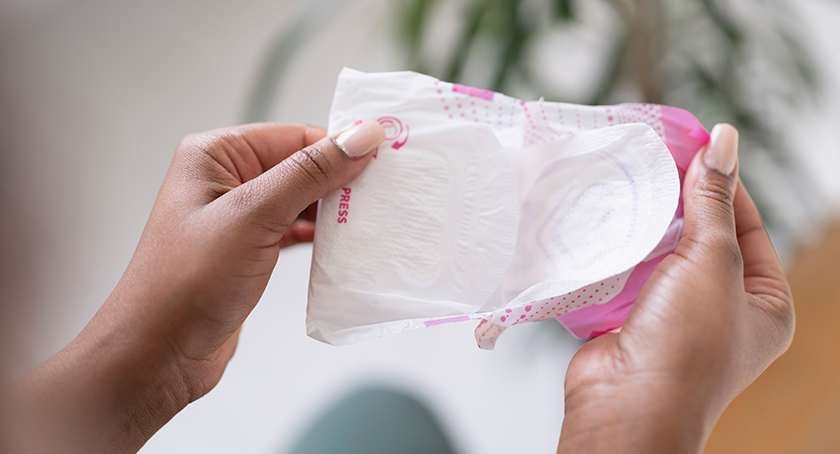
For EAM, feminine hygiene and adult incontinence remain its strongest opportunities. The company develops and manufactures a range of airlaid and laminated absorbent materials for these and other applications, including baby diapers, medical, industrial and food packaging.
“While feminine hygiene is a well-established market, we are seeing considerable interest in new product development, particularly as manufacturers explore different approaches to product design while balancing costs and machine efficiency,” Venn says.
Adult incontinence continues to be an important growth area for EAM, with opportunities driven by both product innovation and expanding demand across geographic markets. The company is seeing increased interest in heavier absorbent products designed for higher-capacity applications.
Similarly, Schäfer identifies absorbent hygiene as a key driver of airlaid demand, where airlaid is used for highly absorbent pulp-based structures, including cores for baby, feminine care and adult incontinence products. Feminine care remains the largest market segment, followed by table linen products, he notes. Demand for feminine hygiene products continues to grow as living standards rise and access to modern hygiene solutions expands in developing markets, while growth in adult care is being supported by aging populations.
In wipes, he says that demand is increasingly linked to biodegradable and pulp-rich concepts, including carded-airlaid-carded configurations that combine the strength of longer fibers with the absorbency and cost advantages of cellulose. Andritz is seeing a growing number of requests to upgrade spunlace lines with integrated airlaid forming units, enabling producers to expand into new pulp-based product segments, according to Schäfer.
Meanwhile, in the tabletop market, Swedish supplier Duni reports continued demand for its premium airlaid napkin offerings.
Duni’s key napkin offerings include Dunilin 40×40 cm 1/4-fold and Dunisoft/Bio Dunisoft 40×40 cm in both 1/4-fold and 1/8-fold formats. “These qualities are particularly popular in restaurants, hotels, catering and event environments where guests expect a high-quality dining experience,” says Carl-Philip Ottergren, category specialist, Duni Group.
Compared with pre-pandemic levels, Ottergren says that demand for premium airlaid napkins has grown, driven by the desire to elevate the guest experience while maintaining operational efficiency. “Although market conditions in Europe have been challenging in recent years, we now see encouraging momentum in some markets,” he explains. “Airlaid napkins also often offer a cost advantage compared with traditional linen napkins, while delivering a similar premium appearance.”
Emerging Applications
Airlaid producers are also exploring opportunities to expand the material’s use beyond its traditional end-use markets.
According to Mango, emerging applications such as insulation, packaging and molded products currently represent small volumes but offer high potential. Agricultural and other durable nonwoven markets are also being developed.
In the dry molded fiber packaging process, airlaid forming is combined with nonwoven converting and thermoforming to produce three-dimensional cellulose-based products such as trays, lids and other packaging formats, explains Schäfer of Andritz. “This expands airlaid beyond traditional roll-goods applications and creates new architecture requirements for fiber formulation, highly uniform web formation, stable transfer into molding steps and close integration between forming and downstream converting,” he adds.
Magic is among the companies exploring the use of airlaid in dry molding applications. Through PulpForm, Magic is developing airlaid material specifically for three-dimensional forming processes. “This work opens up possibilities beyond traditional absorbent products and allows us to investigate airlaid as a functional material for shaped components,” Giani explains.
He says that interest in this area reflects the search for new fiber-based materials and forming processes, particularly in packaging. “Dry molding offers a different route from conventional wet-forming systems and raises new questions about how fibers and material structures can be designed for the final shape and function.”
PulPac is also advancing dry molded fiber technology, using airlaid techniques to form cellulose fibers into three-dimensional packaging products.
In a recent commercial development, HZ Green Pulp has begun full-scale production of dry molded fiber coffee lids in Malaysia, becoming the first PulPac licensee in Asia to supply the market with this fiber-based alternative to plastic. The Malaysia-based company, already established in wet-molded fiber, commissioned its first PulPac Modula machine earlier this year.
Coffee lids are the first product, broadening the company’s current portfolio. Additional dry molded fiber food-service applications are expected to follow.
“Our mission is to provide packaging solutions that are both responsible and cost-efficient,” says Dr. Donald Yap, CEO of HZ Green Pulp. “Our wet molding operations continue to serve customers well, but dry molded fiber allows us to introduce a new generation of products that respond to evolving market demands while reducing environmental impact. We’re confident in the technology’s capability and its fit with our customers’ requirements.”
Sustainable Developments
Airlaid’s predominantly wood pulp-based composition offers sustainability advantages, while manufacturers continue to explore ways to further improve the environmental profile of their products.
According to Badaoui of Magnera, brand owners and consumers are increasingly seeking products that reduce environmental impact without compromising performance. The company is responding by focusing on increased renewable content, improved material efficiency and enhanced end-of-life attributes where appropriate.
Another area of ongoing development is the replacement of conventional synthetic binders, which remain an obstacle to achieving plastic-free airlaid across all applications.
“Development of plastic-free binders has been underway for several years, and acceptable candidates for dry end-use products and even some wet wipes have been developed, but there are still many end uses for which acceptable plastic-free binders do not exist,” Mango explains. “Development of an acceptable plastic-free binder may be critical in future growth potential for airlaid.”
In recent years, Duni has invested significantly in the development of Bio Dunisoft, an airlaid napkin featuring a fossil-free binder that is certified OK Compost HOME. “Our focus has been on combining the softness and appearance appreciated by customers with environmental benefits that support changing market demands,” Ottergren explains.
In addition, Duni claims its white Bio Dunisoft products were the first to carry the Nordic Swan Ecolabel.
Finnish airlaid producer SharpCell has also been exploring alternatives to conventional fossil-based binders. In 2023, the company announced a collaboration with OrganoClick to develop a new airlaid material using a bio-based binder made from food industry side streams, including wheat, corn, lemons and shrimp shells. The material has the potential to replace more than 1000 tons of fossil-based binder when fully implemented at SharpCell, while maintaining airlaid’s soft feel and textile-like appearance.
More recently, SharpCell and Celanese Corporation, a global specialty materials and chemical company, have been working together to help reduce greenhouse gas emissions through the use of carbon capture and utilization (CCU) technology in Celanese binders.
This collaboration is allowing SharpCell to create lower carbon footprint nonwoven materials for the production of everyday articles such as tabletops, wipes and hygiene products with ingredients manufactured with carbon dioxide (CO2) emissions captured from industrial processes using CCU technology.
Celanese uses CCU-based chemical building blocks at its Clear Lake, TX, facility for vinyl acetate ethylene binders, an integral component in the production of binder-bonded airlaid nonwovens. The resulting nonwoven products offer a lower product carbon footprint (PCF) than conventional nonwoven products and contribute to more sustainable fiber-based products without compromising product quality. CCU and conventional fossil-fuel based feedstocks are commingled but separately accounted for using a process called mass-balance accounting.
Using CCU binder technology in SharpCell’s airlaid nonwovens is projected to utilize over 400 metric tons of captured CO2 annually. According to the U.S. EPA Greenhouse Gas Equivalencies Calculator, this is comparable to the emissions from burning approximately 45,000 gallons of gasoline.
Meanwhile, Magic is focusing on both product performance and end-of-life considerations in its development of airlaid materials for food pad applications. This has led to Spongel, Magic’s superabsorbent powder certified OK Compost Industrial, and to Airgel g-grade, an airlaid material combining cellulose fibers with Spongel. Airgel g-grade is certified OK Compost Industrial.
The company has extended this approach to finished food pad solutions. Magic’s G-pad, a biodegradable and compostable food pad, combines Airgel g-grade with a compostable film, with the layers thermally bonded without glue.
“We see the future of airlaid development in bringing performance and end-of-life considerations into the same design process,” Giani explains. “The right solution will depend on the food being packed, the packaging system and the intended end-of-life route. Our aim is to develop structures that respond to those specific conditions, rather than rely on a single design for every application.”
Stay up to date with all Nonwovens Industry content by subscribing to our newsletter.
The post Airlaid’s Next Chapter appeared first on Nonwovens Industry.


