
Indian aquatech startup Aqua Exchange is targeting $40 million in revenues in the year to March 2027, a 33% increase on the previous year, as it builds traction with smallholders in India and expands into overseas markets with larger clients.
The six-year-old firm, which initially focused on shrimp farm monitoring and automation technology, has since expanded its offering to include a full stack of services from financing, insurance, and input procurement to market access, cofounder and COO Hemasundar Dhavili told AgFunderNews.
The model illustrates how technology can become a gateway to a much broader range of agricultural services, particularly in fragmented markets dominated by smallholders.
The company has been EBITDA positive for two years and is “pretty confident” it will reach profitability or break even on a profit-after-tax (PAT) basis in the financial year ending March 2027, he added.
Two commercial models
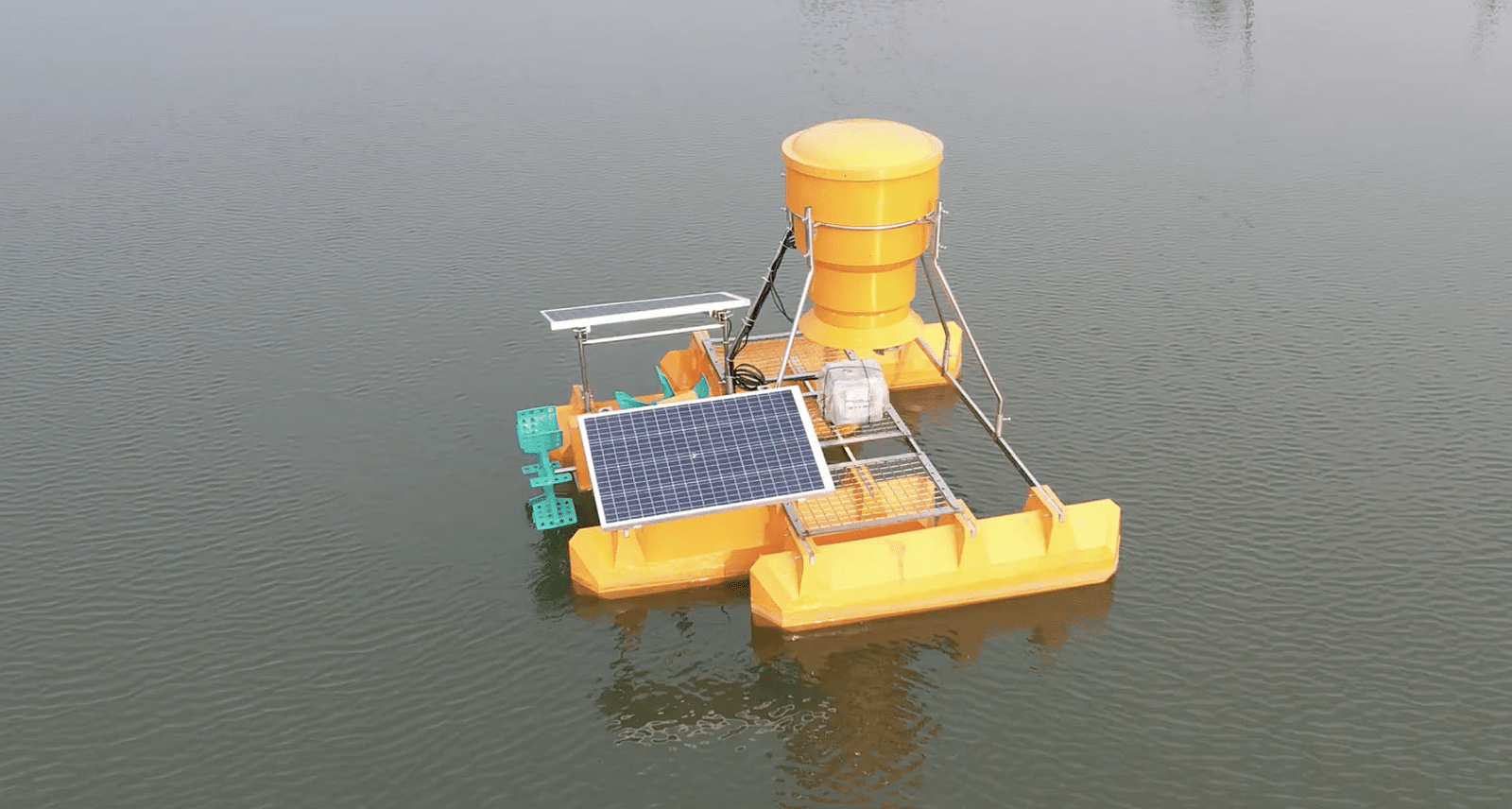
Aqua Exchange currently monitors close to 100,000 acres of shrimp farms in India with tech including power monitoring, aeration, energy management and automated feeding, said Dhavili, who estimates this represents around 35% of the country’s active shrimp farming acreage.
The business operates two distinct commercial models, with Indian farmers accessing its devices through a hardware-as-a-service subscription model, while larger international customers purchase equipment directly.
The difference largely reflects the structure of the markets. In India, where the market is dominated by smallholders farming 5-10 acres, Aqua Exchange customers often require a combination of technology, technical assistance, working capital and connections to buyers.
Larger farmers operating 50–100 acres, meanwhile, are more likely to seek standalone monitoring and automation services.
In Latin America, in turn, farms can run to hundreds or even thousands of hectares, requiring a different approach again, said Dhavili. “So there, it’s kind of an enterprise sales, industrial automation approach that we had to build in.
“In Latin America and parts of the Middle East, the farms are very different and we had to custom build and repurpose our existing products and build some from scratch for markets such as Ecuador, Mexico, Panama, Saudi, and Madagascar.
“We have set up a subsidiary in Ecuador for the Central and South American market and we’ve set up close to 5,000 auto feeders in Latin America.”
Last year, technology sales and subscriptions accounted for around 15% of revenues, with the balance coming from sales of farm inputs to shrimp farmers and harvested shrimp to processors and exporters.
Dhavili expects technology’s share to at least double to 30% next year as Aqua Exchange expands its higher-margin hardware and software business.
Tackling operational problems
According to Dhavili, shrimp farming in India has a crop success rate of just 55–60%, with failures stemming from a multitude of factors from power outages to poor feed management, low-quality shrimp larvae and disease outbreaks.
“When we started engaging with farmers, we found so many painful issues that they were dealing with day in day out, and being engineers by background, we rolled up our sleeves and tried to solve the issues they were facing on a daily basis.”
The first 45 days of a shrimp crop are critical, as shrimp must survive at least that long to reach a marketable size, he explained.
Two key tools that can make an immediate, tangible difference to farmers during this period are automatic feeders, which he claims can improve feed conversion ratios by up to 10%, and devices that monitor aeration to ensure consistent dissolved oxygen levels in ponds.
The latter continuously monitor electricity consumption by individual aerators and sends automated alerts to farmers and supervisors when equipment stops operating, which can happen repeatedly due to power outages or motor failures, said Dhavili.
“Then they can either resolve the [mechanical] issue or turn on the generator for backup power.”
The firm has also developed automatic power factor controllers to adjust electrical loads, tech Dhavili claims can reduce farmers’ electricity bills by 20–25%.
Tackling biological problems
To tackle biological problems (disease, poor quality larvae) on shrimp farms, Aqua Exchange offers a seed assistance program that analyzes microscope images and videos of shrimp post-larvae (baby shrimp supplied by hatcheries) before farmers purchase them, he said.
“There is a scoring mechanism which gives a score to the post larvae. So typically, if it is about 85%, then we give a green signal to the farmer to purchase the seed.”
Aqua Exchange technicians also conduct weekly farm visits to collect samples of water and shrimp tissue that are analyzed using AI models to flag abnormalities.
Where there are indications of deteriorating health, it can then recommend interventions or early harvesting before visible symptoms of disease emerge.
While Aqua Exchange cannot prevent outbreaks of diseases such as White spot syndrome (WSSV) and Enterocytozoon hepatopenaei (EHP), stressed Dhavili, it can give farmers advance warning to help reduce their financial losses.
Access to finance
The wider opportunity for Aqua Exchange has been to use the operational data captured by its devices to address another longstanding problem in Indian aquaculture: access to formal credit.
According to Dhavili, more than 90% of Indian shrimp farmers lease rather than own their land, making it difficult to access conventional agricultural loans, forcing them to rely on input dealers who also dictate which feed, seed and healthcare products they can purchase.
“Shrimp farming, despite being a multibillion dollar industry in India, had almost zero formal financing presence because it is considered so risky by bankers.”
By monitoring pond operations, feed consumption, crop performance and input purchases, Aqua Exchange has been able to provide lenders with a detailed picture of individual farming operations that has enabled them to extend unsecured working capital loans to farmers who might otherwise struggle to access formal finance.
The funds are held in escrow accounts and used to purchase inputs through Aqua Exchange, giving lenders visibility over how the money is spent while allowing farmers to choose their preferred brands.
Aqua Exchange also provides ongoing technical support and monitoring, reducing risks for lenders.
The combined approach has helped increase crop success rates from 55-60% to 83% among farmers using its full platform, claimed Dhavili.
The company has also introduced shrimp disease insurance through two partners in India, with more than 1,500 policies issued and over $300,000 in claims settled over the past year.
Connecting farmers directly with exporters
The final piece of the puzzle is market access, with Aqua Exchange now working with more than a dozen shrimp processors and exporters to match their demand for particular shrimp sizes with production across its network of 10,000+ farms.
By connecting farmers directly with exporters, Aqua Exchange aims to improve their negotiating position while helping buyers access a more predictable supply of shrimp, explained Dhavili.
Beyond shrimp
Looking ahead, Aqua Exchange has a three-pronged strategy: increasing penetration of India’s shrimp farming acreage to 70%+, expanding its overseas platform, and moving into other species such as tilapia.
According to Dhavili: “Now is the opportune time for us to evolve into a physical AI company.”
This would mean systems autonomously determining when to start or stop feeding, or when to activate aerators in response to changes in dissolved oxygen levels, rather than simply alerting farmers to take action.
Perhaps 60–70% of Aqua Exchange’s existing technology could be transferable beyond shrimp, said Dhavili, who said a move into tilapia might require a fresh funding round for Aqua Exchange, which has raised $18 million in equity and $5 million in debt to date.
Further reading:
Atarraya looks to bring high-tech shrimp farming to UAE, evolves business model
Seascape Aquatech bets on robotics to reinvent oyster farming
US aquaculture needs more than VC dollars to grow: report
The post Aqua Exchange eyes $40m revenue as shrimp farming platform scales globally appeared first on AgFunderNews.
- Source: https://agfundernews.com/aqua-exchange-eyes-40m-revenue-as-shrimp-farming-platform-scales-globally


